

What is the 3-3-3 rule for newly adopted cats?
The 3-3-3 rule is an adopter pacing framework describing the three typical adjustment milestones after bringing a cat or kitten home: 3 days to decompress from transport and shelter sensory overload, 3 weeks to learn household feeding and play routines, and 3 months to feel fully secure in their new territory. Shy seniors or under-socialized cats may move slower than outgoing kittens, so let your cat’s body language—not a calendar—set the pace.
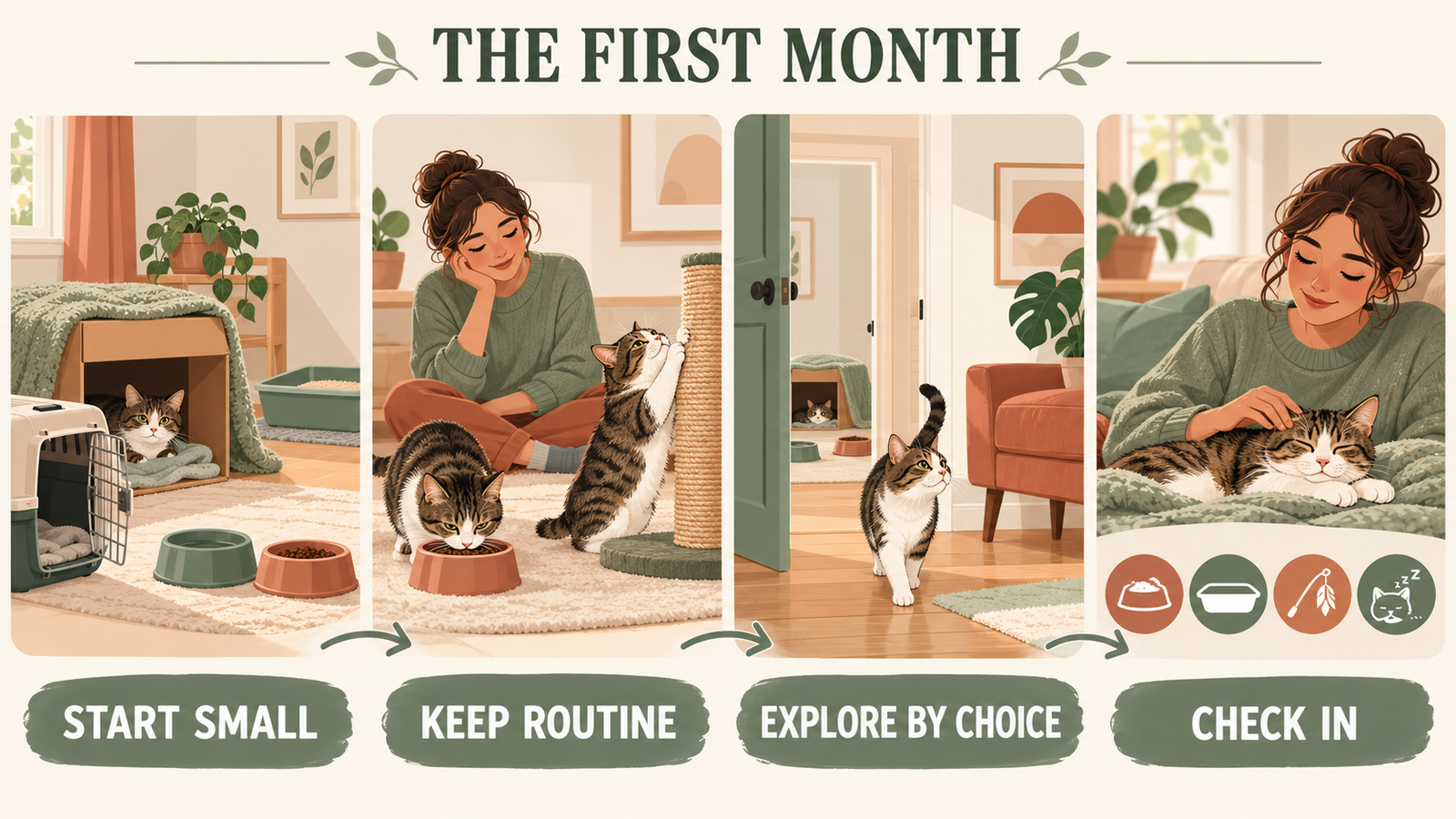
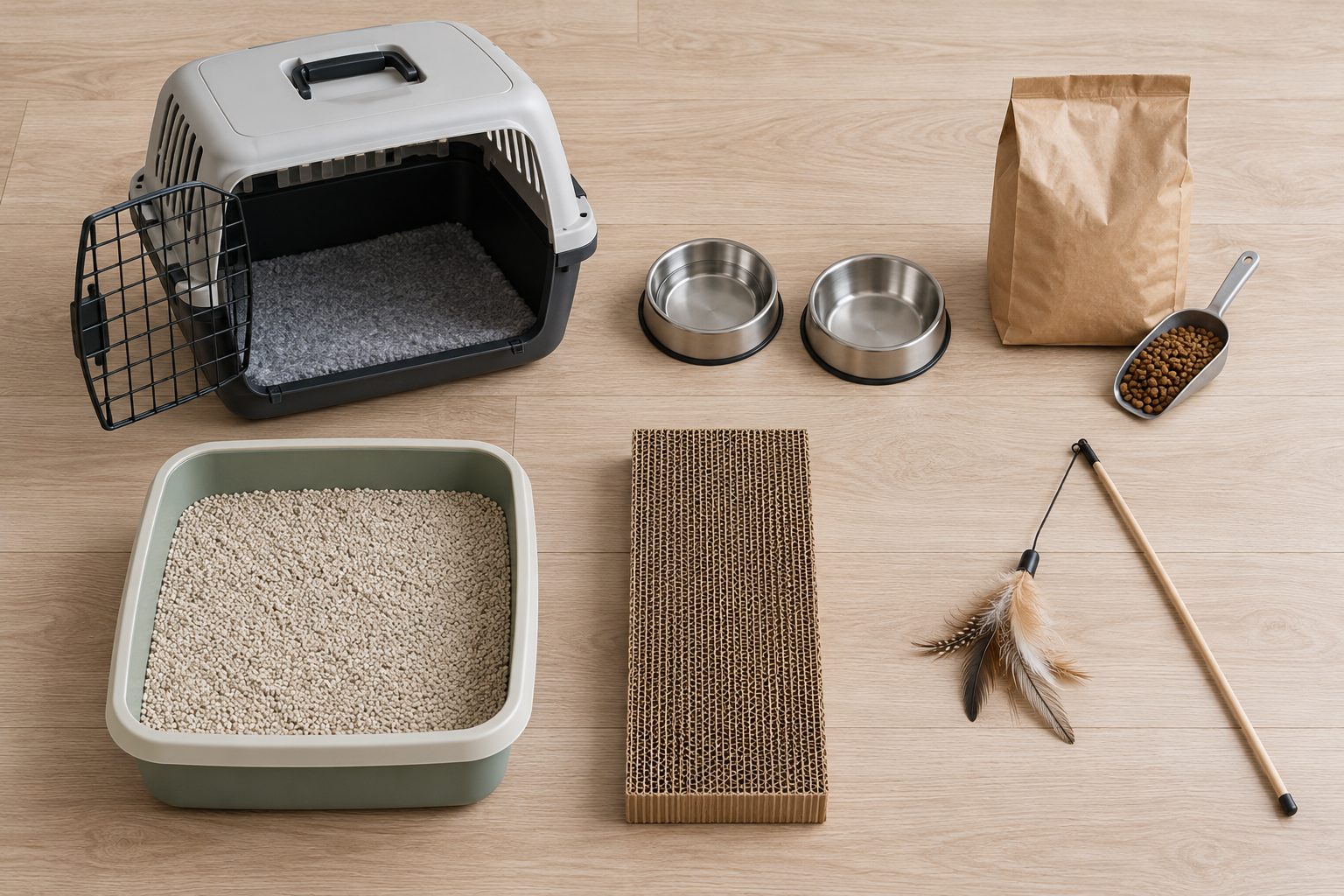
| Milestone Window | Expected Normal Behavior | Sign You Are Moving Too Fast | When to Call a Veterinarian |
|---|---|---|---|
| Days 1–3 | Hiding under bed/box, eating overnight when quiet, minimal vocalization | Hissing, flattened ears, or freezing when approached or picked up | Zero food or water intake for >24–36 hours, or no urination for >24 hours |
| Weeks 1–3 | Exploring base camp at dusk, approaching for treats, steady litter habits | Dashing back under cover or eliminating outside the box when doors open too soon | Persistent diarrhea, sneezing with thick discharge, or painful urination straining |
| Months 1–3 | Relaxed belly-up sleeping, greeting at door, predictable play and nap cycles | Staring or blocking between resident pets near bowls or litter boxes | Sudden aggression, excessive hiding after prior confidence, or weight loss |
4-step slow introduction protocol for resident cats or dogs
Never place a newly adopted cat directly face-to-face with resident pets on Day 1. Cats bond and build trust through shared scent first, positive food associations second, and visual contact last.

Why visual dividers prevent territorial standoffs
Direct eye contact across open floor space reads as a territorial challenge to cats. Feeding on opposite sides of a closed door—and later a baby gate or screen—lets both cats build positive associations without competing over bowls or escape routes.
Total Physical Separation
Keep the new cat in their closed base-camp room so resident pets cannot stare under the door or crowd the threshold.
Scent Swapping
Rub a soft sock on the new cat’s cheeks and place it near resident pets’ bowls (and vice versa). Reward calm sniffing with treats.
Closed-Door Meals
Feed both sides at comfortable distances from the closed door so each animal links the other’s scent with positive mealtimes.
Filtered Visual Visits
Use a tall baby gate or cracked door during play/meals. Keep dogs leashed. End sessions early while both pets stay relaxed.
Frequently Asked Questions
My newly adopted cat hasn’t eaten or used the litter box in 24 hours—is that normal?
Brief fasting or holding urine for the first 12–24 hours is very common when a cat enters a new home, especially if they only feel safe emerging at night. Place smelly wet food, fresh water, and the litter box within easy reach of their hiding spot and leave the room quiet overnight. If your cat refuses all food for 36–48 hours or has not urinated in 24+ hours, contact your veterinarian promptly because prolonged fasting risks hepatic lipidosis.
How big should the starter sanctuary room be?
A spare bedroom, quiet home office, or large bathroom works best—small enough that the cat cannot wedge into inaccessible crawlspaces, yet large enough to separate the litter box from food and water bowls by at least 1.5 meters (5 feet). Avoid rooms with noisy washing machines or heavy foot traffic.
When should I switch my adopted cat to a new food brand?
Wait at least 7–10 days after adoption before changing diets. Moving homes already elevates stress hormones that can loosen stool; keeping the shelter’s exact food for the first week prevents stress colitis. When you do switch, transition over 7–10 days (75% old / 25% new, then 50/50, then 25/75).
Can animal shelters and rescue groups print this timeline for adopters?
Yes. Enter your organization’s name in Step 1 above and click Print Welcome Sheet to generate a clean, ad-free single-page roadmap to staple into adoption folders—or visit our Cat Care Printables Hub for blank weight logs and sitter sheets.
How many litter boxes should I set up before bringing a cat home?
Follow the veterinary N + 1 rule: one litter box per cat in the household, plus one extra box in a separate location (and at least one box per floor). Check exact box dimensions for your cat’s size with our Cat Litter Box Size Calculator.
Feline Behavior References & Related Tools
- AAFP / ISFM Feline Environmental Needs Guidelines (Ellis SLH et al., Journal of Feline Medicine and Surgery) — Safe haven setup and resource distribution.
- International Cat Care (iCatCare). Bringing a New Cat or Kitten Home & Introducing Cats.
- ASPCA Pro / Shelter Behavioral Health Resources. Post-Adoption Decompression and Return Prevention.
- Cornell Feline Health Center. Feline Hepatic Lipidosis (Fatty Liver Disease) & Appetite Monitoring.