
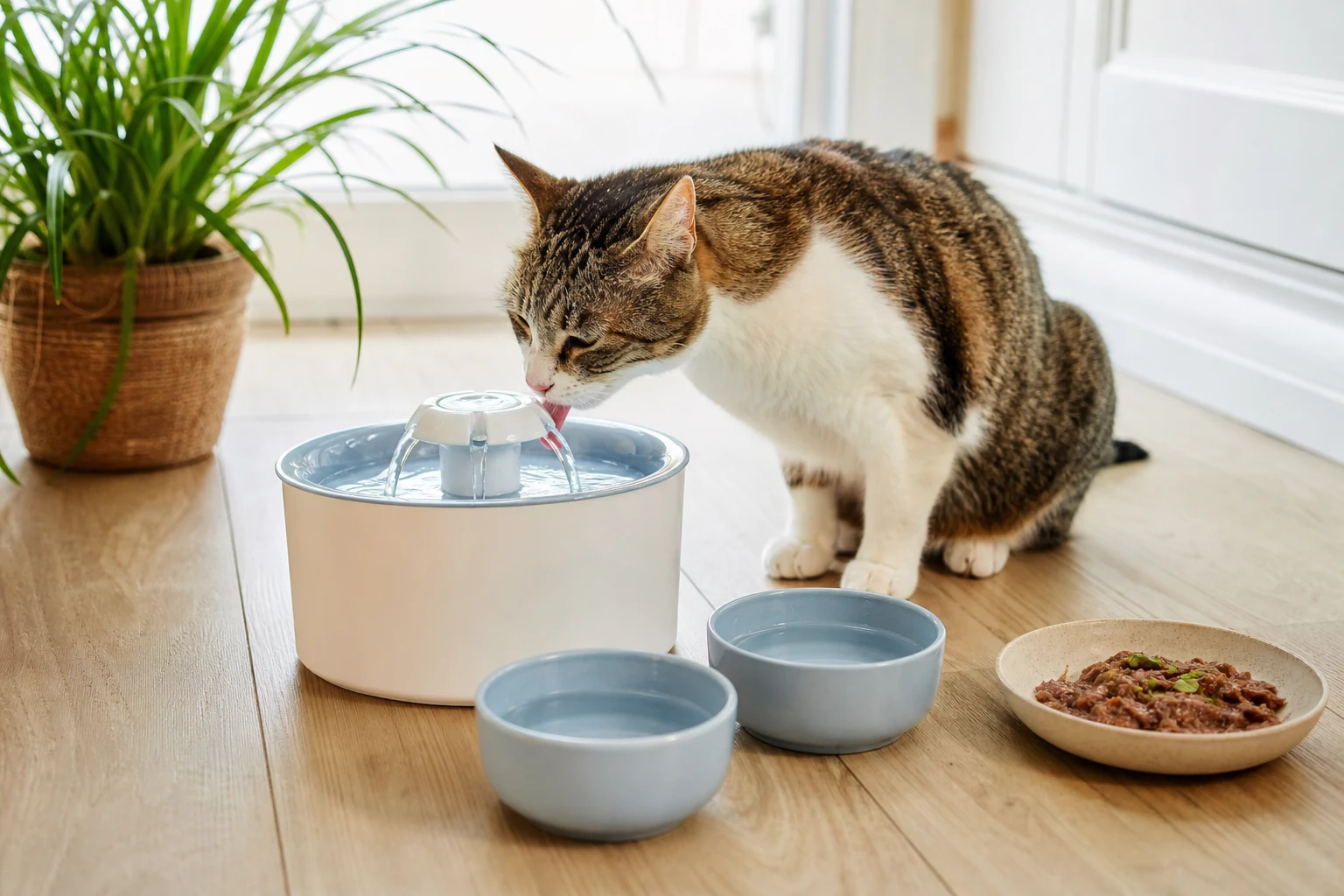
How much water should a cat drink per day?
A healthy adult cat generally requires 50 to 60 ml of total water per kilogram of body weight per day (about 0.8 to 1.0 fl oz per pound), or roughly 1 ml of water per kilocalorie (kcal) eaten. Because cats evolved with a low thirst drive, moisture inside wet food plays a major role in reaching that daily target.
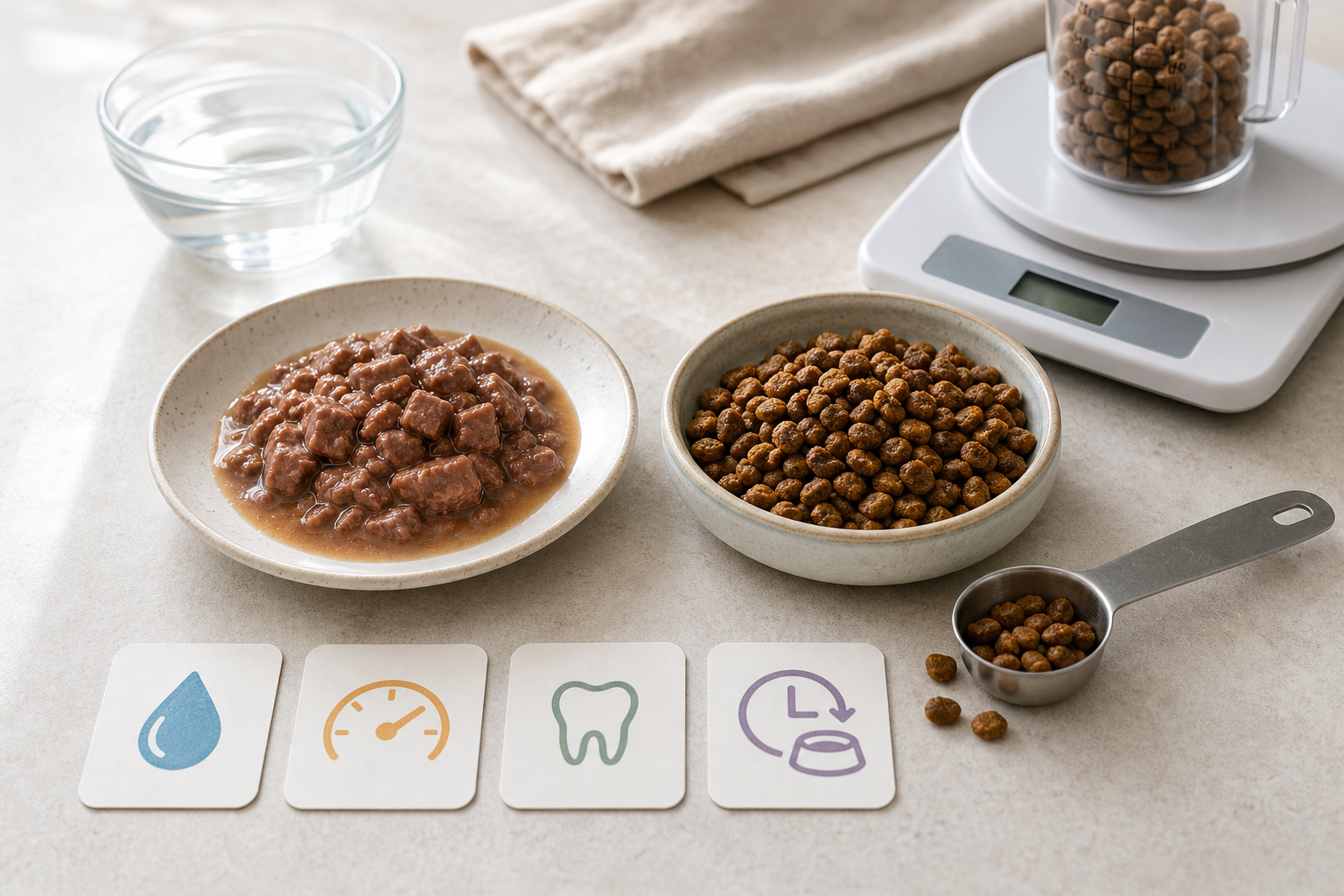
1. Total fluid budget: 4.5 kg × 55 ml/kg = 248 ml/day (8.4 fl oz).
2. Food moisture credit: One 85 g wet pouch (78% moisture) provides 66 ml; 35 g dry kibble (8% moisture) provides 3 ml.
3. Fresh bowl water needed: 248 − 69 = 179 ml/day (~6.1 fl oz).
| Cat Weight | Total Fluid Target (50–60 ml/kg) | Bowl Water (All-Dry Diet) | Bowl Water (1 × 85 g Can/Day) | Bowl Water (2 × 85 g Cans/Day) |
|---|---|---|---|---|
| 3.5 kg (7.7 lb) | 175–210 ml (5.9–7.1 oz) | 170–205 ml | 106–141 ml | 40–75 ml |
| 4.5 kg (10.0 lb) | 225–270 ml (7.6–9.1 oz) | 220–265 ml | 156–201 ml | 90–135 ml |
| 5.5 kg (12.1 lb) | 275–330 ml (9.3–11.2 oz) | 270–325 ml | 206–261 ml | 140–195 ml |
| 7.0 kg (15.4 lb) | 350–420 ml (11.8–14.2 oz) | 344–414 ml | 280–350 ml | 214–284 ml |
Dietary moisture comparison across cat food formats
Check the Guaranteed Analysis panel on your cat’s food bag or can for the Maximum Moisture (%) line. Switching even one meal per day from dry kibble to wet food dramatically reduces how much water your cat must drink from a bowl.
| Food Format | Typical Moisture % | Water per 100 g Served | Hydration Impact |
|---|---|---|---|
| Dry kibble | 7%–10% | 7–10 ml | Minimal; cat must drink >90% of fluid need from bowls |
| Semi-moist pouches / treats | 25%–35% | 25–35 ml | Moderate; higher sugar/humectant content in some formulas |
| Canned pate / chunks in gravy | 75%–82% | 75–82 ml | High; supplies roughly two-thirds of daily baseline water |
| Commercial raw / rehydrated freeze-dried | 70%–78% | 70–78 ml | High once fully rehydrated per manufacturer instructions |
| Cat-safe bone broth / hydration toppers | 92%–96% | 92–96 ml | Useful flavor enhancer (ensure zero onion, garlic, or excess salt) |
6 evidence-based ways to encourage your cat to drink more water
Why station placement changes drinking habits
Cats instinctively avoid water placed next to food (to avoid prey contamination) or near litter trays. Setting up multiple wide, whisker-friendly bowls in quiet corners along your cat’s natural walking paths increases daily water visits without forcing behavior.
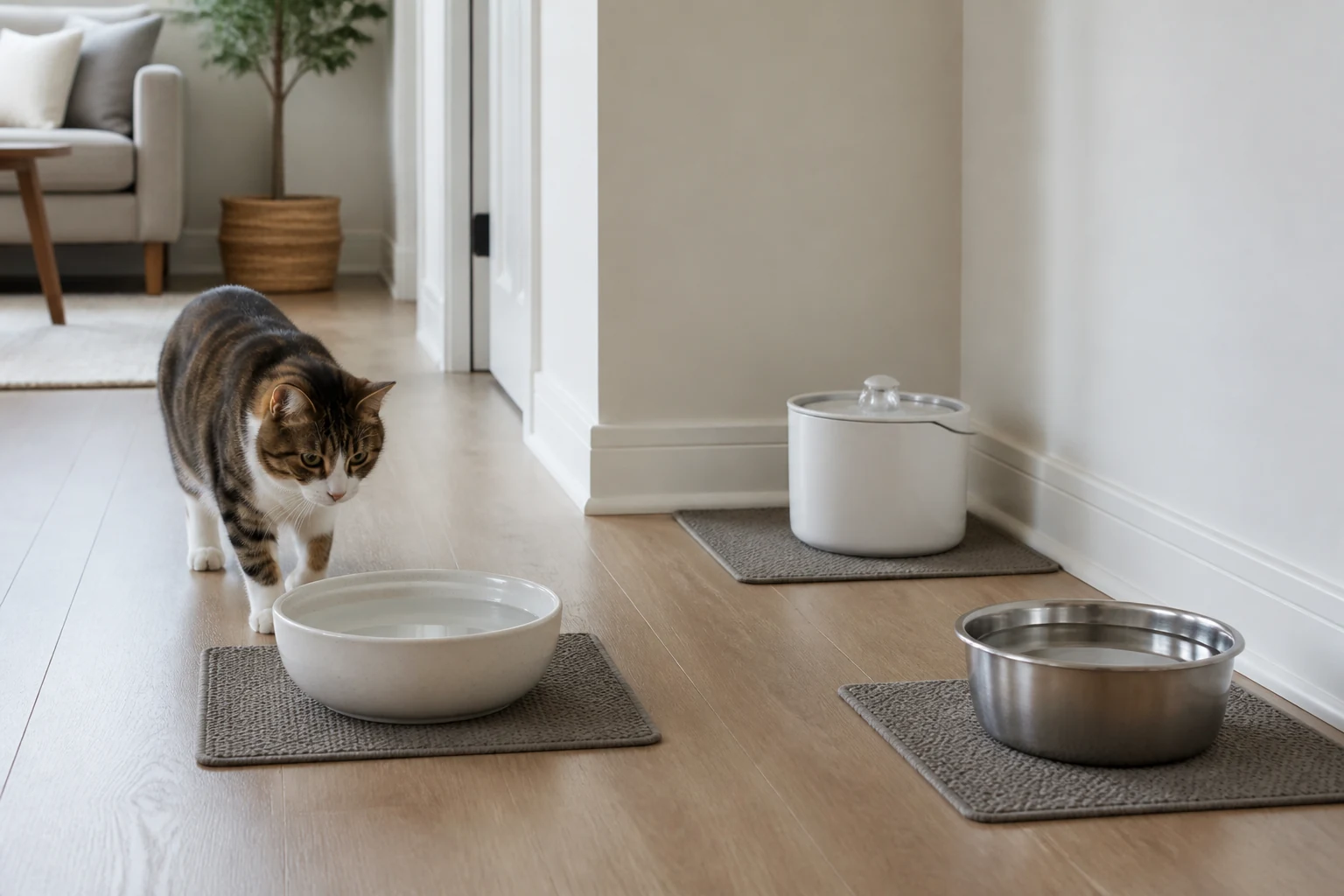
Move water away from food bowls
In the wild, cats avoid water near food to prevent contamination. Place water bowls at least 1–2 meters (3–6 feet) away from food dishes and well away from litter boxes.
Use wide, shallow, brim-filled dishes
Narrow bowls press against sensitive whiskers. Choose a wide ceramic, tempered glass, or stainless-steel bowl (15+ cm wide) and fill it near the top so your cat can see the water surface.
Test a quiet circulating fountain
Many cats prefer aerated, moving water because it signals freshness and is easier to see. Clean pump impellers and replace filters weekly to prevent biofilm buildup.
Add warm water to wet food
Mix 15–30 ml (1–2 tbsp) of warm water into canned pate to create a gravy texture. Warm water releases aroma and increases fluid intake without relying on thirst cues.
Offer 1 station per cat + 1 extra
In multi-cat homes, one cat can subtly block access to a single bowl. Place water stations in quiet, low-traffic corners on every floor your cats use.
Use unsalted tuna water or cat broth
Add a teaspoon of spring water drained from unsalted canned tuna (not oil or brine) or plain boiled chicken broth without onion/garlic to tempt reluctant drinkers.
When to call a veterinarian promptly
- Sudden excessive thirst (polydipsia) or larger urine clumps: Drinking noticeably more than normal for 48+ hours can be an early sign of chronic kidney disease, diabetes mellitus, or hyperthyroidism.
- Straining in the litter box or frequent small urine drops: Especially in male cats, straining or crying in the litter box can indicate a life-threatening urethral blockage requiring immediate emergency care.
- Zero water or food intake for 24+ hours, repeated vomiting, or tacky/dry gums: Rapid dehydration requires prompt veterinary assessment.
Frequently Asked Questions
Why does my cat barely touch their water bowl?
If your cat eats mostly wet food (which is ~78% water), they already get a large share of their daily fluid requirement from meals and naturally drink less from the bowl. However, if your cat eats dry kibble and rarely drinks, check whether the bowl is too close to their food or litter box, too narrow for their whiskers, or overdue for a wash.
Is tap water safe for cats, or should I use filtered water?
In areas with safe municipal drinking water, standard tap water is fine for most healthy cats. However, cats have a keen sense of smell and may reject heavily chlorinated water—using a basic carbon filter or letting tap water sit out briefly often improves acceptance. Avoid mineral-heavy hard water if your vet recommends urinary stone prevention.
How can I check at home if my cat is dehydrated?
Gently lift the loose skin between your cat’s shoulder blades and release it: in a well-hydrated cat, the skin snaps back immediately; if it stays tented or sinks slowly, dehydration may be present. Also check that gums feel moist and slick rather than dry or tacky, and monitor litter box clump size. Contact a vet if you suspect dehydration.
Do kittens need more water per kilogram than adult cats?
Yes. Growing kittens have higher metabolic rates and higher body-water turnover, typically needing around 60–70 ml/kg/day (including wet food moisture). Use shallow, stable dishes that kittens cannot tip over or fall into.
How does water intake connect to daily calorie intake?
A widely used veterinary rule of thumb is roughly 1 ml of total water per 1 kcal of metabolizable energy eaten. For example, a cat eating 220 kcal/day needs roughly 220 ml of total water from food plus bowls. You can find your cat’s exact calorie target with our Cat Calorie Calculator.
Veterinary References & Related Tools
- National Research Council (NRC). Nutrient Requirements of Dogs and Cats. Washington, DC: The National Academies Press (Water and Electrolyte Requirements).
- AAFP / ISFM Feline Environmental Needs Guidelines (Ellis SLH et al., Journal of Feline Medicine and Surgery) — Resource separation and multi-station water placement.
- Cornell Feline Health Center. Feline Lower Urinary Tract Disease (FLUTD) & Hydration Management. Cornell University College of Veterinary Medicine.
- WSAVA Global Nutrition Committee. Nutritional Assessment Guidelines & Pet Food Label Moisture Evaluation.