
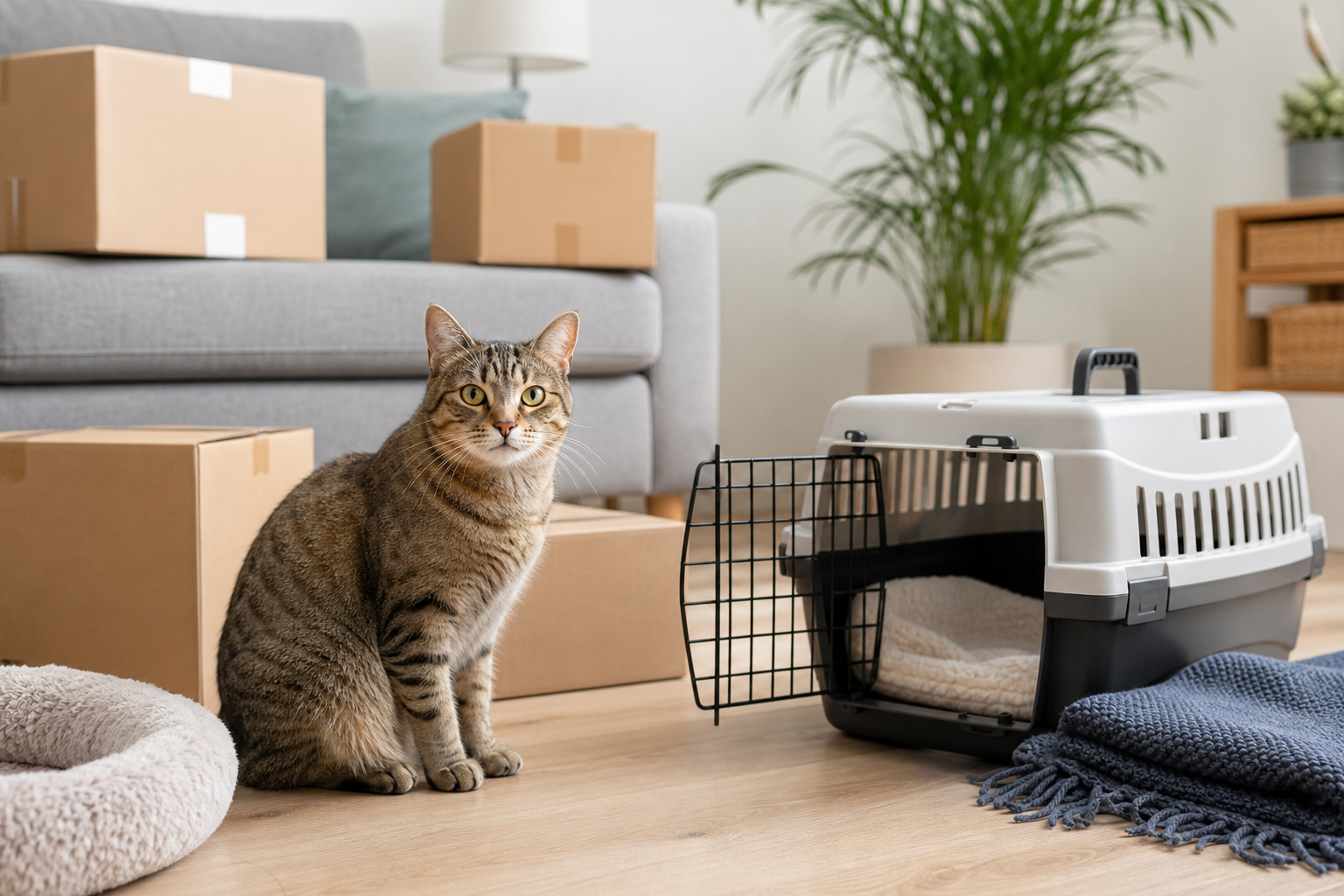
Moving a cat to a new home goes smoothest when you manage three stages: keep pre-move routines steady, transport your cat in a secured carrier, and decompress inside a stocked safe room before exploring [1] [2]. If helpers assist on moving day, print clear care instructions with our Cat Sitter Instructions Generator.
A move changes almost every scent, sound, and territory marker your cat relies on to feel secure—giving your cat control over one quiet room first prevents panic and door-dashing.
Table of Contents
- What should you prepare before moving day?
- How do you help your cat handle the carrier and car ride?
- What should you do when moving a cat into a new home first?
- How should you set up the safe room?
- When can your cat explore the rest of the home (3-3-3 timeline)?
- What behavior is normal after a move?
- What should you do for multi-cat households?
- Conclusion
- Frequently Asked Questions
- References
What should you prepare before moving day?
Start preparing 2 to 4 weeks before moving house by keeping feeding and litter routines unchanged, acclimating your cat to its carrier, and packing an essentials bag so familiar scent items stay accessible [1]:
| Timeline | What to do | Why it helps |
|---|---|---|
| 2–4 weeks before | Leave the carrier open in a normal living area with soft bedding | The carrier becomes familiar instead of appearing only for stressful events |
| 1–2 weeks before | Choose a quiet bathroom or bedroom for moving-day confinement | Prevents escape while exterior doors are open and movers carry boxes |
| A few days before | Pack a cat-only bag with food, medications, litter, scoop, bowls, bedding, and vet records; update microchip contact info | Keeps essentials out of moving boxes and protects ID if startled |
| Moving morning | Secure your cat in the quiet room with a “Do Not Open — Cat Inside” sign before movers arrive | Creates a calm sanctuary while the rest of the home is emptied |
How do you help your cat handle the carrier and car ride?
Transport your cat inside a seatbelt-secured hard or sturdy carrier—never loose in the vehicle—and review our traveling with a cat checklist for long drives:
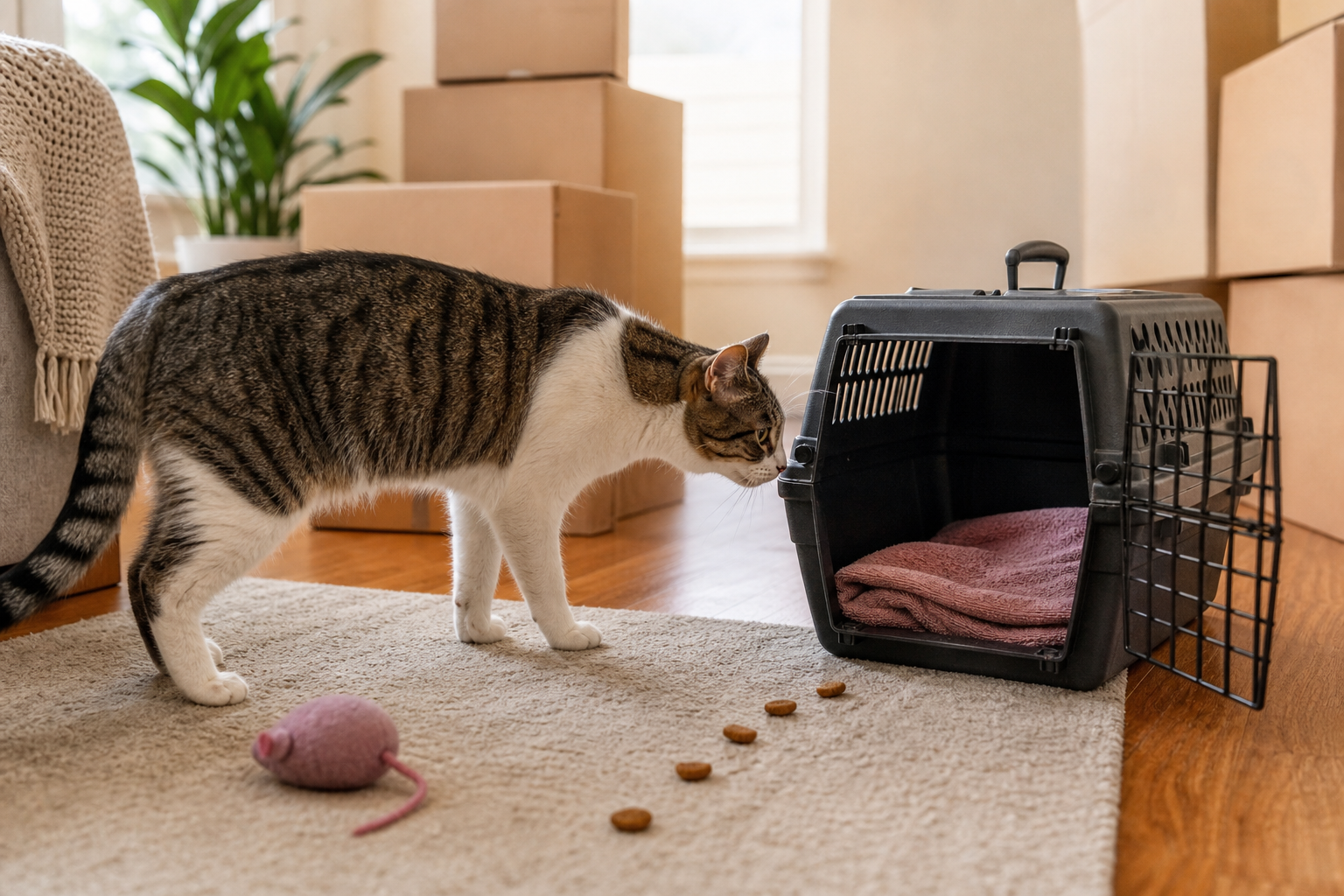
A secure carrier for moving day
A well-secured carrier helps keep your cat contained during the car ride. Measure your cat, secure the carrier in the vehicle as directed, and give your cat time to acclimate before moving day.

Petmate
Petmate Top Load Cat Kennel, Pearl Bubble Grape/Black
The Petmate Top Load Cat Kennel is designed for cat companions who weigh up to 10 pounds. Purr-fect for travel or house-training, this kennel…
$44.99
Shop ChewyWe may earn a commission if you buy through this Chewy link, at no extra cost to you. Product details and prices can change.
What should you do when moving a cat into a new home first?
Set up your cat’s closed safe room in the new house before bringing the carrier inside, verify hazards using our cat-proofing your home guide, and open the carrier door quietly so your cat exits on its own terms [2].
How should you set up the safe room?
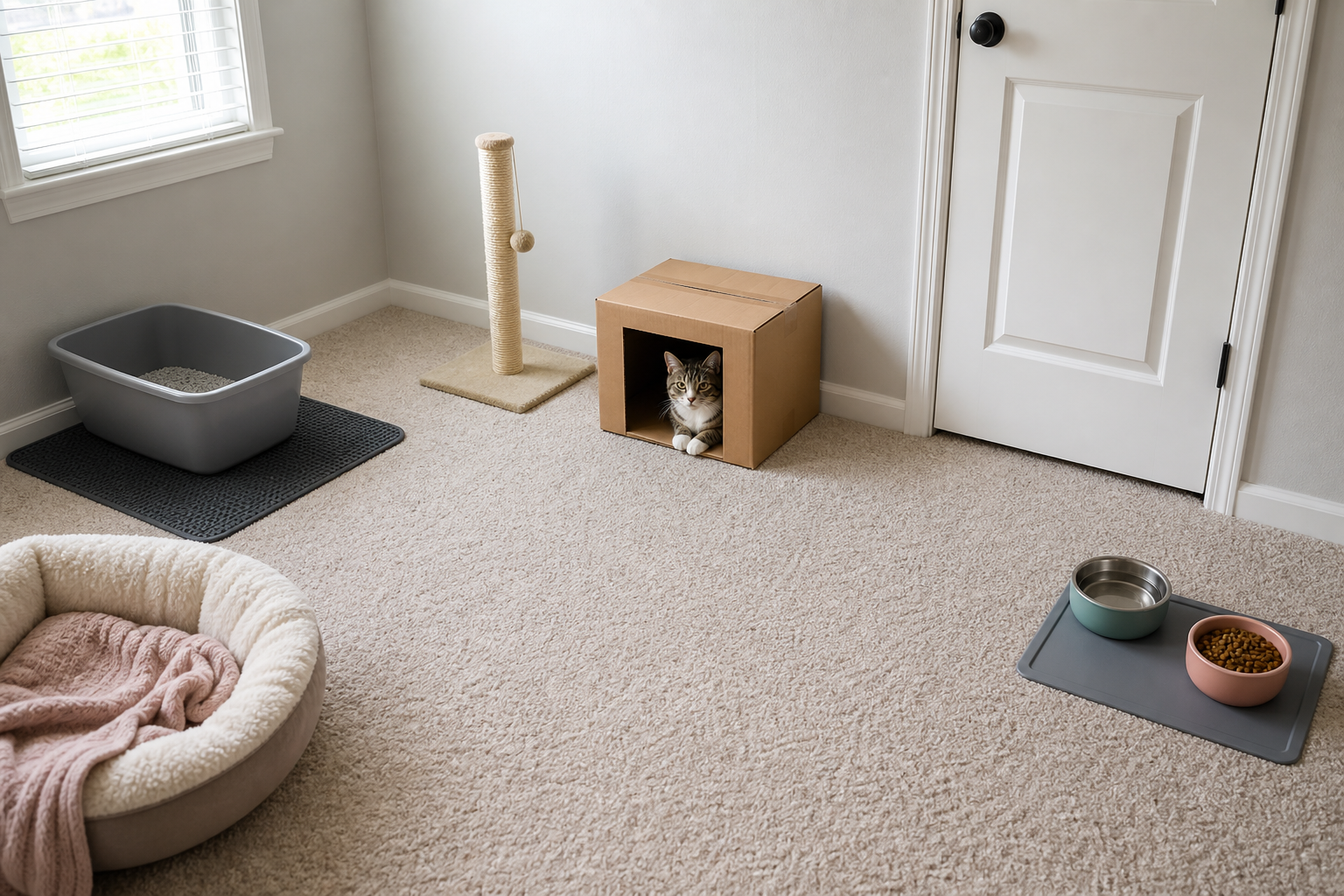
Stock the safe room with separated food, water, litter, scratching, and covered hiding spots—following AAFP/ISFM resource separation rules and our best cat litter box setup and litter box cleaning schedule [3]:
- Clean litter box in a quiet corner, separated from food and water bowls
- Unwashed blankets, bed, or worn T-shirt carrying familiar scent from the old home
- Covered hiding box or igloo bed, scratching post, and familiar toys
When can your cat explore the rest of the home (3-3-3 timeline)?
Wait until your cat eats, uses the litter box, and relaxes openly in the safe room (usually 2–5 days), then open one adjacent hallway or room at a time with the safe-room door propped open for retreat [4]:
| Adjustment window | Typical cat milestone in a new home | Helpful owner action |
|---|---|---|
| First 3 days | Decompressing from travel; hiding or sniffing cautiously in the safe room | Keep doors shut, maintain quiet feeding/scooping times, and let your cat initiate contact |
| First 3 weeks | Exploring adjoining rooms, testing perches, and learning new household sounds | Expand room access gradually and distribute water, scratchers, and litter boxes across floors |
| First 3 months | Full territorial confidence, relaxed sleep in open rooms, and steady play routines | Keep resource stations predictable and never allow unsupervised outdoor access |
What behavior is normal after a move?
Hiding under beds, cautious sniffing, clinginess, and quieter play are normal for several days after moving house—check why cats hide and stress-related peeing, and call a veterinarian immediately if your cat refuses food for 24+ hours or strains in the litter box [3].
What should you do for multi-cat households?
In multi-cat moves, separate tense cats into individual safe rooms at first, provide N+1 litter boxes and separate feeding stations, and scent-swap bedding before letting them share newly opened rooms [3].
Conclusion
Moving a cat to a new home works best when you protect familiar routines before packing, travel in a secured carrier, and decompress in one stocked safe room before opening the rest of the house [1] [2]. Leave familiar bedding unwashed so old scents anchor the new safe room, expand room access gradually over days to weeks, and call your veterinarian promptly if your cat stops eating or shows urinary distress.
Frequently Asked Questions
How long should I keep my cat in one room after moving to a new home?
Most cats benefit from staying in a closed, stocked safe room for 2 to 5 days until they are eating, using the litter box reliably, and resting calmly in the open before exploring adjoining rooms one at a time [2].
How does the 3-3-3 rule apply when moving a cat to a new home?
As a general settling benchmark, expect roughly 3 days to decompress inside the safe room, 3 weeks to learn the layout and routines of the new house, and up to 3 months to feel completely secure across the entire territory.
Should I wash my cat’s bedding before moving house?
No—unless soiled, keep your cat’s blankets, beds, and scratchers unwashed during the move so familiar personal scents make the new safe room feel safe immediately [1].
What if my cat hides and won’t eat after moving?
Hiding for the first 24–72 hours is normal if your cat eats and uses the litter box overnight—place food, water, and litter near the hiding spot in a quiet room, and call your veterinarian if your cat eats nothing for 24 hours or fails to urinate.
Can I use pheromone sprays or diffusers when moving with a cat?
Yes—feline facial pheromone sprays (applied to carrier bedding 15 minutes before travel) and plug-in diffusers in the new safe room can complement slow room introductions [5].
References
[1] International Cat Care. Moving house with your cat. 2025.
[2] American Society for the Prevention of Cruelty to Animals (ASPCA). Moving With Your Pet. 2026.
[3] AAFP and ISFM. Feline Environmental Needs Guidelines. 2013.
[4] AAHA and AAFP. Behavior and Environmental Needs. 2021.
[5] Cats Protection. Advice for moving house with your cat. 2026.