
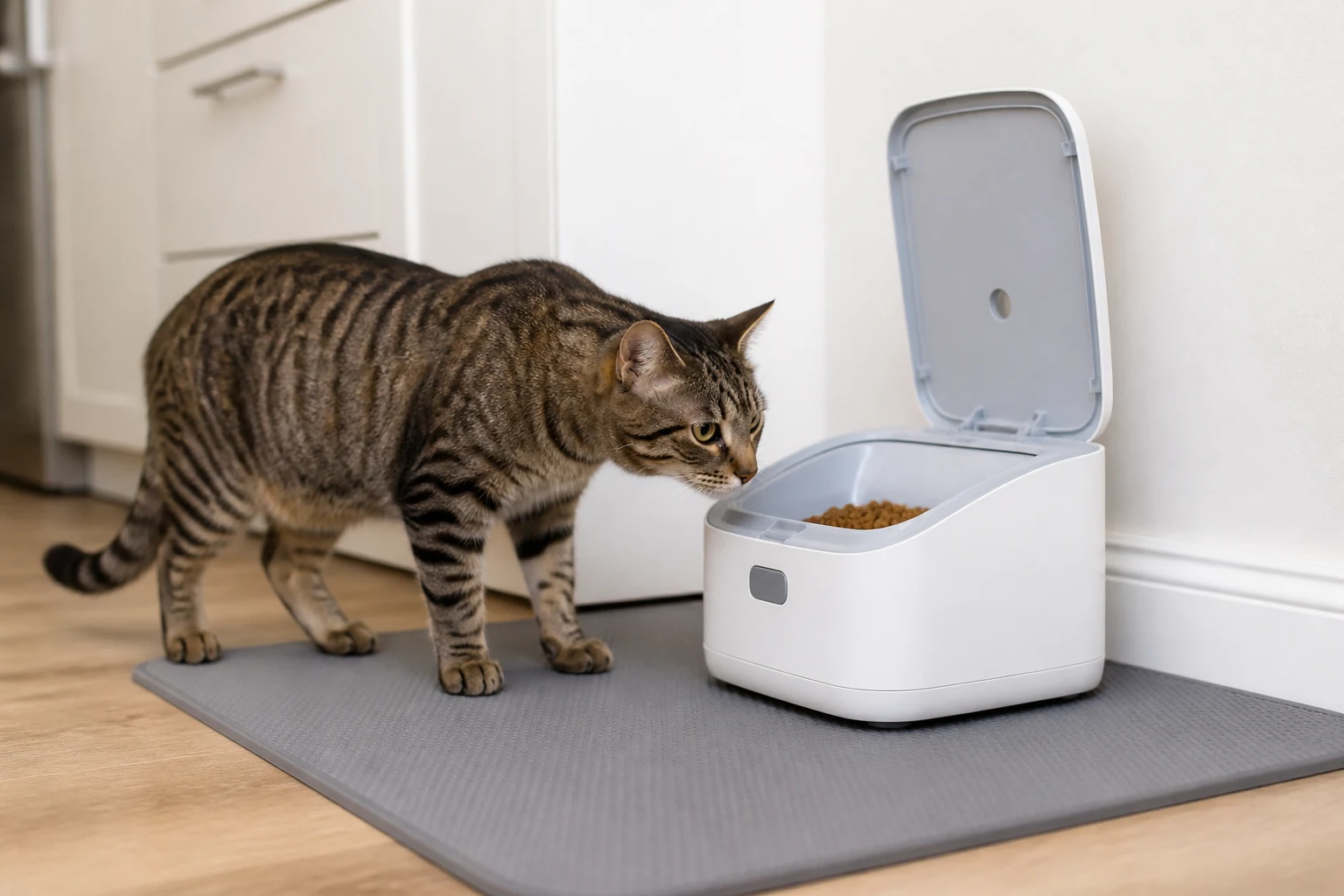
Introduce a microchip feeder to a scared cat by making the feeder boring, open, and predictable before you expect your cat to eat from it. The goal is not to prove the lid works on day one; it is to help your cat learn that the feeder is just a safe place where food appears.
This matters because a nervous cat may avoid a perfectly useful feeder if the first experience includes a sudden lid movement, another cat staring nearby, or a hungry training session that feels pressured. Move slowly, protect portions while training, and use your cat's body language to decide when to advance.
Table of Contents
- Should you use a microchip feeder for a nervous cat?
- What should you set up before the first training session?
- How do you start microchip feeder training with a scared cat?
- When should you close the lid or change training stages?
- What if another cat keeps hovering near the feeder?
- How do you protect portions while training is still in progress?
- What mistakes make a scared cat avoid the feeder?
- When should you stop and ask for help?
- Conclusion
- Frequently Asked Questions
- References
Should you use a microchip feeder for a nervous cat?
A microchip feeder can work for a nervous cat if the feeding problem is access control and you are willing to train gradually. It is most useful when one cat steals food, one cat needs a different diet, or a shy cat eats slowly and loses food to a faster housemate.
If you are still deciding whether the device is the right tool, start with the broader guide to microchip feeders for cats. A microchip feeder controls who can reach the food. Timed feeders for cats control when food appears. A nervous cat may need one, both, or neither depending on the household problem.
The risk is that a feeder can become one more stressor if it is introduced too quickly. The AAFP and ISFM environmental guidelines emphasize that cats need resources placed in ways that let them feel secure and avoid conflict, including food areas that reduce competition 1. That means the feeder should support your cat's sense of safety, not become a test your cat must pass while hungry.
Do not use a feeder to delay veterinary care. If your cat has suddenly stopped eating, is losing weight, drooling, vomiting repeatedly, hiding more than usual, or seems painful near the mouth or neck, call your veterinarian before assuming the feeder is the problem.
What should you set up before the first training session?
Set up the feeder in its likely final location before training begins. Moving it repeatedly can make a cautious cat restart the learning process.
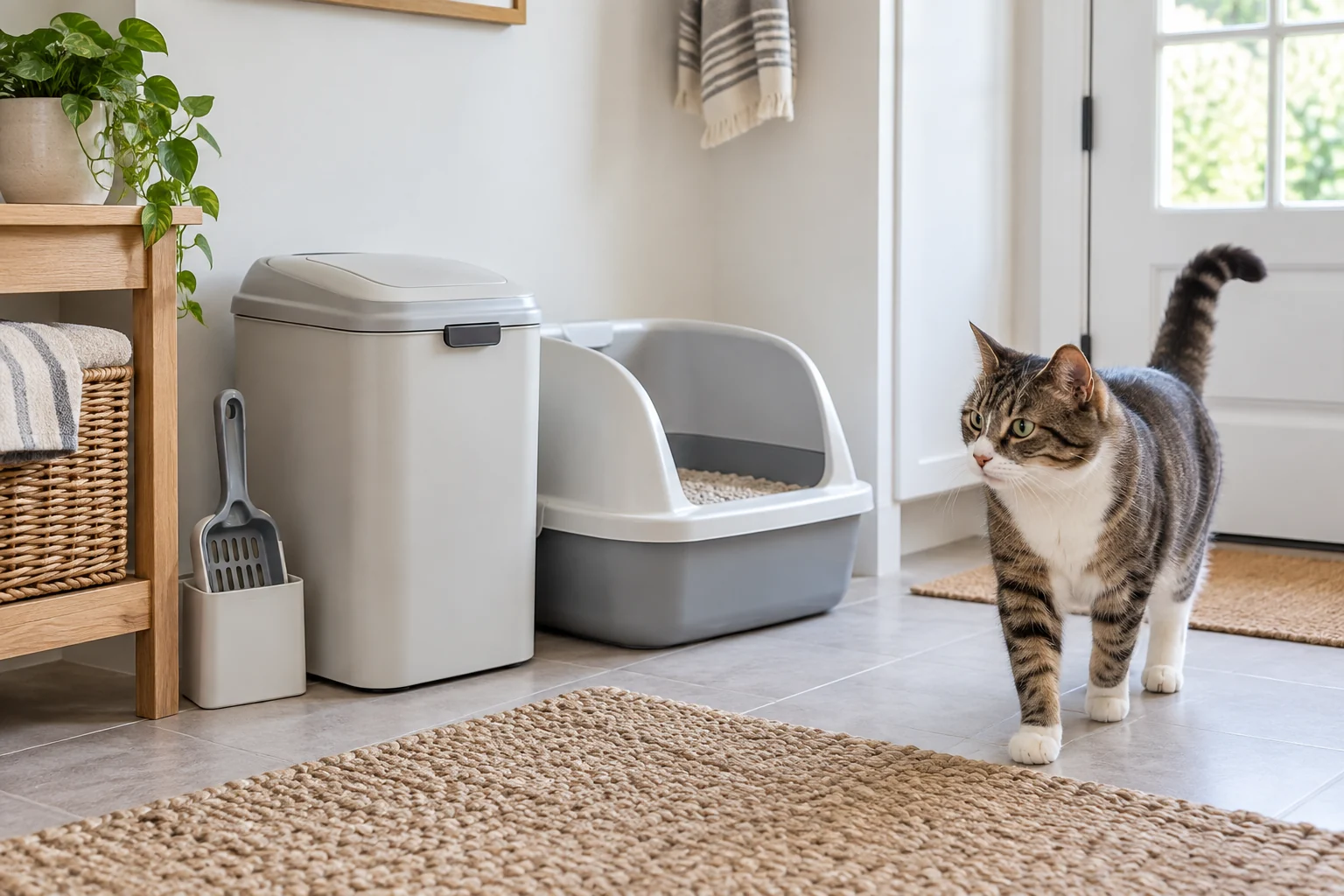
Choose a quiet spot with good footing, an easy exit route, and enough space that the cat does not feel trapped. Avoid tight corners, busy walkways, laundry rooms during noisy cycles, and any place another pet can block the entrance. Food stations should also be away from litter boxes, and water should have its own separate location when possible 1.
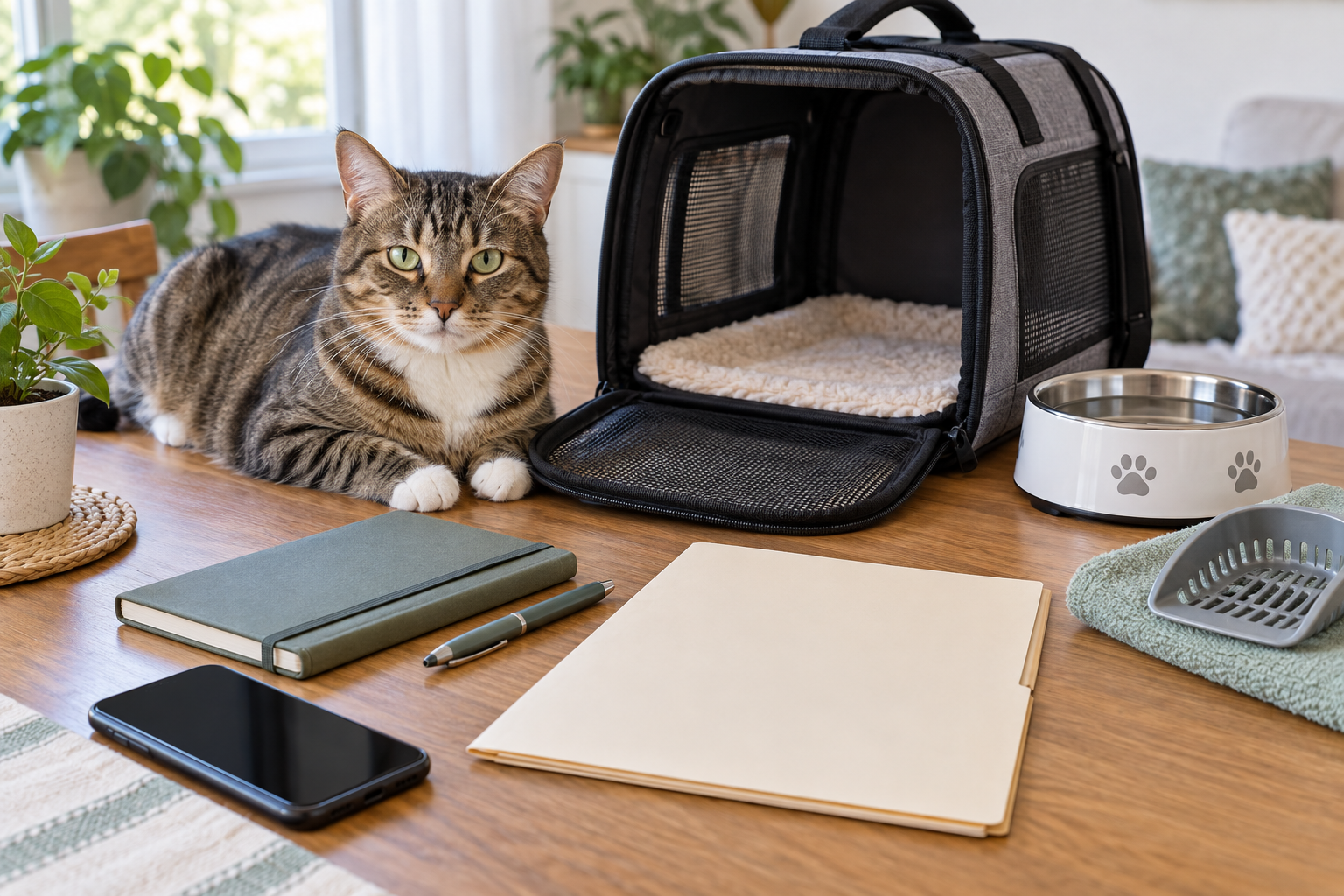
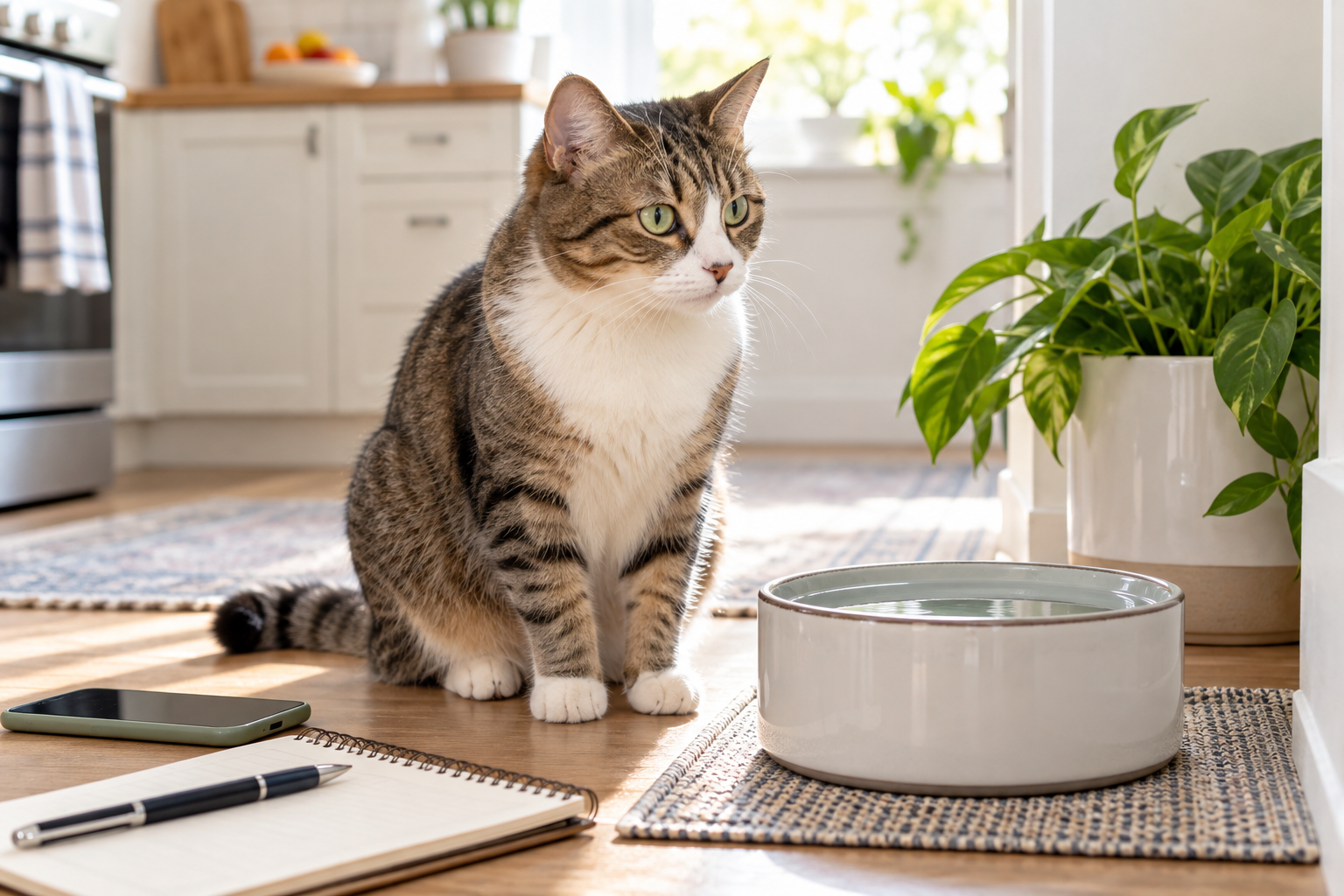
Before the first session, prepare:
- The feeder with the lid open, disabled, or in the easiest training stage.
- A familiar bowl if the feeder bowl itself feels suspicious.
- A small measured meal your cat already likes.
- A non-slip mat so the feeder does not slide or rattle.
- A way to keep other pets out for a few minutes.
- A notebook or phone note for appetite, fear signs, and progress.
For very timid cats, place the feeder near the normal bowl at first instead of replacing the bowl immediately. The manufacturer of a common microchip feeder recommends moving the feeder gradually closer to the familiar bowl for cautious pets, then working toward placing the bowl on or inside the feeder 5.
How do you start microchip feeder training with a scared cat?
Start with the lid open and the easiest version of the task: familiar food, familiar bowl, and no moving parts. Let your cat approach, sniff, eat, and leave without being picked up, pushed forward, or held in place.
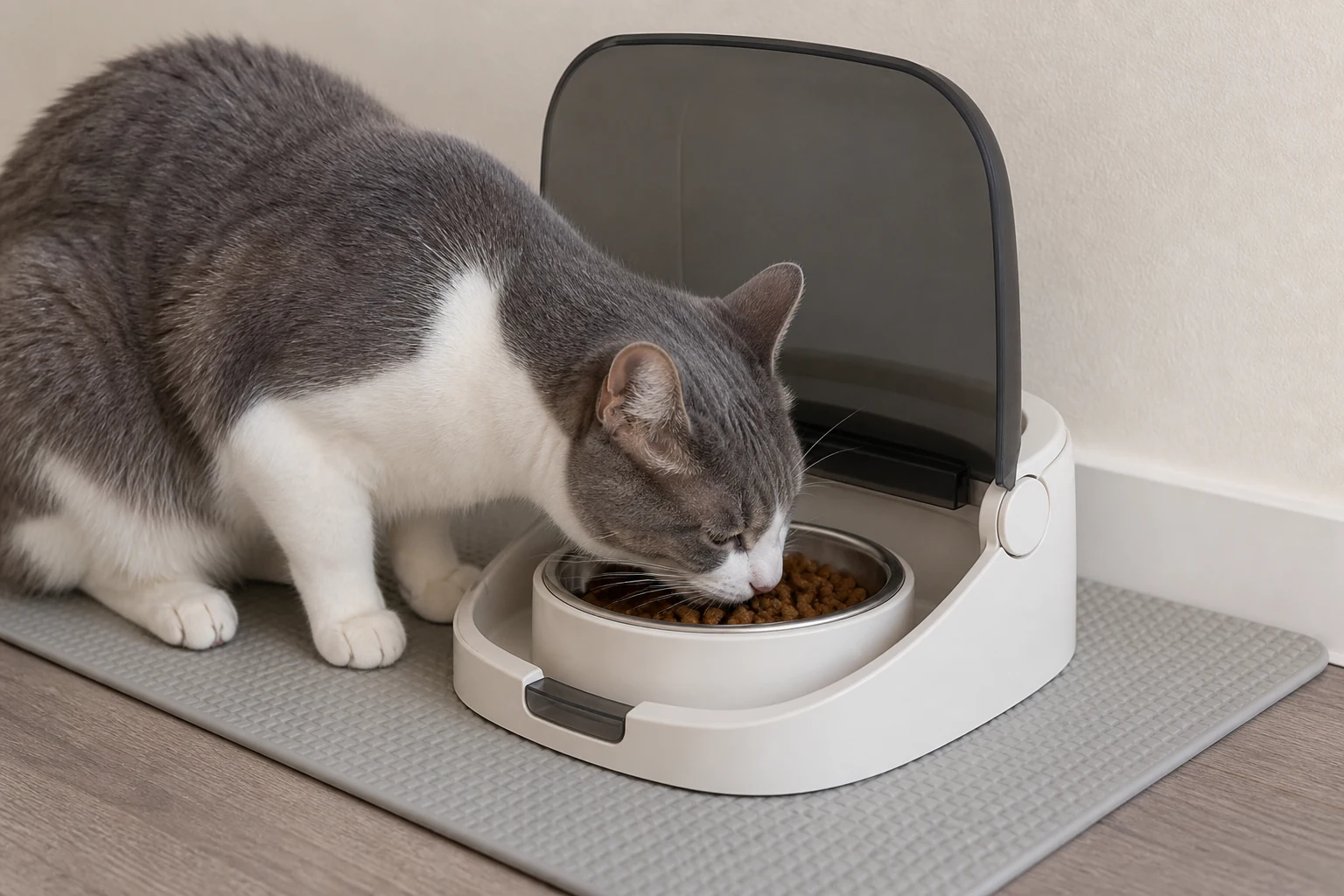
A low-pressure first week might look like this:
| Stage | What the cat experiences | When to move on |
|---|---|---|
| Feeder nearby | Normal bowl, feeder sitting close but not touching | Cat eats normally without watching the feeder |
| Bowl on the mat | Familiar bowl on or beside the feeder mat | Cat approaches without stretching or flinching |
| Bowl inside, lid open | Food inside the feeder, no lid movement | Cat eats a normal portion calmly |
| Training mode | Lid moves only a little, if your model allows staged training | Cat keeps eating after the small movement |
| Normal mode | Lid opens and closes as designed | Cat returns for meals without hesitation |
Use short sessions. End while the cat is still doing well instead of waiting until they get worried. Best Friends Animal Society describes desensitization and counterconditioning as gradual exposure paired with something rewarding, while keeping the cat below the point where fear takes over 4. For feeder training, that reward is usually the normal meal itself.
If your cat backs away, freezes, flattens the ears, crouches low, flicks the tail sharply, or refuses food, make the next session easier. Cats Protection notes that stress signs can be subtle and may include hiding, tense body language, appetite change, or behavior that looks like "acting out" but is really distress 3.
When should you close the lid or change training stages?
Change stages only when your cat is eating comfortably at the current stage for several meals in a row. Comfort matters more than the number of days.
For many cats, the moving lid is the hardest part. Some cats dislike the sound, some dislike motion near the whiskers, and some dislike anything that changes while their head is near food. If your feeder has training stages, use them. Sure Petcare describes a staged training mode where the lid closes by different amounts so the pet can adapt gradually before the lid closes fully 5.
Use this rule: if the cat notices the lid but keeps eating with loose body language, you can stay at that stage. If the cat stops eating, stretches from a distance, or leaves and does not return, you went too fast.
Do not compensate by making the cat extra hungry. Hunger can push a cat into the feeder once, but it can also make the whole setup feel tense. A cat who learns under pressure may still avoid the feeder later when another cat is nearby or the lid surprises them.
What if another cat keeps hovering near the feeder?
Train the scared cat without an audience. Another cat hovering nearby can make the feeder look scary even if the lid is not the real problem.
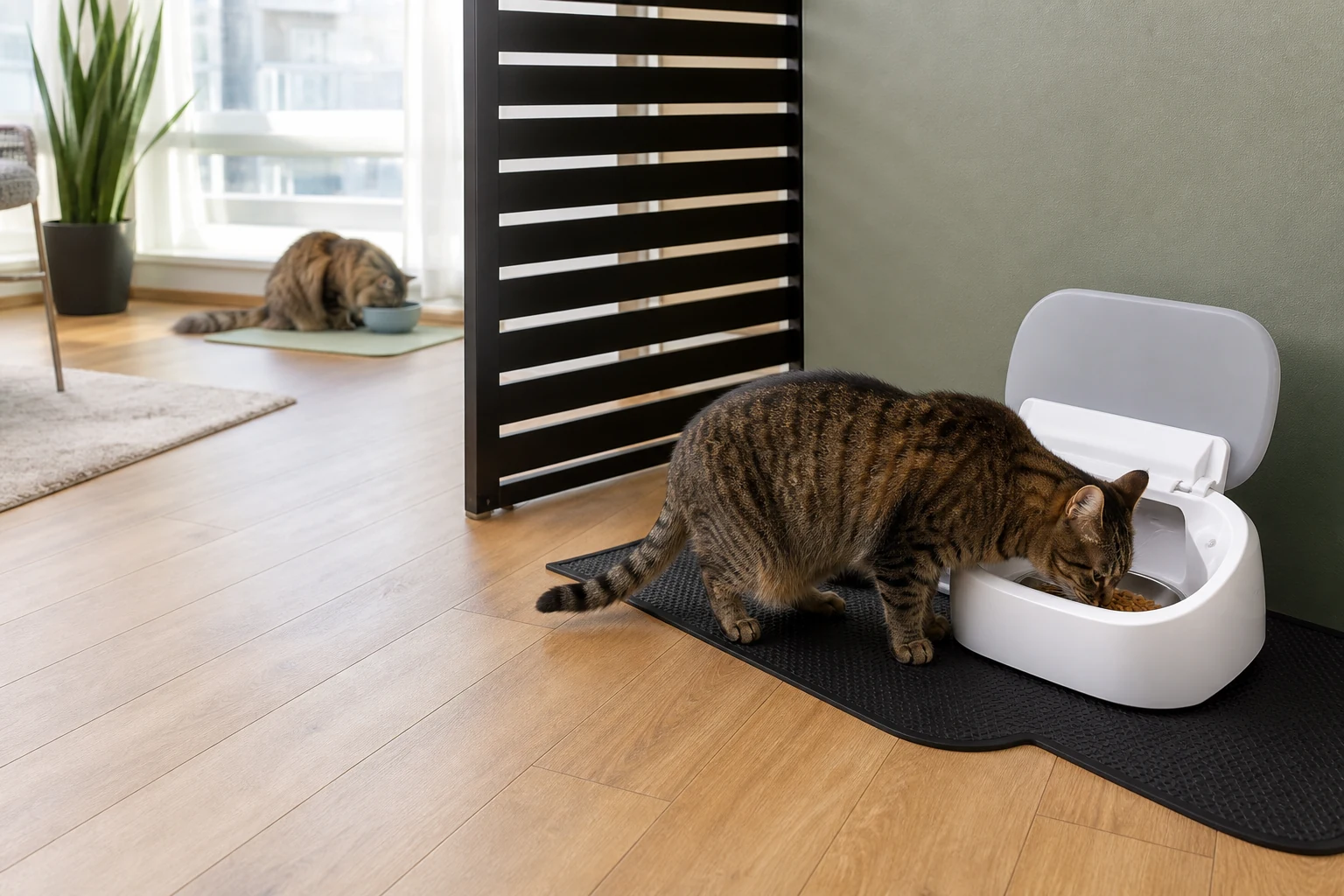
The AAFP feline feeding consensus statement notes that forced interactions during feeding can be highly stressful, and it recommends distributing food stations based on individual cat access, social dynamics, and visual separation 2. That is especially important when the nervous cat has already lost meals to a bolder cat.
Try these adjustments:
- Train behind a closed door for the first few meals.
- Feed the bolder cat at the same time in another room.
- Use a partial visual barrier so the nervous cat cannot see a watcher.
- Keep the feeder out of dead-end corners.
- Supervise early meals so tailgating does not become a habit.
- Add distance before adding complexity.
If the other cat needs a slower or more enriching meal at the same time, puzzle feeders for cats or slow feeder bowls for cats can keep that cat busy away from the microchip feeder. Keep the calories part of the same daily food budget.
How do you protect portions while training is still in progress?
Protect portions by measuring the food before training and using temporary supervision until the feeder is reliable. During early stages, other pets may still be able to reach the food, so do not assume access control is working yet.
Use your cat's normal daily plan as the guardrail. If you need help reading the label, review cat food feeding directions. If scoops vary too much, learn how to use a kitchen scale for cat food portions. For a rough planning estimate, the cat calorie calculator can help organize the numbers before you confirm the plan with your veterinarian.
The AAFP feeding statement recommends monitoring whether the cat is actually eating the right amount and checking weight or body condition regularly, especially for cats with chronic illness, age-related needs, or weight concerns 2. A microchip feeder helps only if the intended cat is both willing and able to eat from it.
For the first two weeks, write down:
- How much food went in.
- How much was left after each meal or 24 hours.
- Whether the correct cat ate.
- Whether another cat hovered or pushed in.
- Any vomiting, begging, hiding, or skipped meals.
This record is useful if you need to adjust the setup or speak with your veterinarian.
What mistakes make a scared cat avoid the feeder?
The biggest mistakes are moving too fast, letting the lid surprise the cat, placing the feeder where another pet can intimidate them, and treating refusal as stubbornness. A scared cat is giving feedback about the setup.
Common mistakes and fixes:
| Mistake | Why it backfires | Better option |
|---|---|---|
| Starting with full lid movement | The first experience becomes startling | Begin with lid open or lowest training stage |
| Removing the old bowl too soon | Familiarity disappears all at once | Use the familiar bowl near or inside the feeder first |
| Training in a crowded food zone | The cat may fear the other pet, not the feeder | Train separately, then rebuild the shared routine |
| Standing over the cat | Human pressure can make the meal feel unsafe | Sit nearby or step back after setting food down |
| Advancing after one good meal | Confidence may not be stable yet | Wait for several calm meals |
| Leaving too much food inside | Portion control disappears | Measure refills and check leftovers |
If your cat seems constantly hungry once meals are protected, do not assume the feeder caused the problem. Review portion math, food theft, feeding schedule, and possible medical issues. The guide to cat begging for food after eating can help separate habit, hunger, and health clues.
When should you stop and ask for help?
Stop the training plan and ask for help if your cat is not eating enough, seems distressed around every meal, or shows health changes. A feeder should make feeding calmer, not create a daily standoff.
Call your veterinarian promptly if your cat does not eat for 24 hours, has repeated vomiting or severe diarrhea, shows rapid weight loss, breathes abnormally, collapses, appears painful, has trouble chewing, or suddenly hides and will not come out. Cats can hide pain and stress, so a persistent behavior change deserves attention 3.
For a medically stable cat who is eating but still frightened of the feeder, consider a certified feline behavior professional or your veterinary team. Desensitization and counterconditioning work best when the steps are small enough that the cat stays relaxed and able to learn 4.
Conclusion:
A scared cat can learn to use a microchip feeder, but the training has to respect what the cat finds difficult: sudden motion, noise, crowding, and loss of control. Start open, familiar, and quiet. Add lid movement only after calm meals are consistent.
The feeder is only one part of the plan. Keep portions measured, place food stations thoughtfully, watch the other cats, and treat appetite changes as health information. When the setup feels safe, the feeder can protect the right meal without turning dinner into a stressful event.
Frequently Asked Questions
How long does it take a scared cat to use a microchip feeder?
Some cats adjust in a few days, while cautious cats may need several weeks. Move at the cat's pace rather than the calendar; several calm meals at one stage are a better sign than one lucky success.
Should I leave the old bowl out during feeder training?
Yes, for many scared cats the old bowl helps bridge the change. You can start with the familiar bowl near the feeder, then on the feeder mat, then inside the feeder with the lid open.
What if my cat eats only when the lid is open?
Go back to open-lid meals for a few days, then try the smallest lid movement your feeder allows. If your model has no staged training mode, you may need more open-feeder time before normal operation.
Can I use treats to train a cat to use a microchip feeder?
You can use tiny food rewards if they do not upset your cat's diet, but the normal meal is usually enough. Count treat calories, especially for cats on weight-loss or therapeutic feeding plans.
Is a microchip feeder safe for a very anxious cat?
It can be safe if introduced gradually and placed in a calm, escape-friendly location. If the cat stops eating, panics at every session, or has health changes, pause training and ask your veterinarian or a qualified behavior professional for guidance.
References
[1] AAFP and ISFM. (2013). Feline Environmental Needs Guidelines. AAFP Cat Friendly Homes
[2] AAFP. (2018). Feline Feeding Programs: Addressing Behavioral Needs to Improve Feline Health and Wellbeing. Journal of Feline Medicine and Surgery PDF
[3] Cats Protection. (2026). Stress in Cats. Cats Protection
[4] Best Friends Animal Society. (2026). Cat Behavior Modification: Desensitization and Counterconditioning. Best Friends Animal Society
[5] Sure Petcare. (2018). SureFeed Microchip Pet Feeder Training Tips. Sure Petcare
 EN
EN DE
DE ES
ES PT
PT