
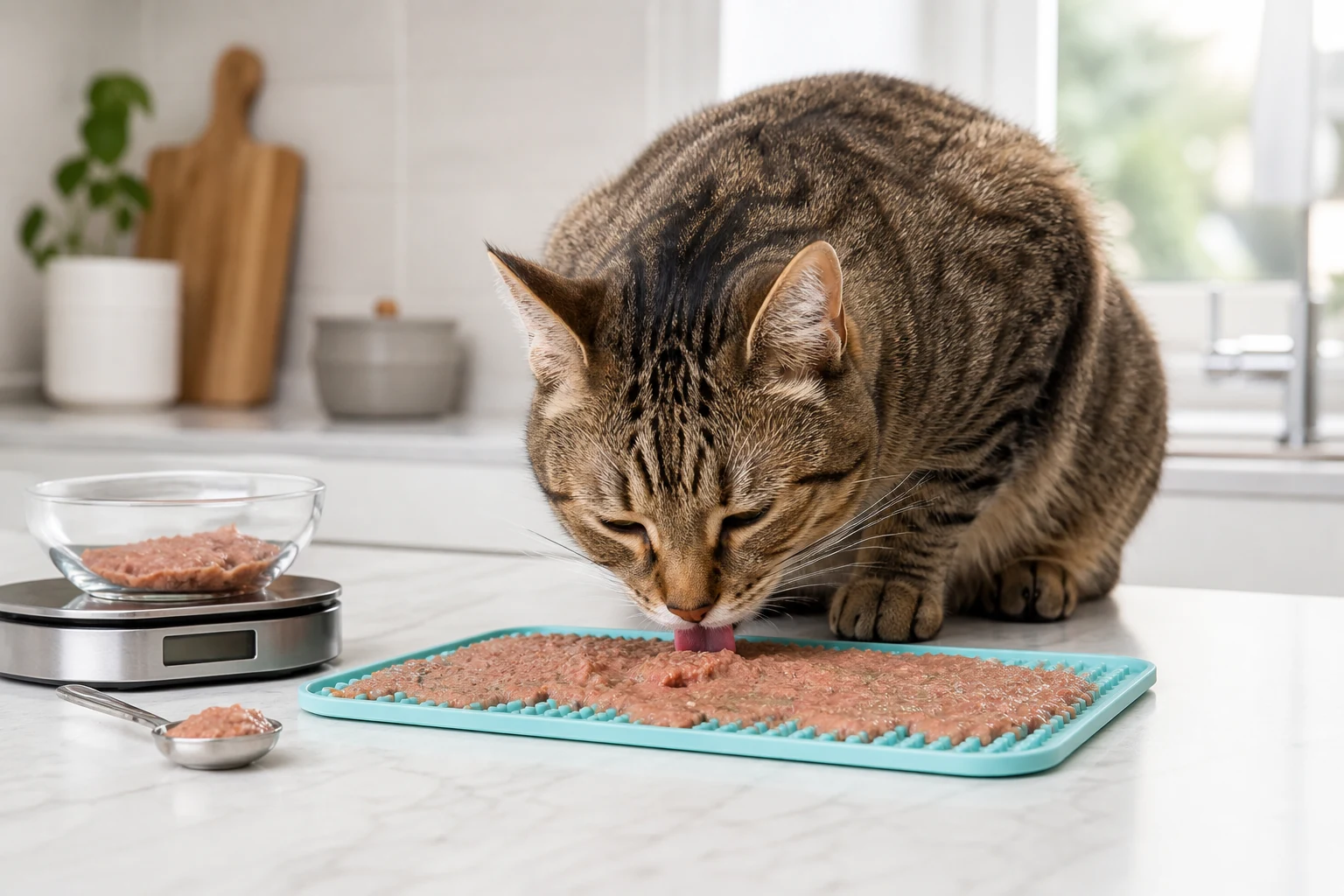
Lick mats for cats can be useful when you spread a measured portion of wet food thinly, supervise the meal, and wash the mat well afterward. They are not magic weight-loss tools, but they can turn a normal meal into slower licking, scent work, and a calmer feeding routine.
Cat parents usually search for lick mats because one of two things is happening: their cat gulps wet food too fast, or indoor mealtimes feel too short and boring. A lick mat can help with both, but only if the food still counts toward the day's calories and the mat is safe for the individual cat.
This guide explains when lick mats make sense, how much food to use, what to avoid spreading on them, and when a different feeder is a better fit.
Table of Contents
- Are lick mats good for cats?
- Are lick mats better than puzzle feeders or slow feeder bowls?
- How much wet food should you put on a cat lick mat?
- What foods can you spread on a lick mat?
- How do you introduce a lick mat without frustrating your cat?
- How do you clean a lick mat safely after wet food?
- What mistakes make lick mats stressful or unsafe?
- Conclusion: Should you try a lick mat for your cat?
- Frequently Asked Questions
- References
Are lick mats good for cats?
Lick mats can be good for cats who enjoy wet food, tolerate a new feeding surface, and need a simple form of meal enrichment. They give the cat a job: lick, search the grooves, pause, reposition, and keep working through a thin layer of food.
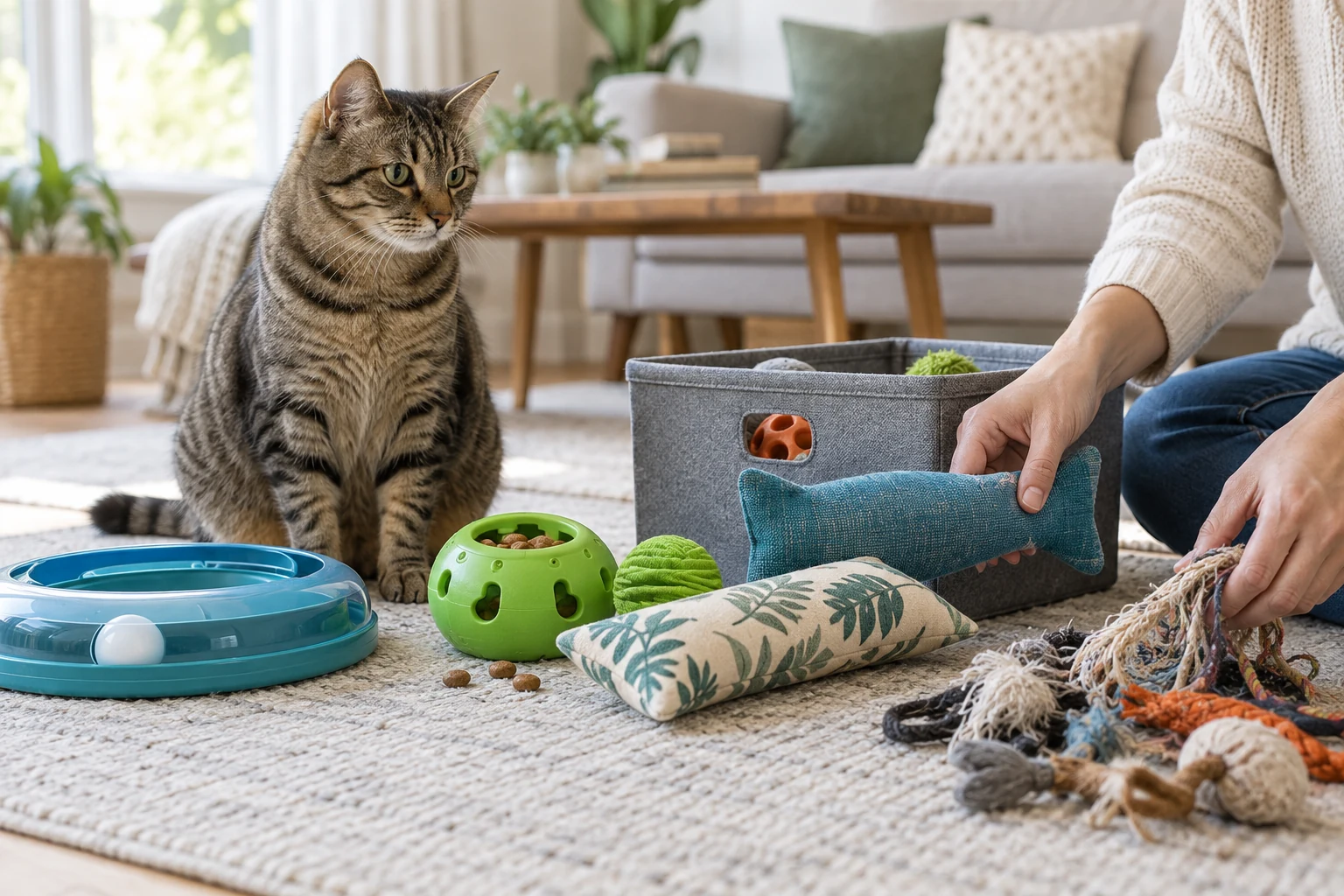
That matters because cats are built for small, repeated feeding events rather than one passive bowl. Feline feeding-enrichment literature describes food puzzles as a way to support physical and emotional wellbeing, especially for indoor cats with few chances to forage or work for food 1. The AAFP and ISFM environmental needs guidelines also encourage feeding activities that let cats express parts of the predatory sequence, including searching and manipulating food 2.
A lick mat is the easiest end of that enrichment spectrum. It does not require pawing, rolling, opening doors, or solving a hard puzzle. For a cat who gets discouraged by more complex puzzle feeders for cats, a soft start with a lick mat can be more realistic.
The benefit is mainly behavioral and practical:
| Goal | How a lick mat may help | What still matters |
|---|---|---|
| Slow a wet-food meal | Food is spread thinly across grooves instead of piled in a bowl | The meal must still be measured |
| Add indoor enrichment | The cat works longer for the same portion | Start easy and supervise |
| Support a calm routine | Licking can be a focused, repetitive activity | Stop if the cat guards, chews, or seems stressed |
| Use wet food neatly | A flat mat can hold pate, mousse, or softened food | Wash promptly after every use |
Lick mats are less useful for cats who chew silicone, eat so aggressively that they pull the mat around, or need a veterinarian-directed diet plan. In those cases, a regular dish, slow feeder bowls for cats, or a vet-approved feeding setup may be safer.
Are lick mats better than puzzle feeders or slow feeder bowls?
Lick mats are better for soft wet food and beginner enrichment, while puzzle feeders are usually better for active foraging and slow feeder bowls are better for simple speed control. The right choice depends on the food texture, the cat's confidence, and the problem you are trying to solve.
A lick mat is not really a puzzle feeder in the classic sense. It is a textured surface. The cat does not have to move pieces or hunt through compartments; the challenge comes from licking food out of shallow ridges. That makes it gentle, but also less physically active than many dry-food puzzles.
Use this quick comparison:
| Feeding tool | Best for | Less ideal for |
|---|---|---|
| Lick mat | Wet food, pate, mousse, soft toppers, nervous beginners | Silicone chewers, unsupervised meals, chunky food |
| Slow feeder bowl | Cats who gulp wet or dry meals from a bowl | Cats who need more mental work or have whisker sensitivity |
| Puzzle feeder | Indoor cats who enjoy pawing, searching, or moving food | Cats who are ill, under-eating, or easily frustrated |
| Microchip feeder | Multi-cat homes with food stealing or prescription diets | Enrichment by itself |
If your main issue is one cat stealing another cat's food, a lick mat will not solve the access problem. A controlled station such as microchip feeders for cats may be more appropriate. If your main issue is boredom, a lick mat can be one piece of a larger feeding-enrichment rotation.
How much wet food should you put on a cat lick mat?
Put only part of your cat's normal measured meal on the lick mat, not an extra scoop. A good starting amount is a thin layer that takes a few minutes to lick clean, then adjust based on appetite, body condition, and your veterinarian's guidance.
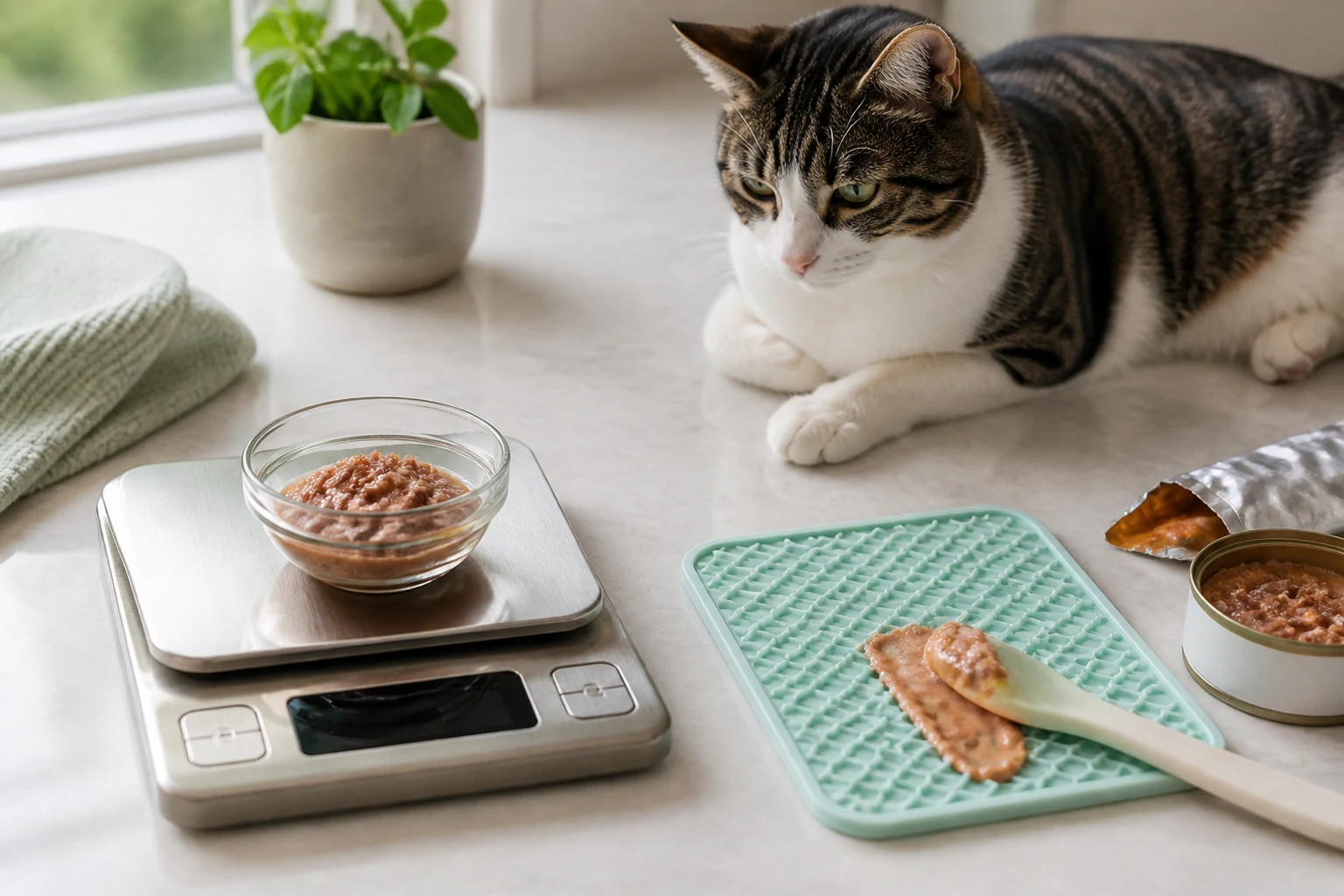
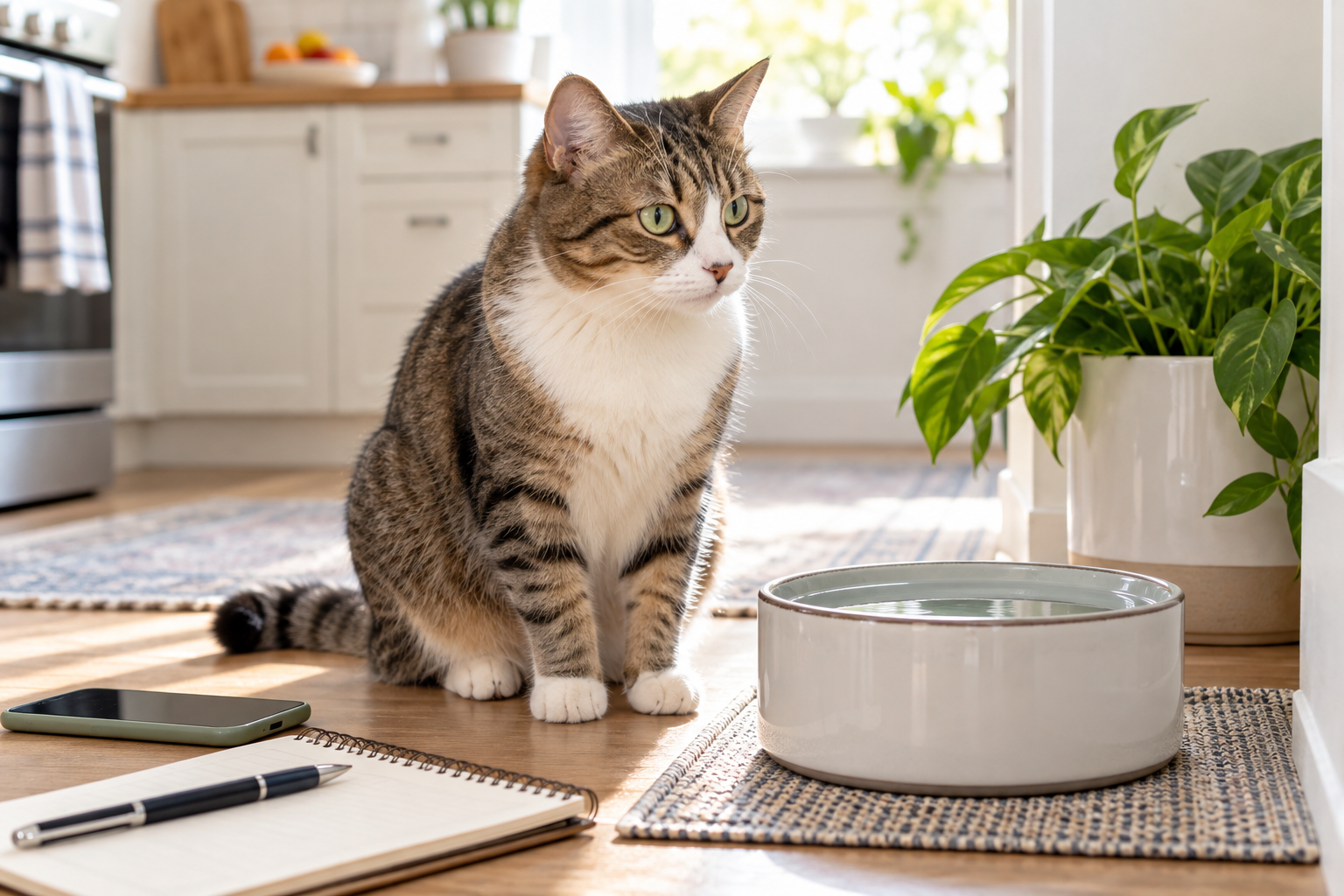
Measure the wet food before spreading it so enrichment does not accidentally become overfeeding.
Portion control is the most important lick-mat rule. Veterinary nutrition guidance emphasizes maintaining optimal body weight and adjusting feeding based on body condition, while treats and snacks should be counted within total daily calories 4. Cornell's feline obesity guidance also notes that excess body condition is common and clinically important in cats 5.
Use this simple process:
- Decide your cat's daily calorie target with your veterinarian or a trusted calculator.
- Check the wet-food label for calories per can, tray, pouch, or ounce.
- Divide the day's food into meals.
- Take a measured amount from one meal and spread it on the mat.
- Subtract any treats, toppers, or dry food from the same daily total.
If you are still calculating how much wet food to feed a cat, do that before turning the mat into a daily habit. The cat calorie calculator can give you a starting estimate, and a kitchen scale for cat food portions is usually more precise than guessing by spoonful.
For weight-conscious cats, keep the mat boringly honest: same food, same calories, just spread differently. If your cat is underweight, diabetic, on a prescription diet, recovering from illness, or eating inconsistently, ask your veterinarian before adding a feeding challenge.
What foods can you spread on a lick mat?
The safest everyday choice is your cat's normal complete-and-balanced wet food, mashed smooth enough to spread. That keeps the lick mat connected to nutrition rather than turning it into a treat dispenser.
Good options include:
- Pate-style wet food spread thinly.
- Mousse or puree diets made for cats.
- A spoonful of the cat's regular wet food mixed with a little warm water.
- A small amount of the wet portion from a planned mixed-feeding meal.
Be cautious with rich toppers. A lick mat covered with fish puree, high-calorie treats, or multiple extras can add up quickly. If you mix wet and dry cat food, the mat should hold part of the wet-food allowance, not an uncounted bonus.
Avoid unsafe or inappropriate spreads:
| Avoid | Why it is a problem |
|---|---|
| Onion, garlic, chive, or seasoned human foods | These can be unsafe for cats |
| Sweetened dairy, desserts, or peanut butter | Often too rich, sugary, or inappropriate |
| Raw meat diets | Higher food-safety risk for pets and people |
| Hard chunks wedged into grooves | Choking risk and harder cleaning |
| Medication hidden without vet approval | Can create dosing mistakes or food aversion |
If your cat has food allergies, kidney disease, urinary issues, diabetes, pancreatitis history, inflammatory bowel disease, or any prescription diet, keep the lick mat limited to food your veterinarian has already approved.
How do you introduce a lick mat without frustrating your cat?
Make the first session easy, short, and rewarding. A cat should not have to scrape every groove perfectly to get the meal.
Start with a smooth smear on the shallowest part of the mat. Place it on a stable floor or low feeding surface where the mat will not slide. Let your cat approach without pressure, and pick up the mat after a few minutes if interest fades.
A gentle introduction plan works well:
| Day | Setup | Goal |
|---|---|---|
| 1 | A teaspoon-sized smear near the edge | Curiosity and quick success |
| 2-3 | A thin layer over a small section | Longer licking without frustration |
| 4-7 | Part of one measured meal spread wider | Routine enrichment |
| Later | Rotate with bowls or feeders | Variety without dependence |
Do not use the mat only when you leave the house if your cat is new to it. Watch the first several sessions so you can see whether your cat licks calmly, paws at the mat, chews the edge, guards it from other pets, or walks away.
Multi-cat homes need extra care. Separate cats during lick-mat sessions if one cat hovers, steals, or blocks another cat's exit. Feeding enrichment should reduce stress, not create a new competition point.
How do you clean a lick mat safely after wet food?
Wash the lick mat after every wet-food use with hot water and dish soap, scrubbing into the grooves before food dries. Wet food residue can stick in textured surfaces, so a quick rinse is usually not enough.
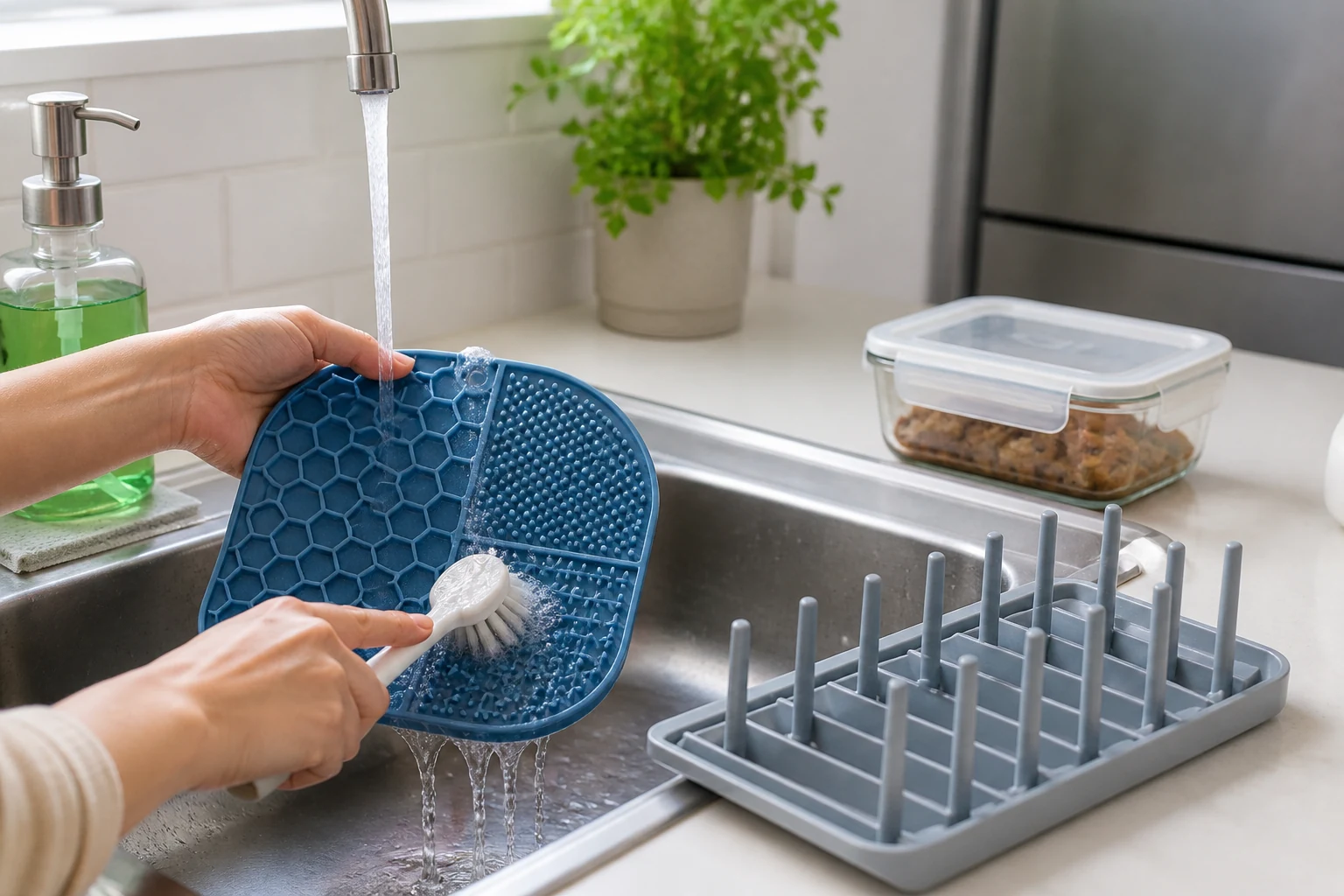
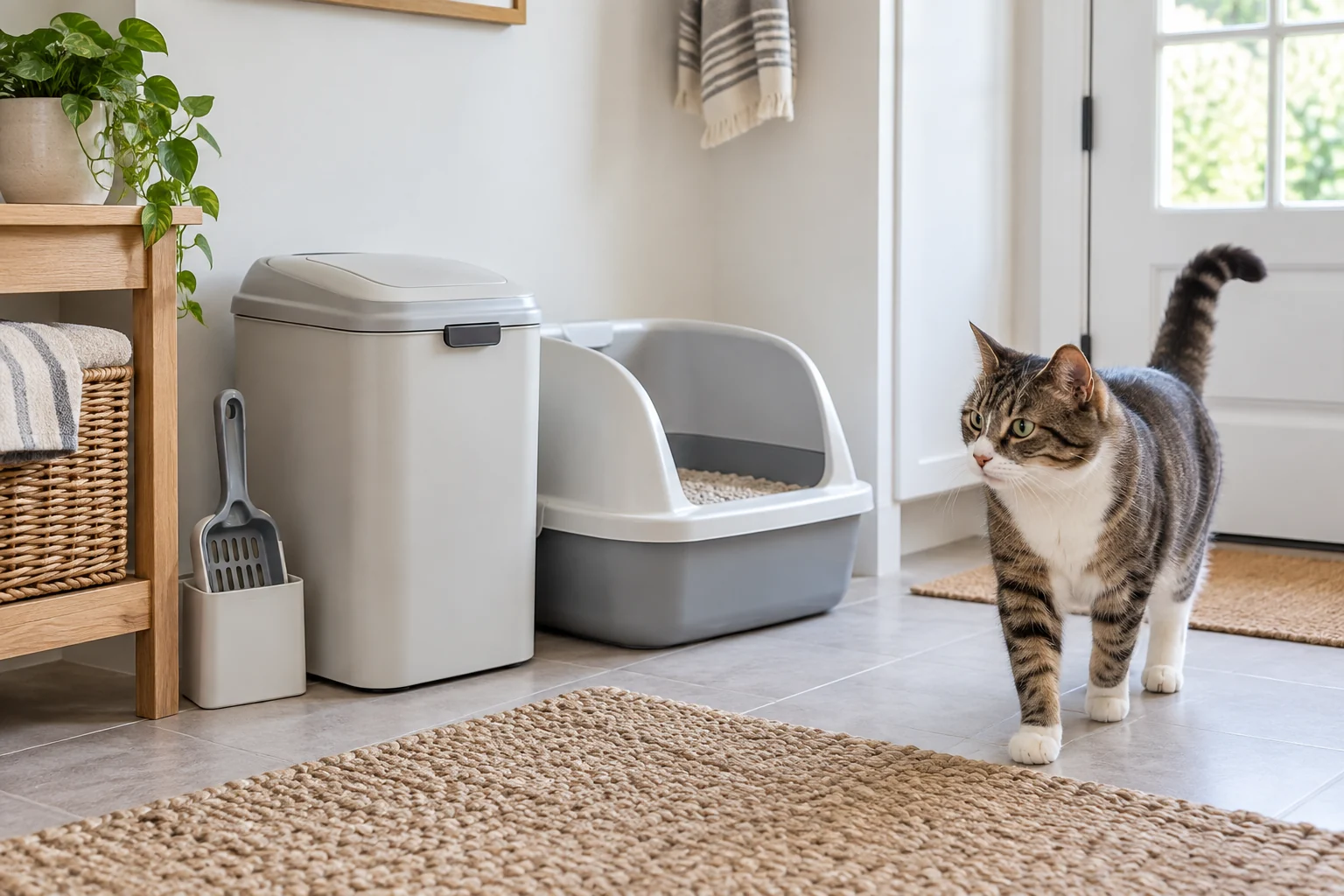
Wet food dries into grooves quickly, so cleaning the mat after each use is part of the feeding routine.
Food-safety agencies treat pet food as a potential source of contamination. The FDA advises washing pet food bowls and measuring utensils with soap and hot water after each use and promptly refrigerating or discarding leftover canned or pouched pet food 3. A lick mat should be handled at least as carefully as a bowl because it has more grooves.
Use this routine:
- Pick up the mat when the meal is finished.
- Discard any smeared food your cat did not eat.
- Rinse from both sides if the mat has suction cups or deep texture.
- Scrub grooves with hot water and dish soap.
- Let it dry fully before storing.
- Inspect for cracks, tears, loose pieces, or odor.
Check the manufacturer's care instructions before using a dishwasher. Some silicone mats tolerate the top rack, while cheaper or damaged mats may warp, hold odors, or break down faster.
For wet-food storage, follow the same rules you would for a bowl meal. Cover leftovers, refrigerate promptly, and avoid letting opened wet food sit around. The SnuggleSouls wet cat food storage guide can help you build a safer routine around partial cans and pouches.
What mistakes make lick mats stressful or unsafe?
The biggest mistakes are overfilling the mat, leaving it unsupervised with a chewer, using unsafe spreads, and letting hygiene slide. A lick mat should make feeding calmer, not riskier.
Watch for these problems:
| Mistake | Safer adjustment |
|---|---|
| Adding a lick mat after the full meal | Move part of the measured meal onto the mat |
| Using a deep, difficult mat on day one | Start with a shallow smear |
| Leaving a silicone chewer alone with the mat | Use only supervised sessions or stop using it |
| Letting multiple cats crowd one mat | Feed separately with distance and exit routes |
| Freezing hard food for a cat with dental pain | Use soft, room-temperature food and call the vet if eating hurts |
| Reusing a mat with dried residue | Wash after every wet-food session |
Stop using the mat and call your veterinarian if your cat suddenly refuses food, vomits repeatedly, paws at the mouth, drools, seems painful while eating, loses weight, or has a major appetite change. A feeding tool should never delay medical care.
Also avoid turning every meal into work. Some cats love enrichment feeders; others prefer a plain dish for most meals and a lick mat only a few times a week. That preference is valid. The goal is better welfare, not forcing a trend onto a cat who does not enjoy it.
Conclusion: Should you try a lick mat for your cat?
Try a lick mat if your cat enjoys wet food, eats too fast, needs easy enrichment, and can use silicone safely under supervision. Keep it simple: measure the food first, spread a thin layer, watch the session, wash the mat well, and count every calorie.
Skip or pause the mat if your cat chews it, guards it, loses interest in regular meals, has a medical diet concern, or seems stressed. A lick mat is just one feeding option; the best setup is the one that keeps your cat nourished, comfortable, and safe.
Frequently Asked Questions
Can cats use lick mats every day?
Yes, some cats can use a lick mat daily if the food is measured, the mat is cleaned after each use, and the cat does not chew or guard it. Daily use is not required, though. Many cats do well with lick mats a few times a week as part of a feeding rotation.
Do lick mats help cats eat slower?
They can slow wet-food eating because the cat has to lick food from grooves instead of taking large mouthfuls from a bowl. If your cat still gulps, vomits, or seems frantic around food, review meal size, feeding frequency, and medical possibilities with your veterinarian.
Can you freeze wet cat food on a lick mat?
You can freeze a thin layer for some healthy cats, but use caution. Frozen food may be too hard or frustrating for cats with dental pain, senior cats, kittens, or cats who need reliable intake. Start with soft, unfrozen food first.
Are silicone lick mats safe for cats?
Food-grade silicone mats can be safe when they are intact, washed well, and used under supervision. They are not safe for cats who bite off pieces, shred edges, or try to swallow the material.
What is the best lick mat texture for cats?
Start with shallow grooves or small bumps rather than a very deep pattern. Cats have small tongues and may quit if the food is too hard to reach. A mat that is easy to clean is usually better than one with dramatic texture.
References
[1] Journal of Feline Medicine and Surgery. (2016). Food Puzzles for Cats: Feeding for Physical and Emotional Wellbeing. Source URL
[2] AAFP and ISFM. (2013). Feline Environmental Needs Guidelines. Source URL
[3] FDA. (2024). Tips for Safe Handling of Pet Food and Treats. Source URL
[4] Merck Veterinary Manual. (2024). Feeding Practices in Small Animals. Source URL
[5] Cornell Feline Health Center. (2026). Obesity. Source URL
 EN
EN DE
DE ES
ES PT
PT