
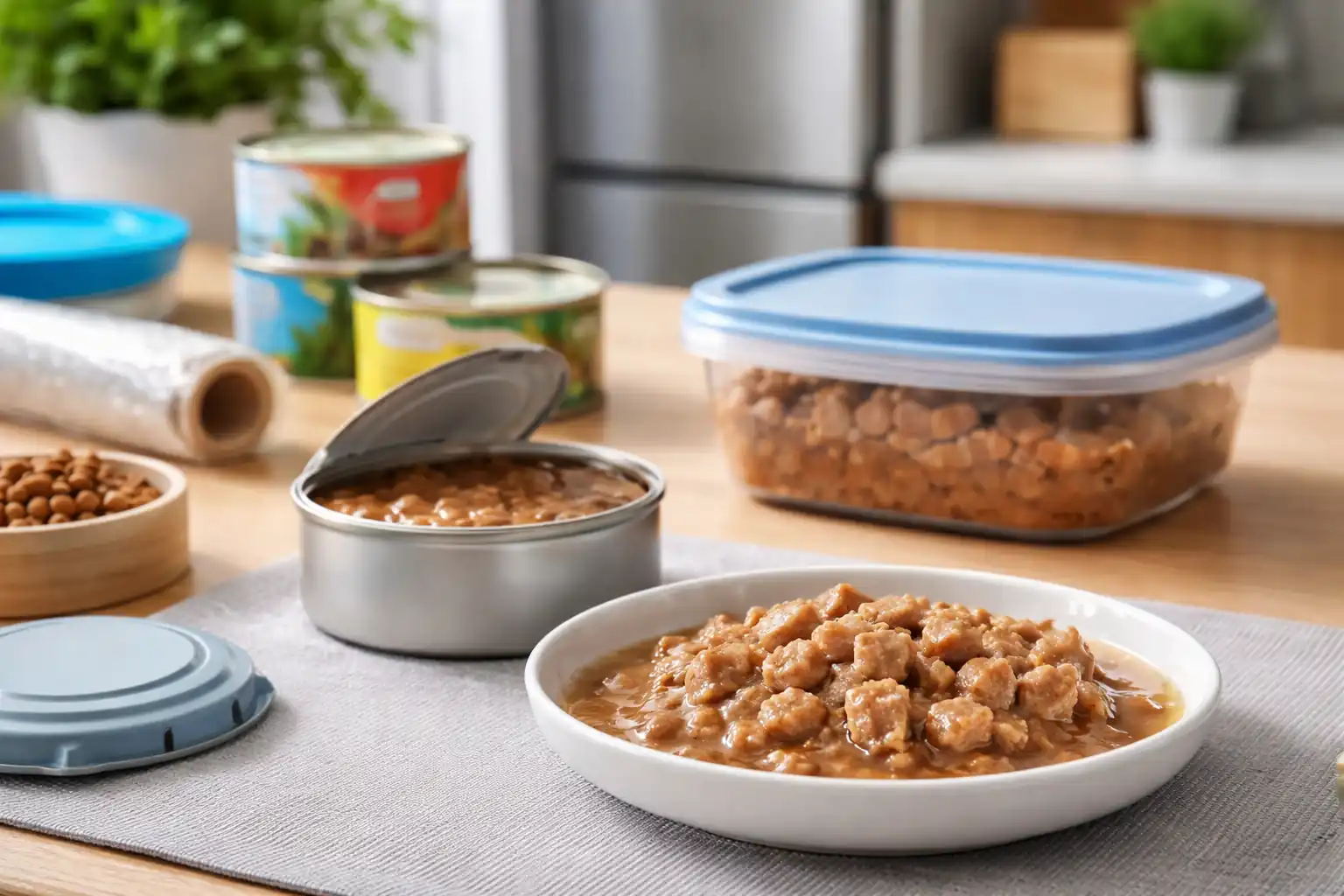
Opened wet cat food should be covered and refrigerated promptly. Keep the refrigerator at 40°F (4°C) or below, follow the package’s storage directions, and use opened food within the label’s time limit. Food served in a bowl should not sit out for long periods; if it smells off, looks changed, or you are unsure, throw it away.
This guide is educational and focuses on everyday canned, pouched, or tray wet cat food. Ask your veterinarian before changing feeding routines for kittens, pregnant or nursing cats, seniors, cats with appetite changes, vomiting, diarrhea, urinary signs, weight loss, medical conditions, or prescription diets.
Table of Contents
- What is the safest way to store wet cat food?
- How long can wet cat food sit out?
- How long does opened wet cat food last in the fridge?
- Should I cover wet cat food before refrigerating it?
- How can I tell if wet cat food has gone bad?
- Can I freeze leftover wet cat food?
- How do I serve refrigerated wet food safely?
- What storage mistakes should cat owners avoid?
- When should I call a veterinarian?
- Conclusion
- Frequently Asked Questions
- References
What is the safest way to store wet cat food?
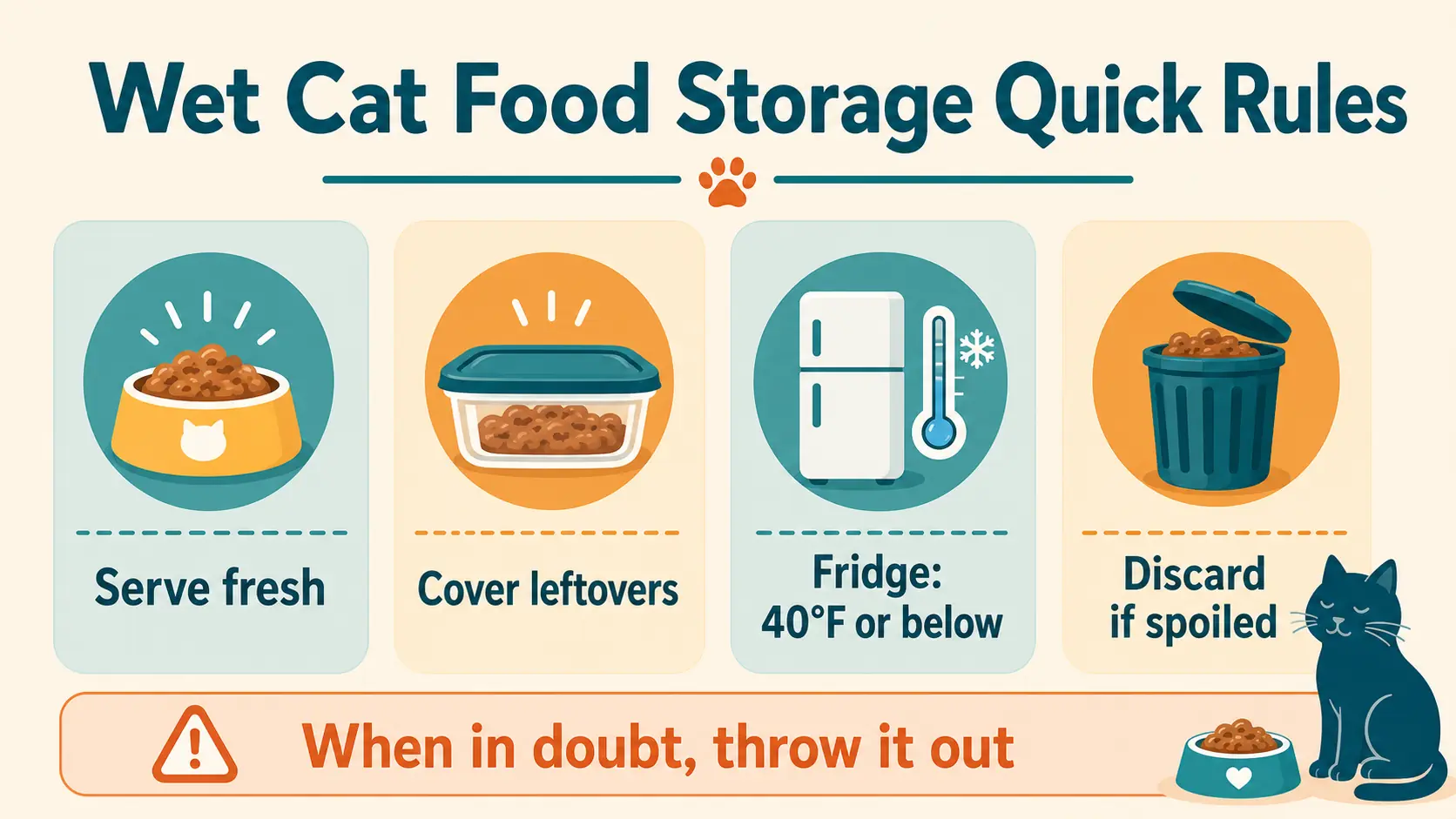
The safest routine is simple: serve a fresh measured portion, cover unused food, refrigerate leftovers promptly, and discard anything that looks or smells spoiled. FDA advises pet owners to promptly refrigerate or throw out unused or leftover canned and pouched pet food, tightly cover refrigerated pet food, and keep the refrigerator at 40°F or below.1
| Wet food situation | What to do | Why it matters |
|---|---|---|
| Unopened shelf-stable can, pouch, or tray | Store in a cool, dry place and check the best-by date | Heat, dents, tears, or swollen packaging can signal a problem |
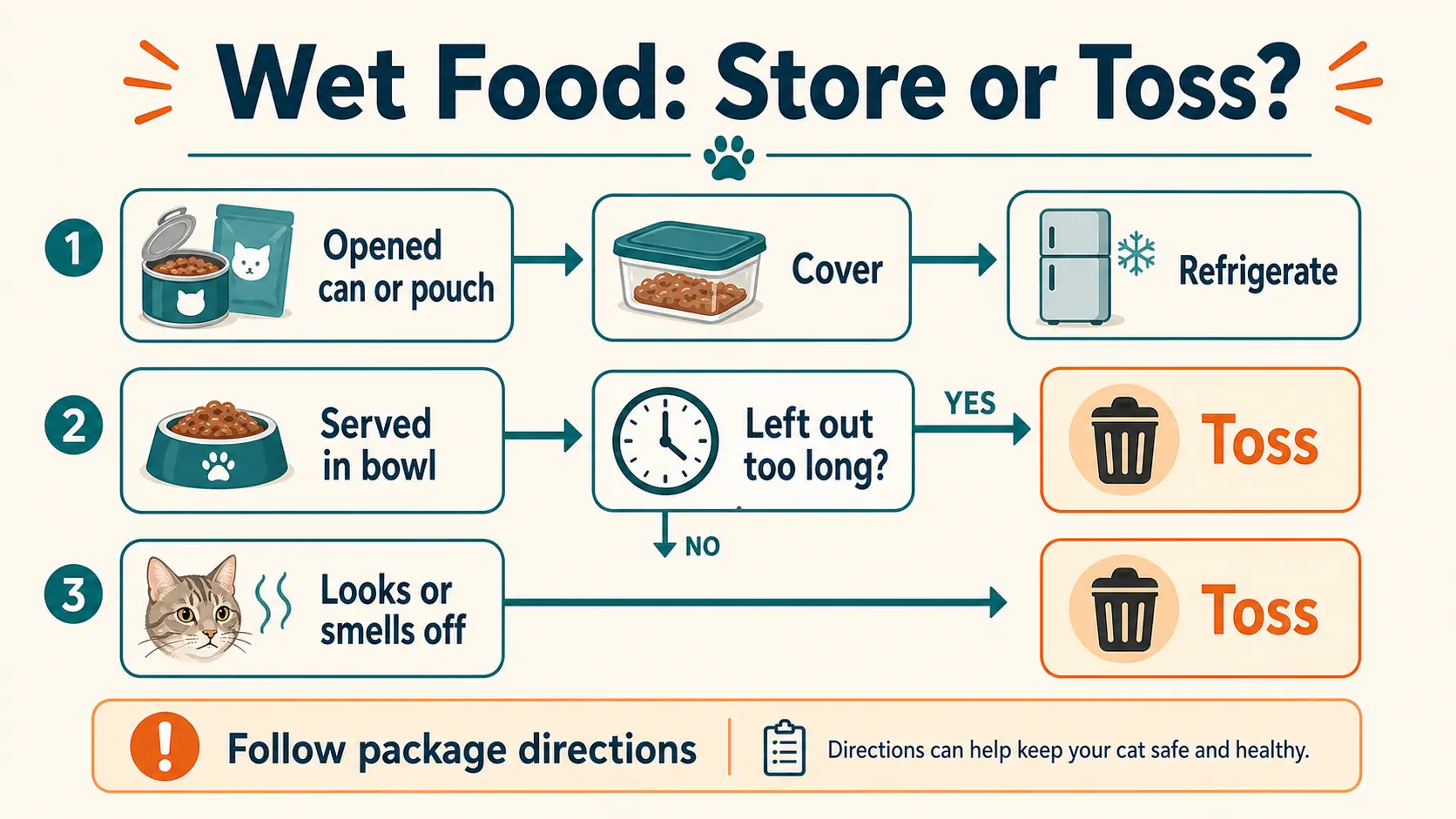
| Opened can or pouch | Cover tightly and refrigerate promptly | Reduces contamination and slows spoilage |
| Food served in the bowl | Pick up leftovers instead of letting them sit all day | Bowl food has been exposed to room temperature, air, saliva, and household surfaces |
| Refrigerated leftover | Use within the package’s time limit; a conservative home target is within 2-3 days | Label directions are more specific than a universal rule |
| Food that smells sour, looks changed, or has mold | Throw it away | Spoilage signs are not worth testing with a cat’s stomach |
How long can wet cat food sit out?
As a practical home rule, do not leave wet cat food sitting out for more than 2 hours, and shorten that window in hot rooms. FoodSafety.gov says perishable foods should be refrigerated within 2 hours, or within 1 hour when exposed to temperatures above 90°F.2
Wet cat food is not identical to every human food, so the package directions still matter. But the same food-safety logic applies: warm room temperature, time, dirty bowls, and repeated exposure increase risk.
| Situation | Safer action |
|---|---|
| Cat finishes the meal | Wash the bowl before the next meal |
| Cat leaves a small amount for a short time | Pick it up and discard it when the meal window ends |
| Food has been out near heat, sun, or a warm appliance | Discard sooner |
| Food was served to a sick cat or mixed with medication | Ask your veterinarian how to handle leftovers |
| You cannot remember when it was served | Throw it away |
For cats that nibble slowly, try smaller, more frequent meals instead of leaving a large wet-food portion out. The SnuggleSouls guide on how often to feed cat wet food can help you divide meals without increasing the daily calories.
How long does opened wet cat food last in the fridge?
Opened wet cat food should follow the package’s refrigerated storage time. If the label is unclear, a conservative household target is to use refrigerated opened wet food within 2-3 days, then discard the rest.
FoodSafety.gov lists 40°F (4°C) or below as the refrigerator temperature for cold storage and notes that short refrigerator time limits help keep foods from spoiling or becoming unsafe.3 FDA’s pet-food guidance gives the pet-specific rule: promptly refrigerate or throw out unused or leftover canned and pouched pet food, and tightly cover refrigerated food.1
Use this fridge checklist:
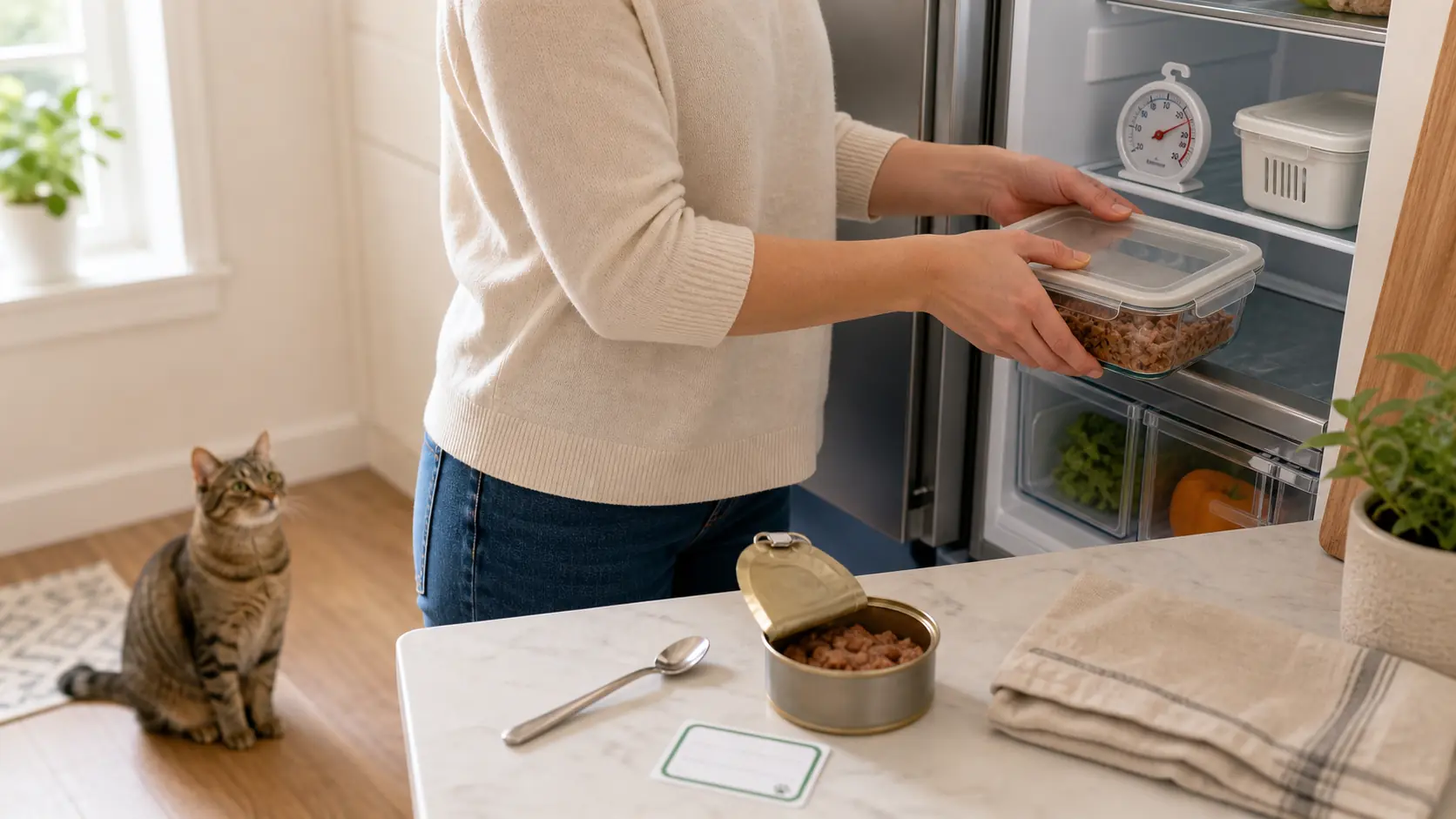
- Transfer food to a clean covered container or use a tight-fitting pet-food can lid.
- Add the opening date if several foods are in the fridge.
- Keep the container away from raw meat, strong-smelling foods, and spills.
- Use the food within the label’s time limit.
- Discard anything that smells off, dries out heavily, changes color, grows mold, or was left uncovered.
Should I cover wet cat food before refrigerating it?
Yes. Cover wet cat food before refrigerating it. A tight cover helps limit drying, odor transfer, spills, and contact with other foods in the refrigerator.
Good options include:
- a reusable lid designed for pet-food cans
- a clean airtight glass or plastic container
- the original tray or pouch if it can be sealed tightly
- a labeled container when multiple cats eat different foods
Do not leave an open can uncovered in the fridge. Also avoid using your cat’s food bowl as a storage container. FDA recommends washing pet food bowls and scooping or measuring utensils with soap and hot water after each use.1
How can I tell if wet cat food has gone bad?
Throw wet cat food away if the smell, texture, color, container, or timing makes you unsure. Spoiled food is not always obvious, so do not taste-test it or offer it to see whether your cat refuses.
| Warning sign | What it may look like | What to do |
|---|---|---|
| Sour, rancid, or unusual smell | Different from how the food smelled when opened | Discard |
| Mold or fuzzy growth | Green, white, black, or fuzzy patches | Discard and wash the container area |
| Swollen, leaking, rusty, torn, or badly dented packaging | Package looks damaged before opening | Do not feed |
| Dry crust, color change, or separated liquid after storage | Food looks very different from normal | Discard if unsure |
| Unknown fridge date | No one remembers when it was opened | Discard |
| Cat refuses a normally liked food | Could be food quality or a health issue | Offer fresh food; call a vet if appetite stays reduced |
If your cat eats questionable food and then develops vomiting, diarrhea, lethargy, poor appetite, or other illness signs, call your veterinarian.
Can I freeze leftover wet cat food?
Some wet foods may be frozen for short-term quality preservation, but freezing can change texture, smell, and palatability. Follow the package or manufacturer’s instructions before freezing a commercial wet food.
Freezing is not a way to rescue food that already sat out too long or smells wrong. FoodSafety.gov notes that freezing keeps food safe while frozen but does not destroy all harmful germs.2 If the food is questionable before freezing, discard it.
For cats with sensitive digestion, prescription diets, or medical conditions, ask your veterinarian or the manufacturer before freezing and thawing a therapeutic wet food.
How do I serve refrigerated wet food safely?
Serve refrigerated wet food in a clean bowl and offer only the amount your cat is likely to eat during the meal window. Many cats prefer food closer to room temperature, but do not leave it warming on the counter for a long time.
Safe serving steps:
- Wash your hands before and after handling pet food.
- Use a clean spoon, not the cat’s bowl, to scoop food.
- Serve a measured portion.
- If warming, use gentle warming and stir well so there are no hot spots.
- Put the covered container back in the refrigerator promptly.
- Wash the bowl after the meal.
For portion planning, use the SnuggleSouls cat calorie calculator and how much wet food to feed a cat. Smaller measured portions are easier to keep fresh and safer than one large bowl left out all day.
What storage mistakes should cat owners avoid?
Most wet-food storage problems come from leaving food out too long, forgetting when a can was opened, using dirty bowls, or assuming the fridge makes food safe forever.
Avoid these mistakes:
- leaving wet food out for grazing all day
- refrigerating an uncovered open can
- mixing old refrigerated food into a fresh serving to hide smell or dryness
- keeping opened food past the label’s limit
- buying dented, torn, swollen, leaking, or discolored packages
- using the food bowl as a measuring scoop
- letting one cat eat another cat’s prescription or special diet
- making sudden diet changes after vomiting, diarrhea, weight loss, or appetite changes
For broader feeding decisions, see benefits of wet food for cats, choosing the right wet food for your cat, and the general cat feeding guide.
When should I call a veterinarian?
Call a veterinarian if your cat becomes sick after eating questionable food or if a feeding problem is tied to appetite, weight, urinary, or digestive changes. Storage advice cannot replace medical care.
Ask for veterinary guidance if your cat:
- vomits repeatedly or develops persistent diarrhea
- refuses food, eats much less than usual, or has a sudden appetite change
- loses weight unexpectedly
- strains to urinate, cries in the litter box, has blood in urine, or produces little urine
- is a kitten, pregnant, nursing, senior with weight loss, or medically fragile
- eats a prescription or therapeutic diet
- may have eaten spoiled food, moldy food, or a damaged-package product
Cornell Feline Health Center emphasizes matching feeding to life stage, health, and body condition.4 When storage and appetite questions overlap with health changes, the safest move is a veterinary call.
Conclusion
Wet cat food is safest when it is treated like a perishable meal: serve a measured portion, cover what remains, refrigerate promptly, keep the fridge cold, and discard food when the time, smell, package, or appearance is questionable.
The best storage rule is not heroic thrift; it is consistency. Use the package directions, label leftovers, wash bowls, and keep portions small enough that your cat can finish them during a normal meal. If your cat’s appetite, digestion, weight, or urinary habits change, treat that as a health question, not just a storage problem.
Frequently Asked Questions
How long can wet cat food stay out?
A practical rule is no more than 2 hours at room temperature, and less in hot conditions. If you are unsure how long it has been out, throw it away.
How long does opened wet cat food last in the fridge?
Follow the package directions. If the label is unclear, use opened refrigerated wet food within 2-3 days as a conservative home limit, then discard leftovers.
Should wet cat food be refrigerated after opening?
Yes. Opened canned, pouched, or tray wet cat food should be covered tightly and refrigerated promptly unless the package gives different instructions.
Can cats eat cold wet food from the fridge?
Some cats will, but many prefer it slightly warmed. If warming, avoid hot spots, stir well, and do not leave it sitting out for a long time.
Is it safe to leave wet food out overnight?
No. Wet cat food left out overnight should be thrown away.
Can I save wet food my cat already licked?
It is safer to discard food left in the bowl after the meal window. Serve smaller portions if your cat rarely finishes a full serving.
What if the wet food smells strange when I open it?
Do not feed it. Throw it away, keep the package information if you need to contact the manufacturer, and offer fresh food from an undamaged container.
References
[1] U.S. Food and Drug Administration. Tips for Safe Handling of Pet Food and Treats.
[2] FoodSafety.gov. 4 Steps to Food Safety.
[3] FoodSafety.gov. Cold Food Storage Chart.
[4] Cornell Feline Health Center. Feeding Your Cat.
 EN
EN DE
DE ES
ES PT
PT