
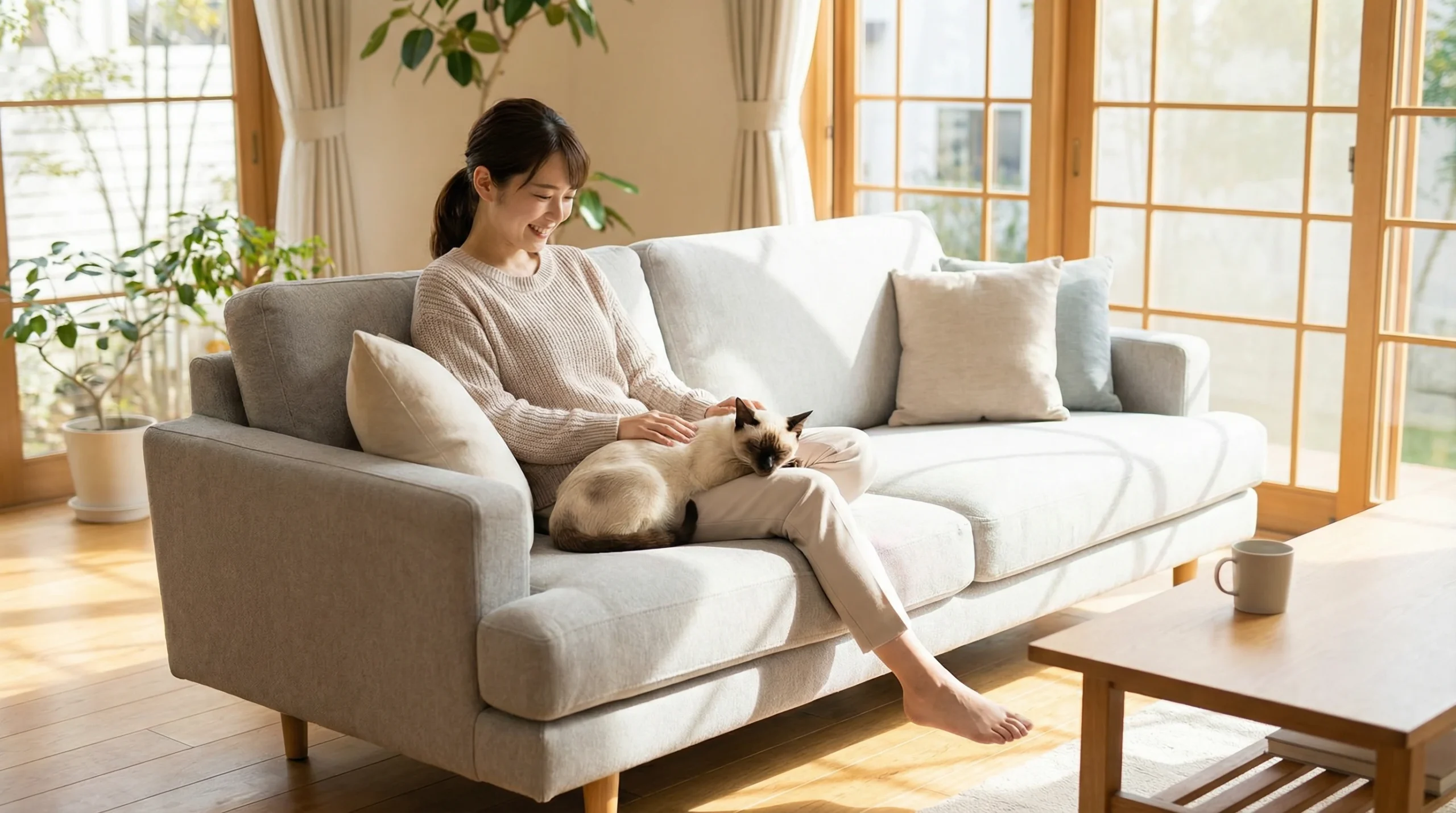
Have you ever wished for all the cuddles of a cat without turning your home into a fur factory? You are not alone. Many people love cats but dread the constant struggle of finding cat hair on every couch cushion, sweater, and coffee mug. Fortunately, while no cat is entirely shed-free, certain breeds naturally drop significantly less hair than others. This comprehensive guide breaks down the science of feline shedding, highlights the best low-shedding breeds for your lifestyle, and provides actionable tips to keep your home clean and your allergies at bay.
Quick Answer / Key Takeaways
- Top Low-Shedding Breeds: The Sphynx, Cornish Rex, Devon Rex, Siamese, and Oriental Shorthair are among the breeds that shed the least.
- Coat Science: Breeds with short, single-layer coats or curly hair shed far less than those with dense, fluffy double coats.
- Allergies vs. Shedding: Low-shedding does not automatically mean hypoallergenic. Allergies are triggered by the Fel d1 protein in saliva and skin, not just the fur itself.
- Management: Even low shedding cats benefit from regular brushing, a high-quality diet rich in Omega-3s, and a low-stress environment to minimize loose hair.
Table of Contents
The Science of Shedding: Why Some Cats Shed Less
To understand why some cats leave fur everywhere while others do not, you have to look at the biology of their coat. A cat’s hair grows in cycles: the active growth phase (anagen), the transitional phase (catagen), and the resting phase (telogen). Shedding occurs when old hair in the telogen phase falls out to make room for new growth.
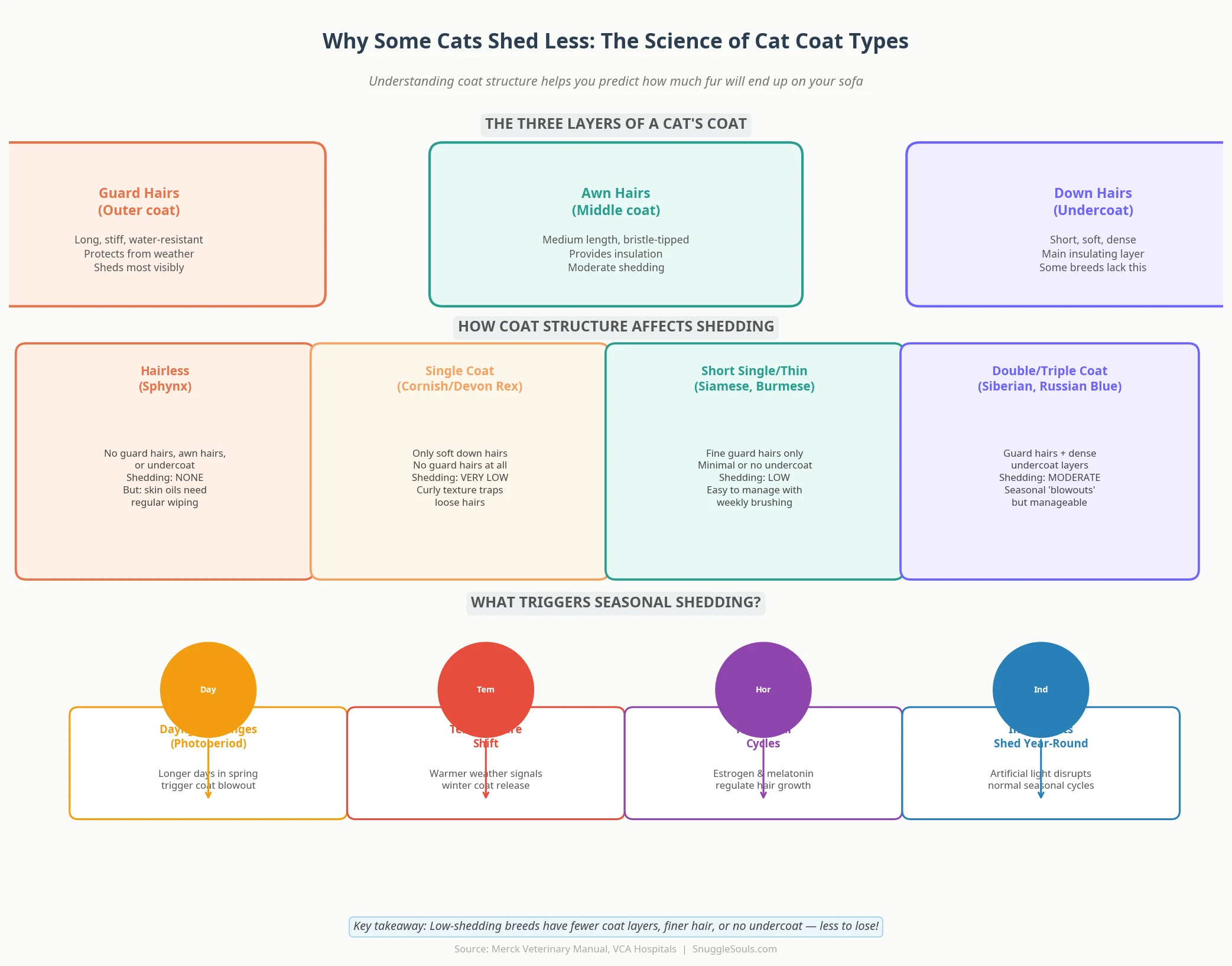
Most domestic cats have a complex coat consisting of three distinct layers:
- Guard Hairs: The longer, stiffer outer coat that protects against weather and moisture.
- Awn Hairs: The medium-length middle layer that provides insulation.
- Down Hairs (Undercoat): The short, dense, and incredibly soft layer closest to the skin, responsible for keeping the cat warm.
The amount a cat sheds is directly related to which of these layers they possess. Breeds with a dense undercoat (like the Maine Coon or Persian) will shed significantly more, especially during seasonal temperature changes. In contrast, low-shedding breeds typically lack an undercoat entirely, or their hair structure traps the loose fur before it can fall onto your furniture.
Seasonal shedding is primarily triggered by photoperiod (the length of daylight) and temperature changes. As days get longer and warmer in the spring, cats naturally “blow” their winter undercoat. However, indoor cats exposed to artificial lighting and climate control often shed a smaller, more consistent amount year-round rather than having distinct seasonal blowouts.
Shedding Level Comparison: Top 10 Breeds
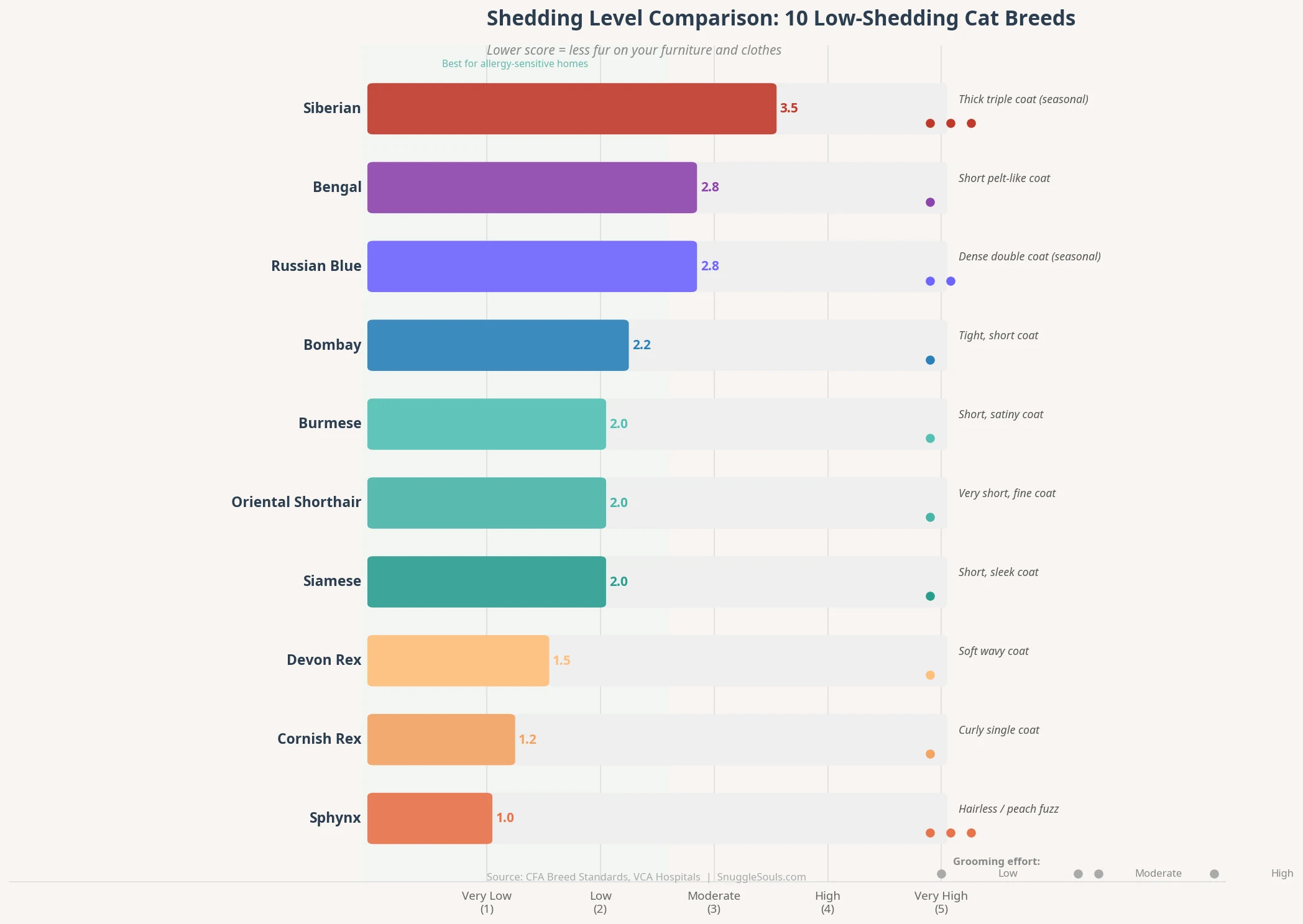
If you are looking for a cat that won’t require you to buy lint rollers in bulk, these ten breeds are excellent choices. They range from completely hairless to having short, manageable coats.
1. Sphynx
The Sphynx is the most famous of the hairless cats. Due to a natural genetic mutation, they lack a traditional coat, though many have a fine, suede-like “peach fuzz” covering their bodies. Because they have almost no hair to lose, shedding is virtually non-existent. However, they are not maintenance-free; without fur to absorb natural skin oils, Sphynx cats require regular sponge baths or wipe-downs to prevent greasy residue from building up on their skin and your furniture.
2. Cornish Rex
The Cornish Rex looks like a tiny athlete from outer space, sporting oversized ears and a unique, curly coat. They possess only the soft down layer of hair (no guard or awn hairs), which grows in tight, velvety waves. This single-layer coat sheds very little, and the curly texture helps trap any loose hairs before they fall. They are incredibly playful, high-energy cats that love to be the center of attention.
3. Devon Rex
Often described as the mischievous “pixie” of the cat world, the Devon Rex shares the curly-haired trait with its Cornish cousin, though its coat is slightly looser and more wavy. They also lack a heavy undercoat, making them an excellent low-shedding option. Devon Rex cats are famously known as “velcro cats” because they form intense bonds with their owners and prefer to spend their days perched on a shoulder or snuggled under a chin.
4. Siamese
Siamese cats are the chatty extroverts of the feline world. They have a very short, sleek, and fine coat that lies flat against their body. Because their hair is so short and lacks a dense undercoat, their shedding is minimal and easy to manage with a quick weekly brushing. Siamese cats are highly intelligent, deeply affectionate, and will happily hold long, vocal conversations with you throughout the day.
5. Oriental Shorthair
A close relative of the Siamese, the Oriental Shorthair shares the same elegant, angular body type and very short, fine coat. They come in over 300 color and pattern combinations, but all share the low-shedding trait. Like the Siamese, they are talkative, dramatic, and thrive in households where they receive plenty of interaction and playtime.
6. Burmese
The Burmese cat boasts a short, satiny coat that feels like pure silk. They naturally have less hair per square inch than many other breeds, translating to very light shedding. Burmese are incredibly sweet, devoted lap cats that want nothing more than to be close to their humans. They are perfect for people seeking a deeply affectionate companion with minimal fur cleanup.
7. Bombay
Bred to look like a miniature black panther, the Bombay has a tight, short, and glossy black coat. Their shedding is very low, and their grooming needs are minimal—often, just petting them or giving them a quick wipe with a chamois cloth is enough to keep their coat gleaming. Bombays are outgoing, adaptable, and make fantastic all-around family pets.
8. Russian Blue
Dressed in a dapper blue-gray coat, the Russian Blue looks like they might shed heavily, but they are surprisingly clean. They do possess a dense double coat, which means they experience a short, seasonal shedding period (usually in spring). However, for the rest of the year, their shedding is minimal. Russian Blues are calm, polite, and fiercely loyal to their chosen humans, making them ideal for quieter households.
9. Bengal
If you want a miniature leopard in your living room, the Bengal is the breed for you. They have a unique, pelt-like coat that is incredibly soft and sheds less than a typical domestic shorthair. Bengals are brilliant, highly active, and require a lot of mental and physical stimulation. They are best suited for active owners who want an engaging, adventurous feline companion.
10. Siberian
The Siberian is a large, fluffy cat that seems out of place on a low-shedding list. Originating from Russia’s harsh climate, they have a thick, water-resistant triple coat. While they do experience significant seasonal shedding, many owners find that they drop less fur year-round compared to other long-haired breeds like Persians or Maine Coons. More importantly, Siberians are often sought after by allergy sufferers due to their unique saliva composition.
Breed Selector: Finding Your Perfect Match
Choosing a low-shedding cat is not just about avoiding hair on your clothes; it is about finding a personality and energy level that fits your lifestyle.
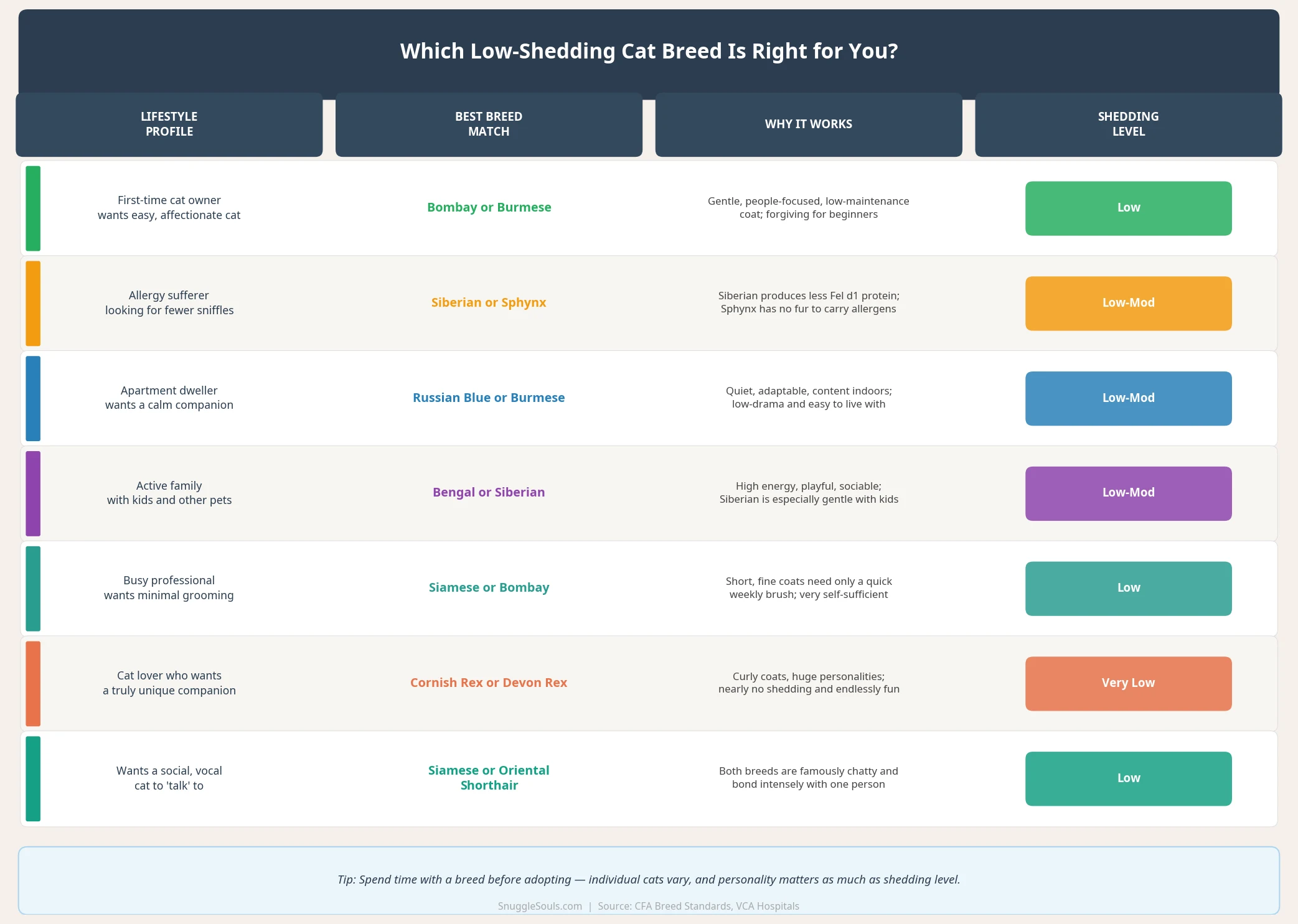
If you are a first-time cat owner seeking an easy, affectionate companion, the Bombay or Burmese are excellent choices. For allergy sufferers looking to minimize sniffles, the Siberian or Sphynx are often recommended. Apartment dwellers wanting a calm, low-drama roommate might prefer the Russian Blue (see our full guide on adopting a cat in an apartment). Active families with kids and other pets will enjoy the playful energy of the Bengal. Busy professionals who want minimal grooming can opt for the self-sufficient Siamese. Finally, cat lovers desiring a truly unique, entertaining companion will fall in love with the Cornish Rex or Devon Rex.
Low-Shedding vs. Hypoallergenic Cats

It is a common misconception that “low-shedding” means “hypoallergenic.” While related, they describe two different aspects of living with cats.
Low shedding cats simply drop less hair around your home, resulting in fewer fur tumbleweeds in corners and less hair stuck to your furniture. Hypoallergenic cats, however, are breeds that may produce lower levels of the proteins (primarily Fel d1) that trigger allergic reactions in sensitive individuals.
The Fel d1 protein (which you can learn more about in our guide to hypoallergenic cats) is found in a cat’s saliva, skin flakes (dander), and sebum (skin oils). When a cat grooms itself, it spreads this protein across its fur. As the fur sheds or dander flakes off, the allergen becomes airborne and settles throughout your home.
A cat can be low-shedding but not truly hypoallergenic. For example, a Sphynx has no fur to spread the allergen, but their skin still produces Fel d1 and requires regular bathing to manage. Conversely, a fluffy Siberian might shed moderately but is considered hypoallergenic because they often produce significantly less of the Fel d1 protein.
If you mainly hate cleaning fur, focus on low-shedding breeds like the Sphynx, Cornish Rex, Devon Rex, Siamese, or Oriental Shorthair. If you have mild allergies, look at both low-shedding and hypoallergenic breeds, and read our tips on adopting a cat with allergies, and always spend time around the specific breed before adopting, as everyone’s immune system reacts differently.
Grooming Guide: How to Reduce Shedding in Any Cat
Even if you choose a low-shedding breed, some hair is a normal part of life with cats. Fortunately, a few simple habits can dramatically cut down on fur and dander in your home.
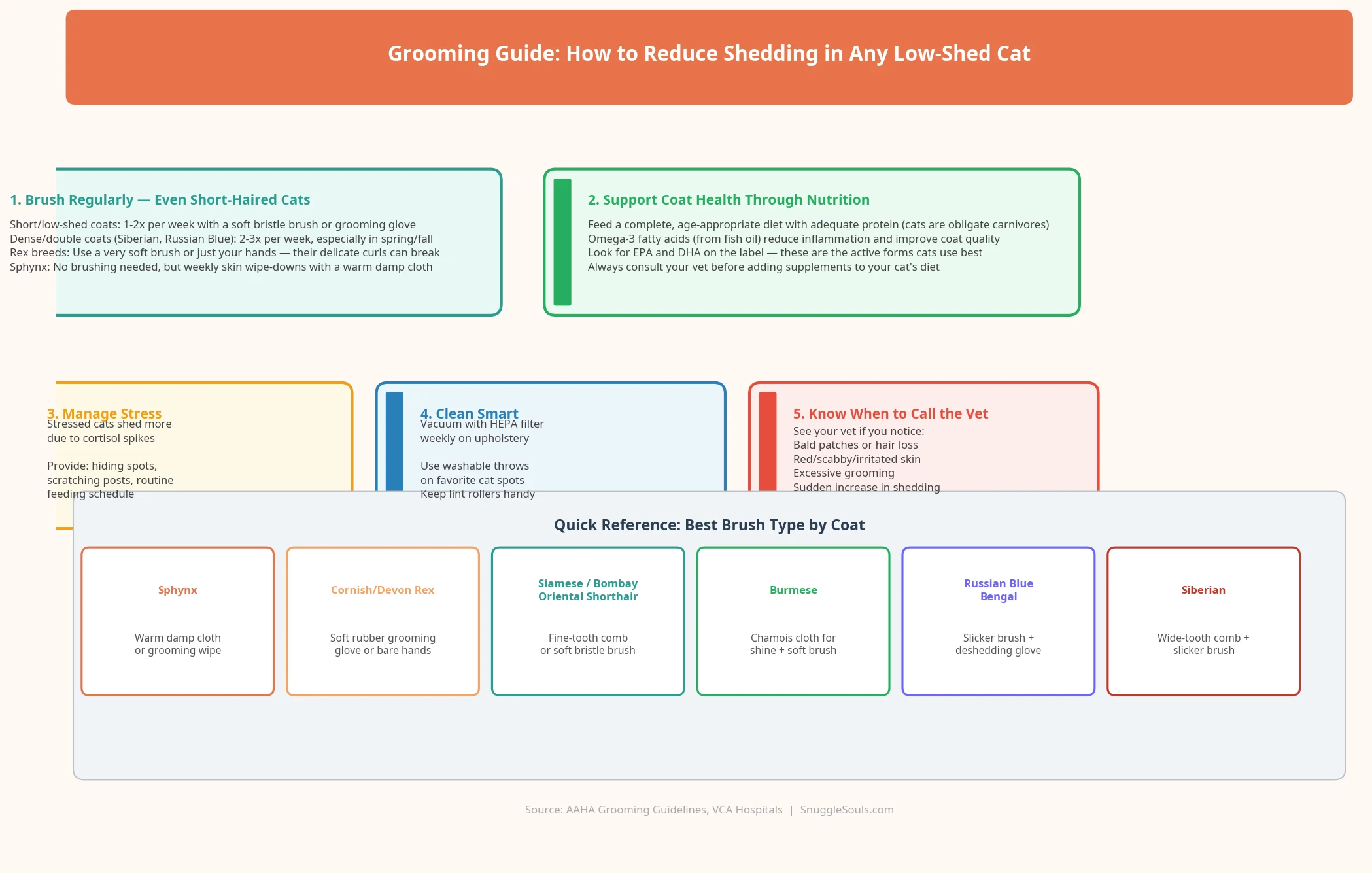
1. Brush Regularly
Regular brushing removes loose hair before it lands on your couch and helps distribute natural oils for a healthy, shiny coat. For short-haired or low shedding cats, a gentle brush one to two times per week is sufficient. Long-haired or fluffier coats require brushing two to three times per week, especially during seasonal shedding periods. Choose a brush that suits your cat’s coat type, such as a soft bristle brush for single coats or a slicker brush for double coats.
2. Support Coat Health with Nutrition
A healthy coat starts on the inside. Feed a high-quality, complete diet appropriate for your cat’s age and health needs. Balanced nutrition, particularly diets rich in Omega-3 fatty acids, can help reduce excessive shedding, keep skin and fur in better condition, and minimize dryness and flakiness. Always consult your veterinarian before adding supplements to your cat’s diet.
3. Keep Stress Levels Low
Stressed cats often shed more due to cortisol spikes. Common stressors include big changes at home, loud noises, and a lack of hiding spots or vertical space. You can help by providing safe, cozy hideaways, offering scratching posts, and sticking to a predictable routine for feeding and playtime. A relaxed cat is often a healthier, better-groomed cat.
4. Clean Smart, Not Harder
You do not have to clean non-stop to manage cat hair. Focus your efforts where fur tends to collect: use a vacuum with a good HEPA filter on carpets and upholstery, keep washable throws on favorite cat spots, and keep lint rollers handy for clothing.
5. Know When to Call the Vet
While some shedding is normal, sudden changes can be a red flag. Contact your veterinarian if you notice bald spots, patchy hair loss, red or irritated skin, excessive grooming, or a significant increase in shedding for no clear reason. Your vet can rule out allergies, parasites, infections, or other health issues and recommend the appropriate treatment.
Conclusion
Living with a cat does not have to mean living in a sea of fur. By choosing a low-shedding breed that matches your lifestyle and implementing a consistent grooming and home care routine, you can enjoy all the love and companionship a feline friend offers with a fraction of the cleanup. Whether you prefer the elegant Siamese, the playful Devon Rex, or the affectionate Burmese, there is a perfect, low-shedding SnuggleSoul waiting for you.
FAQ
Which cat breeds shed the least?
Some of the lowest-shedding cats include the Sphynx, Cornish Rex, Devon Rex, Siamese, Oriental Shorthair, Russian Blue, Burmese, and Bombay. Their short, fine, or curly coats (or lack of fur) mean they typically leave less hair around your home than many other breeds.
Are low shedding cats better for allergies?
They can be more comfortable for some people, but they are not automatically hypoallergenic. Cat allergies are usually triggered by proteins (like Fel d1) found in saliva, skin flakes (dander), and oils—not just fur. A low-shedding cat may spread fewer allergens on loose hair, but sensitive people can still react.
What type of cat hair sheds the least?
Hairless or nearly hairless coats (Sphynx) leave very little hair but need more skin care. Curly, single-layer coats (Cornish Rex, Devon Rex) tend to shed less because there is no thick undercoat. Short, sleek coats (Siamese, Oriental Shorthair, Bombay) usually shed less than long, fluffy double coats.
Do low shedding cats require less grooming?
Sometimes, but not always. A low-shedding coat can still be high-maintenance. Sphynx cats need regular baths and skin care because oils build up on bare skin. Curly-coated breeds like the Cornish Rex usually need only gentle, occasional grooming. Short-haired cats like Siamese often do well with a quick weekly brush.
Can I stop shedding entirely by choosing one of these breeds?
No cat is 100% non-shedding. Even “hairless” cats shed skin cells (dander), and most breeds will lose at least some hair over time. What low-shedding breeds offer is a significant reduction in visible fur on your furniture, clothes, and floors—not a completely shed-free life.
References
[1] Merck Veterinary Manual. “Structure and Function of the Skin in Cats.”
[2] VCA Animal Hospitals. “Cat Hair and Coat Types.”
[3] American Animal Hospital Association (AAHA). “Shedding.”
[4] PetMD. “Hypoallergenic Cat Breeds.”
[5] Kelly, S. M., Karsh, J., Marcelo, J., et al. (2018). “Fel d 1 and Fel d 4 levels in cat fur, saliva, and urine.” Journal of Allergy and Clinical Immunology.
[6] VCA Animal Hospitals. “Grooming and Coat Care for Your Cat.”
[7] Cornell Feline Health Center. “Feeding Your Cat.”
 EN
EN DE
DE ES
ES PT
PT