
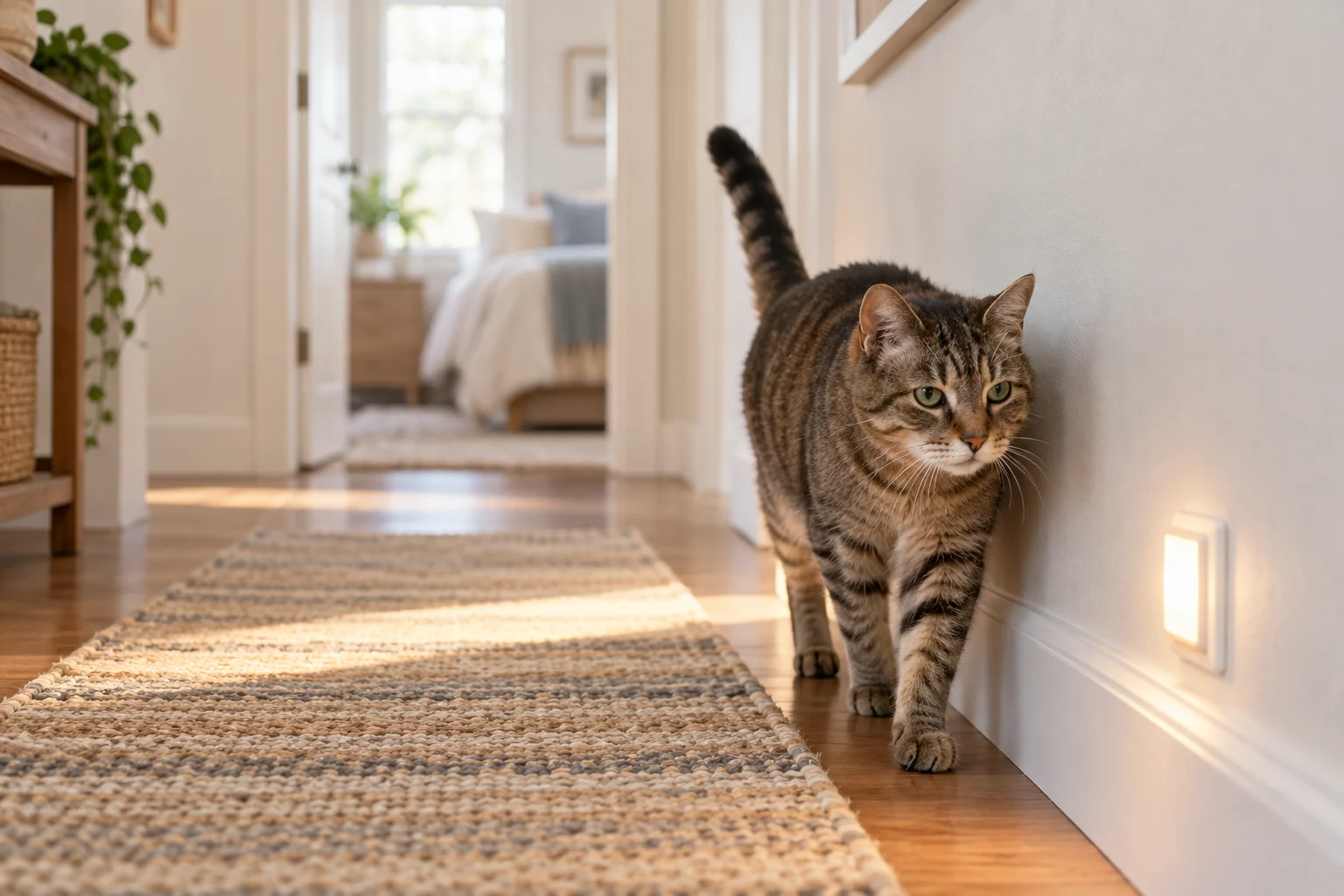
A senior cat walking along walls is often using the wall as a predictable guide, but a new or worsening habit can also point to vision changes, pain, anxiety, high blood pressure, or cognitive decline.
Some older cats simply prefer edges and familiar routes. The wall gives them a tactile boundary, a scent-marked path, and a safer feeling than crossing an open room. But because senior cats are very good at hiding illness, a change in how your cat moves through the home deserves calm attention instead of a quick "just old age" label.
This guide explains what wall-walking can mean, which signs are more urgent, how to make your home safer tonight, and what details to track before a veterinary visit.
Table of Contents
- Why does my senior cat walk along walls?
- Is wall-walking a vision clue?
- Could pain, arthritis, or confidence make wall routes easier?
- What red flags mean the behavior needs a vet call?
- How can you make your senior cat's wall routes safer?
- What should you track before the vet visit?
- How is this different from getting stuck in corners or staring at walls?
- Conclusion: Help your senior cat move with confidence
- Frequently Asked Questions
- References
Why does my senior cat walk along walls?
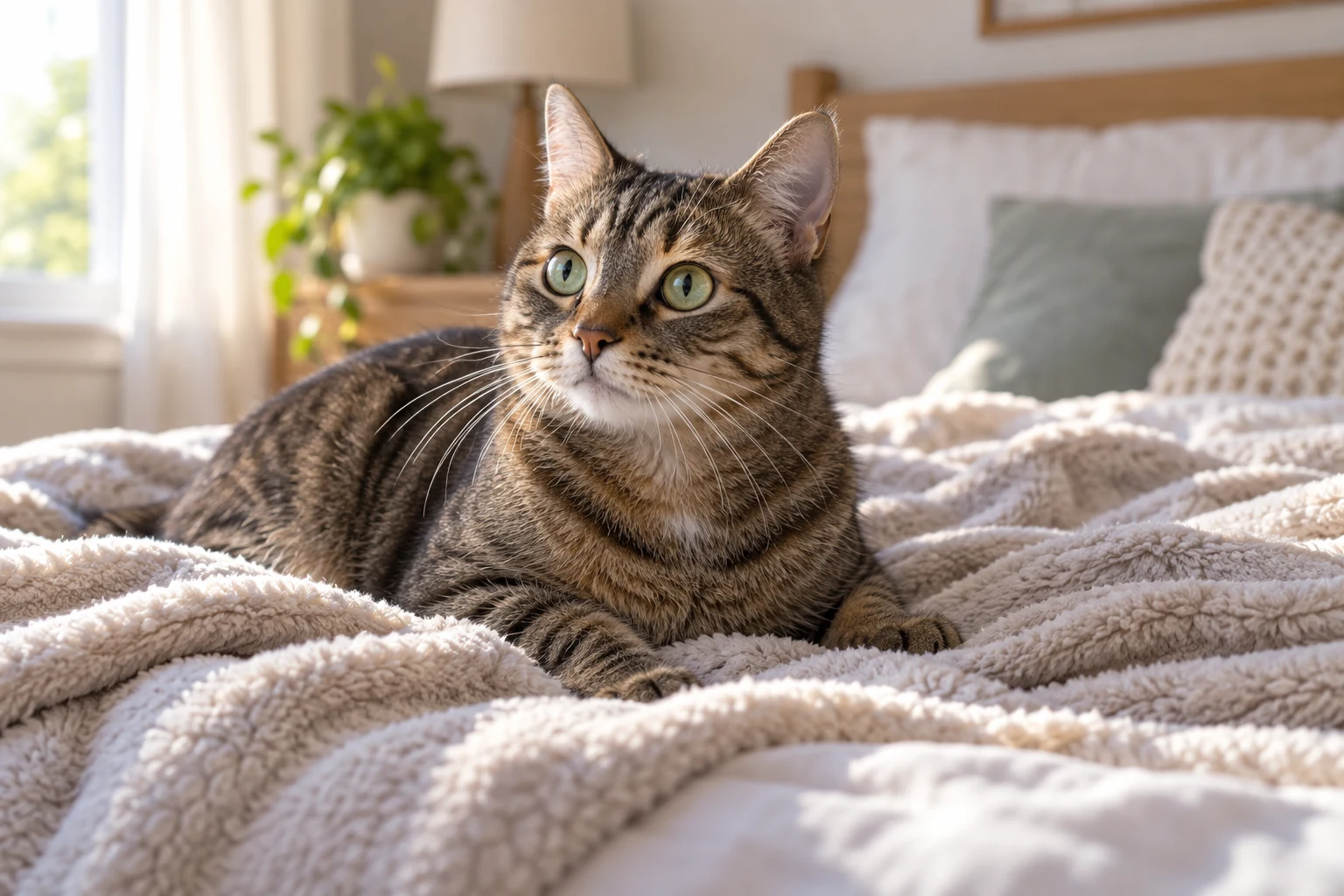
A senior cat may walk along walls because the edge of the room feels safer, easier to navigate, and more predictable than the open center of the floor. If the route is familiar and your cat otherwise acts normal, it may be a comfort habit. If it is new, sudden, or paired with other changes, it is a clue worth investigating.
Wall routes give cats several kinds of information at once. The baseboard, doorway, furniture edge, and scent marks help define where the cat is. For a cat whose vision, hearing, joints, balance, or confidence has changed, that boundary can reduce uncertainty.
Age itself is not a diagnosis. Cornell notes that older cats can show physical and behavioral changes, including disorientation, hearing changes, eye-related disease, arthritis, and reduced ability to adapt to unfamiliar situations 2. If you are unsure whether your cat is entering a senior life stage, the SnuggleSouls cat age calculator can help you put age into context, but behavior changes still need individual attention.
Common non-emergency explanations include:
- Your cat has learned a reliable path to food, water, litter, or a favorite bed.
- The wall helps your cat avoid slipping on a shiny floor.
- The room feels too open, busy, or noisy.
- Your cat prefers scent-marked edges after household changes.
- A new rug, furniture layout, pet, or person has changed your cat's confidence.
- Your cat feels more secure moving close to a boundary at night.
The most useful question is not only "Why walls?" but "What changed?" A senior cat who has always hugged the hallway wall after waking may simply be choosing a comfortable route. A cat who suddenly clings to walls, misses doorways, hesitates at thresholds, yowls, stumbles, or avoids normal destinations needs a veterinary check.
Is wall-walking a vision clue?
Wall-walking can be a vision clue, especially if your cat also bumps into objects, hesitates on stairs, misjudges jumps, has cloudy eyes, or seems worse in dim light. Cats can compensate for gradual vision loss at home, so subtle route changes may appear before obvious blindness.
Cornell's feline vision guidance lists behavioral signs such as bumping into furniture, tripping on stairs, or trouble finding a litter box or food bowl, and it emphasizes prompt veterinary examination for unusual eye changes 1. A cat does not have to crash into everything to have a vision problem. A cautious route along the wall may be the cat's way of avoiding open-space uncertainty.
Look for patterns:
| What you notice | What it may suggest | What to do next |
|---|---|---|
| Worse at night or in dim hallways | Low-light vision or confidence issue | Add nightlights and book a checkup |
| Bumping into moved furniture | Vision loss or disorientation | Keep furniture stable and call your vet |
| Hesitating at stairs or thresholds | Vision, pain, or balance change | Block unsafe access until assessed |
| One pupil looks different, cloudy, red, or painful | Eye disease or injury | Seek veterinary care promptly |
| Sudden blindness, stumbling, or confusion | Possible urgent illness | Contact a vet urgently |
High blood pressure deserves special attention in older cats because it can affect the eyes and brain. Cornell explains that feline hypertension can cause target-organ injury in the eyes and neurologic signs such as disorientation, lack of balance, seizures, altered behavior, or limb weakness 3. Sudden vision loss, a very disoriented cat, or neurologic signs should not wait for a routine appointment.
Until your cat is checked, make the home easier to map. Keep furniture in familiar places, avoid moving litter boxes without a transition, call your cat before approaching, and do not pick up a blind or visually impaired cat unless necessary. Being lifted and set down somewhere unexpected can make the floor plan feel unreliable.
Could pain, arthritis, or confidence make wall routes easier?
Yes. Pain, arthritis, weak muscles, slippery floors, and low confidence can all make a wall route feel easier than crossing an open room. A senior cat may use the wall to choose shorter paths, avoid jumps, pause near stable surfaces, or stay close to familiar scent and texture.
Arthritis in cats is often subtle. Cornell notes that older cats with arthritis may have trouble reaching food, water, or litter boxes, especially when stairs or jumping are involved 2. AAHA's feline life stage guidance also highlights the importance of asking about nocturnal activity, vocalization, habit changes, pain, disease-reduced mobility, and reduced vision in mature and senior cats 4.
That means wall-walking may be part of a bigger mobility story. Your cat may still eat, groom, and greet you, but quietly avoid the middle of the room because the floor is slick or the path feels less controlled.
Compare wall-walking with these everyday clues:
| Clue | Why it matters | Helpful next step |
|---|---|---|
| Shorter jumps or missed jumps | Possible joint pain or weakness | Review older cat arthritis signs |
| Walking close to walls on hard floors | Seeking traction or a predictable boundary | Add non-slip runners |
| Avoiding stairs or high-sided boxes | Pain, vision, or confidence change | Offer low-entry options |
| Less grooming or matted fur | Reduced flexibility or discomfort | Ask your vet about pain screening |
| Facial tension, squinting, or withdrawn posture | Possible pain or stress | Use the cat grimace scale as an observation tool |
Do not give pain medicine made for people, and do not start supplements or leftover medications without your veterinarian. Cats metabolize many drugs differently from humans and dogs, and senior cats often have other health issues that affect treatment choices.
What red flags mean the behavior needs a vet call?
Call your veterinarian if wall-walking is new, worsening, or paired with changes in vision, balance, appetite, litter box use, vocalization, pain, or awareness. Seek urgent care if the change is sudden or your cat seems unable to navigate normally.
Senior cats may hide illness until it is advanced, so small movement changes can be meaningful. Cat Friendly Homes, a caregiver resource powered by feline veterinarians, recommends regular senior-cat checkups and encourages caregivers to discuss age-related changes such as sight, hearing, pain with movement, behavior changes, and sleeping-pattern changes with a veterinarian 5.
Treat these signs as important:
- Sudden wall-hugging, circling, head pressing, collapse, seizure, severe weakness, or loss of balance.
- Sudden blindness, dilated pupils, eye redness, cloudiness, eye pain, or bumping into familiar objects.
- Not eating, repeated vomiting, severe diarrhea, rapid weight loss, or obvious dehydration.
- Straining to urinate, frequent litter box trips with little urine, crying in the box, or inability to pass urine.
- New nighttime distress, pacing, confusion, or cat yowling at night that disrupts normal rest.
- Hiding, aggression, flinching, or posture changes that suggest pain.
- A wall route that ends with your cat trapped, stuck, or unable to turn around.
If the behavior is mild but new, schedule a non-emergency visit and bring notes. If your cat seems neurologically abnormal, suddenly blind, unable to walk safely, or unable to urinate, contact an emergency veterinarian.
How can you make your senior cat's wall routes safer?
Make wall routes safer by keeping paths predictable, adding traction and light, reducing dead ends, and placing key resources where your cat can reach them without stairs or jumps. These changes do not replace a vet visit, but they can lower the risk of slips, stress, and missed resources while you arrange care.
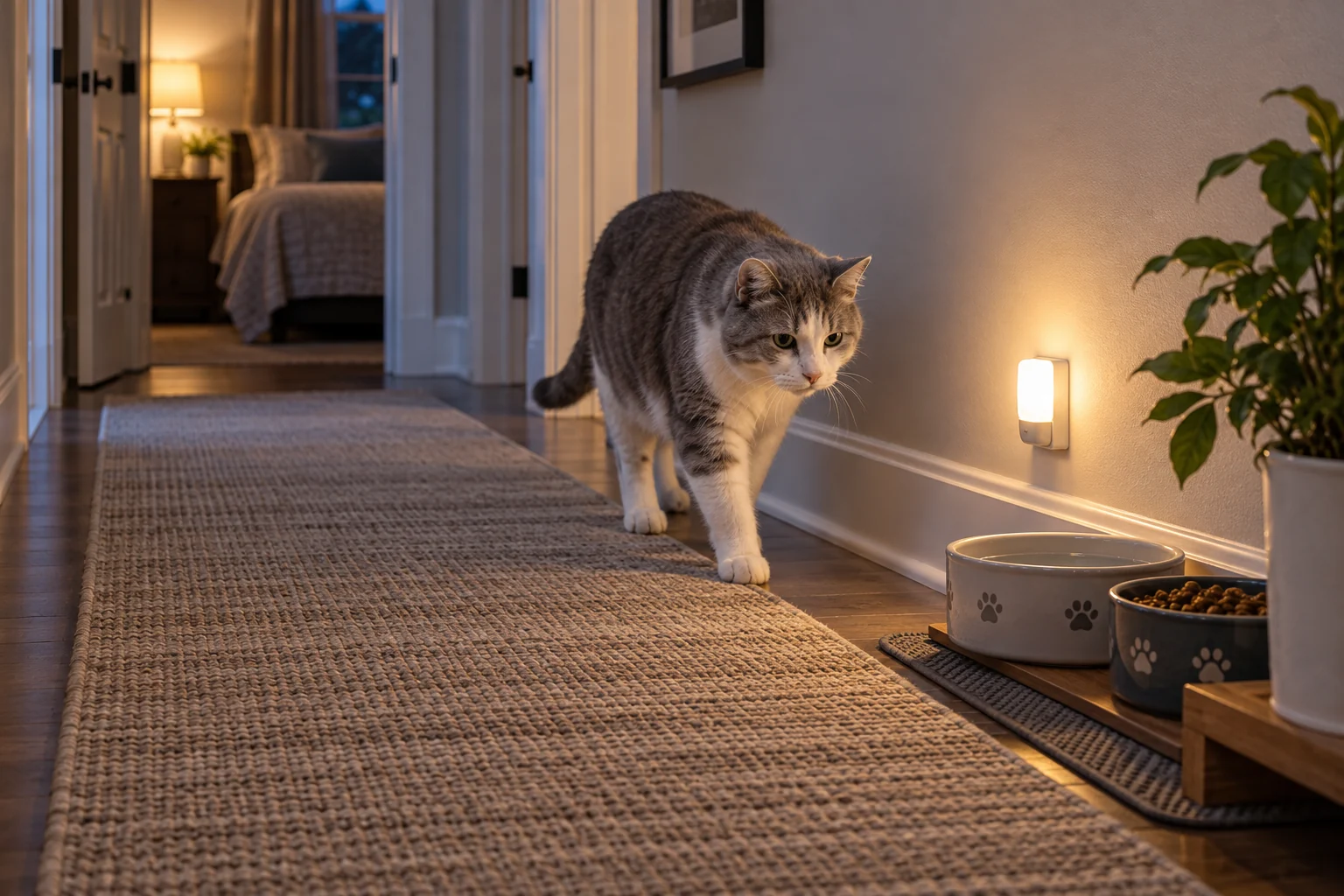
Nightlights, non-slip paths, and easy resource placement can make a senior cat's familiar wall route safer.
Start with the route your cat already chooses. Stand at cat height if you can and look for slick flooring, sharp corners, loose rugs, blocked doors, tight turns, cords, clutter, and places where another pet can ambush the route.
Try this route-safety checklist:
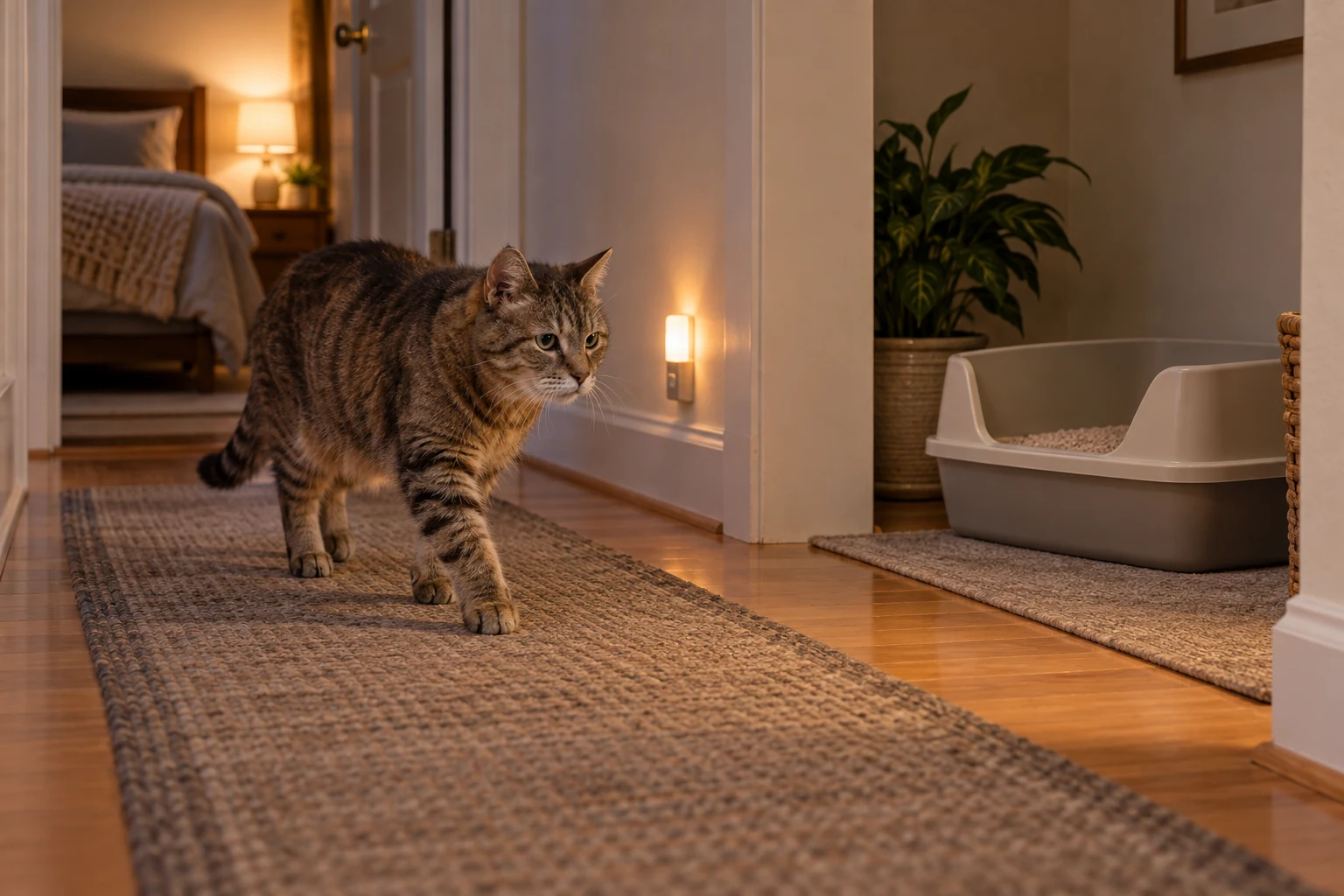
- Add low nightlights near hallways, litter boxes, water, and bedroom routes.
- Use flat, non-slip runners instead of loose rugs that bunch up.
- Keep furniture and litter boxes in stable, familiar places.
- Create wide turning spaces at hallway ends and corners.
- Place food, water, and litter on the same level as your senior cat's main resting area.
- Offer low-entry litter boxes and shallow bowls if bending or stepping is hard.
- Add ramps or sturdy steps to favorite beds and sofas.
- Keep doors fully open or fully closed so they do not create narrow surprises.
- Separate pushy pets during nighttime movement.
- Avoid startling your cat from behind on a narrow route.
If arthritis is part of the picture, the SnuggleSouls guide on how to help an arthritic cat at home can help you think through ramps, litter boxes, and comfort checks. If the issue is mostly night access to resources, this guide on helping a senior cat reach bedroom water at night pairs naturally with wall-route planning.
Do not overcorrect the home overnight. For a cat with vision or cognitive changes, a familiar layout is often safer than a dramatic redesign. Change one route at a time and watch whether your cat moves with more ease.
What should you track before the vet visit?
Track when the wall-walking happens, which route your cat uses, whether it is new or worsening, and what other body or behavior changes appear around it. Clear notes help your veterinarian decide whether to focus first on eyes, blood pressure, pain, neurologic signs, or general senior-cat screening.
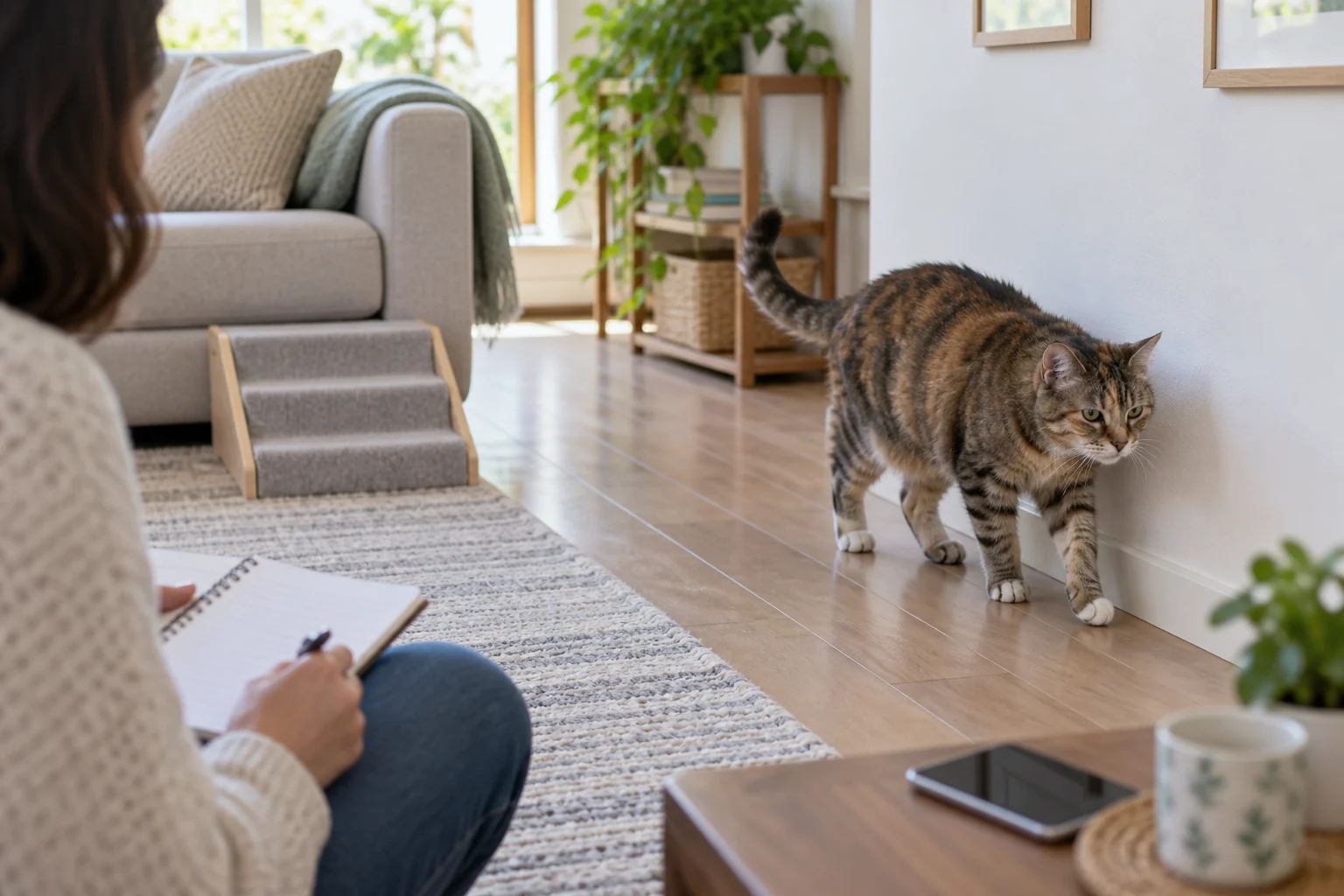
Tracking when, where, and how your senior cat follows walls helps your veterinarian interpret subtle changes.
A one-week log is often enough to reveal patterns, but do not wait a week if signs are urgent. Record short, factual observations:
| Detail to track | Examples to write down | Why it helps |
|---|---|---|
| Time of day | "After sunset," "after waking," "only at 3 a.m." | Separates low-light, sleep, and routine clues |
| Location | Hallway, bedroom wall, litter route, food route | Shows whether one path is hard |
| Movement quality | Slow, stiff, stumbling, circling, pausing | Helps separate confidence from pain or neurologic signs |
| Eyes and pupils | Cloudy, red, unequal, squinting, dilated | Supports eye and blood-pressure screening |
| Appetite and water | Eating less, drinking more, missing bowl | Flags systemic illness |
| Litter box changes | More urine, accidents, straining, missed box | Flags urinary or mobility issues |
| Voice and sleep | New yowling, pacing, restless nights | Supports cognitive, pain, or anxiety discussion |
| Video | 10-20 seconds in good light | Lets the vet see gait and route choice |
Bring your cat's medication list, diet, supplement use, and any recent household changes. Tell your veterinarian whether the route is new, sudden, seasonal, or linked to a specific room. If your cat has kidney disease, hyperthyroidism, heart disease, diabetes, known arthritis, or previous eye issues, mention that when you book the appointment.
How is this different from getting stuck in corners or staring at walls?
Walking along walls is about route choice; getting stuck in corners or staring at walls may point more strongly toward disorientation, sensory changes, pain, or unusual attention to one spot. The behaviors can overlap, but the pattern matters.
A cat who follows the wall from the bedroom to the water bowl and arrives normally may be using a smart route. A cat who follows the wall into a dead-end corner, cannot turn around, cries, or seems confused is showing a different level of concern. If that sounds familiar, compare the signs in the SnuggleSouls guide to a senior cat getting stuck in corners.
Staring is also different from route-following. Some cats stare at walls because they hear insects, pipes, or subtle sounds. In senior cats, repeated staring plus nighttime confusion, pacing, or missed navigation can deserve a health check. The guide to cat staring at walls at night can help you separate curiosity from disorientation clues.
Use this quick comparison:
| Behavior | More reassuring pattern | More concerning pattern |
|---|---|---|
| Walking along walls | Familiar route, normal arrival, relaxed body | New, sudden, stumbling, panic, missed destinations |
| Getting stuck in corners | Brief pause, turns around easily | Repeats, cries, seems unable to back out |
| Staring at walls | Tracks a sound, stops when distracted | Paired with confusion, yowling, or navigation trouble |
| Night pacing | Occasional routine check | Persistent restlessness, distress, or appetite/litter changes |
The safest mindset is curious, not alarmed. Your cat's route can be both adaptive and medically useful information. When you notice the pattern early, you can make the home kinder and give your veterinarian better clues.
Conclusion: Help your senior cat move with confidence
A senior cat walking along walls may be choosing a safe, familiar path, especially if vision, mobility, or confidence has changed. Support that route with light, traction, clear access to resources, and a predictable layout.
At the same time, do not dismiss a new wall-hugging habit as harmless aging. Sudden changes, eye changes, stumbling, confusion, pain signs, appetite changes, litter box problems, or nighttime distress deserve veterinary attention. Your job is not to diagnose the reason at home. It is to notice the pattern, make movement safer, and get your cat the right help before a subtle clue becomes a crisis.
Frequently Asked Questions
Is it normal for an old cat to walk close to walls?
It can be normal if your cat has always preferred edges and still moves confidently, eats, uses the litter box, and acts like themselves. If the habit is new, worsening, or paired with bumping, hesitation, pain signs, or confusion, schedule a veterinary check.
Does walking along walls mean my cat is blind?
Not always. Wall-walking can reflect confidence, traction, scent routes, pain, or habit. It becomes more suggestive of vision trouble when your cat bumps into objects, struggles in dim light, hesitates at stairs, misses bowls or litter boxes, or has visible eye changes.
Should I move furniture to make a wider path?
Avoid a big sudden rearrangement unless there is an immediate hazard. Many senior cats navigate by memory, so stable furniture can be helpful. Remove clutter, secure rugs, add nightlights, and change one route at a time while watching how your cat responds.
Why does my senior cat walk along walls at night?
Night wall-walking may happen because low light makes the open floor feel less predictable. It can also connect to pain, nighttime restlessness, cognitive changes, or resource access. Add safe lighting and traction, then track whether your cat is also yowling, pacing, bumping into objects, or missing normal destinations.
When is wall-walking an emergency?
Treat it as urgent if your cat suddenly cannot navigate, seems blind, collapses, has seizures, circles, presses their head, loses balance, cannot urinate, refuses food, vomits repeatedly, or declines quickly. Those signs need prompt veterinary or emergency care.
References
[1] Cornell Feline Health Center. (2026). Feline Vision Problems: A Host of Possible Causes. Source URL
[2] Cornell Feline Health Center. (2026). The Special Needs of the Senior Cat. Source URL
[3] Cornell Feline Health Center. (2021). Hypertension. Source URL
[4] AAHA. (2021). PE and History Focus: Mature Adult and Senior Cats. Source URL
[5] Cat Friendly Homes. (2026). Providing Care for a Senior Cat. Source URL

 EN
EN DE
DE ES
ES PT
PT