
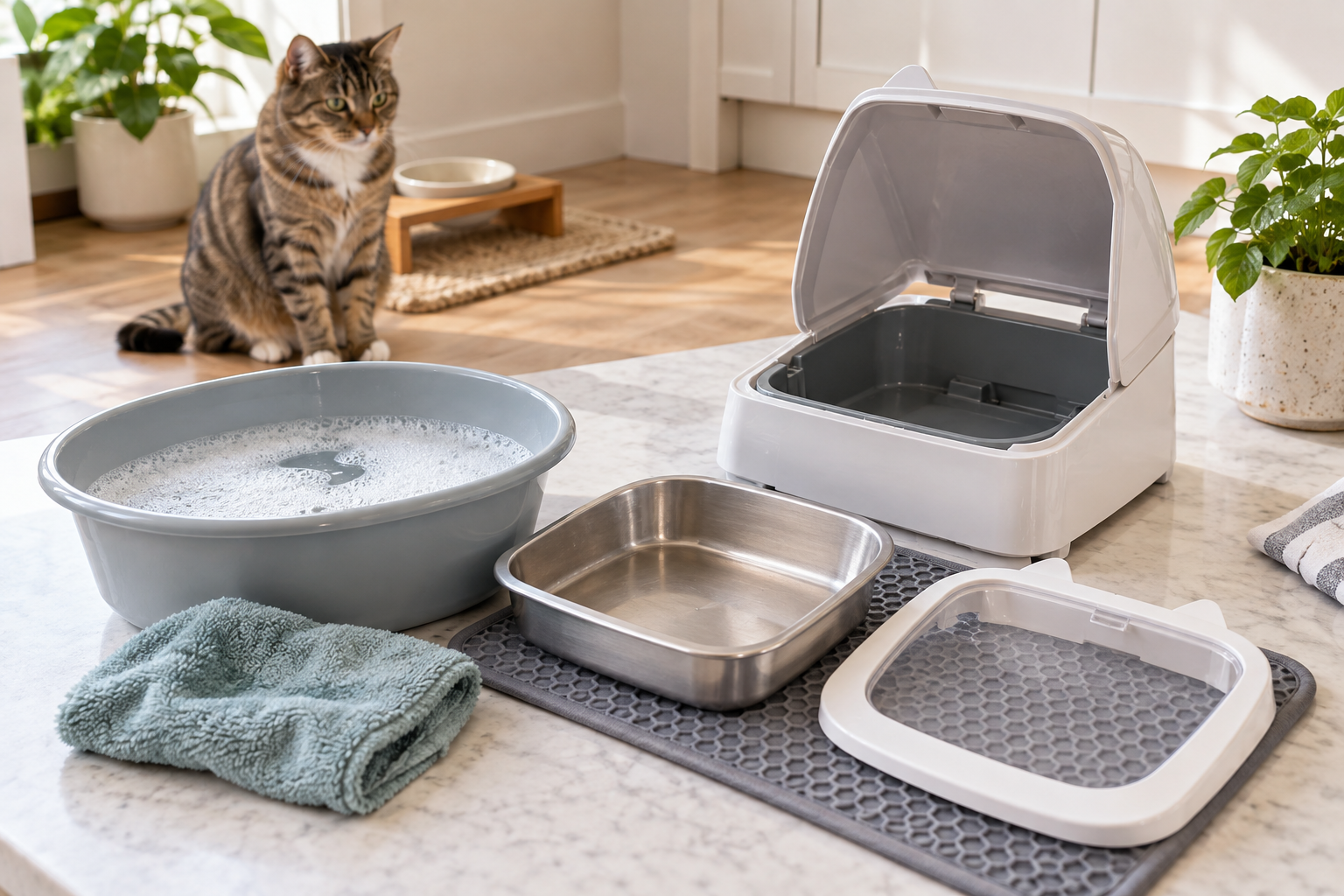
Clean a microchip feeder for cats by washing removable food-contact parts, wiping the electronic body with a damp cloth, and drying everything before refilling.
The most important habit is simple: clean food-contact parts after wet-food meals, keep crumbs out of the sensor and lid areas, and let every part dry before the next refill.
That routine protects two things at once. It keeps your cat's food area fresher, and it helps the feeder read the right cat, close smoothly, and avoid sticky wet-food buildup. If your feeder model has its own manual, follow that first; the steps below show how to turn those instructions into a safe daily habit.
Table of Contents
- How often should you clean a microchip feeder?
- What parts should you remove before cleaning?
- How do you wash the bowl, mat, and lid safely?
- How do you clean the sensor area without damaging electronics?
- What should you do with wet food and leftovers?
- Which cleaning products are safest around cats?
- How do you keep the feeder working in a multi-cat home?
- When should you stop using the feeder and call the vet or manufacturer?
- Conclusion: Clean the food-contact parts, protect the electronics
- Frequently Asked Questions
- References
How often should you clean a microchip feeder?
Clean the bowl after every wet-food feeding and at least daily for dry food. Wipe the mat, lid edge, and feeder deck whenever food touches them, then do a deeper check of the lid track, hinges, sensors, and crumbs at least weekly.
The FDA advises pet owners to wash pet food bowls and measuring utensils with soap and hot water after each use, and to refrigerate or discard leftover canned and pouched pet food promptly 1. CDC pet-supply guidance gives a similar practical schedule: clean bowls after every wet-food use and every day for dry food and water 2. For a microchip feeder, those bowl rules matter even more because the bowl sits inside a moving device where residue can migrate into lid grooves and sensor areas.
Use this schedule as a starting point:
| Feeder area | Wet food | Dry food | Why it matters |
|---|---|---|---|
| Bowl insert | After every meal or refill | Daily | Direct food contact and saliva buildup |
| Mat or tray | After spills, at least daily | Daily or when dusty | Catches crumbs, gravy, and paw debris |
| Lid and lid rim | After wet-food splashes | Weekly or when dusty | Sticky residue can affect closing |
| Feeder deck | Wipe after food contact | Weekly | Keeps crumbs away from moving parts |
| Sensor hoop or read area | Weekly, or sooner if unreliable | Weekly | Residue can interfere with detection |
| Underside and access cover | Weekly to monthly | Monthly | Crumbs can collect under the unit |
If you are still deciding whether this device is the right match for your home, the SnuggleSouls guide to microchip feeders for cats explains when access-control feeders help and when another feeding setup is simpler.
What parts should you remove before cleaning?
Remove the bowl, mat, and lid pieces your model allows you to remove. Keep the electronic base, battery compartment, controls, display, scale parts, and sensor area out of standing water unless the manual clearly says otherwise.
Most cat parents run into trouble when they clean the feeder as if it were an ordinary bowl. It is not. A microchip feeder has electronics, moving parts, and small places where crumbs can lodge. Sure Petcare's cleaning instructions for its SureFeed microchip feeders tell owners to remove the mat and bowl, wash them in warm soapy water, remove and wash the lid, then pat pieces dry before replacing them 3. The same source says the body should be wiped with a damp cloth and never placed in water 3.
Before cleaning, do this:
- Remove any uneaten food and throw away questionable leftovers.
- Turn off the feeder or open the lid according to your model's instructions.
- Remove the bowl insert.
- Remove the mat, tray, or bowl support if your feeder has one.
- Unlock and remove the lid only if your model is designed for that.
- Set the electronic base on a dry towel away from the sink.
- Keep batteries, charging cables, and ports dry.
If your cat is nervous around the device, avoid making cleaning feel like a daily battle. Clean during a natural break, not while your cat is trying to eat. For training-sensitive cats, the guide on how to introduce a microchip feeder to a scared cat can help you rebuild trust if the feeder has become noisy or unpredictable.
How do you wash the bowl, mat, and lid safely?
Wash removable food-contact parts with warm soapy water, scrub away residue, rinse thoroughly, and dry completely before reassembly. Check your feeder manual before using the dishwasher, because dishwasher-safe rules vary by model and part.
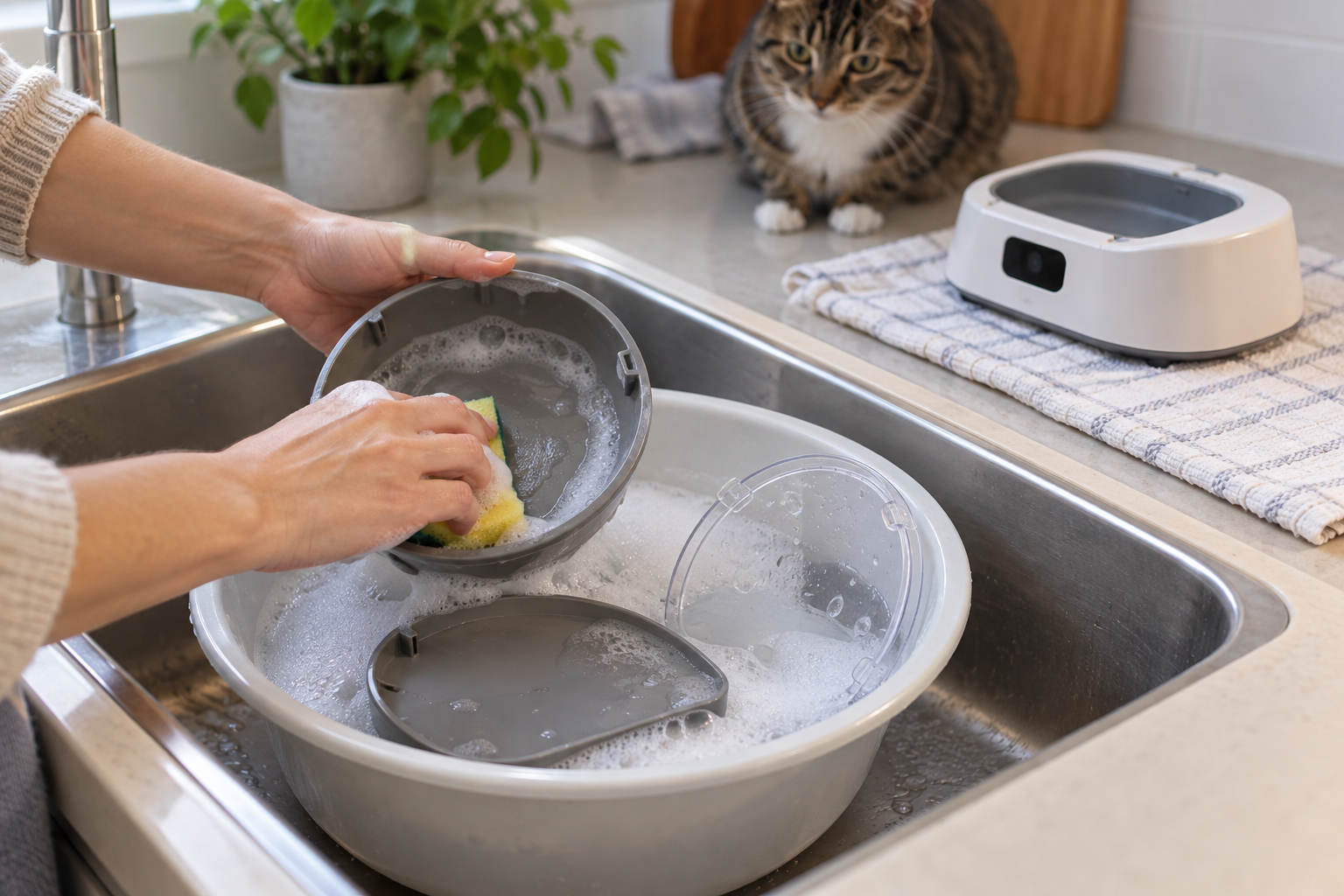
Wash removable bowls, mats, and lids with warm soapy water, then dry them fully before reassembling the feeder.
For hand washing:
- Scrape leftover wet food into the trash, not the sink drain.
- Rinse removable parts under warm water.
- Wash with mild dish soap and a soft sponge or brush.
- Pay attention to lid edges, seal lips, corners, and bowl rims.
- Rinse until no soap film remains.
- Dry with a clean towel or air dry fully.
- Reassemble only when all parts are dry.
Do not assume every removable piece can go in the dishwasher. Sure Petcare's online cleaning guide says only the bowl inserts are dishwasher safe for the SureFeed models it discusses, while the mat and lid should be hand washed and the feeder body should only be wiped clean 3. A separate SureFeed Microchip Pet Feeder Connect manual says to hand-wash the lid and not put it in a dishwasher; it also warns not to submerge the unit or place it under running tap water because water can damage the electronics 4.
For stainless steel bowls, plastic bowls, silicone mats, and clear lids, let the material guide your pressure. Use a soft sponge for smooth surfaces. Use a soft brush for grooves. Avoid abrasive pads that scratch plastic, because scratches can hold residue and may make future cleaning harder. The SureFeed manual also warns against abrasive sponges and abrasive cleaning products around the feeder 4.
How do you clean the sensor area without damaging electronics?
Clean the sensor area with a slightly damp cloth, cotton swab, or soft dry brush, then dry it carefully. Do not spray cleaner directly into the feeder, run water over the hoop, or let liquid collect around buttons, battery doors, charging ports, hinges, weighing arms, or sensor dots.
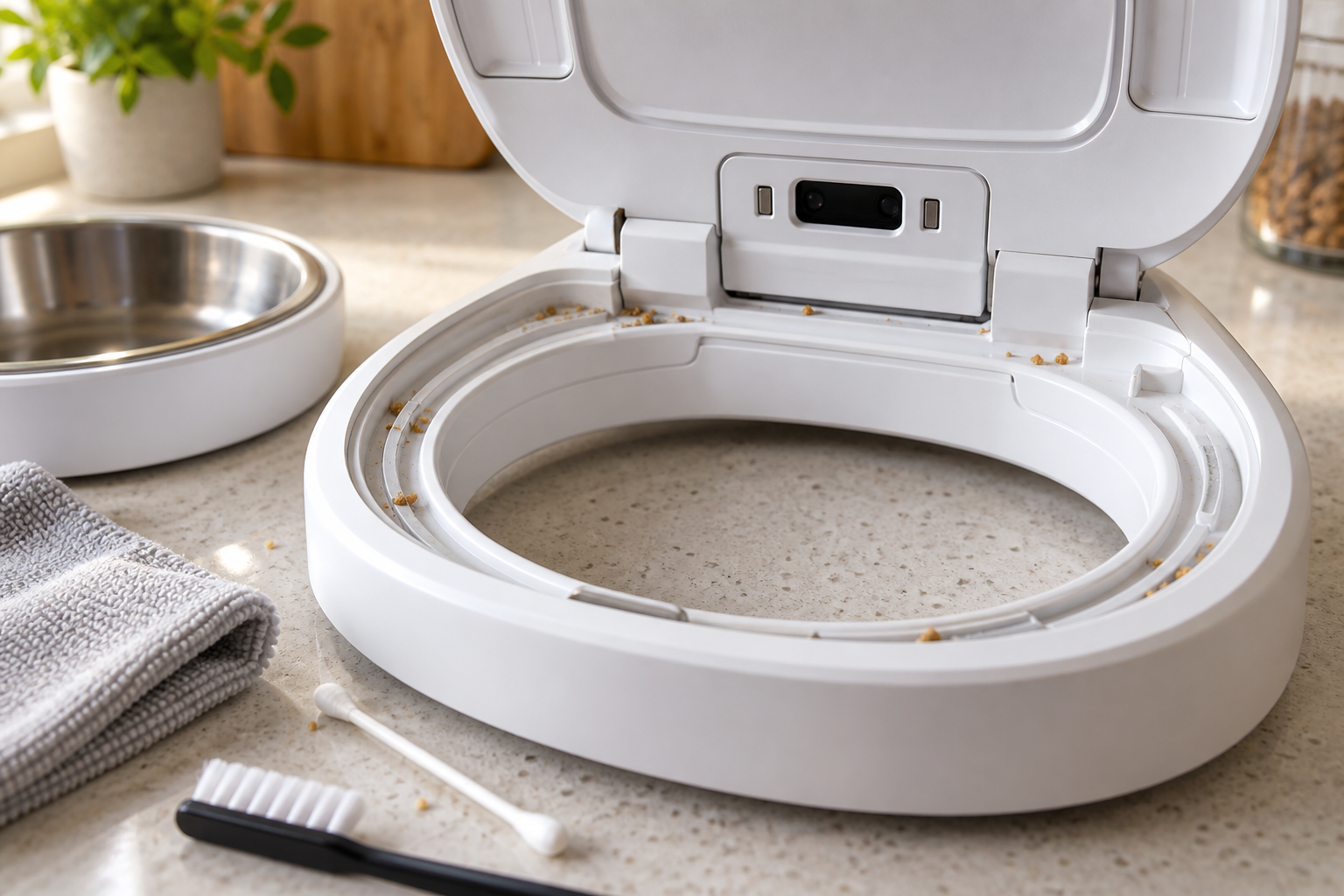
Crumbs and wet-food residue can collect around lid tracks, hinges, weighing arms, and sensor points, so check those small areas before refilling.
On some feeders, the sensor points are small dark dots inside the hoop. The SureFeed Connect manual says those sensor dots should be kept clean, and it notes that debris around weighing arms can affect feeder performance 4. If your feeder starts opening late, closing unevenly, failing to recognize the right cat, or making a rough sound, a crumb check is a low-risk first step before assuming the device is broken.
Try this dry-first sequence:
| Problem area | Tool to try | What to avoid |
|---|---|---|
| Sensor dots or reader hoop | Soft dry cloth, then slightly damp cloth if needed | Sprays, dripping cloths, sharp tools |
| Lid track or hinge edge | Soft brush or cotton swab | Metal picks, abrasive pads |
| Feeder deck | Damp cloth followed by dry towel | Pouring water into the base |
| Weighing arms or supports | Dry brush, then lightly damp cloth | Pressing hard or bending parts |
| Battery door or ports | Dry cloth only unless manual says otherwise | Any direct liquid |
If wet food has dried into a hard patch, soften it by holding a damp cloth against the removable part, not by flooding the feeder body. A toothpick may seem tempting, but hard points can scratch plastic or push debris deeper into the mechanism. Use soft tools and patience.
What should you do with wet food and leftovers?
Treat wet food in a microchip feeder as perishable food, not as an all-day room-temperature snack. Serve measured portions, pick up leftovers when the safe meal window ends, cover and refrigerate unused canned or pouched food, and clean the bowl before adding more.
The FDA says unused or leftover canned and pouched pet food should be promptly refrigerated or thrown out, and refrigerated pet food should be tightly covered 1. FoodSafety.gov explains the general household rule behind that caution: bacteria grow fastest between 40 F and 140 F, and perishable foods should not be left out for more than 2 hours, or more than 1 hour in hot conditions above 90 F 5. Cat foods vary by texture and label directions, so follow the food maker's instructions when they are more specific.
Use a microchip feeder wet-food routine like this:
| Situation | Safer habit |
|---|---|
| Morning wet meal | Add only the portion your cat is expected to eat during the meal window |
| Slow eater | Ask your veterinarian or follow label guidance on safe holding time |
| Leftover can or pouch | Cover tightly and refrigerate promptly |
| Food dried around the rim | Remove it before refilling, then wash the bowl |
| Unknown timing | Throw it out instead of guessing |
| Prescription diet | Follow your veterinary team's storage and feeding instructions |
Portioning also matters because a protected feeder can hide overeating if you keep topping it up. If you need help reading the label, review cat food feeding directions. If you use wet food, the wet cat food storage guide gives more detail on covers, fridge timing, and when to toss leftovers.
For cats on a weight plan, prescription diet, or multi-cat feeding routine, measure before you refill. SnuggleSouls has separate guides on how to use a kitchen scale for cat food portions and how to weigh wet cat food portions. The cat calorie calculator can help organize a planning estimate, but your veterinarian should set the plan for cats with medical needs.
Which cleaning products are safest around cats?
For routine feeder cleaning, mild dish soap, warm water, a soft sponge, a soft brush, and clean towels are usually enough. Use disinfectants only when needed, follow the product label exactly, rinse or dry as directed, and keep cats away until the area is safe.
CDC explains the difference clearly: cleaning removes dirt and germs with soap or detergent, while disinfecting kills germs on surfaces using chemicals 2. Cleaning is usually enough for most pet items, but disinfecting may be appropriate when a pet is sick or when someone in the household is at higher risk from germs 2. If you disinfect any feeder part, confirm the material can tolerate the product and that no chemical residue remains where food touches.
Be especially careful with cats and phenols. CDC warns cat owners not to use disinfectants with "phenol" in the ingredient list because phenols are very toxic to cats 2. Also avoid mixing cleaners. CDC cautions that bleach should not be mixed with other cleaners such as ammonia because toxic gases can form 2.
Safer cleaning habits:
- Keep the cat out of the cleaning area.
- Use mild soap for everyday bowl, mat, and lid washing.
- Use a feeder-only sponge or brush if your household needs stricter separation.
- Rinse food-contact parts very well.
- Dry parts fully before adding food.
- Store cleaning products where cats cannot reach them.
- Avoid scented residues inside bowls, lids, and mats.
- Do not use abrasive pads on plastic lids or sensor areas.
If your cat has asthma-like breathing signs, drooling, vomiting, pawing at the mouth, sudden weakness, collapse, or possible exposure to a cleaning chemical, contact your veterinarian or a pet poison helpline right away. Do not wait to see whether symptoms pass.
How do you keep the feeder working in a multi-cat home?
Keep the feeder clean, correctly assembled, and placed where the intended cat can eat without being crowded. In multi-cat homes, hygiene and access control are connected: food theft, hovering, and crumbs all make it harder to know whether the right cat ate the right amount.
After reassembly, check that:
- The bowl sits flat.
- The lid is locked or seated as the manual requires.
- The mat is not blocking the lid path.
- The sensor area is dry.
- No crumbs are stuck in the track.
- The correct cat can trigger the feeder.
- Other pets cannot push in from the side or rear.
If another cat starts hovering while you clean or refill the station, feed that cat elsewhere first. Refill the microchip feeder only after the target cat has a calm route to approach and leave. This is especially important for shy cats, slow eaters, seniors, and cats eating therapeutic diets.
Cleaning is also a chance to check whether the feeding plan still works. Is the protected cat leaving food? Is a bolder cat waiting nearby? Is wet food drying out because the portion is too large? Are you refilling without measuring? If the problem is portion drift rather than cleaning, return to the feeder setup and portioning advice in microchip feeders for cats.
When should you stop using the feeder and call the vet or manufacturer?
Stop using the feeder temporarily if it will not open reliably for the intended cat, the lid sticks near your cat's face, the feeder smells sour after cleaning, the base got wet, or your cat stops eating from it. Call the manufacturer for device faults and call your veterinarian for appetite, vomiting, weight, or behavior changes.
Use this decision table:
| What you notice | First safe step | Who to contact |
|---|---|---|
| Lid opens late or unevenly | Remove food, clean grooves, check assembly | Manufacturer if it continues |
| Correct cat is not recognized | Clean sensor area and check collar tag or chip setup | Manufacturer or vet if chip concerns arise |
| Feeder body got wet | Turn it off, remove power if safe, let it dry per manual | Manufacturer before reuse |
| Cat avoids only this feeder | Return to open, low-pressure feeding if medically stable | Vet or behavior professional if fear persists |
| Cat eats less from every bowl | Do not blame the feeder first | Veterinarian |
| Repeated vomiting, diarrhea, weakness, or rapid weight loss | Pause feeding experiments | Veterinarian promptly |
A feeder problem can be mechanical, behavioral, or medical. Device cleaning may solve crumbs and sticky lids, but it cannot solve nausea, dental pain, kidney disease, diabetes, food intolerance, stress, or a diet that does not fit your cat. If your cat has not eaten for 24 hours, is vomiting repeatedly, has severe diarrhea, seems weak, breathes abnormally, strains to urinate, or declines quickly, seek veterinary care promptly.
Conclusion: Clean the food-contact parts, protect the electronics
A clean microchip feeder is not about making the feeding corner look perfect. It is about keeping food-contact surfaces sanitary, preventing wet-food buildup, and helping the feeder open and close reliably for the right cat.
Wash the removable bowl, mat, and lid often. Keep the electronic body dry. Check sensor dots, lid tracks, crumbs, and weighing supports before refilling. With a simple cleaning rhythm, the feeder can do its real job: protect the right portion without turning mealtime into a sticky, unreliable puzzle.
Frequently Asked Questions
Can I put a microchip cat feeder in the dishwasher?
Only if the specific removable part is labeled dishwasher-safe. Some feeder makers allow bowl inserts in the dishwasher but require hand washing for mats, lids, and other parts. Never put the electronic feeder body in the dishwasher.
How do I clean dried wet food from the feeder lid?
Remove the lid if your model allows it, then soften the residue with warm soapy water and a soft sponge. If the lid is not removable, use a damp cloth or cotton swab carefully and keep liquid away from electronics, hinges, ports, and battery areas.
Should I disinfect my cat's microchip feeder every day?
Usually no. Routine cleaning with soap and water is enough for most daily use, while disinfecting is an extra step for illness, higher-risk households, or contamination concerns. Follow your veterinarian's advice and the disinfectant label.
Why does my feeder smell bad even after washing?
Check the lid grooves, bowl rim, mat underside, and feeder deck for hidden wet-food residue. Also check whether opened wet food is sitting too long before being picked up. If the smell remains after proper cleaning and drying, replace worn food-contact parts or ask the manufacturer.
Can I use vinegar to clean a microchip feeder?
Use the cleaning method in your feeder manual first. CDC says vinegar is not a reliable disinfectant for all germs, so soap or detergent is the better everyday cleaner and an appropriate disinfectant is the better germ-killing step when disinfection is needed.
What if my cat refuses the feeder after I clean it?
Make sure the feeder is dry, correctly assembled, and free of strong cleaner smells. Offer the next meal with the lid open or in the easiest training stage if your model allows it. If your cat refuses food generally, seems nauseated, hides, drools, vomits, or loses weight, call your veterinarian.
References
[1] U.S. Food and Drug Administration. (2024). Tips for Safe Handling of Pet Food and Treats. Tips for Safe Handling of Pet Food and Treats
[2] Centers for Disease Control and Prevention. (2026). About Cleaning and Disinfecting Pet Supplies. About Cleaning and Disinfecting Pet Supplies
[3] Sure Petcare. (2026). How to Clean Your SureFeed Microchip Pet Feeder and Microchip Pet Feeder Connect. How to Clean Your SureFeed Microchip Pet Feeder and Microchip Pet Feeder Connect
[4] Sure Petcare. (2025). SureFeed Microchip Pet Feeder Connect User Manual. SureFeed Microchip Pet Feeder Connect User Manual
[5] FoodSafety.gov. (2023). 4 Steps to Food Safety. 4 Steps to Food Safety

 EN
EN DE
DE ES
ES PT
PT