
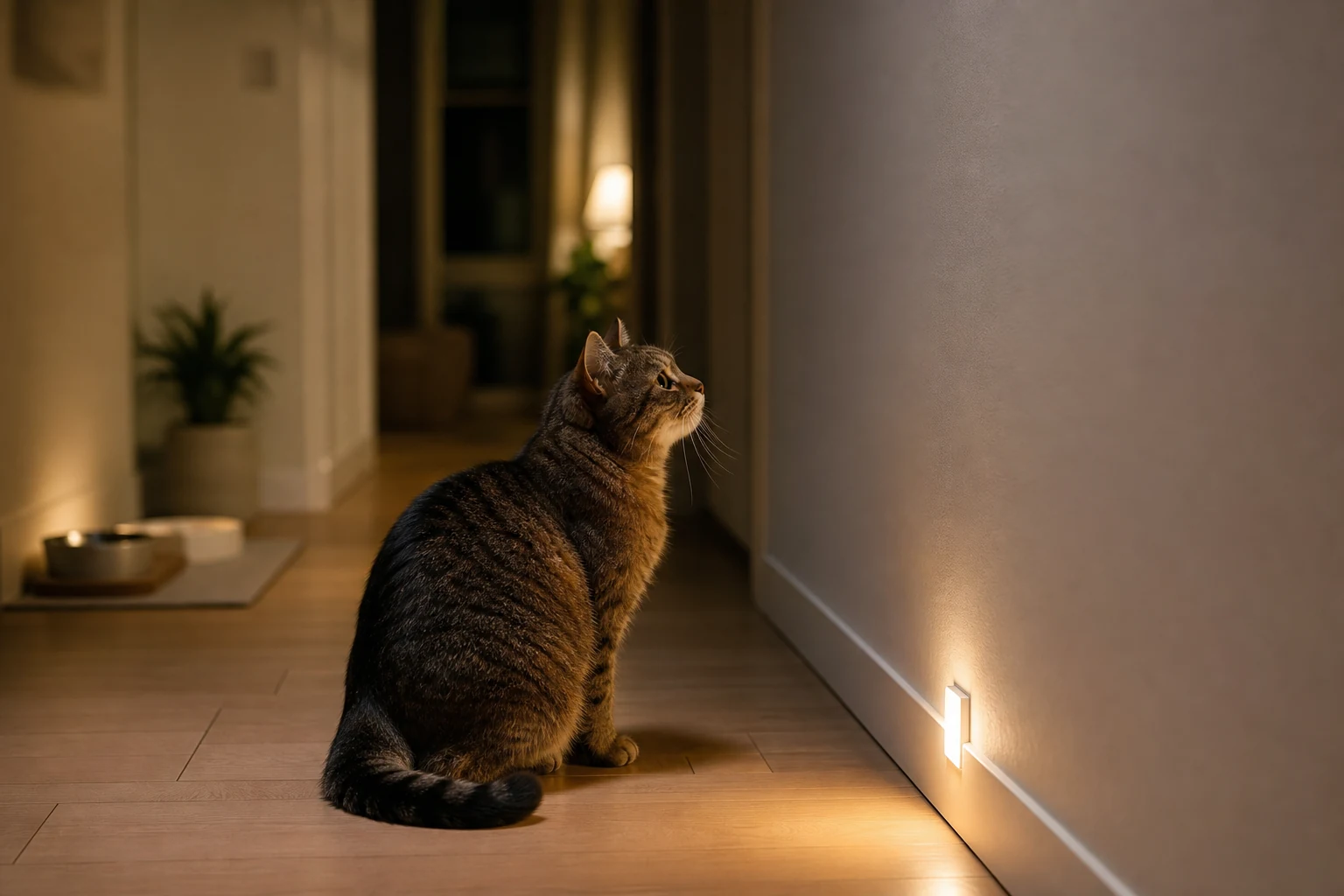
If your cat stares at walls at night, the safest answer is: look for a pattern before you assume it is either "nothing" or dementia. A cat may be tracking tiny sounds, insects, light reflections, or household movement, but new wall staring in a senior cat can also point to disorientation, sensory decline, pain, high blood pressure, thyroid disease, or another medical issue.
One odd stare is usually less important than the whole picture. Notice your cat's age, time of night, body posture, whether she seems able to snap out of it, and whether other changes have appeared around appetite, thirst, litter box use, sleep, movement, or vocalization.
This guide explains why cats stare at walls at night, what to check in the room, which senior-cat clues matter, and when to call your veterinarian.
Table of Contents
- Is staring at walls at night normal for cats?
- What should you check in the room first?
- Could your cat be dreaming or sleepily tracking something?
- When is wall staring a senior-cat concern?
- What red flags mean you should call a veterinarian?
- How can you help a senior cat feel safer at night?
- Conclusion: what to do if your cat stares at walls at night
- Frequently Asked Questions
- References
Is staring at walls at night normal for cats?
Wall staring can be normal when your cat is alert, responsive, and otherwise acting like herself. Cats hear, smell, and notice small movements that people miss, so a quiet wall may not be quiet to your cat. Pipes, vents, insects, outdoor animals, shifting light, or a sound behind the wall can all hold her attention.
Night also changes the context. The house is quieter, human activity drops, and a cat who slept most of the day may be more ready to investigate. If the wall staring happens alongside pacing, repeated waking, or difficulty settling, compare the broader pattern with our guide to cat restless at night.
Use this quick distinction:
| Pattern | More likely ordinary | More concerning |
|---|---|---|
| Response to you | Turns when called, resumes normal activity | Seems lost, hard to redirect, or startles oddly |
| Timing | Brief and occasional | Repeated, increasing, or mostly overnight |
| Body posture | Relaxed ears, normal pupils, normal movement | Hunched, tense, weak, wobbly, or painful |
| Other signs | Eating, drinking, grooming, and litter box habits are normal | Appetite, thirst, weight, bathroom habits, sleep, or mobility changed |
| Age context | Young or adult cat investigating a sound | Senior cat with new confusion, yowling, or route changes |
The goal is not to stop every stare. It is to decide whether this is normal cat curiosity or a behavior change that deserves a closer look.
What should you check in the room first?
Start with the environment. Before labeling the behavior as cognitive or medical, check what your cat may be noticing and whether the room is easy to navigate at night.
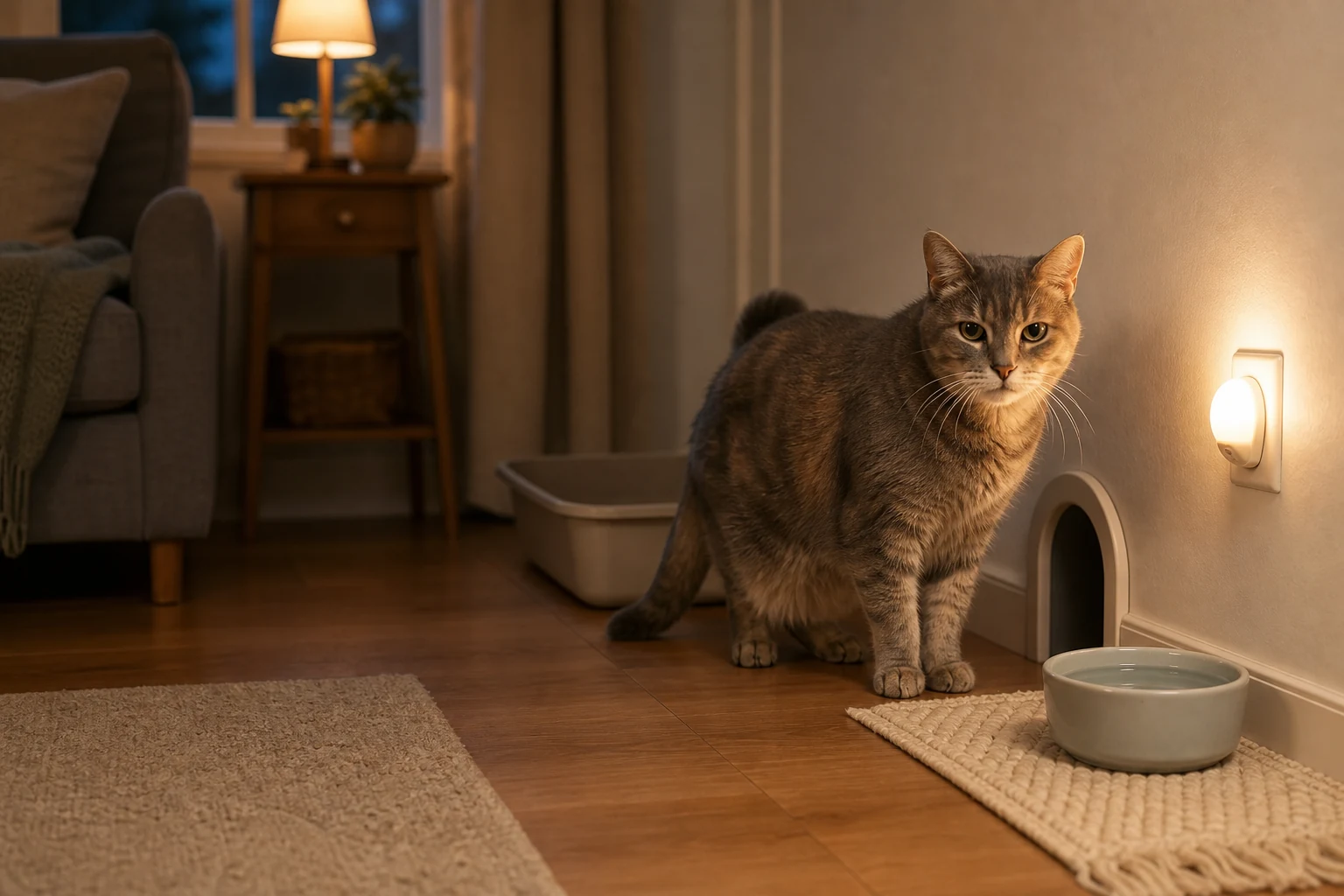
Look for small triggers:
- Insects, spiders, or moths near lamps, baseboards, windows, or vents
- Rodent, bird, or outdoor cat noises around exterior walls
- Reflections from phones, watches, passing cars, mirrors, or appliances
- Furnace, plumbing, refrigerator, or HVAC sounds that start at night
- New scents from cleaning products, laundry, guests, boxes, or repairs
- A blocked route to water, food, litter, or a favorite sleeping spot
Then look at your cat. Is she crouching and hunting, with focused eyes and quick ear movements? That often suggests she is tracking something. Is she standing as if unsure where she is, staring blankly, then wandering away? That deserves more attention, especially in an older cat.
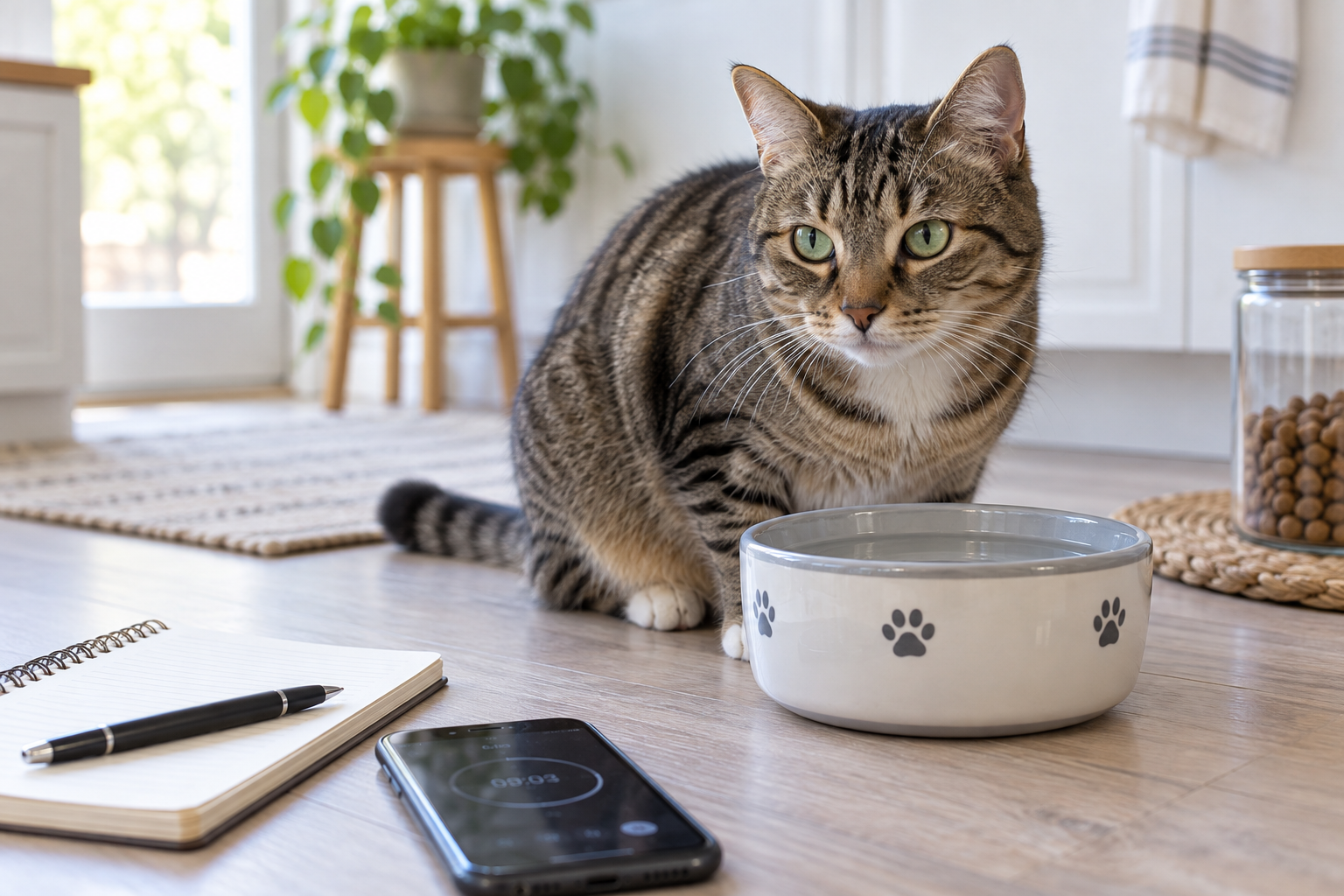
A simple two-night log can help. Write down the time, location, duration, posture, whether your cat responds to her name, and what happened next. Add notes about appetite, thirst, vomiting, litter box trips, and mobility. A short video is often more useful to your veterinarian than a long description.
Could your cat be dreaming or sleepily tracking something?
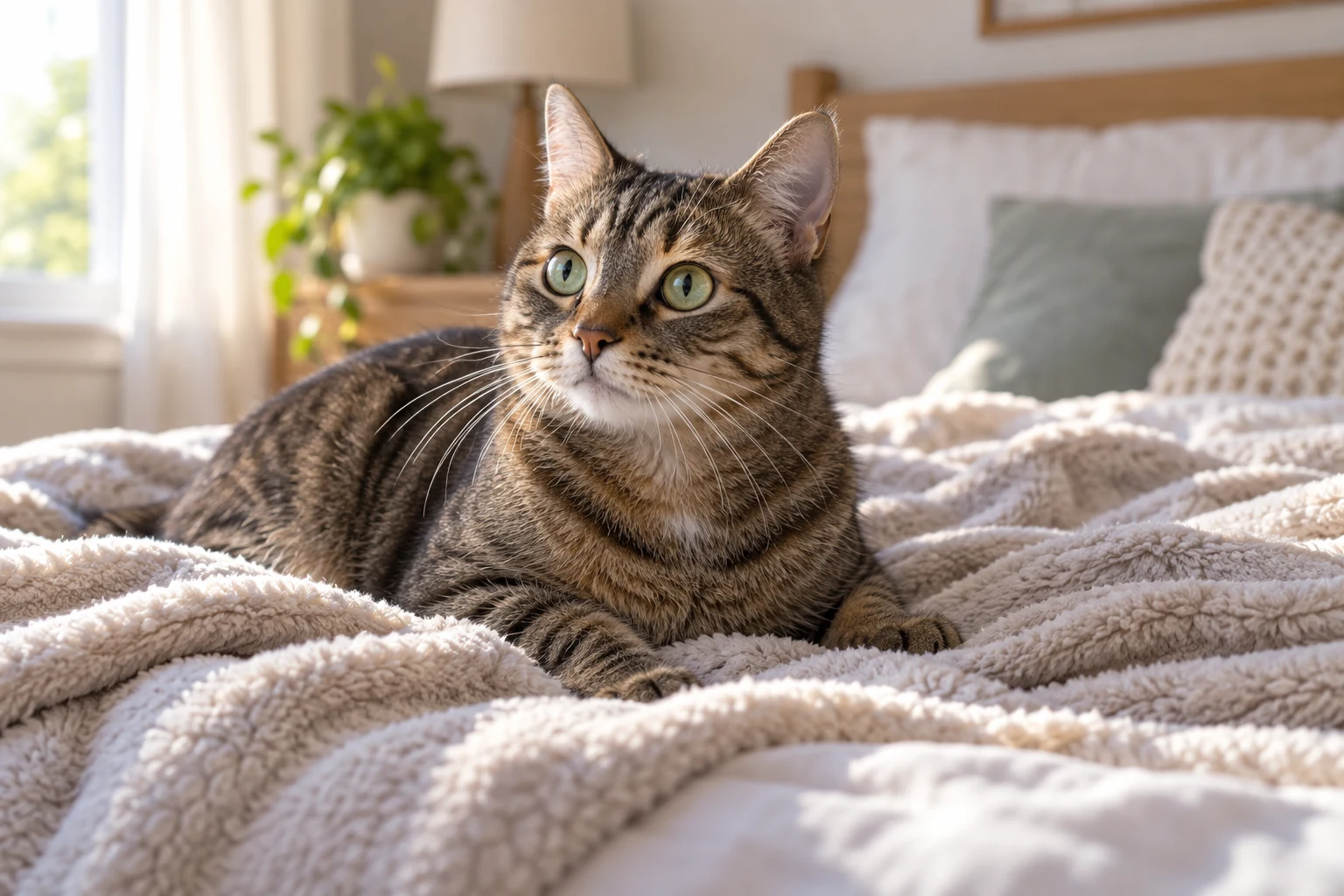
Yes. Some cats wake from a nap, pause, stare, twitch, or seem briefly absorbed before fully reorienting. Sleep transitions can look odd, especially in dim light. If the episode is brief and your cat soon stretches, grooms, changes position, or comes when called, it may not signal a problem.
If your cat often twitches, purrs, or moves during sleep, our guide to cat purring while sleeping may help you separate normal sleep behaviors from signs that need monitoring.
Still, "sleepy" should not become a default explanation for new or escalating behavior. Cornell Feline Health Center lists long periods of staring into space or at walls among signs that can appear with feline cognitive dysfunction, along with disorientation, altered sleep-wake cycles, house soiling, and nighttime vocalization 1. The difference is persistence and the company it keeps.
Ask three questions:
- Does your cat quickly respond to familiar cues?
- Is she otherwise eating, drinking, moving, and using the litter box normally?
- Is this behavior stable and occasional, or new and increasing?
If the answers are reassuring, keep watching and improving the environment. If the answers are uncertain, start a log and schedule a non-urgent veterinary conversation.
When is wall staring a senior-cat concern?
Wall staring becomes more concerning in a senior cat when it appears with disorientation, nighttime vocalization, altered sleep, house soiling, reduced interaction, anxiety, appetite change, thirst, weight loss, stiffness, or new hiding. Aging cats can develop overlapping problems, so the cause may be cognitive, sensory, painful, metabolic, or more than one at once.
Cornell notes that elderly cats can show symptoms such as wandering, excessive meowing, apparent disorientation, and reduced social interaction 2. The AAFP senior care guidelines emphasize that age increases the risk of cognitive dysfunction and sensory changes, and that senior-cat assessment should look beyond one isolated symptom 3.
Feline cognitive dysfunction is one possibility, but it is not the only one. ASPCA advises that older-cat behavior problems should be assessed carefully because medical issues can contribute to changes before a cognitive diagnosis is assumed 4. Merck Veterinary Manual's behavior-sign table also connects behavior changes with medical categories such as neurologic disease, sensory dysfunction, endocrine disease, pain, gastrointestinal problems, and urogenital problems 5.
Watch for these senior-cat combinations:
| Wall staring plus… | Why it matters | What to do |
|---|---|---|
| Night yowling or calling | May suggest confusion, anxiety, pain, sensory change, or illness | Read about cat yowling at night and book a vet exam |
| Getting stuck in corners | More consistent with disorientation than normal hunting | Film the episode and call your vet |
| Hesitating to jump or using lower routes | Pain or arthritis may be changing movement | Compare older cat arthritis signs |
| Drinking or urinating more | Can point to medical disease, not just behavior | Schedule veterinary testing |
| Weight loss with appetite change | May signal an underlying health issue | Do not wait for a behavior fix |
| Sudden personality change | Pain, illness, sensory decline, or neurologic change is possible | Arrange a veterinary visit |
For seniors, the safest mindset is "new behavior is a health clue until proven otherwise." That does not mean panic. It means gathering clear observations and getting professional help early enough to find treatable causes.
What red flags mean you should call a veterinarian?
Call your veterinarian promptly if wall staring is new, repeated, hard to interrupt, or paired with any physical or behavior change. Seek urgent care sooner if your cat seems acutely unwell, weak, unable to walk normally, unable to urinate, struggling to breathe, having seizures, repeatedly vomiting, collapsing, or rapidly declining.
Other same-week veterinary reasons include:
- Staring with circling, head pressing, severe imbalance, or sudden confusion
- New blindness-like behavior, bumping into objects, or dilated pupils
- Increased thirst, increased urination, weight loss, or major appetite change
- Litter box accidents in a cat who was previously consistent
- Pain signals such as hiding, aggression when touched, reduced grooming, or a tense face
- Nighttime calling that starts suddenly in a middle-aged or senior cat
- Staring episodes that are becoming longer or more frequent
Cats often hide pain. If your cat's face, posture, or behavior seems subtly different, our guide to subtle cat pain signs can help you decide what to record before the appointment. Do not give human pain medicine or sedatives unless your veterinarian specifically prescribes them for your cat.
How can you help a senior cat feel safer at night?
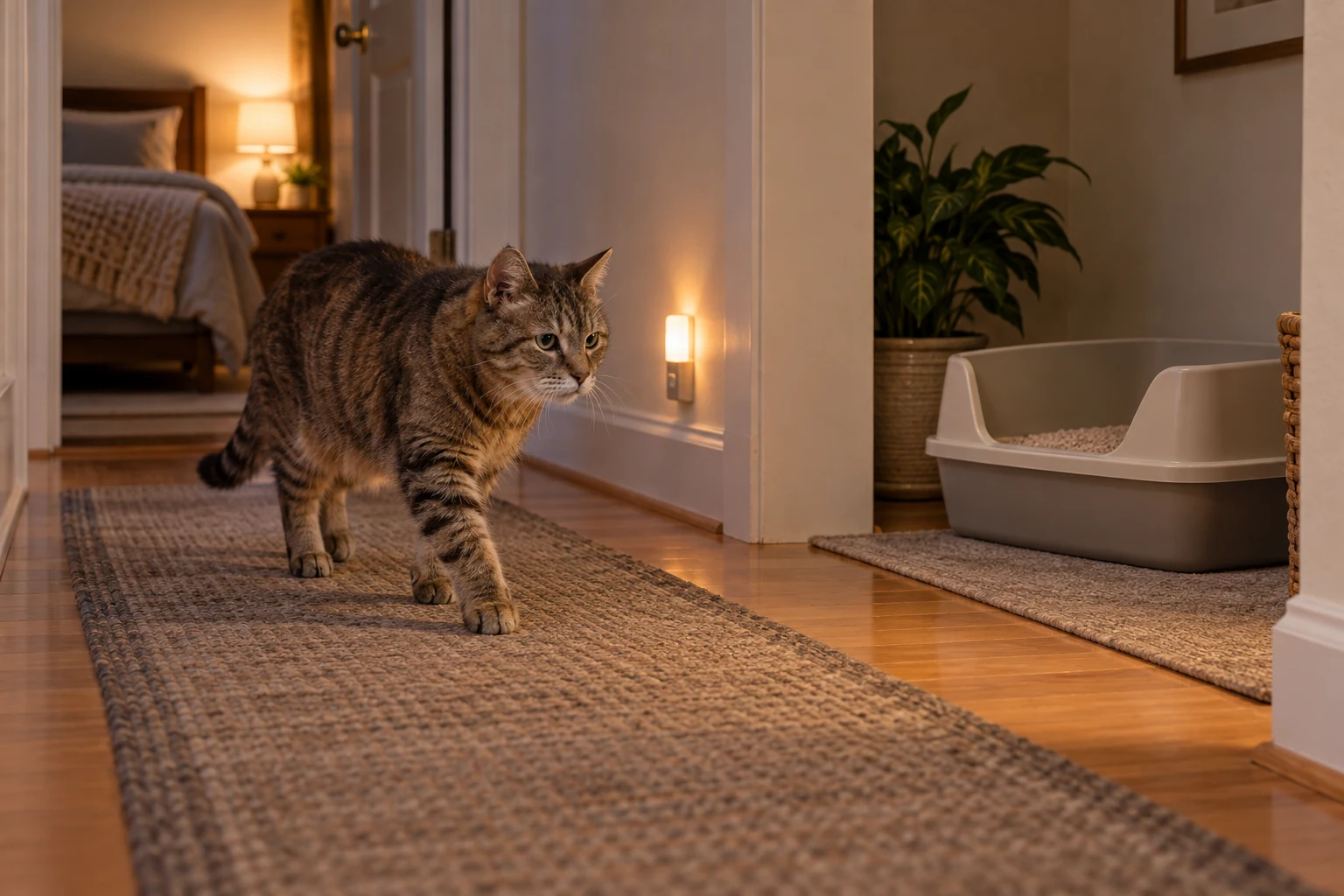
You can make nights easier by reducing confusion, keeping routes predictable, and placing essential resources where your cat can reach them without jumping or searching. These changes do not replace a veterinary exam when new senior-cat signs appear, but they can reduce stress while you investigate the cause.
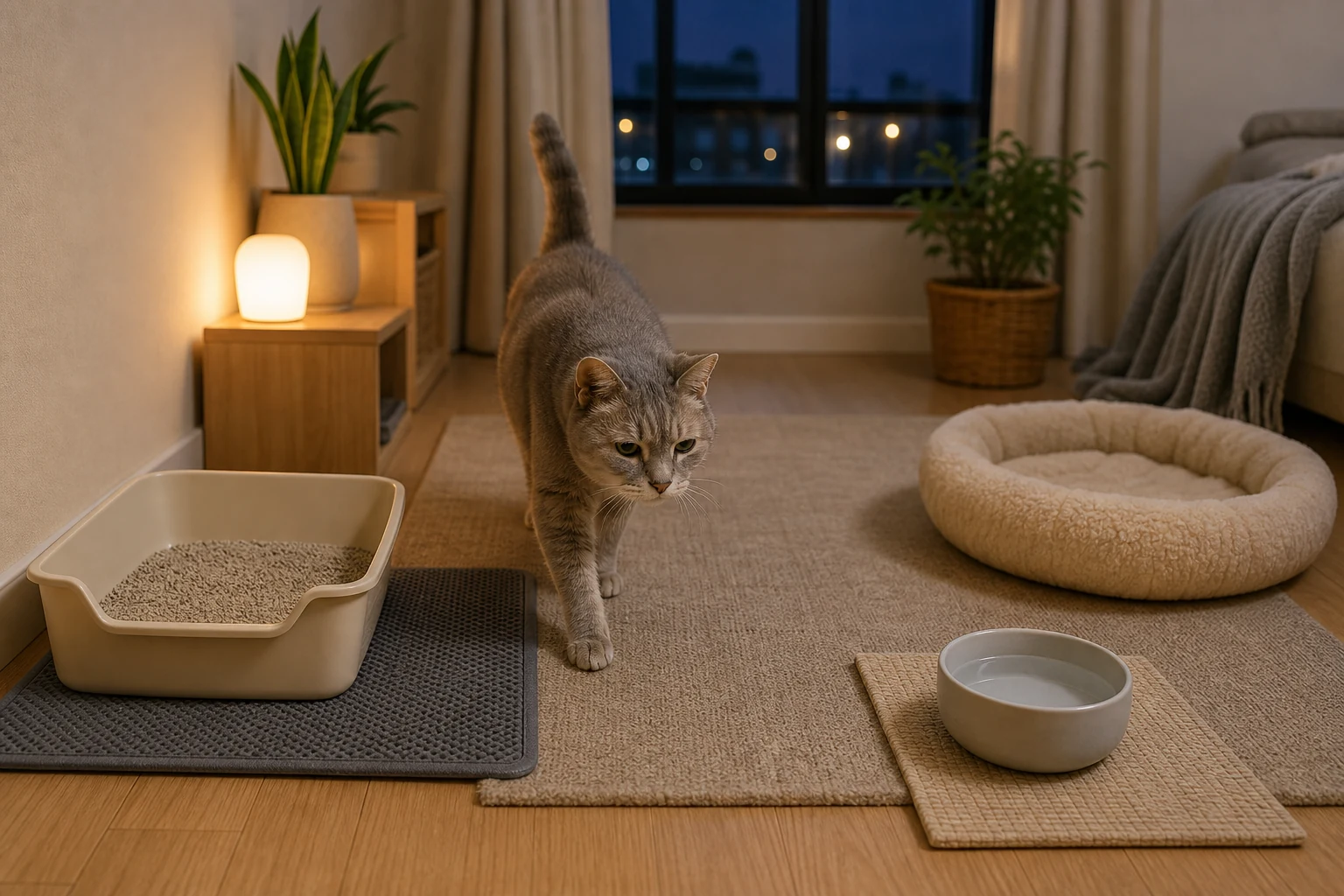
Try practical adjustments:
- Add a soft night light near hallways, food, water, and litter access.
- Keep furniture, bowls, beds, and litter boxes in consistent locations.
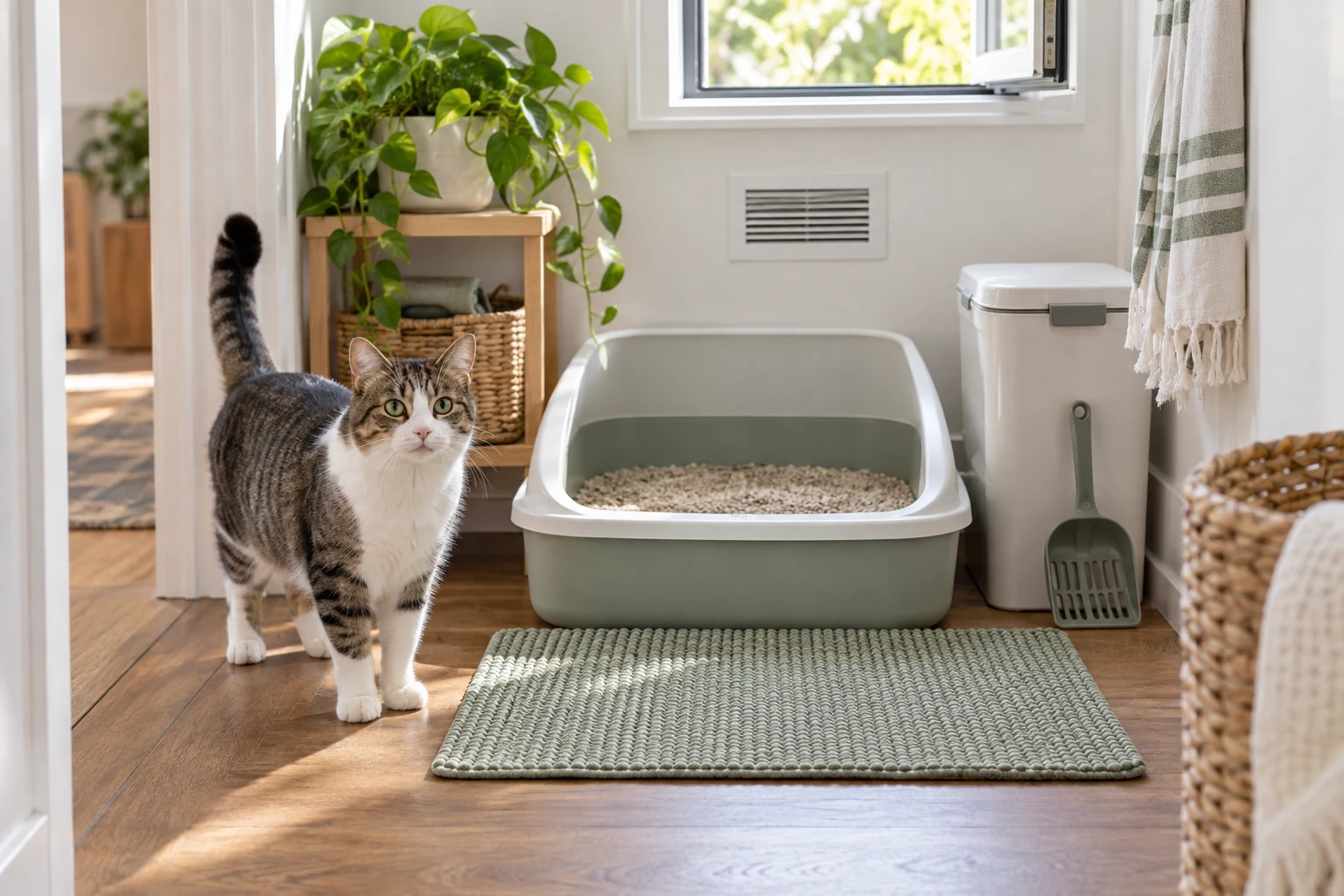
- Offer a low-entry litter box on the same floor where your cat sleeps.
- Use non-slip mats or rugs on slick routes.
- Block confusing dead ends if your cat gets stuck in corners.
- Keep water easy to find, especially for older cats.
- Use gentle evening play and a predictable meal routine.
- Avoid startling your cat out of a stare; call softly and approach slowly.
If stiffness or arthritis may be part of the pattern, see how to help an arthritic cat at home with ramps, low-entry boxes, and comfortable resting spots.
Keep enrichment simple. A senior cat who seems confused may do better with familiar toys, short play sessions, and calm interaction than with a sudden room redesign. Change one or two things at a time so you can tell what helps.
Conclusion: what to do if your cat stares at walls at night
A cat staring at walls at night may be listening, hunting, watching shadows, or waking from sleep. But if the behavior is new, frequent, difficult to interrupt, or happening in a senior cat with other changes, treat it as a useful clue.
Check the room, record the pattern, and look at the whole cat: appetite, thirst, litter box use, movement, sleep, vocalization, and responsiveness. For older cats, early veterinary guidance is the safer path because cognitive dysfunction, sensory decline, pain, and medical disease can look similar at home.
Frequently Asked Questions
Why does my cat stare at a blank wall?
Your cat may be hearing something behind the wall, watching tiny insects or shadows, noticing a reflection, or pausing during a sleep transition. If the staring is brief and your cat responds normally, it may be ordinary curiosity. If it is new, prolonged, or paired with confusion, call your veterinarian.
Is staring at walls a sign of dementia in cats?
It can be one sign, especially in senior cats, but it is not enough for a home diagnosis. Cornell lists staring at walls among possible cognitive dysfunction signs, but similar behavior changes can also come from pain, sensory decline, endocrine disease, neurologic issues, or other illness 1.
Why does my senior cat stare at walls and yowl at night?
That combination can happen with disorientation, anxiety, pain, hearing or vision changes, thyroid disease, high blood pressure, or cognitive dysfunction. Because several causes are treatable or manageable, schedule a veterinary exam and bring a short video or behavior log.
Should I interrupt my cat when she stares at the wall?
Use a calm voice and see whether she responds. Do not clap, shout, or startle her. If she seems confused, gently guide her toward a familiar bed, water bowl, or lit area, then record what happened.
Can better night lighting help an older cat?
Yes, gentle night lighting can help some senior cats navigate more confidently, especially if vision, mobility, or memory is changing. Keep routes predictable and avoid moving key resources around unless your veterinarian recommends a specific setup.
References
[1] Cornell Feline Health Center. (2026). Cognitive Dysfunction. Cornell Feline Health Center
[2] Cornell Feline Health Center. (2026). The Special Needs of the Senior Cat. Cornell Feline Health Center
[3] American Association of Feline Practitioners. (2021). 2021 AAFP Feline Senior Care Guidelines. PubMed Central
[4] ASPCA. (2026). Older Cats with Behavior Problems. ASPCA
[5] Merck Veterinary Manual. (2026). Medical Causes of Behavioral Signs. Merck Veterinary Manual
 Why Does My Cat Jerk Awake Suddenly? Startle Reflexes, Sleep Starts, and Vet Clues">
 Cat Scratching Door Frame: How to Protect Trim">
 EN
EN DE
DE ES
ES PT
PT