
You can safely remove small cat fur mats at home only when the tangle is loose, dry, away from thin skin, and your cat stays calm [2]. Never cut matted hair on a cat with household scissors—stop immediately and call a groomer or veterinarian if the mat feels tight against the skin.
Table of Contents
- How can you tell if a small mat is safe to work on at home?
- What tools should you use for small cat mats?
- How do you loosen a small cat mat step by step?
- When should you stop and call a groomer or veterinarian?
- How do you keep the grooming session calm?
- What should you do after the mat is gone?
- What can cause repeated mats?
- Conclusion
- Frequently Asked Questions
- References
How can you tell if a small mat is safe to work on at home?
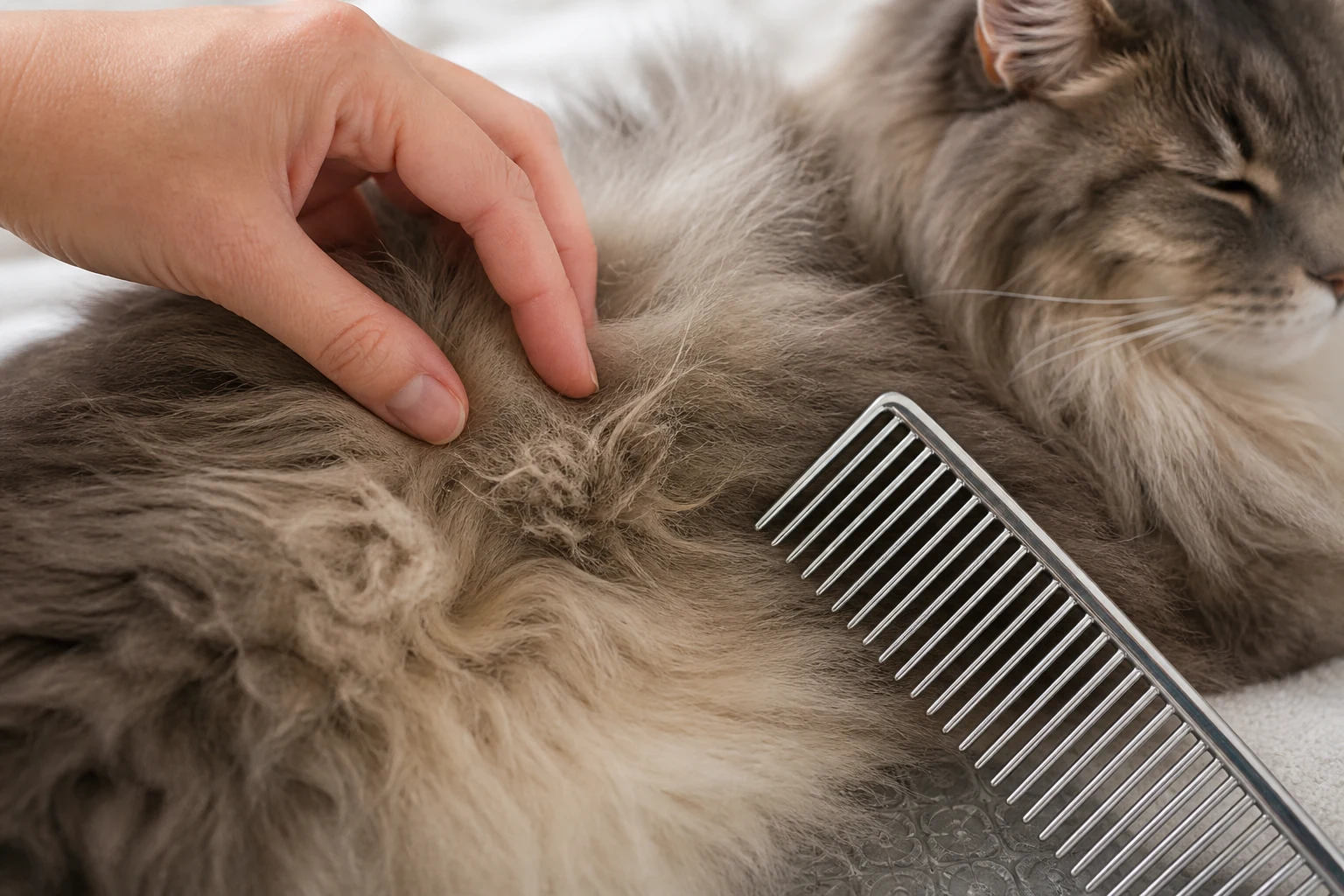
A small mat is safe to work on at home only when it sits near the surface of the coat and you can slide your fingertips underneath without pulling your cat’s skin upward [2] [3].
| Mat or cat signal | What it may mean | Safer next step |
|---|---|---|
| Pea-sized, loose mat at coat surface | Small tangle of shed undercoat | Loosen gently with fingers, then comb outer ends |
| Flat, hard, or pelted mat against skin | Fragile skin is tented up into the mat | Stop and book a professional cat groomer or vet |
| Mat in armpit, belly, groin, tail base, or behind ears | Thin, mobile skin that tears easily | Never cut at home; arrange professional clipping |
| Cat growls, swats, freezes, or tries to leave | The tangle is pulling painfully or causing stress | Stop immediately for the day [4] |
| Red, moist, smelly, or scabby skin under the mat | Skin irritation, hot spot, or secondary infection | Schedule a veterinary exam [3] |
Longhaired cats tangle fastest around friction zones—prevent future tangles with our guide on how to prevent mats in longhaired cats.
What tools should you use for small cat mats?
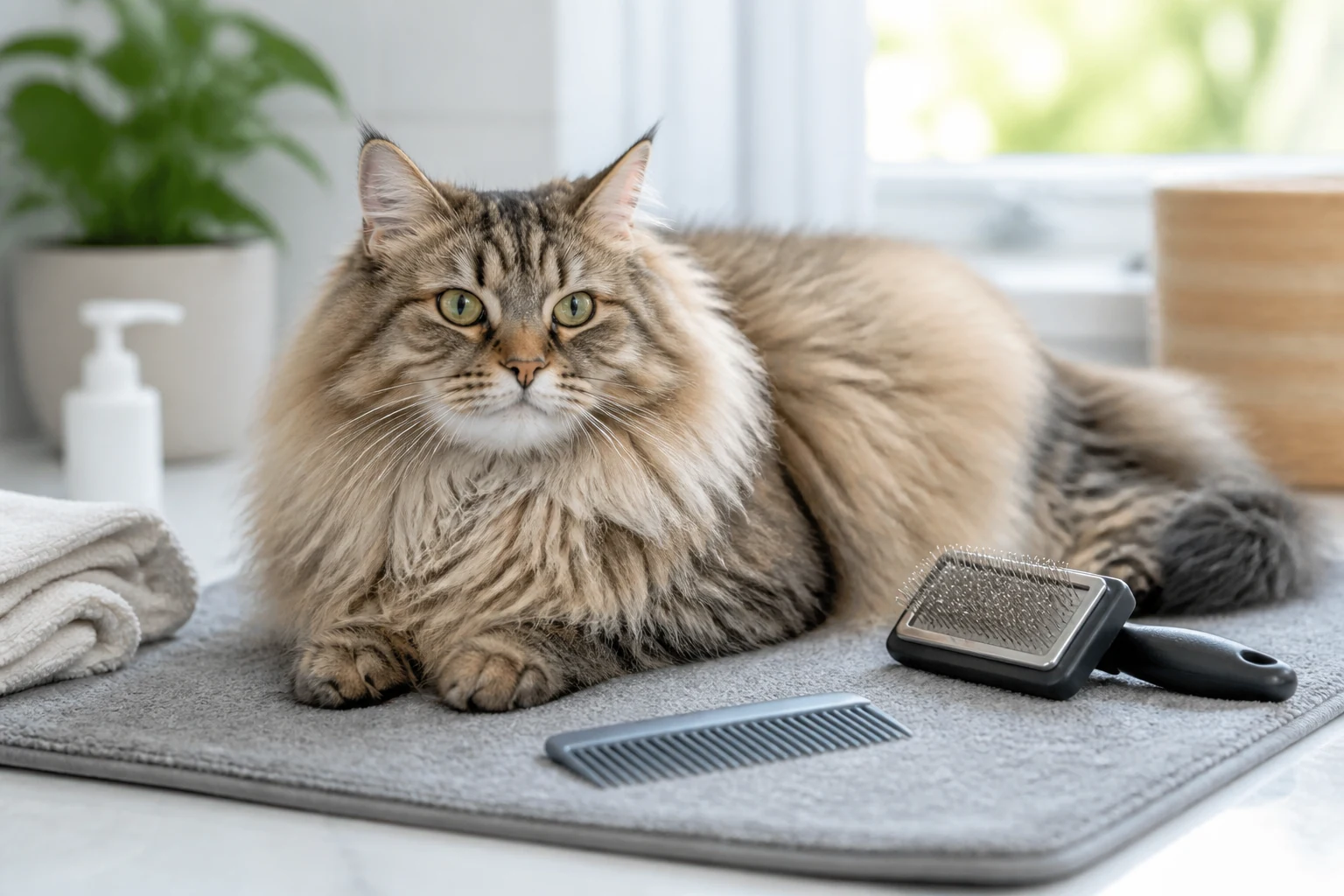
Use your fingertips first, followed by a rounded-tip wide-tooth metal comb and a soft slicker brush—and keep household scissors completely away from matted cat fur [2] [5].
- Wide-tooth metal comb with smooth tips: Separates loosened outer fibers without scraping skin.
- Soft slicker brush: Smooths surrounding loose undercoat after the tangle is gone.
- Non-slip towel and high-value treats: Gives your cat secure footing and rewards short 30-second sessions.
- Myth vs. Fact — Scissors & Water: Household scissors easily slice thin cat skin pulled inside a mat, and wetting a mat causes wool-like fibers to shrink and tighten as they dry.
Build a gentle daily kit with our cat grooming guide and no-pull routine in how to brush a longhaired cat.
How do you loosen a small cat mat step by step?
Loosen small cat fur mats from the outside edge inward while holding the fur at the skin base so your fingers absorb every tug instead of your cat’s skin [2] [5]:
- Pick a calm moment: Work in bright light when your cat is relaxed after a meal or nap.
- Part the fur and check the skin: Stop and call a vet if you see redness, sores, moisture, or fleas.
- Anchor the base of the mat: Pinch the hair between the mat and the skin gently with your non-dominant fingers.
- Tease the outer tips apart: Use your fingertips to separate a few outer strands at a time—never yank the middle.
- Comb only loosened ends: Take short, gentle strokes with a wide-tooth comb from the tip inward.
- Reward and stop early: Offer treats every 20–30 seconds and split larger tangles across multiple days.
When should you stop and call a groomer or veterinarian?
Stop home dematting and call an experienced feline groomer or veterinarian whenever a mat is tight against the skin, covers multiple areas, sits in a delicate fold, or causes pain [3].
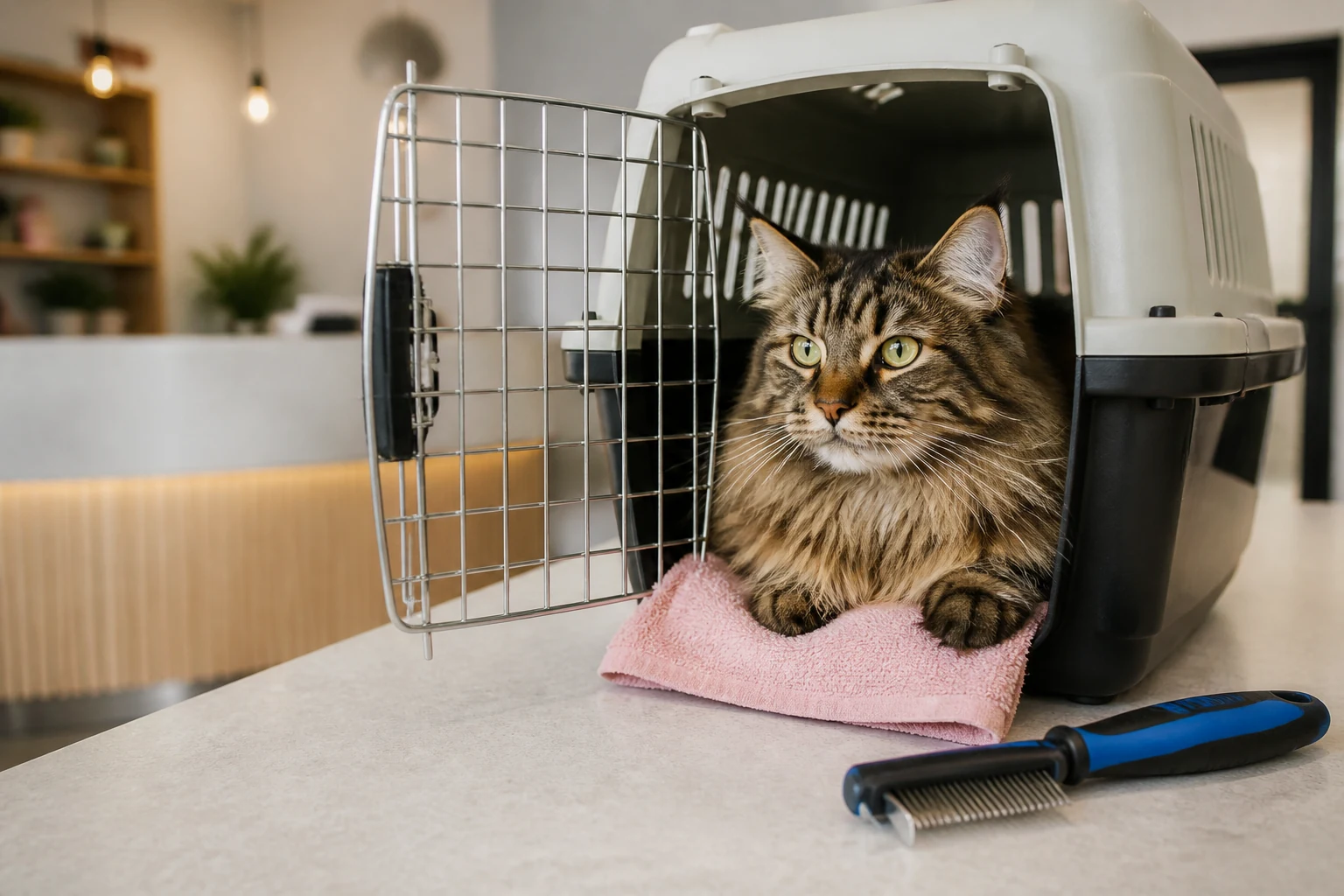
A veterinarian is the safest choice when skin looks red or infected, your cat is senior or arthritic, or gentle sedation is needed so tight pelts can be shaved pain-free—review discomfort cues in our Cat Grimace Scale pain guide.
How do you keep the grooming session calm?
Keep sessions under two minutes, let your cat walk away freely if it objects, and stop at the first tail lash or ear flatten so grooming never turns into a restraint battle [4]. Pair calm handling with our guide to trim cat nails safely.
What should you do after the mat is gone?
Inspect the skin underneath for redness or flaking, reward your cat with a favorite treat, and add quick daily finger-checks behind the ears, under the armpits, and along the hindquarters [1] [2].
What can cause repeated mats?
Sudden or recurring fur matting—especially on the lower back and hips of a normally tidy cat—often signals that arthritis stiffness, excess weight, dental pain, or illness is preventing normal self-grooming [2]. Check mobility tips in helping an arthritic cat at home and coat clues in cat grooming problems.
Conclusion
Removing small cat fur mats at home is safe only when tangles are loose, dry, and away from delicate skin, and your cat stays relaxed throughout. Anchor the fur at the base, tease outer edges apart with your fingers and a wide-tooth comb, never use household scissors or water on tight mats, and book a groomer or veterinarian whenever matting is close to the skin [2] [3].
Frequently Asked Questions
How do you fix matted fur on a cat without hurting them?
For a small, loose mat, hold the fur between the mat and the skin with your fingers so the skin does not pull, tease the outer edges apart gently, and comb only the loosened tips with a wide-tooth comb in 30-second sessions [2]. If the mat is tight or your cat flinches, stop and have a professional shave it safely.
Can I cut a small mat out of my cat’s fur with scissors?
No—never use scissors to cut out cat fur mats. Cat skin is thin, elastic, and easily pulled upward into the base of a mat, making accidental cuts common; veterinarians and feline groomers use guarded electric clippers instead [3].
Is matted hair on a cat painful?
Yes—tight mats pull constantly on hair follicles with every step, restrict movement, and trap moisture, dirt, or parasites against the skin, which can cause painful sores or skin infections [3].
Should I bathe my cat before removing mats?
No—water and shampoo cause tangled undercoat fibers to tighten and felt closer to the skin, making mats much harder to remove. Always remove loose tangles before bathing, or ask a groomer for help first [2].
Why is my cat’s fur suddenly getting matted?
Beyond long coats and seasonal shedding, sudden matting in an adult or senior cat often means arthritis pain, obesity, dental discomfort, or illness is making twisting to self-groom painful—schedule a veterinary checkup if grooming drops off [2].
References
[1] Cornell Feline Health Center. Choosing and Caring for Your New Cat (2024).
[2] VCA Animal Hospitals. Grooming and Coat Care for Your Cat (2026).
[3] ASPCA. A Haircut Could Save a Life: Preventing Your Pet’s Coat from Matting.
[4] AAFP and ISFM. 2022 AAFP/ISFM Cat Friendly Veterinary Interaction Guidelines.
[5] ASPCA. Cat Grooming Tips (2024).