

Wondering what do you need for a kitten or new cat? Your day-one new cat supplies checklist includes a secure carrier, familiar life-stage food, washable bowls, an easy-entry litter box with scoop, a scratching post, and a cozy hiding spot [1] [2]. Estimate total setup costs with our Cat Adoption Cost Calculator.
Table of Contents
- Before You Shop: Set Up a Quiet Starter Room
- What Should You Ask the Shelter or Rescue Before Shopping?
- Kitten vs. Adult Cat: Which Supplies Change?
- What Must Be Ready on Day One (Cat Essentials List)?
- How Do You Choose Each Essential?
- What Can Wait Until Your Cat Settles In?
- How Should You Budget for New-Cat Supplies?
- Conclusion
- Frequently Asked Questions
- References
Before You Shop: Set Up a Quiet Starter Room
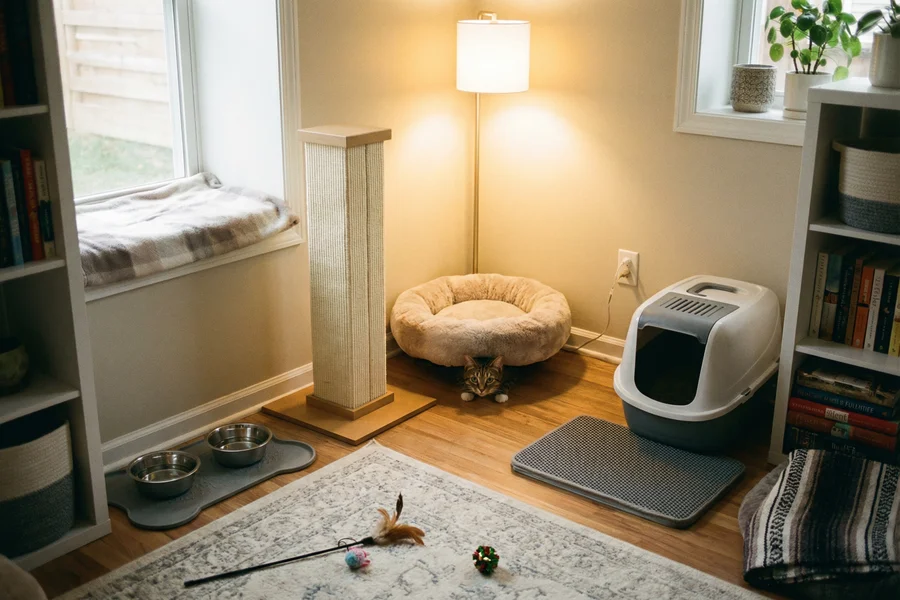
Set up one quiet, cat-safe starter room before bringing a new cat or kitten home, placing food, water, a litter box (away from bowls), a hiding spot, and a scratching post inside so your pet can decompress safely [3]. Remove cords, medications, and toxic plants like lilies first using our first-time owner’s cat-proofing guide [1].
What Should You Ask the Shelter or Rescue Before Shopping?
Ask the shelter, foster, or breeder what food, litter, and box style your cat already uses—plus which medical records or starter supplies come home at pickup—to prevent stomach upset and duplicate purchases [3]:
| Ask about | Why it changes the shopping list |
|---|---|
| Current food & feeding routine | Buy a starter bag/cans of the exact food so you avoid abrupt diet changes on day one |
| Current litter & box style | Start with familiar litter texture; for very young kittens, ask whether they mouth litter |
| Age, size & mobility | Ensures the litter box lip is low enough for a small kitten or senior cat to step over easily |
| Vaccination & microchip records | Prepare your folder using our new cat first-vet-visit guide |
Planning the whole adoption journey? Read our complete cat adoption guide.
Kitten vs. Adult Cat: Which Supplies Change?
While the core cat essentials list is similar at every age, kittens need growth-formulated food, low-entry litter boxes, and kitten-safe litter/toys, whereas adult cats need full-sized boxes (1.5× body length) and familiar food [2] [3]:
| Cat or household | What to adjust before arrival | What to avoid assuming |
|---|---|---|
| Growing kitten | Buy AAFCO kitten-growth food, a low-lip litter pan, and wand toys stored out of reach after play | Do not use automatic self-cleaning litter boxes for kittens under 6–8 weeks or minimum weight limits [2] |
| Very young kitten learning box habits | Ask the shelter/vet whether unscented non-clumping paper/pellet litter or fine clumping litter is best [2] [4] | Never assume any litter is safe if eaten |
| Adult cat | Provide an extra-large open litter box, tall scratching post, and familiar food | Avoid switching food and litter brands simultaneously on arrival day [3] |
| Multi-cat home | Follow the “one box per cat plus one extra” rule across separate rooms [1] | Do not line all boxes up in one corner |
What Must Be Ready on Day One (Cat Essentials List)?
Have these six core essentials set up before pickup so your new cat or kitten has safe transport, nutrition, elimination, scratching, and a secure hideaway from minute one [1] [2]:
| Day-one need | What to prepare | Practical check |
|---|---|---|
| Safe transport | Sturdy, well-ventilated top- or front-loading carrier | Buckle the carrier in the car; never let a cat ride loose [2] |
| Food and water | Current life-stage food plus wide, shallow washable dishes | Keep a fresh water bowl available even if you add a fountain later [3] |
| Litter setup | Easy-entry litter box, familiar unscented litter, scoop, and waste bags | Ensure enough floor space for your cat to turn around comfortably [1] |
| Hiding and resting | Cardboard box with a soft blanket or open carrier in a quiet corner | Purchased beds can wait until you see whether your cat prefers open or covered spots [3] |
| Scratching surface | Stable vertical sisal scratching post or corrugated cardboard scratcher | Place near sleeping areas so your cat can stretch and mark upon waking [1] |
| ID & medical records | Microchip registration info, breakaway collar (if used), and vet contact number | Update microchip contact details on day one [2] |
A secure carrier is a day-one essential
A properly sized carrier is useful for bringing a new cat home and for future transport. Confirm the shelter’s pickup requirements and keep the carrier available as a familiar hideaway.
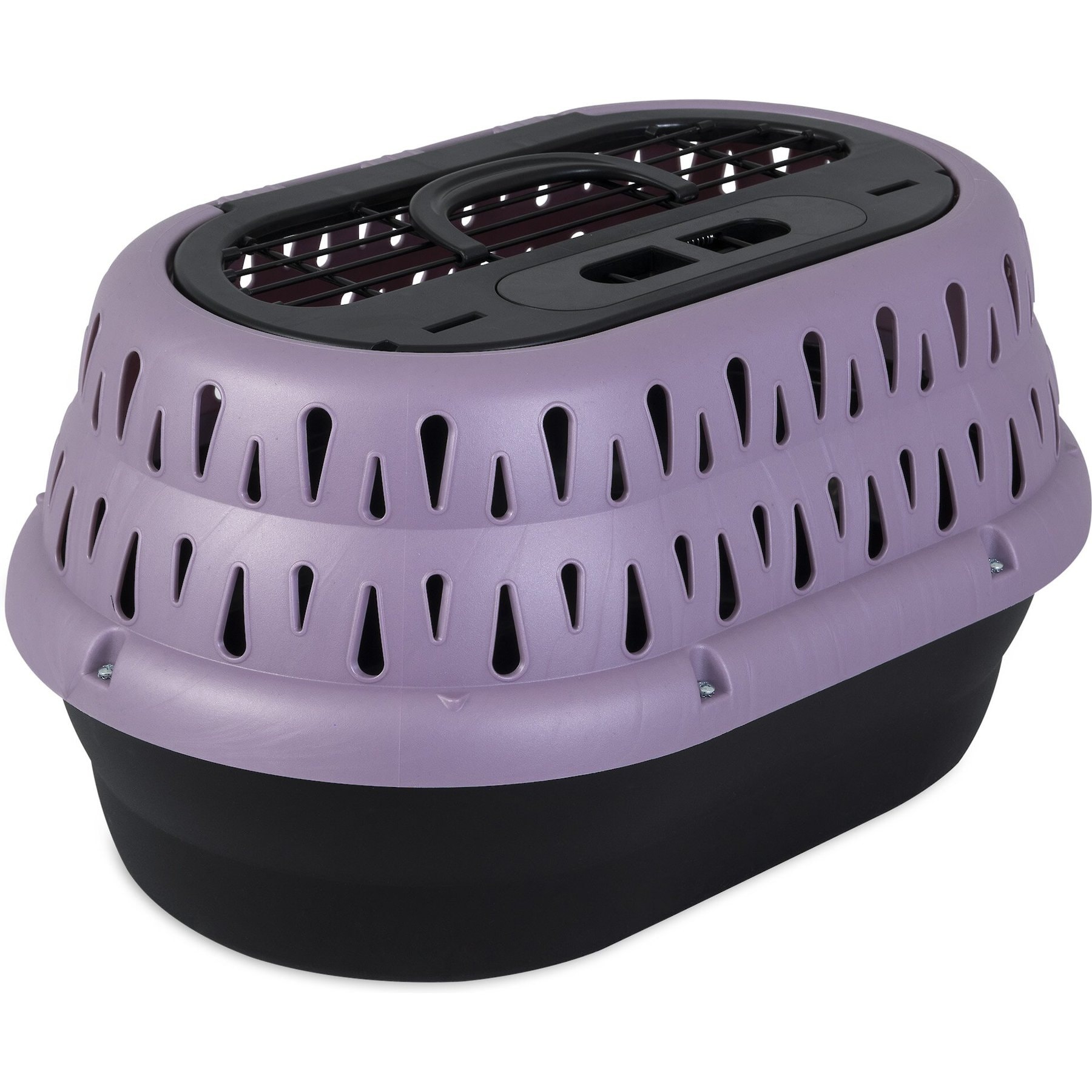
Petmate
Petmate Top Load Cat Kennel, Pearl Bubble Grape/Black
The Petmate Top Load Cat Kennel is designed for cat companions who weigh up to 10 pounds. Purr-fect for travel or house-training, this kennel…
$44.99
Shop ChewyWe may earn a commission if you buy through this Chewy link, at no extra cost to you. Product details and prices can change.
How Do You Choose Each Essential?
Select durable, easy-to-clean basics matched to your cat’s size and habits rather than buying complex gadgets before knowing your pet’s preferences [3] [5]:
What carrier should you buy for a new cat?
Choose a rigid, well-ventilated carrier with a removable top or top-load door so veterinary exams and home loading stay low-stress [2].
Which food and bowls should you prepare?
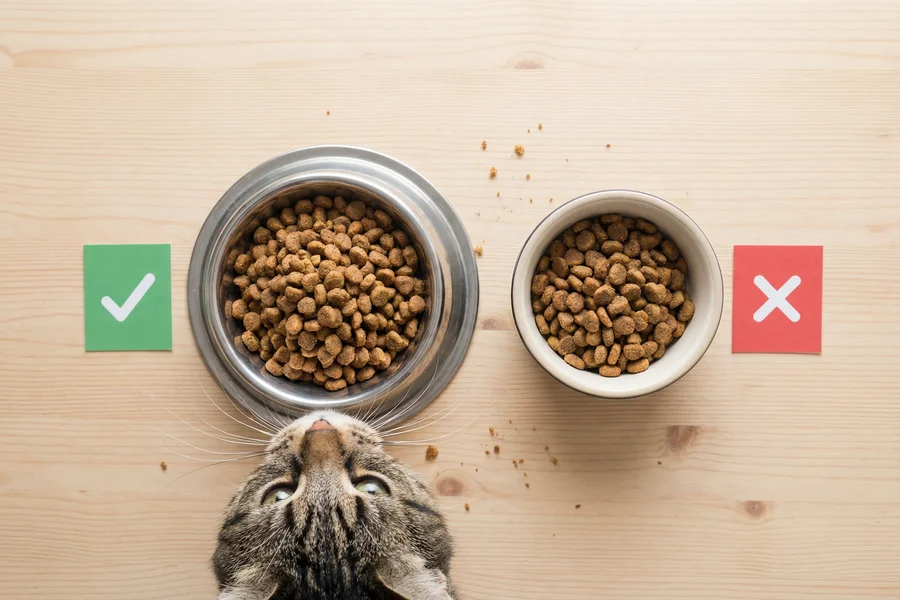
Use wide, shallow stainless-steel, ceramic, or glass dishes that do not crowd sensitive whiskers, and feed the cat’s familiar diet before making any gradual transitions—see our SnuggleSouls cat feeding guide [3] [5].
Which litter box and litter should you buy?
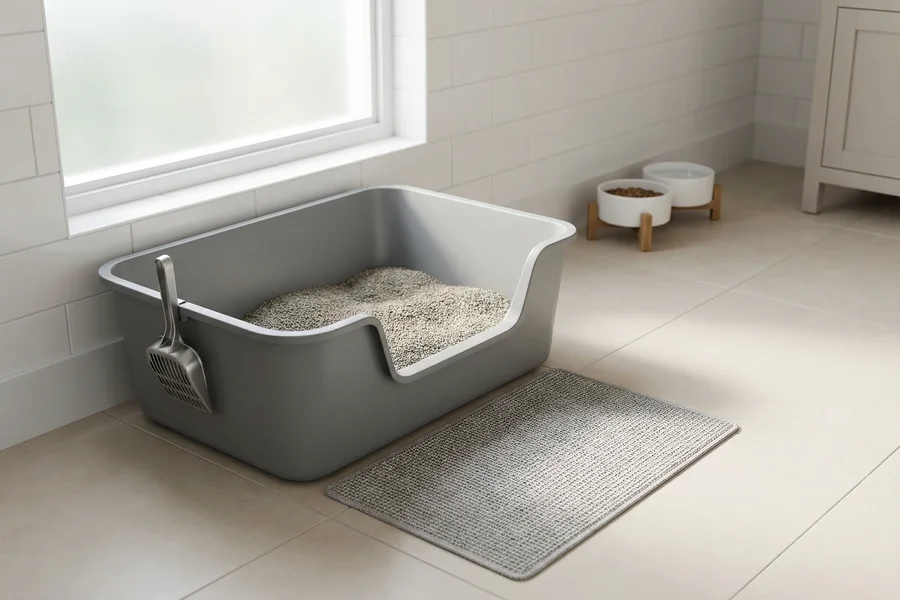
Pick an uncovered rectangular box at least 1.5 times your cat’s body length (or a low-lip tray for young kittens) filled with unscented litter familiar to the cat [1] [3].
What scratching, hiding, and ID items are enough?
A sturdy sisal post, a blanket-lined cardboard box, a properly fitted breakaway collar, and your vet clinic’s phone number cover all day-one behavioral and safety needs [1] [2], and you can prepare for your checkup with our new cat first-vet-visit guide.
What Can Wait Until Your Cat Settles In?
Hold off on luxury beds, tall multi-tier cat trees, water fountains, automatic feeders, and self-cleaning litter boxes until you observe your cat’s size, jumping confidence, and litter preferences over the first 30 days with your new cat [2] [3].
How Should You Budget for New-Cat Supplies?
Divide your budget into one-time day-one gear (carrier, litter box, bowls, scratcher), recurring monthly consumables (food and litter), and initial veterinary care—compare realistic ranges in our cat adoption cost guide.
Conclusion
Preparing a new cat or kitten supplies checklist does not require buying every accessory in the pet store before pickup day. Set up one quiet, hazard-free starter room with a secure carrier, familiar food and bowls, an easy-entry litter box, a scratching post, and a cozy hiding box, then add upgrades once your cat settles in [1] [3].
Frequently Asked Questions
What do you need for a new kitten vs. an adult cat?
For a new kitten, prepare a secure carrier, kitten-formulated growth food, shallow bowls, a low-entry litter pan with kitten-appropriate unscented litter, a small scratching post, a warm hiding box, and wand toys stored safely after play [1] [2]. Adult cats need the exact same essentials scaled up to full adult litter-box length (1.5× body length) and taller scratching posts.
How many litter boxes should I have for one cat?
Follow the “one box per cat plus one extra” rule—meaning two litter boxes in separate, quiet locations for a single cat whenever space permits [1].
Should I use clumping litter for a kitten?
Ask your kitten’s shelter, foster, or veterinarian first: some veterinary sources recommend unscented non-clumping paper or pellet litter for very young kittens that still mouth litter, while older kittens often prefer fine unscented clumping litter [2] [4].
Do I need to buy a cat bed before adoption?
No—a quiet cardboard box lined with a soft towel or your open carrier makes an ideal, familiar hiding bed during the first week, letting you see whether your cat prefers open perches or covered caves before buying a bed [3].
Can I change my cat’s food or litter on the first day?
Keep your cat’s familiar food and litter for the first week whenever possible, then transition gradually over 7 to 10 days to prevent stress-related digestive upset or litter box avoidance [3].
References
[1] American Animal Hospital Association (AAHA). New Kitten Checklist: First Vet Visit, Supplies & First-Year Care (2026).
[2] VCA Animal Hospitals. New Kitten Checklist.
[3] Cats Protection. Preparing Your Home For a Cat.
[4] PetMD. New Kitten Checklist: Essential Supplies, Home Prep, and Vet Visits (2026).
[5] The International Cat Association (TICA). Essential Cat Care Supplies.