
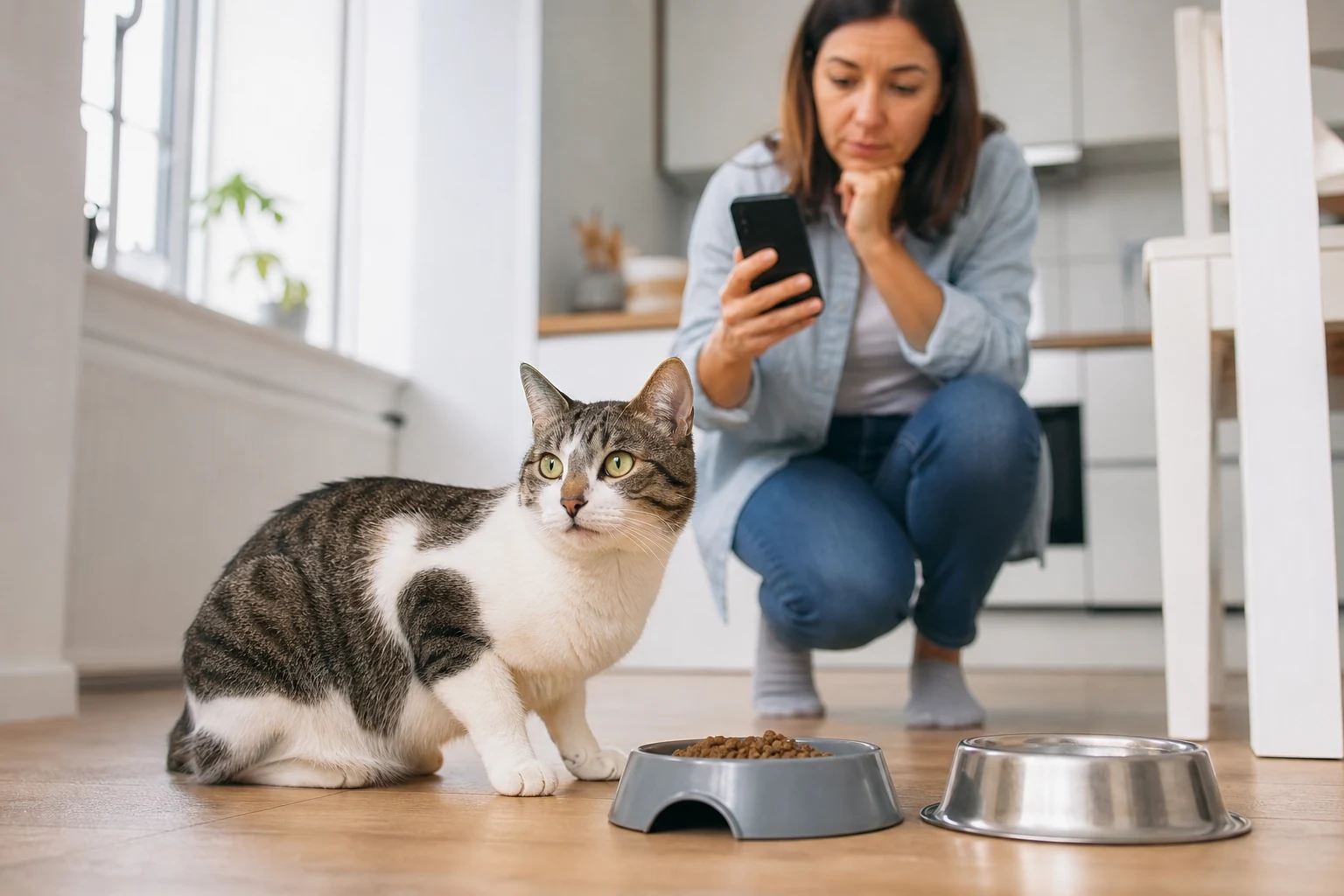
Cat regurgitation is usually a passive return of food or fluid from the esophagus, while vomiting is an active process that often includes nausea, drooling, swallowing, and abdominal heaving. The difference matters because each pattern can point your veterinarian toward different causes and different tests.
If your cat brought something up, try to notice the body motion, timing after eating, material, and how your cat acts afterward. This guide helps you describe the episode clearly, recognize warning signs, and know when to call a veterinarian. It is educational only and cannot diagnose your individual cat.
Table of Contents
- What is the main difference between cat regurgitation and vomiting?
- How can you tell regurgitation from vomiting at home?
- Could it be coughing instead?
- What causes regurgitation in cats?
- What causes vomiting in cats?
- Could eating habits or food be involved?
- When should you call a veterinarian?
- What should you record before calling the vet?
- What patterns should you watch over time?
- Conclusion: Know the motion, then watch the whole cat
- Frequently Asked Questions
- References
What is the main difference between cat regurgitation and vomiting?
Regurgitation is usually passive: food, water, or saliva comes back up with little warning and little abdominal effort. Vomiting is active: the cat often looks nauseated, may drool or swallow repeatedly, crouches, and uses visible belly contractions before material comes out.
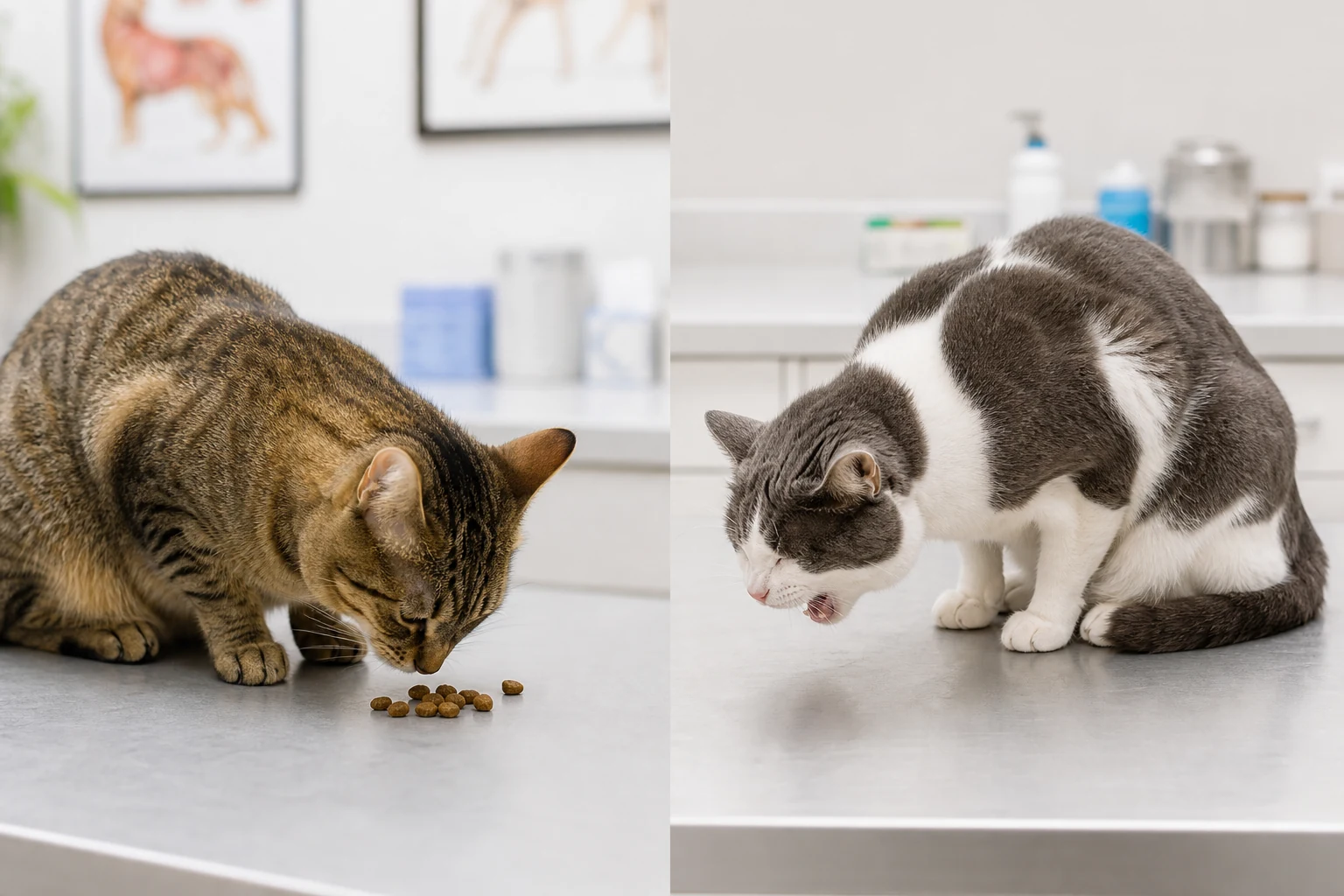
Merck describes regurgitation as a passive process involving material from the esophagus rather than the stomach 1. Cornell explains that vomiting is a complex reflex that can accompany many digestive and non-digestive conditions 2. In plain English, regurgitation often asks, "Why is food not moving normally through the esophagus?" Vomiting asks, "Why is the stomach or body triggering an active emptying reflex?"
This article is meant to complement, not replace, our broader guide on why cats vomit. If the episode is forceful, repeated, or paired with illness, treat it as a veterinary question rather than a home-labeling exercise.
How can you tell regurgitation from vomiting at home?
Watch the motion first, then the timing and material. The appearance of the pile can help, but it is less reliable than what your cat's body did before it happened.
| Clue | More like regurgitation | More like vomiting |
|---|---|---|
| Body effort | Sudden, passive, little belly movement | Nausea signs, retching, abdominal heaving |
| Timing | Often soon after eating or drinking | Any time, including hours after meals |
| Material | Undigested food, tube-shaped food, water, saliva | Partly digested food, foam, bile, hair, fluid |
| Cat afterward | May seem normal unless it repeats | May hide, drool, act tired, or refuse food |
| Best note to take | Food timing and swallowing behavior | Frequency, symptoms, and possible exposures |
Some cats do not read the textbook. A cat may vomit soon after eating, and regurgitated food may not always look neat or tube-shaped. That is why a short video is more useful than trying to decide the label from memory.
Could it be coughing instead?
Coughing can look like vomiting because a cat may crouch, extend the neck, and make repeated hacking movements. The key difference is that coughing is usually a respiratory event, while vomiting or regurgitation brings up food or stomach contents.
If your cat hacks repeatedly but little or no food comes up, compare the episode with our cat coughing guide. Breathing trouble, open-mouth breathing, blue or pale gums, collapse, or severe weakness is an emergency.
Hairballs can also confuse the picture. Cornell notes that frequent hairballs or repeated unproductive retching should not be dismissed as normal grooming 4. A video helps your vet separate cough-like hacking, hairball attempts, regurgitation, and true vomiting.
What causes regurgitation in cats?
Regurgitation can happen when swallowed food or liquid does not move normally down the esophagus. Possible reasons include eating too fast, esophageal irritation, narrowing, motility problems, foreign material, or other disorders that interfere with swallowing and passage of food 1.
Call your veterinarian if regurgitation repeats, begins suddenly, happens with water as well as food, or comes with weight loss, drooling, trouble swallowing, coughing, nasal discharge, fever, or low energy. Cats that repeatedly regurgitate may also be at risk of inhaling material, especially if they cough, gag, or seem unwell afterward.
Do not push food changes or home remedies as the main solution if the pattern continues. Your veterinarian may need the timing, video, diet details, exam findings, and sometimes imaging or other tests to understand whether the esophagus, stomach, airway, or another body system is involved.
What causes vomiting in cats?
Vomiting has a wider cause list because many conditions can trigger nausea or stomach emptying. Cornell lists gastrointestinal disease, parasites, foreign material, toxins, medication effects, and diseases affecting organs outside the digestive tract among possible causes 2.
Common categories include:
- Eating something spoiled, irritating, toxic, or indigestible.
- Sudden diet changes or food intolerance.
- Hairballs, especially if frequent or paired with retching.
- Parasites or infectious disease.
- Inflammatory bowel disease or other gastrointestinal conditions.
- String, ribbon, toys, or other foreign-body obstruction.
- Kidney, liver, pancreatic, thyroid, diabetic, or other systemic disease.
- Medication reactions or toxin exposure.
VCA emphasizes that severe, persistent, or symptom-associated vomiting needs veterinary attention 3. The key is pattern and whole-cat health, not just whether the material looks like food, foam, bile, or hair.
Could eating habits or food be involved?
Yes, eating habits can contribute, especially when a cat eats quickly, drinks a lot at once, exercises right after eating, or gulps food in a stressful multi-cat setting. But repeated regurgitation or vomiting should not be managed by guessing through food after food without veterinary advice.
Try practical, low-risk observations first:
- Note whether episodes happen within minutes of eating or much later.
- Record the exact food, portion size, treats, and feeding schedule.
- Watch whether other pets are causing rushing or food guarding.
- Ask your vet whether a slow feeder, smaller meals, or a different feeding routine makes sense.
If your veterinarian agrees that diet is part of the plan, our guide to choosing the right wet food can help you evaluate texture, moisture, and transition basics. Avoid abrupt diet changes for a cat that is already nauseated or not eating well.
When should you call a veterinarian?
Call a veterinarian promptly when regurgitation or vomiting repeats, happens more than once in a short period, or appears with any change in appetite, energy, hydration, stool, urination, weight, breathing, swallowing, or behavior. Seek urgent care if your cat is rapidly worsening.
Go to an emergency veterinarian now for:
- Trouble breathing, collapse, seizures, severe weakness, or unresponsiveness.
- Suspected poisoning, medication exposure, or ingestion of a toxic plant.
- Suspected string, ribbon, thread, toy, bone, or other foreign object.
- Repeated vomiting or inability to keep water down.
- Blood in vomit, dark coffee-ground-like material, or a swollen painful abdomen.
- Vomiting or regurgitation with severe lethargy, dehydration, fever, or rapid decline.
- A kitten, senior cat, or medically fragile cat who cannot keep food or water down.
If poisoning is possible, contact your veterinarian or a poison-control service immediately. The ASPCA Animal Poison Control Center is a dedicated poison resource, but emergency veterinary care may still be needed 5. Our cat health guides can help with education after your cat is stable; they are not a substitute for urgent care.
What should you record before calling the vet?
A short video is often the most helpful record because it captures the motion. If it is safe, record from a respectful distance without delaying care.

Write down:
- Date, time, and number of episodes.
- Whether your cat had just eaten or drunk water.
- Whether the episode looked passive, forceful, cough-like, or hairball-like.
- What came up: food, liquid, foam, bile, hair, blood, plant matter, or possible foreign material.
- Appetite, thirst, litter box changes, stool, energy, hiding, pain, and breathing.
- Recent foods, treats, medications, plants, cleaners, toys, string, ribbon, or household access.
- Your cat's age, known diagnoses, and current medications.
Do not wait to build a perfect log if your cat has a red flag. The log supports care; it does not replace it.
What patterns should you watch over time?
The pattern over days or weeks can matter more than a single episode. Repeated regurgitation after meals may suggest a different problem than occasional vomiting with hair, while weight loss or appetite change raises the concern level for both.
Watch for:
- Increasing frequency.
- A switch from food-only episodes to liquid, foam, bile, or blood.
- Eating less, eating ravenously, or drinking more.
- Weight loss, muscle loss, or poor coat condition.
- Diarrhea, constipation, black stool, or straining.
- Hiding, irritability, reduced jumping, or low energy.
If your cat's shape or muscle changes, our guide to body condition and muscle condition can help you describe what you see. Bring that information to your veterinarian, especially for senior cats or cats with chronic disease.
Conclusion: Know the motion, then watch the whole cat
Cat regurgitation and vomiting can look similar, but the body motion is the biggest clue: passive return points toward regurgitation, while nausea and abdominal effort point toward vomiting. Coughing and hairball attempts can blur the picture, so video and timing notes are often more useful than a guess.
Repeated episodes, any emergency warning sign, possible toxin exposure, suspected foreign material, or a cat who seems unwell deserves veterinary care. Your job is not to diagnose the cause at home; it is to notice the pattern, keep your cat safe, and get help when the signs are concerning.
Frequently Asked Questions
Is cat regurgitation less serious than vomiting?
Not always. A single passive food return after fast eating may be less concerning than repeated vomiting, but recurring regurgitation can signal an esophageal or swallowing problem. If it happens more than once, starts suddenly, or comes with weight loss, coughing, drooling, or low energy, call your veterinarian.
Why does my cat throw up whole pieces of food?
Whole food can appear with regurgitation, especially soon after eating, but vomiting can also bring up recently eaten food. Watch whether the episode was passive or involved nausea and belly heaving. If it repeats, record a video and ask your veterinarian.
Can hairballs look like vomiting?
Yes. A hairball episode can include hacking or retching and may be mistaken for coughing or vomiting. Frequent hairballs, repeated unproductive retching, appetite loss, lethargy, constipation, diarrhea, or ongoing vomiting should be checked by a veterinarian.
Should I use a slow feeder for cat regurgitation?
A slow feeder or smaller meals may help some fast eaters, but it should not be your only response to repeated regurgitation. Ask your veterinarian first if the pattern is new, frequent, involves water, or appears with any illness signs.
What should I do if my cat vomits and then acts normal?
Monitor closely, note the time and possible trigger, and make sure your cat keeps eating, drinking, urinating, and acting normally. Call your veterinarian if it happens again, if your cat is a kitten, senior, or medically fragile, or if any red flag appears.
References
[1] Merck Veterinary Manual. (2025). Regurgitation in Small Animals. Read the Merck Veterinary Manual overview
[2] Cornell Feline Health Center. (2026). Vomiting. Read Cornell's feline vomiting guide
[3] VCA Animal Hospitals. (2026). Vomiting in Cats. Read the VCA vomiting guide
[4] Cornell Feline Health Center. (2026). Hairballs. Read Cornell's hairball guidance
[5] ASPCA Animal Poison Control Center. (2026). Animal Poison Control. Read ASPCA poison-control guidance
 Why Does My Cat Flinch When Touched While Sleeping? Startle, Trust, and Pain Clues">
 Cat Scratching Baseboards: Trim Guards and Route Fixes">
 EN
EN DE
DE ES
ES PT
PT