
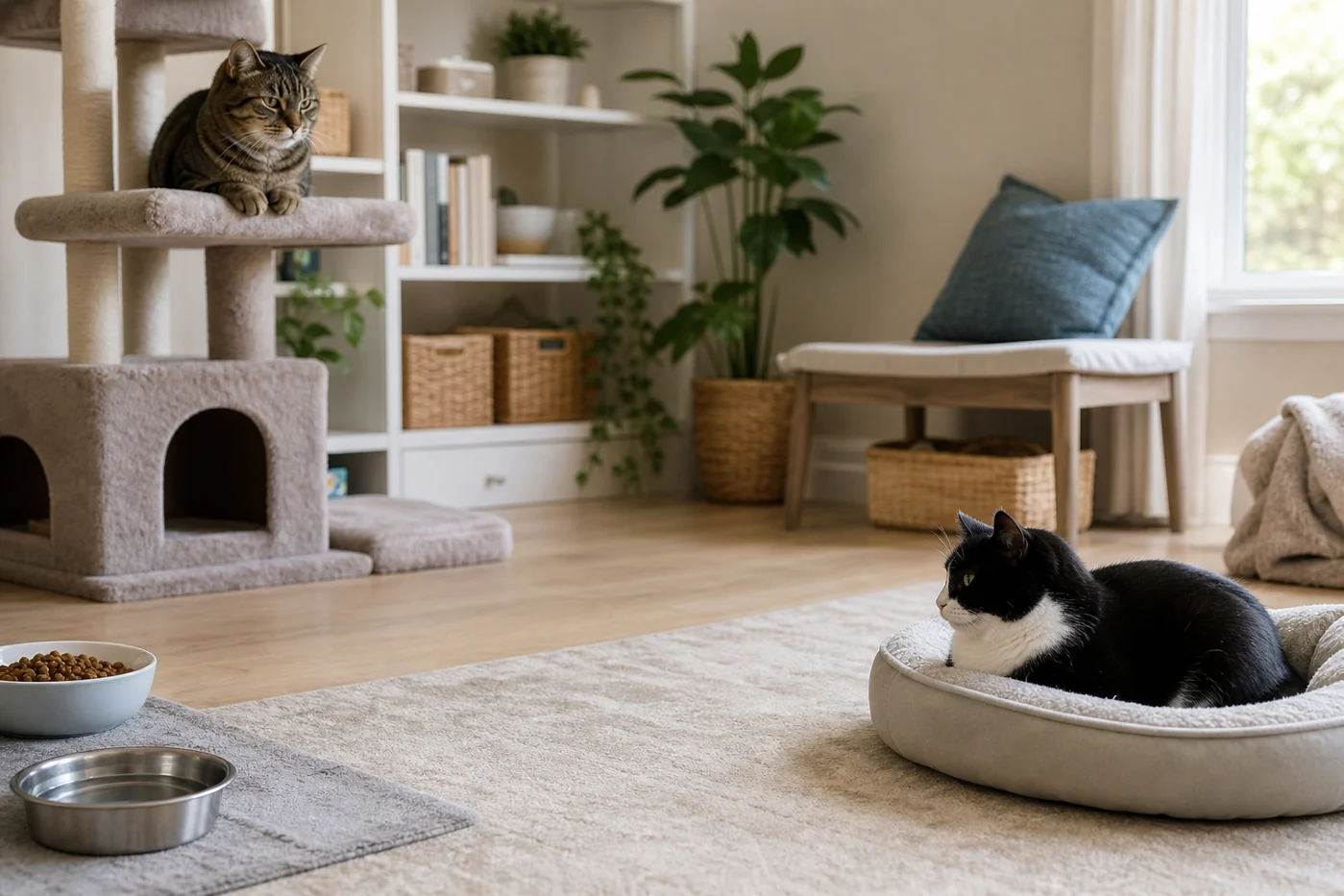
To stop one cat from bullying another, first protect the target cat, then reduce competition, separate tense cats before fights happen, and rebuild calm contact slowly. Cat bullying is usually not about one cat being "mean"; it is often intercat tension, resource pressure, fear, pain, poor introductions, or a home layout that lets one cat control another cat's choices.
The goal is not to force the cats to become best friends. The goal is for every cat in the home to eat, drink, rest, use the litter box, move through rooms, and approach people without being chased, cornered, stared down, or blocked.
Table of Contents
- What are the signs of cat bullying?
- Why does one cat bully another cat?
- How do you interrupt bullying safely?
- How can you stop resource blocking at home?
- What should you do after a fight or chase?
- How do you rebuild peace between the cats?
- When should you call a vet or behavior professional?
- Conclusion:
- Frequently Asked Questions
- References
What are the signs of cat bullying?
Cat bullying can be loud and obvious, but it is often quiet. A bully cat may chase, swat, ambush, or pin another cat, yet many homes have subtler tension: one cat blocks hallways, guards the litter box room, stares from a doorway, or makes the other cat avoid parts of the home.
The American Association of Feline Practitioners describes intercat tension as a welfare issue that can include obvious conflict and subtle stress signals in multi-cat homes 1. International Cat Care also notes that hissing, chasing, swiping, and fighting are clear signs of tension between cats 3.
Watch for patterns like these:
| What you see | What it may mean | First safe step |
|---|---|---|
| One cat chases the other from food, a person, or a room | Resource pressure or territorial control | Separate resources and block access before the chase starts |
| One cat waits near a doorway or litter box | Blocking behavior | Add alternate routes and extra litter boxes in separate locations |
| The target cat hides more, moves low to the ground, or avoids rooms | Fear or loss of safe access | Give the target cat a protected zone with food, water, litter, and rest |
| Staring, stalking, tail lashing, growling, or crouching | Escalating tension | Interrupt calmly and increase distance |
| Bites, scratches, screaming, or fur flying | Unsafe conflict | Separate immediately and check for injuries |
Do not ignore the cat who seems to be "just hiding." Hiding can be a normal coping strategy, but if one cat hides because another cat controls the home, it is a sign the environment needs help. This guide to why your cat is hiding can help you separate normal caution from ongoing stress.
Why does one cat bully another cat?
One cat may bully another because the home creates competition, the cats were introduced too quickly, one cat is fearful or frustrated, or a medical problem is changing how one cat smells, moves, or reacts. Cats are not small dogs; many do not naturally enjoy sharing close space with unrelated cats.
Common causes include:
- Too few litter boxes, food stations, water bowls, beds, scratching posts, or high resting areas.
- Key resources grouped in one room, letting one cat guard all of them.
- A new cat introduced before the resident cat felt secure.
- Tension after a vet visit, boarding stay, move, renovation, or schedule change.
- Outside cats visible through windows, causing redirected aggression.
- Pain, dental disease, arthritis, hyperthyroidism, urinary discomfort, or other health changes.
- A young, intense cat repeatedly pouncing on an older or timid cat.
The AAFP/ISFM environmental needs guidelines emphasize that cats need safe places, separated key resources, play/predatory outlets, positive human interaction, and a predictable scent environment 2. When these needs are missing, the more confident cat may gain control and the quieter cat may lose access.
If you are unsure what behavior pattern you are seeing, browse the SnuggleSouls cat behavior guides and make notes about where the tension happens, which cat approaches first, and what resource is nearby.
How do you interrupt bullying safely?
Interrupt early, before a chase or fight starts. The safest moment is when you first notice staring, stalking, blocking, tail lashing, or a tense crouch.
Use calm, low-drama interruptions:
- Toss a treat away from the target cat so the confident cat turns and moves.
- Drag a wand toy in the opposite direction if play does not increase arousal.
- Place a cushion, cardboard panel, or laundry basket between the cats to break eye contact.
- Open a door to give the target cat an escape route.
- Call one cat to a separate room for a predictable reward.
- End the session and close a door if either cat is escalating.
Do not yell, spray water, hit, chase, or force the cats together. Punishment can make the other cat's presence predict fear, which may increase future conflict. Do not pick up a highly aroused cat with bare hands; redirected bites can be serious. If biting is part of the pattern, this guide to why cats bite can help you think about arousal, fear, and overstimulation.
If a fight has already started, use distance and barriers, not your hands. A loud clap, a tossed soft object nearby, or a large visual block may interrupt the cats long enough to separate them behind closed doors. Once they are apart, let them cool down before checking closely for injuries.
How can you stop resource blocking at home?
Stop resource blocking by making it impossible for one cat to control every important thing. Spread food, water, litter boxes, resting places, scratching options, and vertical routes across the home so the target cat has choices.
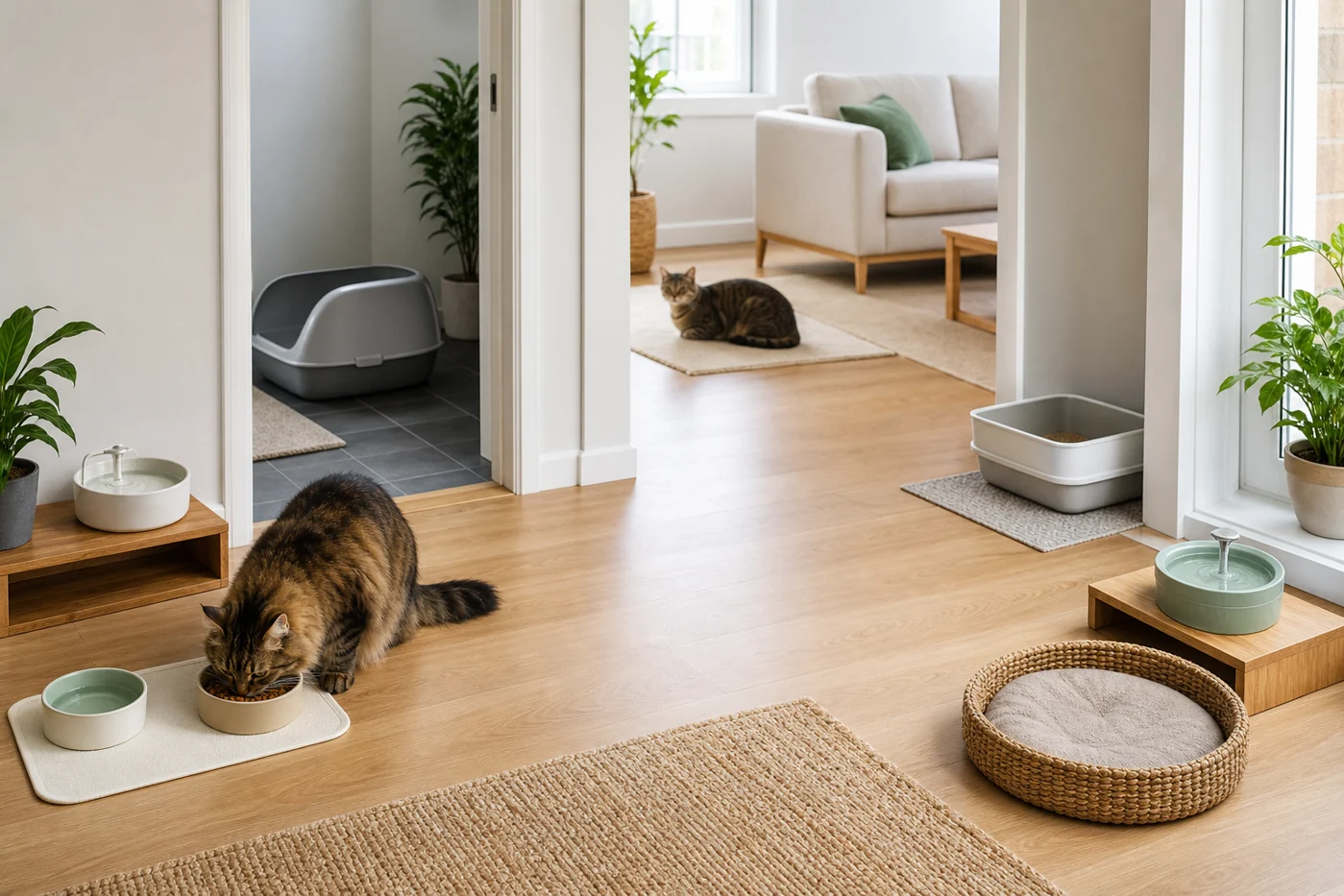
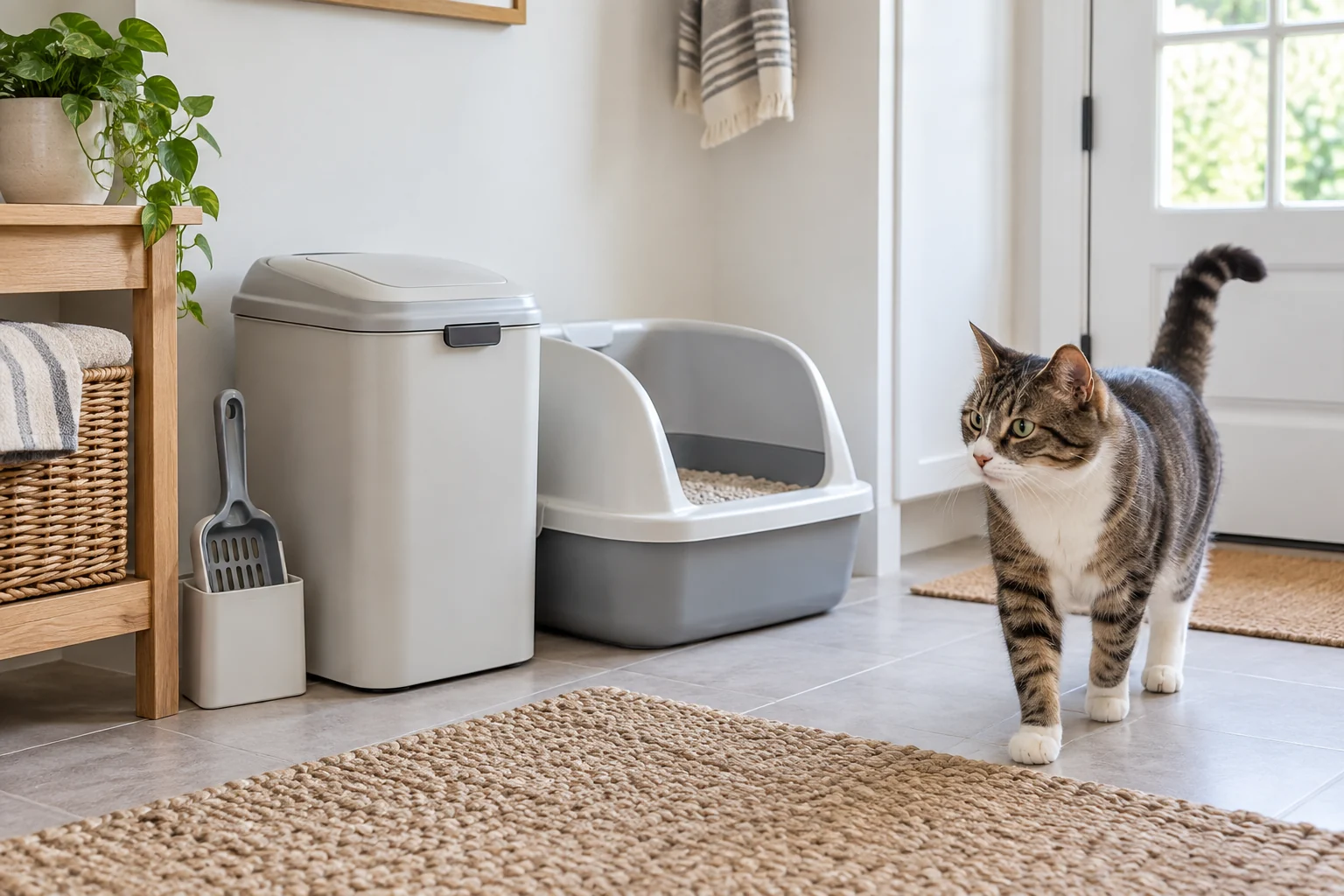
Separated resources reduce the chance that one confident cat can control food, water, litter boxes, or favorite resting spots.
Start with this setup:
- Feed cats in separate rooms or at widely separated stations.
- Put water in more than one location.
- Use multiple litter boxes in different areas, not side by side in one closet.
- Add vertical resting places so cats can pass without face-to-face pressure.
- Create hiding places with more than one exit.
- Keep favorite beds, scratchers, and window perches duplicated when possible.
- Avoid narrow dead ends where one cat can trap another.
The Ohio State University Indoor Pet Initiative describes conflict among indoor cats as a common source of stress and notes that some cats become withdrawn or ill when their safety feels threatened 5. That is why the target cat needs real access, not just theoretical access.
For litter box pressure specifically, use the best cat litter box setup guide to rethink size, placement, and escape routes. If one cat guards the only litter area, adding a second box beside it usually does not fix the problem; the boxes need to be in separate places.
What should you do after a fight or chase?
After a serious chase or fight, separate the cats and reset the relationship. Do not put them back together immediately to "see if they are fine." The target cat may still be frightened, and the other cat may still be aroused.
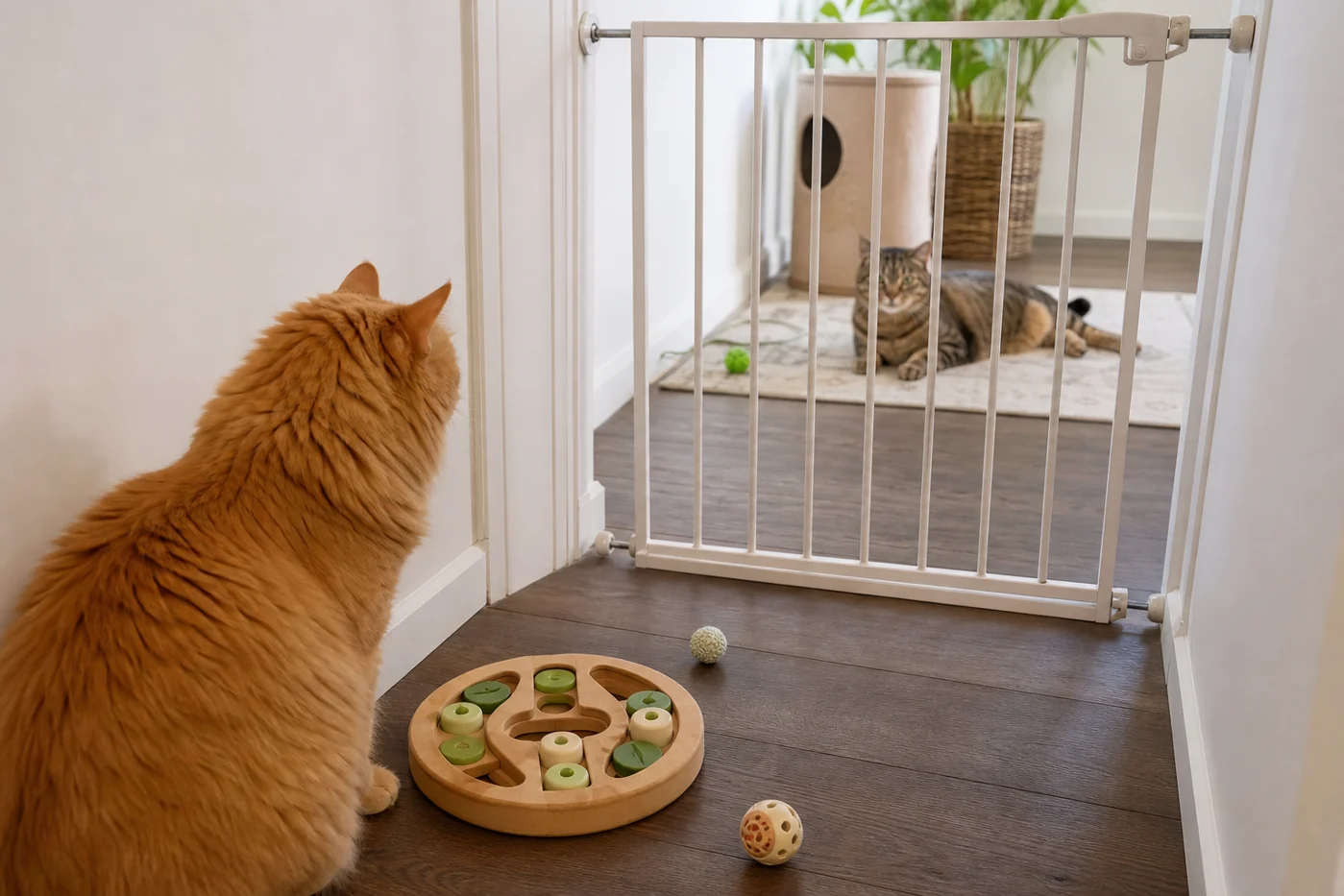
A barrier lets tense cats rebuild calm associations without forcing direct contact.
Use this reset plan:
- Give each cat a closed-door area with food, water, litter, rest, and hiding.
- Check for bites, scratches, limping, eye injuries, or pain.
- Keep them apart until both cats eat, groom, rest, and use the litter box normally.
- Restart scent swapping with bedding or room access while the other cat is elsewhere.
- Feed on opposite sides of a closed door.
- Move to brief barrier sessions only when both cats are calm.
- Return to short supervised time only after several calm barrier meetings.
If the original problem began with a rushed introduction, follow the slower framework in how to introduce two cats without fighting. For cats who already know each other, the same steps can work as a reintroduction after conflict.
ASPCA guidance for aggression between household cats emphasizes giving aggressive cats space and rewarding friendly behavior rather than trying to soothe or force contact during arousal 4. In practice, that means you manage distance first, then reward calm choices.
How do you rebuild peace between the cats?
Rebuild peace by pairing the other cat with predictable, low-pressure good things. The cats do not need to share a bowl, bed, or lap. They need to learn that the other cat's presence does not remove safety or resources.
Try a simple daily routine:
- Morning: feed cats separately, then allow visual access only if both are calm.
- Midday: give the target cat protected solo time in favorite rooms.
- Evening: use short parallel play with distance between cats.
- Before bed: separate if nights are when chasing happens.
During calm shared time, reward these behaviors:
- Looking at the other cat, then looking away.
- Walking past without speeding up or crouching.
- Resting in the same room with loose muscles.
- Using separate resources without guarding.
- Choosing to leave instead of chasing.
Keep sessions short enough that they end before tension rises. If one cat cannot disengage from staring or stalking, the session is too hard. Add distance, use a barrier, or return to separate rooms for a while.
Some cats become affectionate companions. Others become peaceful housemates who prefer distance. Both outcomes can be healthy if each cat has access to resources and can relax.
When should you call a vet or behavior professional?
Call a veterinarian promptly if either cat has a bite wound, bleeding, limping, eye injury, sudden behavior change, not eating, painful urination, repeated vomiting, rapid decline, or any sign that pain or illness may be involved. Cat bites can close over and form abscesses, so do not dismiss small punctures.
Also ask your vet for help when bullying appears suddenly in cats who used to get along. Pain, arthritis, urinary disease, dental disease, thyroid disease, cognitive change, and sensory decline can all affect tolerance and reactions.
Get qualified behavior help if:
- Fights repeat despite separation and resource changes.
- One cat cannot safely access food, water, litter, people, or resting places.
- The target cat hides most of the day.
- Either cat marks urine or avoids the litter box.
- You feel unsafe interrupting conflict.
- You are considering rehoming and need an objective welfare plan.
Stress-related litter box changes deserve special attention. This cat stress peeing guide can help you describe the pattern, but painful urination, straining, blood, repeated trips, or inability to urinate need urgent veterinary care.
Conclusion:
Stopping one cat from bullying another starts with protection, not punishment. Separate before fights escalate, give the target cat safe access to everything they need, spread resources across the home, and rebuild contact through calm, short, predictable sessions.
The best measure of success is not whether the cats cuddle. It is whether each cat can move, eat, rest, use the litter box, play, and seek attention without being controlled by the other cat. If conflict continues or either cat seems unwell, involve your veterinarian and a qualified feline behavior professional early.
Frequently Asked Questions
Should I punish my cat for bullying another cat?
No. Punishment can increase fear and make the other cat's presence feel more threatening. Use separation, barriers, resource changes, and rewards for calm behavior instead.
Is my cat playing or bullying?
Healthy play is usually loose, brief, and mutual, with pauses and role switching. Bullying is one-sided, tense, or repetitive, and the target cat hides, flees, screams, avoids resources, or cannot disengage.
Can cats live together after a serious fight?
Many cats can improve with separation, veterinary checks, resource changes, and slow reintroduction. Repeated injurious fights or severe fear need professional help to decide whether living together is fair to both cats.
How many litter boxes do I need for cats that do not get along?
A common starting point is one box per cat plus one extra, but placement matters as much as the number. Put boxes in separate areas so one cat cannot guard the only route.
What if one cat only bullies at night?
Use nighttime separation while you work on the cause. Add evening play, separate feeding, predictable sleeping zones, and closed doors if needed so the target cat can rest safely.
Will getting a third cat fix bullying?
Usually no. A third cat can add more competition and stress. Solve the current tension first with veterinary input, resource changes, and behavior support before adding another animal.
References
[1] American Association of Feline Practitioners. (2024). 2024 AAFP Intercat Tension Guidelines. URL
[2] American Association of Feline Practitioners and International Society of Feline Medicine. (2013). AAFP and ISFM Feline Environmental Needs Guidelines. URL
[3] International Cat Care. (2025). Multi-cat Households. URL
[4] ASPCA. (n.d.). Aggression Between Cats in Your Household. URL
[5] The Ohio State University Indoor Pet Initiative. (n.d.). Conflict Between Cats. URL
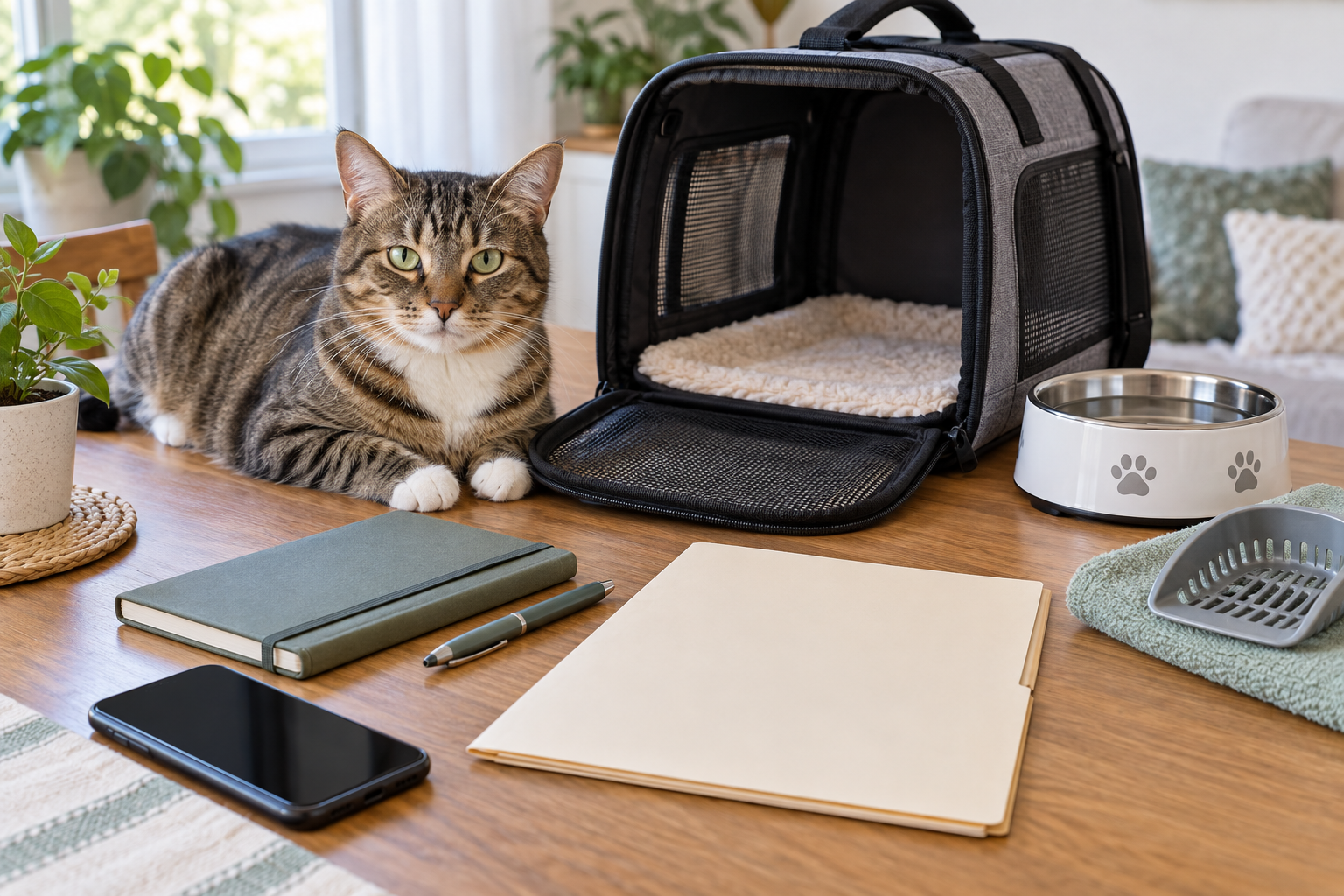


 Why Does My Cat Flinch When Touched While Sleeping? Startle, Trust, and Pain Clues">
 Cat Scratching Baseboards: Trim Guards and Route Fixes">
 EN
EN DE
DE ES
ES PT
PT