
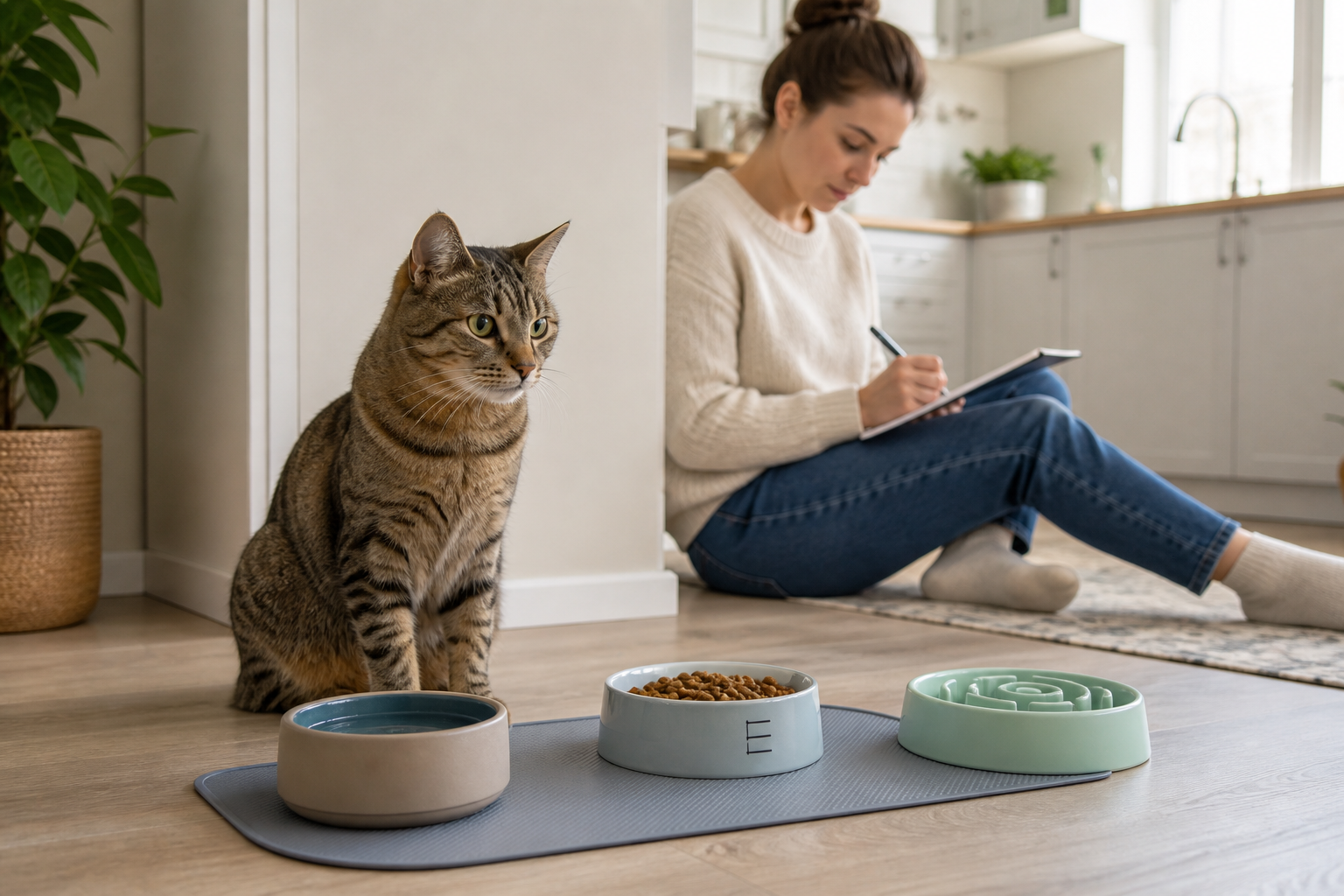
If your cat vomits after eating too fast, first check whether it was true vomiting or regurgitation. Fast eating often brings undigested food back up soon after a meal, but repeated episodes, a sick-looking cat, blood, dehydration, toxin exposure, or suspected string or foreign material should move you toward veterinary care.
The bowl is only one clue. A cat may gulp food because the meal is too large, the schedule leaves long hungry gaps, another pet creates competition, or a medical problem is making meals uncomfortable. This guide explains how to slow meals safely, what warning signs matter, and what to record so your veterinarian can see the pattern clearly.
Table of Contents
- Is my cat vomiting or regurgitating after eating too fast?
- Why can fast eating bring food back up?
- When is post-meal vomiting a vet warning sign?
- What should I check before changing the bowl?
- How can I slow meals without underfeeding my cat?
- What meal size and schedule changes are safer?
- What should I record for your veterinarian?
- Conclusion
- Frequently Asked Questions
- References
Is my cat vomiting or regurgitating after eating too fast?
True vomiting is an active event. Your cat may look nauseated, drool, lick their lips, swallow repeatedly, retch, or use visible belly effort before food or fluid comes up. Merck describes vomiting as forceful ejection from the stomach or upper small intestine, usually with nausea signs and abdominal contractions 2.
Regurgitation is more passive. Food or fluid may come up quickly after eating or drinking, often with little warning and less body effort. VCA notes that regurgitation often happens soon after meals and does not involve the same abdominal contractions as vomiting 3.
That distinction matters because a cat who gulps dry food and brings up a tube-shaped pile of undigested kibble five minutes later may need a slower feeding setup, while a cat who retches, vomits fluid, hides, or repeats the episode may need a medical workup. If you are unsure, take a short video and compare the pattern with this SnuggleSouls guide to regurgitation vs vomiting.
| What you see | More like regurgitation | More like vomiting |
|---|---|---|
| Timing | Often immediately or soon after eating | Can happen soon after meals or hours later |
| Effort | Passive, sudden, little abdominal effort | Retching, heaving, nausea signs, belly contractions |
| Material | Often undigested food or fluid | Food, foam, bile, yellow liquid, hair, or fluid |
| Next step | Slow feeding may help if cat is otherwise well | Watch urgency signs and contact a vet if repeated or paired with illness |
Why can fast eating bring food back up?
Fast eating can overload the stomach or esophagus before the body is ready to handle the meal. Some cats gulp because they are very hungry, compete with another pet, feel rushed in a busy room, prefer a certain texture, or learned to eat quickly in a shelter, outdoor, or multi-pet setting.
Speed is not the only cause. Cornell lists many possible reasons for vomiting in cats, including hairballs, parasites, food issues, toxins, foreign objects, obstruction, inflammatory bowel disease, diabetes, kidney disease, and hyperthyroidism 1. SnuggleSouls has a broader guide on why cats vomit if the pattern is not tightly linked to meals.
Think about the timeline:
- Food comes up within minutes, mostly undigested, and your cat acts normal afterward: speed eating or regurgitation is possible.
- Food comes up after strong retching, with foam or liquid, and your cat seems quiet or nauseated: treat it as vomiting until your veterinarian says otherwise.
- Vomiting happens away from meals, includes yellow fluid, or follows long gaps between meals: compare the timing with this guide to cat vomiting yellow liquid.
- Episodes continue despite slower feeding: the bowl was probably not the whole answer.
When is post-meal vomiting a vet warning sign?
Call your veterinarian promptly if post-meal vomiting repeats, increases, or comes with any change in your cat's whole-body condition. Cornell advises prompt veterinary evaluation for cats vomiting more than once per week or vomiting with signs such as lethargy, weakness, decreased appetite, blood, thirst or urination changes, or diarrhea 1.
Seek urgent veterinary care if you see breathing trouble, collapse, severe weakness, repeated vomiting, blood or coffee-ground material, a painful or swollen belly, suspected poisoning, suspected string or foreign object ingestion, seizures, blocked urination signs, or rapid decline. VCA's emergency guidance treats repeated or continuous vomiting, especially with weakness or blood, as a concern because dehydration and serious causes can develop quickly 3.
Do not try to make your cat vomit at home after a suspected toxin, string, rubber band, toy piece, plant, medication, or chemical exposure unless a veterinarian or poison-control professional directly instructs you. ASPCA Poison Control is available for animal poison emergencies and can help guide next steps alongside your veterinarian 5.
| Situation | Why it matters | Safer next step |
|---|---|---|
| One quick undigested-food episode, cat bright afterward | May fit gulping or regurgitation | Slow the next meal and monitor closely |
| Repeated episodes in a day | Dehydration and illness become more likely | Call your veterinarian |
| Vomit plus lethargy, diarrhea, appetite loss, or pain | Not just a bowl-speed problem | Arrange prompt veterinary care |
| Blood, coffee-ground material, toxin risk, string, or foreign object | Possible emergency | Contact a vet or emergency clinic now |
| Kitten, senior, diabetic cat, kidney disease, or known illness | Less reserve and higher risk | Ask your vet sooner rather than waiting |
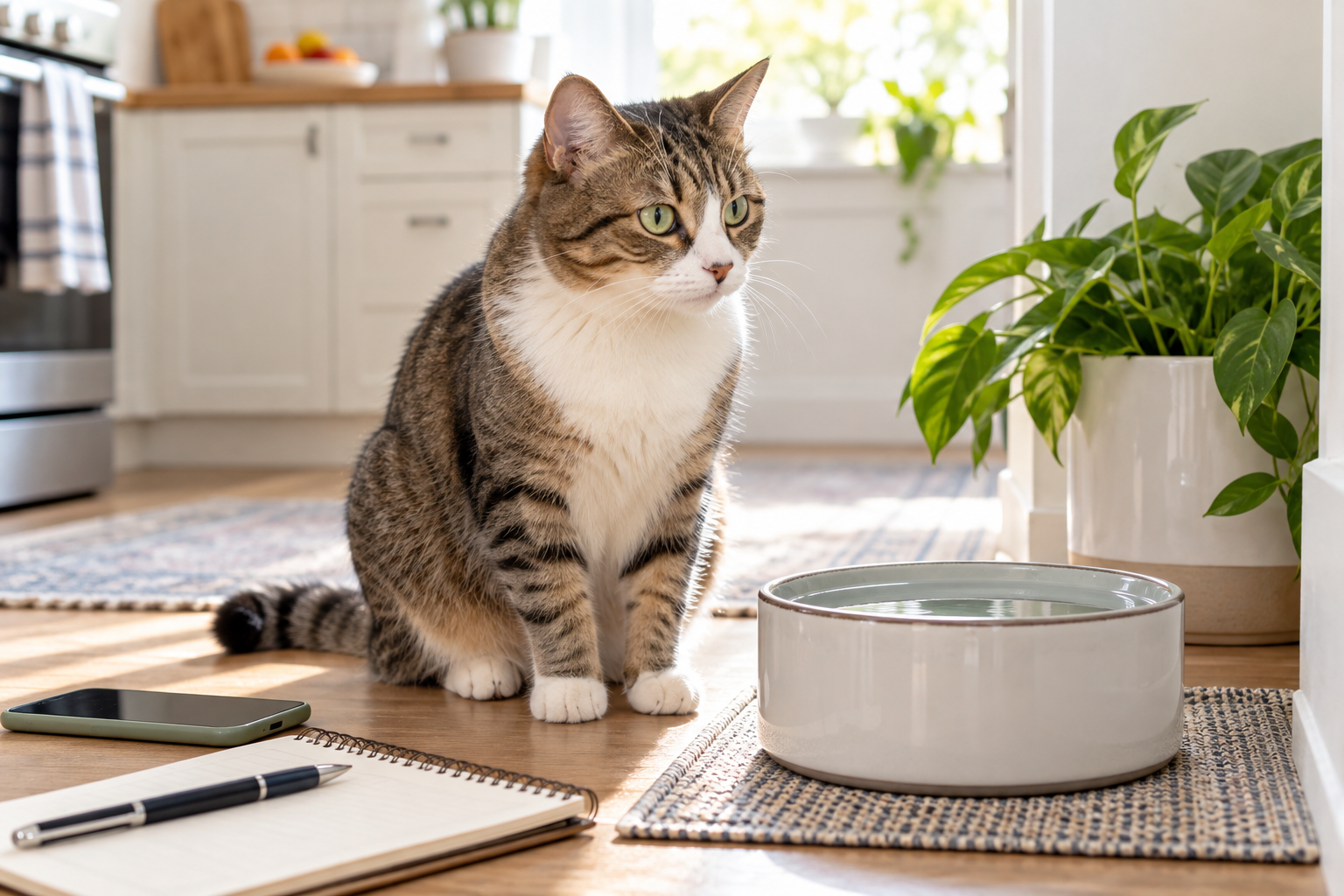
What should I check before changing the bowl?
Before buying a new feeder, check the meal pattern, home pressure, and health context. A slow feeder can help some cats, but it will not fix nausea, pain, obstruction, poisoning, dental trouble, uncontrolled appetite from disease, or anxiety around other pets.
Start with these questions:
- Did the food come up once or is it a repeating pattern?
- Was the material mostly undigested food, fluid, foam, yellow liquid, or hair?
- Did the cat retch, drool, crouch, swallow repeatedly, or look nauseated?
- Is appetite normal between episodes?
- Has weight, thirst, urination, stool, energy, hiding, or behavior changed?
- Did the cat eat a new food, spoiled wet food, treats, plants, string, or a toy piece?
- Is another pet crowding the bowl or stealing food?
- Are portions measured, or is the bowl refilled by habit?
If the issue may be portion size, compare the package directions with your cat's body condition, age, and activity. A calculator cannot diagnose vomiting, but the SnuggleSouls cat calorie calculator can help you discuss daily intake more concretely with your veterinarian.
How can I slow meals without underfeeding my cat?
Slowing the meal should change the pace, not secretly cut the food. Keep the total daily amount measured while you test slower delivery, and make only one or two changes at a time so you can tell what helped.
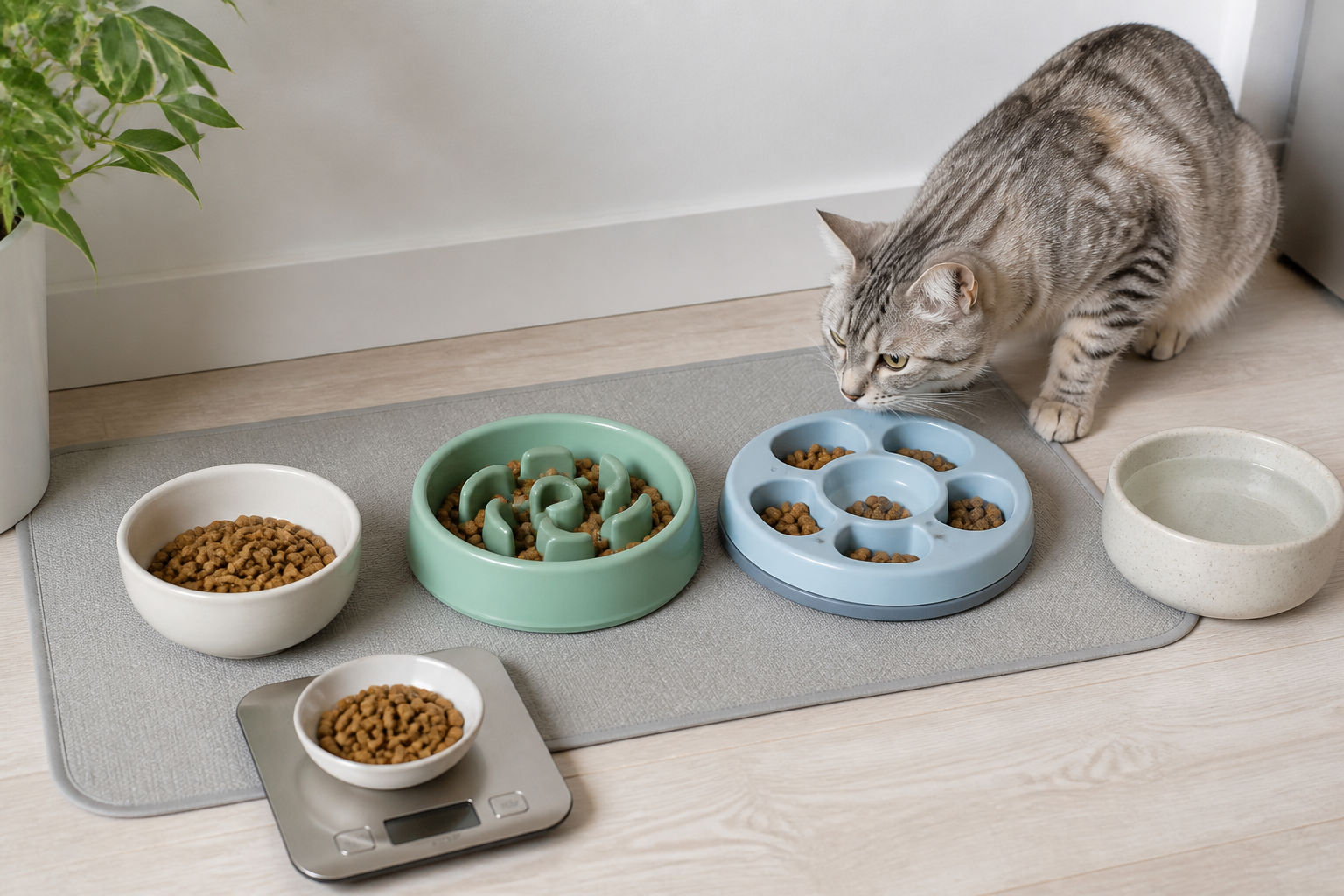
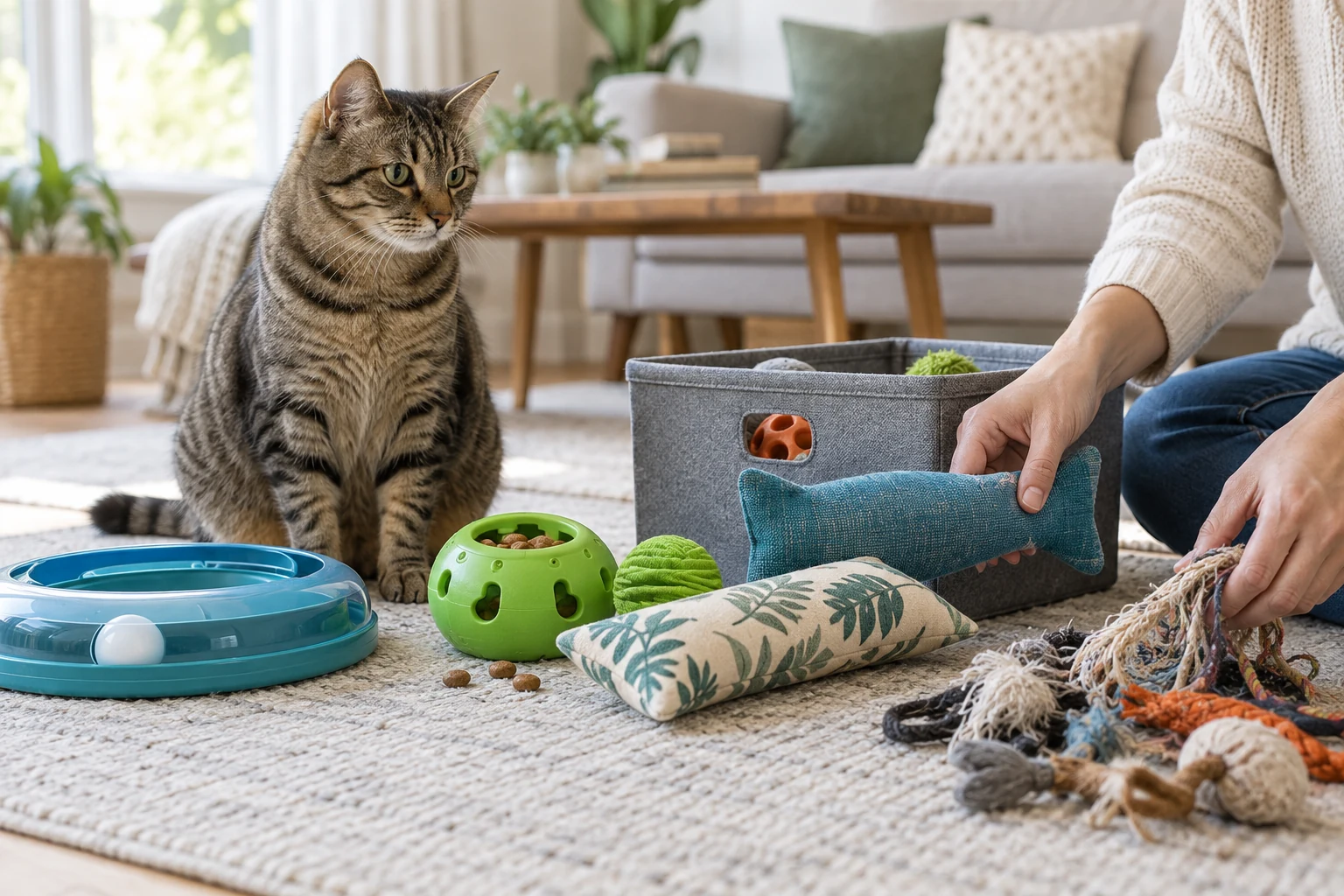
Slow-feeder bowls, puzzle feeders, smaller meals, and measured portions can reduce gulping without guessing at the daily food amount.
Practical options include:
- Use a shallow slow-feeder bowl for cats with rounded ridges that your cat can access comfortably.
- Try puzzle feeders for cats if your cat enjoys working for dry food and does not become frustrated.
- Divide the same daily food into smaller meals.
- Spread dry food on a clean mat or shallow tray for a short supervised test.
- Feed cats in separate rooms if competition is causing gulping.
- Place the bowl in a quiet spot away from dogs, children, loud appliances, and traffic.
- Add water separately nearby, but avoid forcing water or food after vomiting.
Watch for frustration. A feeder that makes a hungry cat paw, bite, or gulp harder is not helping. Cats with flat faces, dental pain, arthritis, vision loss, or anxiety may need a gentler option than a maze bowl.
What meal size and schedule changes are safer?
Smaller, more frequent meals can help some cats who vomit or regurgitate after a large meal, but the daily calories should stay intentional. If you cut too much food, especially in an overweight cat, you can create a different health risk. If your cat needs weight loss, do it with veterinary guidance.
Use the label as a starting point, then measure the actual portion. SnuggleSouls explains why package ranges are only estimates in the cat food feeding directions guide, and a kitchen scale for cat food portions can make changes easier to track.
Safer meal adjustments:
- Keep the same total daily amount for the first slow-feeding test.
- Split one large meal into two smaller meals if your schedule allows.
- Keep treats in the daily total instead of adding them on top.
- Avoid sudden food switches unless your veterinarian recommends one.
- If wet food is involved, handle leftovers safely and do not leave open food out for long periods.
- Stop the experiment and call your vet if vomiting repeats or your cat acts unwell.
Do not withhold water after vomiting unless a veterinarian instructs you. Cats can dehydrate, and VCA notes that vomiting can lead to dehydration and electrolyte problems when it continues 3.
What should I record for your veterinarian?
A simple log is often more useful than a perfect guess. VCA says vomiting investigations begin with history and a physical exam, and details such as duration, unusual foods, behavior, and whether the pet seems bright or unwell help guide testing 3.
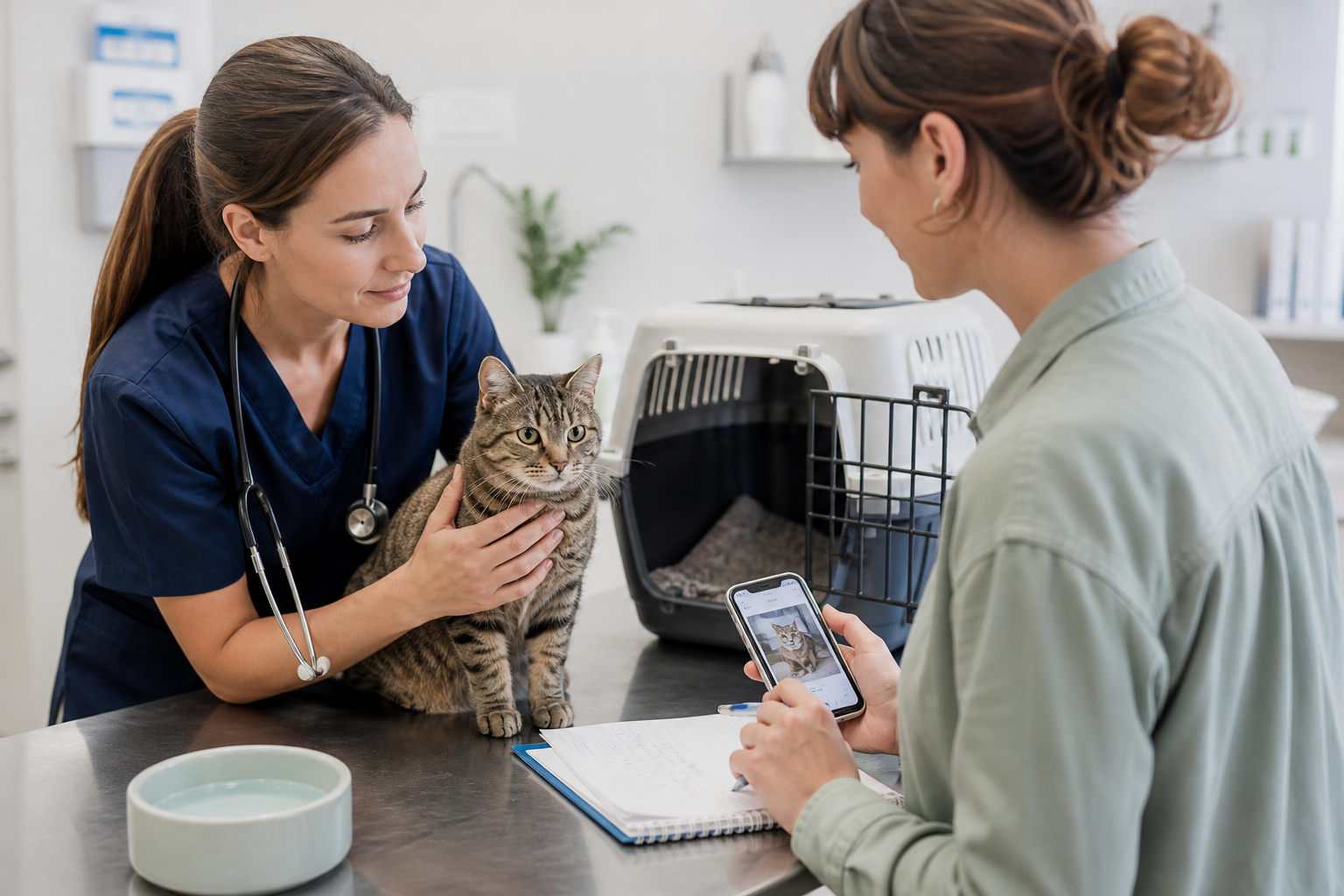
A clear meal-and-symptom log helps your veterinarian decide whether the pattern fits speed eating or needs medical testing.
Record:
- Date and time of each meal.
- Food type, flavor, brand, texture, and measured amount.
- Whether food was dry, wet, mixed, treats, or a new product.
- How fast your cat ate and whether another pet was nearby.
- Time between eating and food coming back up.
- Whether there was retching, drooling, lip licking, or belly effort.
- What came up: undigested food, liquid, foam, bile/yellow fluid, hair, blood, plant material, string, or unknown material.
- Appetite, water intake, stool, urination, energy, hiding, and weight changes.
- Photos of the material and a short video of the episode if it happens again.
Foreign material deserves special caution. VCA explains that cats may ingest thread, wool, rubber bands, paper, plant material, and small toys, and that obstruction can become life-threatening 4. If string is visible from the mouth or rear, do not pull it; contact a veterinarian.
Conclusion:
Cat vomiting after eating too fast is sometimes a feeding-speed problem, especially when undigested food comes up quickly and your cat acts normal afterward. Still, vomiting is a sign, not a diagnosis. The safest approach is to tell regurgitation from true vomiting, slow meals without cutting calories, reduce bowl competition, and keep a log.
Call your veterinarian if the pattern repeats, your cat seems unwell, or any red flag appears. A slow feeder is useful only when the whole-cat picture supports a feeding-management problem rather than illness, obstruction, toxin exposure, or pain.
Frequently Asked Questions
Why does my cat throw up right after eating dry food?
Dry food may come back up if your cat gulps too quickly, eats a large meal, drinks a lot around the meal, or competes with another pet. It can also happen with vomiting, regurgitation, food intolerance, obstruction, or another health issue, so repeated episodes deserve a vet call.
Is it normal for cats to vomit after eating too fast?
It is common enough that many cat parents see it, but repeated vomiting should not be treated as normal. If it happens more than once, increases, or comes with appetite loss, lethargy, diarrhea, weight change, blood, pain, or dehydration concern, contact your veterinarian.
Will a slow feeder stop my cat from vomiting?
A slow feeder may help if the main issue is gulping and your cat is otherwise well. It will not solve true nausea, disease, obstruction, toxin exposure, dental pain, or stress severe enough to affect eating, so monitor the pattern instead of assuming the bowl fixed it.
Should I feed smaller meals if my cat vomits after eating?
Smaller meals may help some cats, especially if large meals trigger gulping or post-meal regurgitation. Keep the total daily amount measured and ask your vet before major changes, especially for kittens, seniors, overweight cats, or cats with medical conditions.
When should I take my cat to the emergency vet for vomiting?
Seek urgent care for repeated vomiting, blood or coffee-ground material, collapse, weakness, breathing trouble, severe pain, swollen abdomen, seizures, suspected poisoning, suspected string or foreign-object ingestion, blocked urination signs, or rapid decline. Kittens, seniors, and cats with known disease should be checked sooner.
References
[1] Cornell Feline Health Center. (2021). Vomiting. Cornell University College of Veterinary Medicine
[2] Merck Veterinary Manual. (2024). Vomiting in Cats. Merck Veterinary Manual
[3] VCA Animal Hospitals. (2026). Vomiting in Cats. VCA Animal Hospitals
[4] VCA Animal Hospitals. (2024). Ingestion of Foreign Bodies in Cats. VCA Animal Hospitals
[5] ASPCA Animal Poison Control Center. (2026). ASPCA Poison Control. ASPCA
 Why Does My Cat Flinch When Touched While Sleeping? Startle, Trust, and Pain Clues">
 Cat Scratching Baseboards: Trim Guards and Route Fixes">
 EN
EN DE
DE ES
ES PT
PT