

A senior cat drinking more water at night is not something to dismiss as "just getting old." It can happen because your cat is awake, warm, eating more dry food, or finding the night bowl easier to reach, but a clear increase in thirst can also point to kidney disease, diabetes, hyperthyroidism, pain, dehydration, or another medical change that needs a veterinarian.
The safest approach is simple: keep water available, track what changed, and book a veterinary check if the pattern is new, increasing, or paired with more urine, weight loss, appetite changes, vomiting, weakness, or behavior changes. Older cats hide illness beautifully, which means quiet home clues matter.
Índice
- Is a senior cat drinking more water at night normal?
- What counts as more water in a senior cat?
- Why would thirst show up mostly at night?
- Which health problems commonly cause increased drinking?
- ¿Qué datos debes anotar antes de la visita al veterinario?
- When should you call a vet urgently?
- How can you make night drinking safer while you wait?
- What will the vet likely check?
- Conclusion: Treat nighttime thirst as a clue, not a personality quirk
- Preguntas frecuentes
- Referencias
Is a senior cat drinking more water at night normal?
Occasional nighttime drinking can be normal. A cat may take a few sips after a salty treat, a warmer day, more play, a dry-food meal, or a long nap. The concern is a pattern: the bowl empties faster, you hear repeated drinking overnight, the litter box is wetter, or your cat seems newly driven to find water.
Cornell's senior-cat guidance is blunt in the best way: advancing age is not a disease, and changes in an older cat should not be written off automatically 1. A new thirst habit deserves attention because many age-associated diseases are more manageable when they are found early.
Nighttime drinking is especially easy to notice because the house is quiet. That does not mean the problem only exists at night. It may simply be the time you hear the lapping, see the bowl, or find larger urine clumps in the morning.
What counts as more water in a senior cat?
"More water" means more than your cat's usual pattern, not just more than another cat in the house. Cats vary by diet, body size, room temperature, activity, and personality. A cat eating mostly wet food may appear to drink very little from a bowl, while a dry-food eater often drinks more because the diet contains less moisture.
As a practical warning sign, Cornell lists increased thirst as more than one ounce per pound of body weight per day, especially when paired with increased urination 1. You do not need perfect measurements before calling your vet, but a measured bowl can turn a vague worry into useful information.
Look for connected changes:
| Pista sobre el hogar | Lo que esto podría indicar | ¿Qué hacer ahora? |
|---|---|---|
| Bowl empties faster for several days | True increase in thirst is possible | Measure intake and schedule a vet check |
| Larger or more numerous urine clumps | Increased urine production may be present | Track clump size and frequency |
| Drinking plus weight loss | Kidney disease, diabetes, hyperthyroidism, or other illness may be possible | Call your veterinarian promptly |
| Drinking plus vomiting or low appetite | Dehydration or systemic illness may be developing | Call your veterinarian, sooner if worsening |
| Drinking but hard to reach the bowl | Pain or mobility changes may affect routines | Improve access while still checking health |
Why would thirst show up mostly at night?
Night drinking can show up for behavioral, environmental, and medical reasons. Some older cats feel safer moving around after the household gets quiet. Others sleep more during the day, then drink when they wake at night. If the bedroom bowl is easier to reach than a kitchen bowl downstairs, arthritis or weakness may quietly shape the routine.
That access piece matters. Cornell notes that arthritis is common in older cats and may make it harder to reach food, water, or litter areas, especially if stairs or jumping are involved 1. If your cat also hesitates before jumping, lands stiffly, avoids stairs, or takes longer to settle, review our guide to Síntomas de artritis en gatos mayores.
Still, convenience does not explain a real thirst increase by itself. If your cat drinks from the night bowl because it is accessible, the total daily intake may stay stable. If your cat drains bowls, urinates more, loses weight, or seems restless, the drinking is more likely to be a medical clue.
Which health problems commonly cause increased drinking?
Veterinarians often think of increased thirst and increased urination together. The pair is called polydipsia and polyuria, or PU/PD. Today's Veterinary Practice notes that PU/PD has many possible causes and that common feline causes include chronic kidney disease, diabetes mellitus, and hyperthyroidism 2.
Chronic kidney disease is a major concern in older cats. Cornell explains that feline kidneys undergo age-related changes and that kidney failure is common in older cats 1. Cats with kidney disease may drink more because damaged kidneys cannot conserve water as well; other clues can include increased urination, weight loss, reduced appetite, vomiting, poor coat, dehydration, and lethargy 3.
Diabetes can also cause extra thirst and urine. Cornell describes increased thirst and urination as two of the most common signs owners notice at home in diabetic cats, often along with weight loss despite a good appetite 4. If your senior cat is drinking at night and also begging for food, losing weight, or producing larger urine clumps, do not wait to see if it resolves.
Hyperthyroidism is another common older-cat disease. Cornell lists weight loss, increased appetite, increased thirst and urination, vomiting, diarrhea, hyperactivity, and a messy or greasy coat among typical signs 5. Some cats seem brighter or more demanding at first, which can make the illness easy to mistake for personality.
Other possibilities include infections, medication effects, electrolyte problems, pain, fever, diet changes, and dehydration from vomiting or diarrhea. A home article cannot sort those apart safely. Lab work and a veterinary exam are what turn a clue into an answer.
¿Qué datos debes anotar antes de la visita al veterinario?
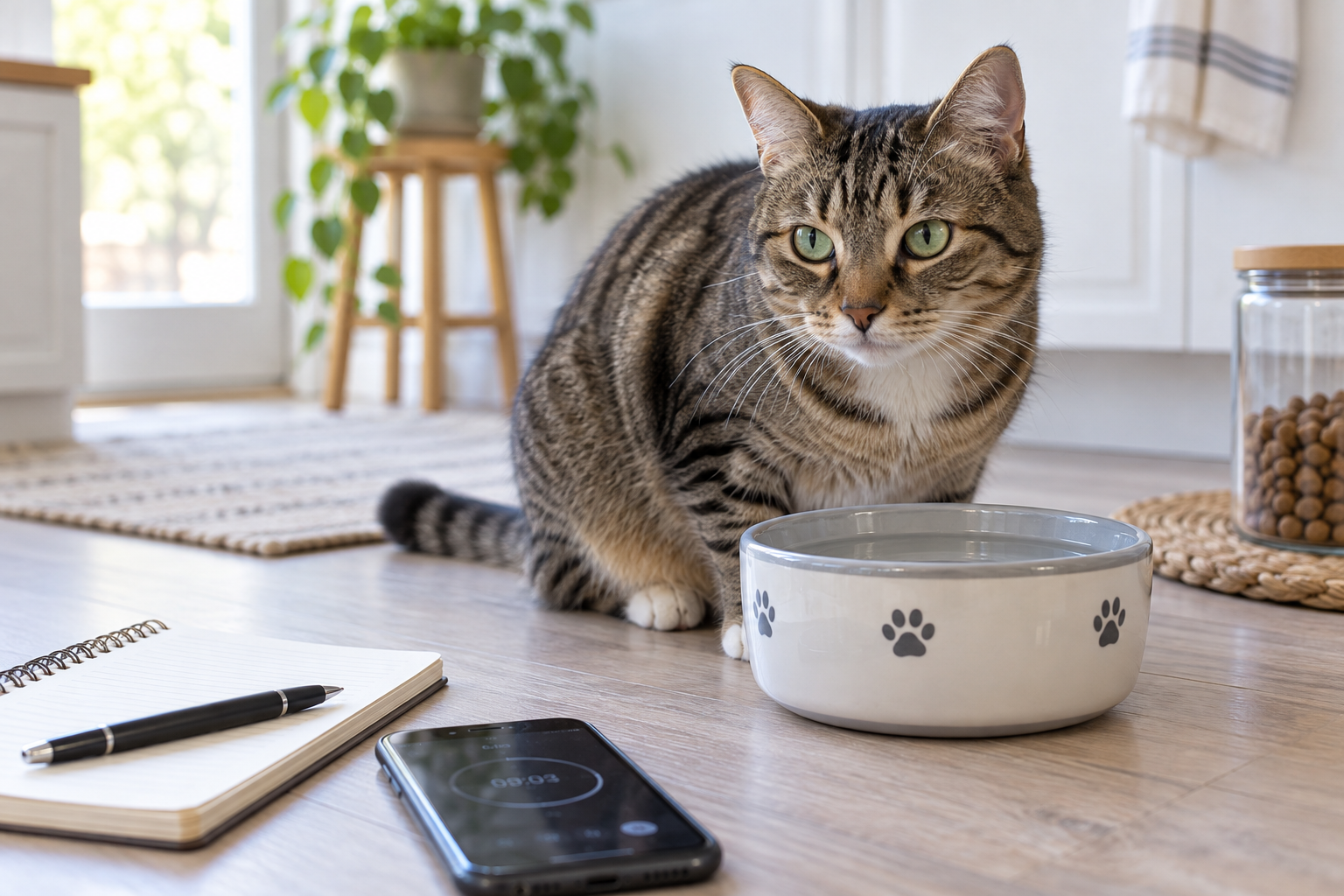
Track enough to help your veterinarian see the pattern, not so much that you delay care. For three to seven days, if your cat is otherwise stable, note water intake, urine output, appetite, weight changes if you can weigh safely, vomiting, stool changes, energy, and any new behavior.
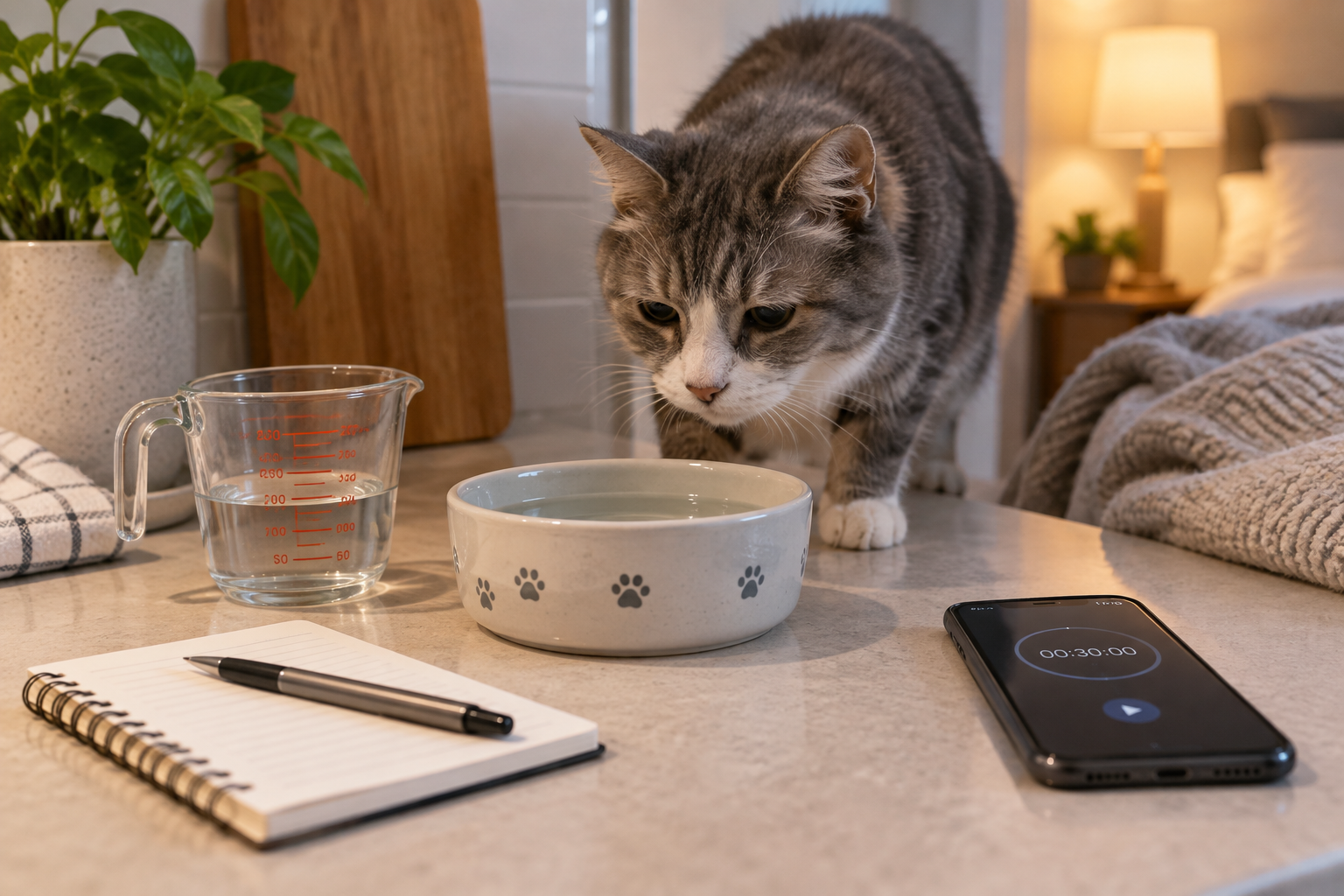
A simple water log is usually enough:
- Fill the same bowl with a measured amount each evening.
- In the morning, measure what remains before refilling.
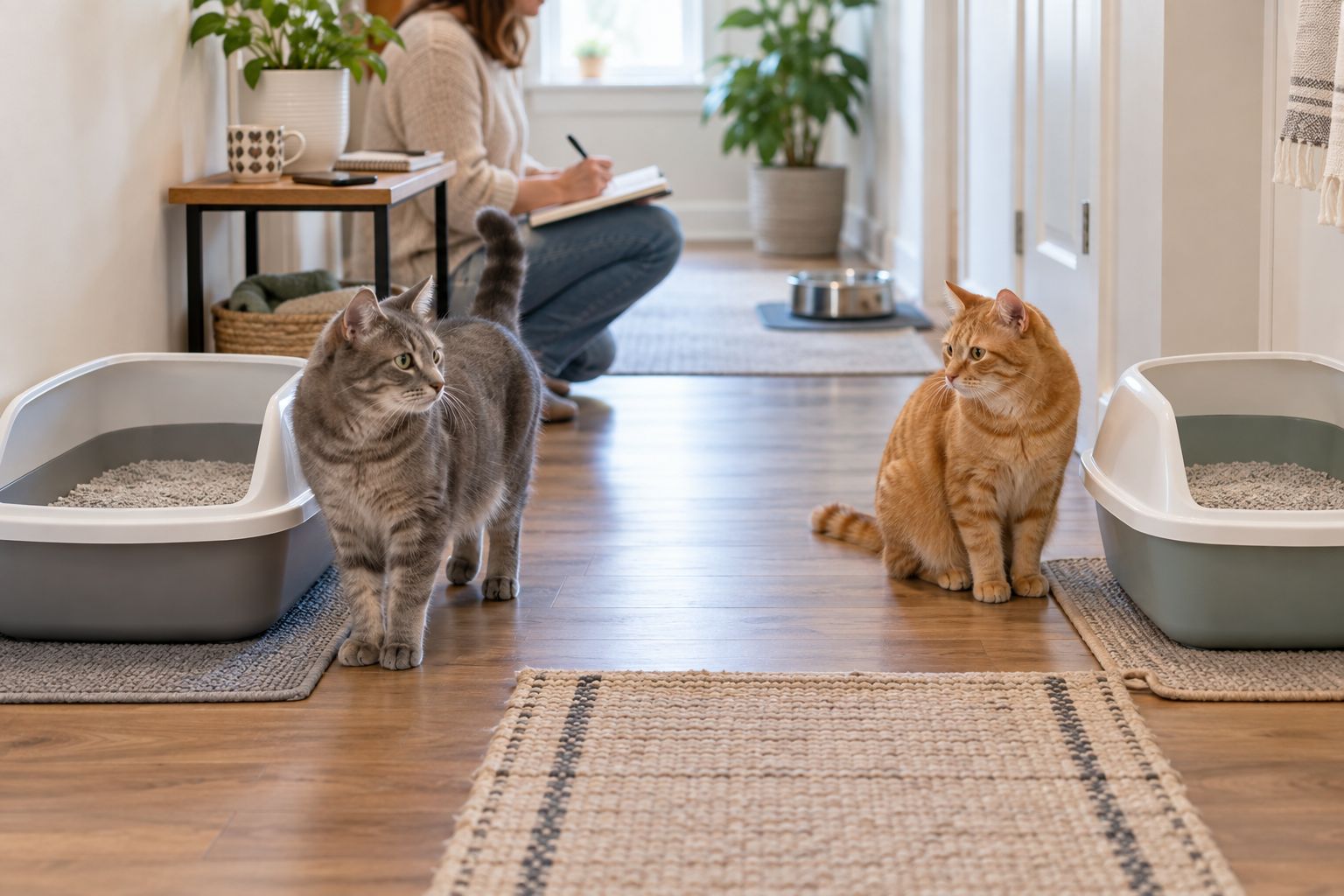
- If there are multiple cats, separate the senior cat for a short, calm observation period only if your vet says it is appropriate and your cat is not stressed.
- Photograph unusual urine clumps next to the scoop or another consistent reference.
- Write down appetite, vomiting, stool changes, medications, treats, and diet changes.
In multi-cat homes, do not assume the wettest box belongs to the cat you are worried about. If urinary history is part of the concern, our guide to cat urine clump size can help you make notes that are clearer for your veterinary team.
When should you call a vet urgently?
Call your veterinarian promptly for any new, persistent increase in thirst in a senior cat. Call sooner, or seek urgent care, if your cat is drinking more and also seems weak, hides intensely, vomits repeatedly, stops eating, loses weight quickly, collapses, breathes abnormally, or appears dehydrated.
Urination changes can be urgent too. If your cat repeatedly enters the litter box, strains, cries, produces little or no urine, has blood in the urine, or seems painful, treat it as urgent. Do not wait overnight to collect a better log.
Also call quickly if increased drinking follows vomiting, diarrhea, heat exposure, a medication change, or known kidney, thyroid, urinary, or diabetic disease. If your cat drinks and then vomits repeatedly, our cat vomiting after drinking water guide can help you think through timing, but repeated vomiting in a senior cat deserves veterinary advice.
Never restrict water to "test" whether your cat is really thirsty. If a disease is causing water loss through urine, restricting water can worsen dehydration.
How can you make night drinking safer while you wait?
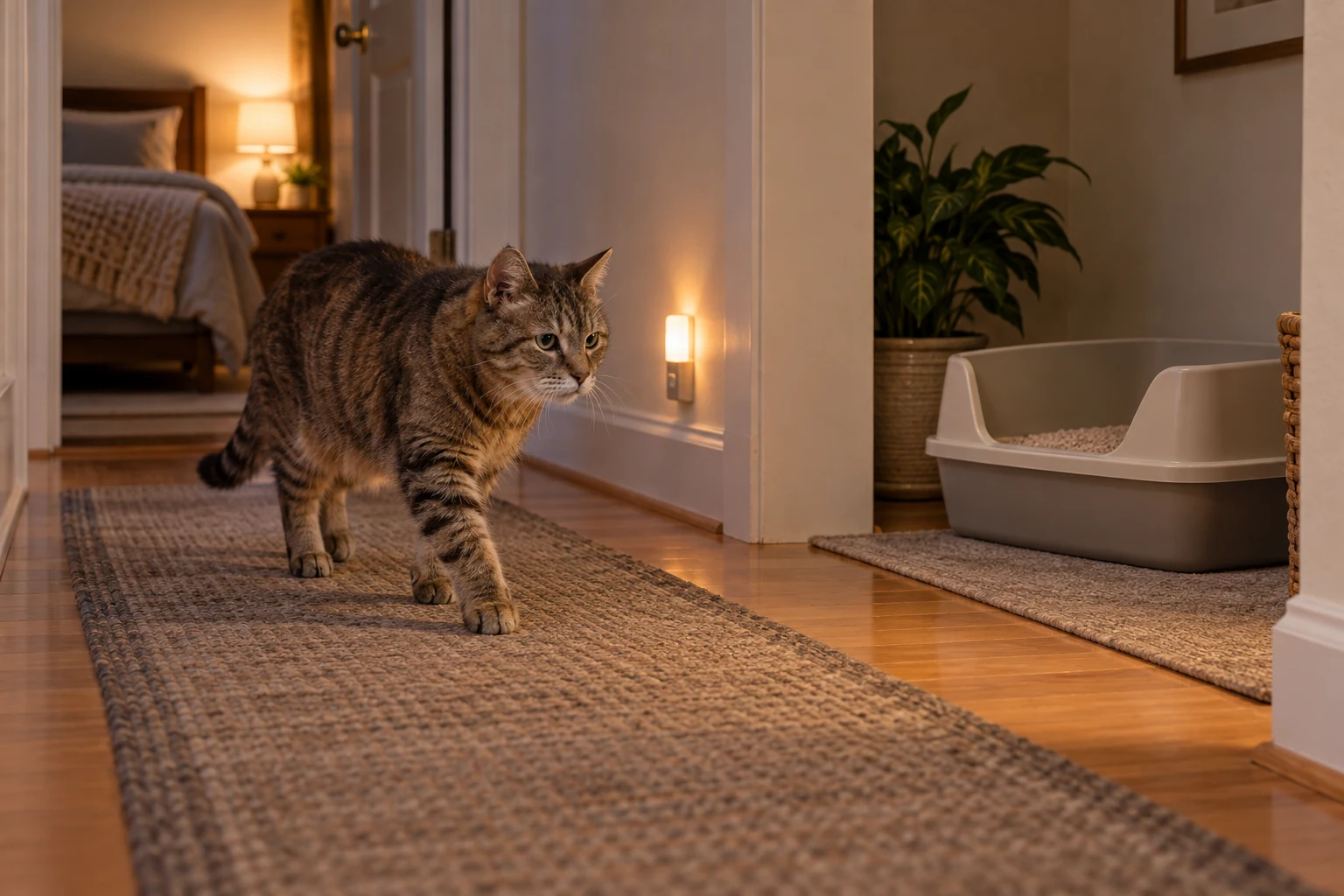
Keep water easy to reach. Add a stable bowl near the sleeping area, use a non-slip mat, keep the path lit with a soft night light, and choose a bowl height your cat can use without crouching painfully. This is comfort support, not a substitute for the vet check.
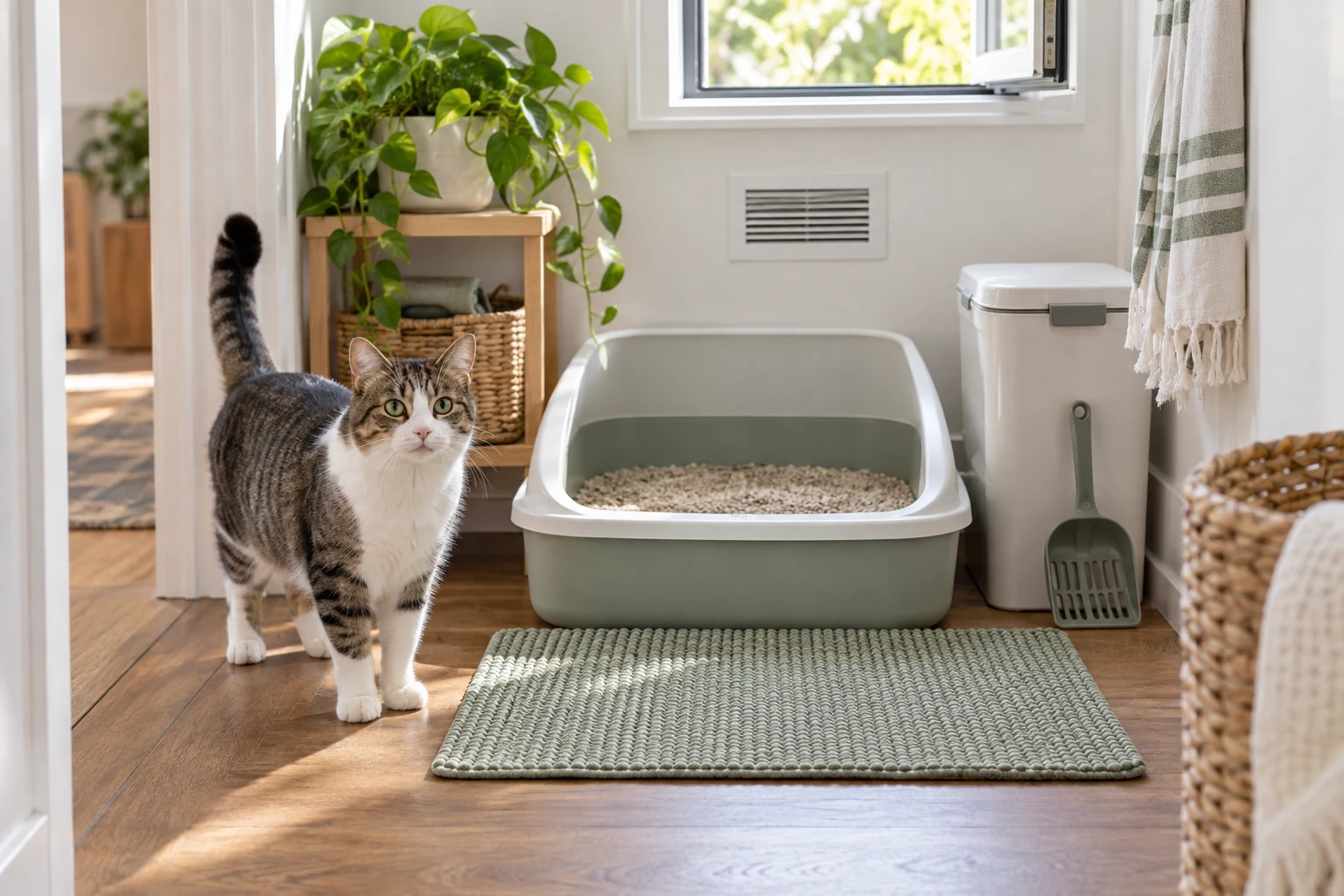
If your cat has arthritis, kidney disease, urinary history, or weakness, the nighttime route matters. Keep the water bowl and litter box on the same floor when possible, remove slippery rugs, and avoid forcing stairs. The same logic applies to the senior cat litter box route at night: make the essential trip short, predictable, and low stress.
If your veterinarian has already advised hydration support after urinary problems, use the specific plan they gave you. For general ideas that stay on the safe side, see our guide on how to encourage a cat to drink more after urinary problems. For bowl placement and access, the related bedroom-water guide on how to help a senior cat reach bedroom water at night may also help.
What will the vet likely check?
Your veterinarian will usually combine your home history with an exam, body weight, hydration assessment, blood pressure when appropriate, bloodwork, and urinalysis. Today's Veterinary Practice emphasizes that the PU/PD workup depends on age, history, and other signs, and that urine concentration can be an important part of understanding whether the body is conserving water normally 2.

Common checks may include kidney values, blood glucose, thyroid hormone, electrolytes, urine specific gravity, urine glucose, urine protein, and signs of infection or inflammation. Your vet may recommend follow-up testing if the first results are borderline or if signs continue.
Bring your notes, the food label or diet name, medication and supplement list, and the timeline of when nighttime drinking started. If you have more than one cat, say that clearly. A good record helps your veterinarian decide whether the issue is increased drinking, increased urination, easier nighttime access, or a mix of clues.
Conclusion: Treat nighttime thirst as a clue, not a personality quirk
A senior cat drinking more water at night may simply be using the most convenient bowl, but a real increase in thirst is a medical clue until proven otherwise. Watch the whole pattern: water, urine, weight, appetite, vomiting, mobility, and energy.
Keep water available, make nighttime access safe, and call your veterinarian when the pattern is new, persistent, or paired with other changes. Older cats often give us quiet signals first. Listening to those signals is one of the kindest ways to protect their comfort and health. For more related guides, browse the SnuggleSouls Guías sobre la salud de los gatos.
Preguntas frecuentes
Should I take my senior cat to the vet for drinking more water at night?
Yes, if the increase is new, persistent, or paired with more urine, weight loss, appetite changes, vomiting, weakness, hiding, or behavior changes. Senior cats can hide illness, and thirst changes are easier to evaluate early than during a crisis.
Is it bad if my old cat only drinks at night?
Not always. Some cats drink at night because the house is quiet or the bowl is easier to reach. It becomes concerning if total intake has increased, the litter box is wetter, your cat is losing weight, or the behavior is a clear change from normal.
How do I know if my senior cat is drinking too much water?
Measure the same bowl for a few days and compare it with your cat's normal pattern. Cornell lists increased thirst as more than one ounce per pound of body weight per day, especially with increased urination, but you should call your vet anytime the change is obvious or worrying 1.
Can kidney disease make a cat drink more at night?
Yes. Chronic kidney disease can make cats drink and urinate more because the kidneys may lose some ability to conserve water 3. Weight loss, reduced appetite, vomiting, dehydration, lethargy, and larger urine clumps are additional reasons to call your veterinarian.
Should I remove water overnight to reduce accidents?
No. Do not restrict water from a senior cat who is drinking more. If an illness is causing water loss, removing water can worsen dehydration. Instead, keep water available, make the litter box easy to reach, and ask your veterinarian what needs checking.
Referencias
[1] Cornell Feline Health Center. (2016). The Special Needs of the Senior Cat. URL
[2] Today's Veterinary Practice. (2023). A Stepwise Diagnostic Approach to Polyuria and Polydipsia. URL
[3] Cornell Feline Health Center. (2026). Enfermedad renal crónica. URL
[4] Centro de Salud Felina de Cornell. (2026). Feline Diabetes. URL
[5] Cornell Feline Health Center. (2026). Hipertiroidismo en gatos. URL
 EN
EN DE
DE ES
ES PT
PT