
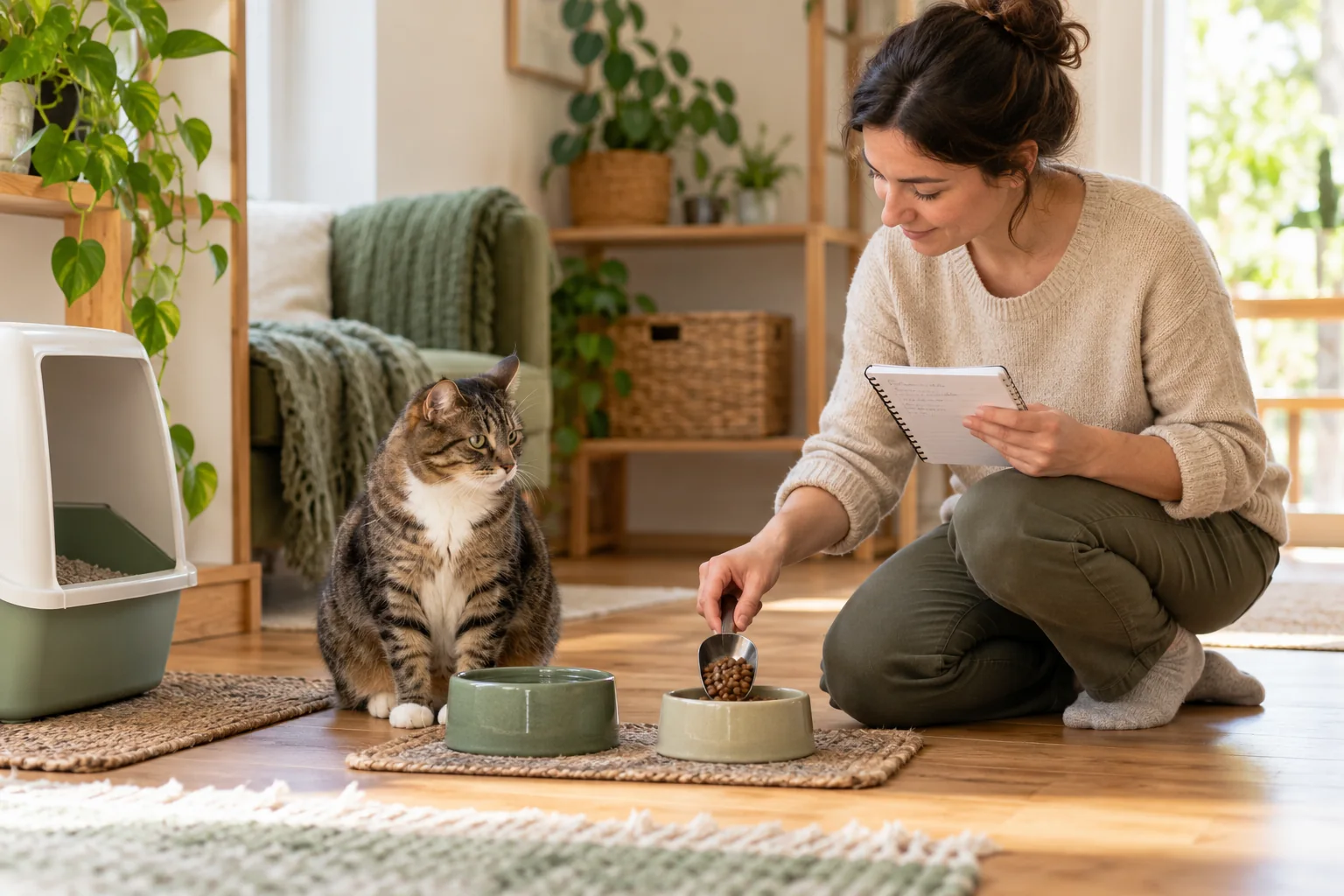
There is no single visit schedule that fits every cat. For a vacation, twice-daily visits are a cautious starting plan when they fit your cat’s routine, but published guidance ranges from at least once a day to at least twice a day, so age, health, meals, medication, and your veterinarian’s advice matter.123
That difference can make booking confusing. This guide compares what established organizations actually recommend, explains which details can change the schedule, and helps you agree on a plan your sitter can follow.
Table of Contents
- How often should a cat sitter visit?
- Why do recommendations differ?
- What can change how often your cat needs a visit?
- How long should each visit last?
- What should happen during each visit?
- What should you confirm with the sitter before you leave?
- When are drop-in visits not enough?
- Conclusion
- Frequently Asked Questions
- References
How often should a cat sitter visit?
For a trip, arrange an in-person check at least daily and consider two visits a day as the more cautious plan when practical. Cats Protection and PDSA recommend at least twice-daily holiday visits, while PetMD says a sitter should visit at least once a day when you will be away for more than 24 hours.123
If you are still comparing sitters, use the cat sitter selection checklist to assess experience, availability, and emergency readiness before booking.
These are organization recommendations, not a universal legal rule or a personalized veterinary plan. If you are choosing between one and two visits, use your cat’s actual meals, normal routine, health, and ability to cope with time alone. A once-daily plan may fit some healthy adult cats, but it does not meet every organization’s holiday-care recommendation and should not be assumed suitable for every cat.
| Published guidance | What it recommends | How to use it |
|---|---|---|
| PetMD, in a veterinarian-authored guide | At least one visit per day when you will be away more than 24 hours | Treat this as a stated minimum, not a guarantee that one visit suits every cat. 1 |
| Cats Protection | At least twice a day; more often for very young or old cats and some cats with health conditions | A conservative holiday-care starting point, especially when a cat has extra needs. 2 |
| PDSA | Someone should check on a cat at least a couple of times a day during a holiday, even with an automatic feeder or cameras | Home-monitoring devices do not replace an in-person check. 3 |
| San Francisco SPCA | Do not leave a cat without someone checking for more than 12 hours | Use the interval to think about the longest stretch between visits, not only the number of visits per calendar day. 4 |
Why do recommendations differ?
The sources set different practical thresholds: some describe a minimum daily check, while others recommend two daily visits or a check within each 12-hour period.1234 They are not all defining the same thing, and none of these numbers can account for an individual cat’s feeding or medical schedule.
It also helps to distinguish a visit count from the time between visits. Two visits booked on the same day could still leave a long overnight gap. Ask the sitter for approximate arrival windows, then check that the longest gap is suitable for your cat and its routine.
What can change how often your cat needs a visit?
Your cat’s routine and care needs should determine the schedule. Cats Protection specifically notes that very young or old cats and cats with certain health conditions may need more frequent visits; PetMD also says age, health, personality, and the home environment affect how long cats can safely be left alone.12
Consider these factors before you book:
- Age and supervision: Kittens need more frequent care than healthy adult cats. A few brief drop-ins may not provide the supervision a young kitten needs; ask your veterinarian or an experienced cat-care professional what arrangement is appropriate.1
- Health and medication: A condition that needs monitoring or medication at set times can make a once-daily visit unsuitable. Ask your veterinarian to set the care schedule and give the sitter written instructions; the sitter should not change a dose or timing on their own.
- Meal routine: If your cat normally eats at several set times, agree how each meal will be served and whether visits need to line up with those times. An automatic feeder can support a plan, but PDSA advises that it does not replace human check-ins.3
- More than one cat: Ask the sitter to confirm that each cat is seen and eating, especially if they need separate meals or one tends to hide. The visit must leave time to check the individual animals, not just the shared bowls.
- Personality and usual company: A cat used to frequent interaction, or one that becomes distressed when alone, may benefit from longer visits or a house sitter. Discuss what is realistic for that cat rather than assuming all cats are equally independent.
If your cat has a recent illness, surgery, a medication schedule, or another known medical need, ask your veterinarian before relying on a standard drop-in plan.
How long should each visit last?
There is no single visit length that guarantees good care for every cat. Set aside enough time for the sitter to complete the agreed tasks, observe each cat, and respond calmly if a cat is hiding or needs extra attention.
Rather than choosing a duration by habit, write down what each visit must include: feeding and cleanup, fresh water, litter care, any prescribed medication, a check that each cat is behaving normally, and interaction if the cat welcomes it. Ask the sitter whether the booked time allows them to complete that list; a rushed food drop may not meet the plan you intended.
What should happen during each visit?
A visit should include a brief welfare check as well as routine care. The sitter should know where to find each cat, what normal eating and litter use look like, and which changes you want reported.
Agree on a concise post-visit message with the cat sitter update template.
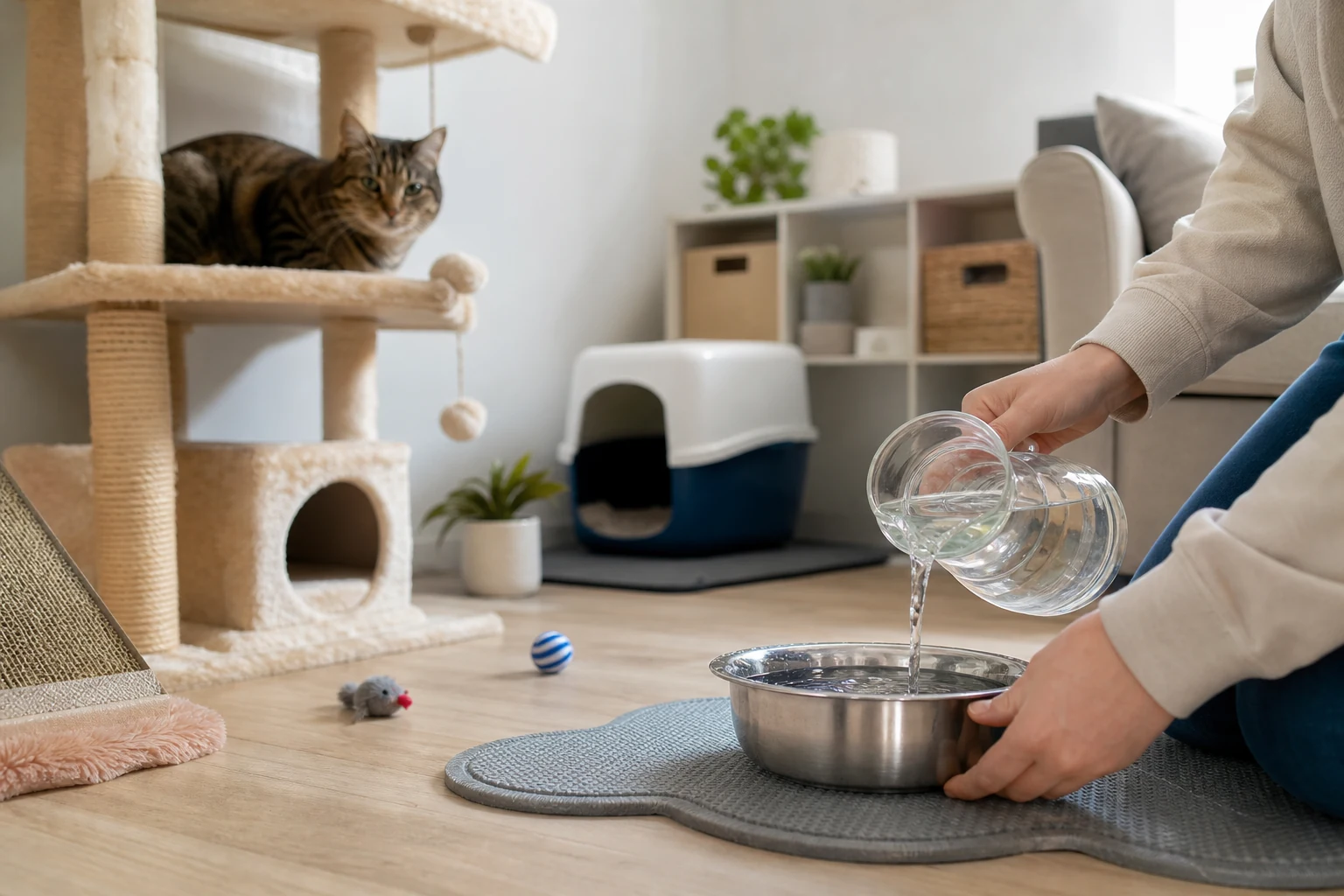
Before leaving, agree that the sitter will:
- Serve the correct food and note whether each cat eats as expected.
- Refresh water and check that bowls or fountains are working.
- Scoop the litter and report unusual urine, stool, or missed litter-box use.
- Locate and observe each cat without forcing a shy cat out of a hiding place.
- Follow only the medication instructions provided by your veterinarian.
- Send a short update after each visit, including anything that differs from normal.
What should you confirm with the sitter before you leave?
Confirm the schedule in concrete terms: dates, arrival windows, expected visit length, tasks at each visit, update method, home access, and who can step in if the sitter is delayed. If medication or meals have fixed times, write those times into the plan and confirm the sitter can meet them.
For a fallback if a visit is missed or home access fails, use the backup cat sitter plan; after returning, the cat sitter debrief checklist helps review what to adjust.
Once you have agreed on the frequency, use the Cat Sitter Instructions Generator to turn the dates and care details into a clear handoff. The broader cat sitter instructions guide can help you prepare feeding, litter, update, and emergency notes.
When are drop-in visits not enough?
Drop-ins may not be enough if your cat needs close monitoring, time-sensitive care, or more frequent supervision than a sitter can provide. In that case, ask your veterinarian about a house sitter, a qualified caregiver, or an appropriate boarding option before you travel.
Agree on an emergency plan in advance. Trouble breathing, collapse, seizure, inability to urinate, suspected poisoning, repeated severe vomiting, or sudden weakness can require immediate veterinary care; tell the sitter which clinic to contact and how to reach your backup person.5 Do not ask the sitter to wait for your next scheduled update if an emergency sign appears.
Conclusion
For vacation care, two daily visits are a cautious starting point when feasible, while some guidance describes at least one visit a day for certain circumstances. Choose the schedule around your cat’s routine and health, confirm the longest gap between visits, and ask your veterinarian about kittens, medical needs, or medication timing. Then put the agreed plan in writing so the sitter knows exactly what to do.
Frequently Asked Questions
Is one visit a day enough for a cat?
It may fit some healthy adult cats, and PetMD describes at least one daily visit as a minimum for an absence longer than 24 hours. Cats Protection and PDSA recommend twice-daily holiday visits, so check your cat’s needs and ask your veterinarian if a daily-only plan is appropriate.123
Should a cat sitter visit twice a day?
Twice daily is the more cautious planning choice when it fits your cat’s routine, and Cats Protection and PDSA recommend that frequency for holiday care. Cats with medication, health concerns, or age-related needs may require a schedule set with their veterinarian.23
Can an automatic feeder or camera replace a cat sitter?
No. A feeder or camera can support a care plan, but it cannot refresh a water bowl, scoop litter, confirm that a cat is eating normally in person, or respond to an emergency. PDSA specifically recommends human check-ins even when owners use feeders or cameras.3
Do kittens or senior cats need more frequent visits?
They may need more frequent care or supervision than a healthy adult cat. Cats Protection advises more frequent visits for very young or old cats and some cats with health conditions; ask your veterinarian to recommend a plan for your cat.2
References
[1] PetMD. (2026). How Long Can You Leave a Cat Alone? PetMD
[2] Cats Protection. Going On Holiday Without Your Cat. Cats Protection
[3] PDSA. (2024). What to do with your cat when you go on holiday. PDSA
[4] San Francisco SPCA. Cat: Traveling. San Francisco SPCA PDF
[5] VCA Animal Hospitals. Emergencies in Cats. VCA Animal Hospitals