
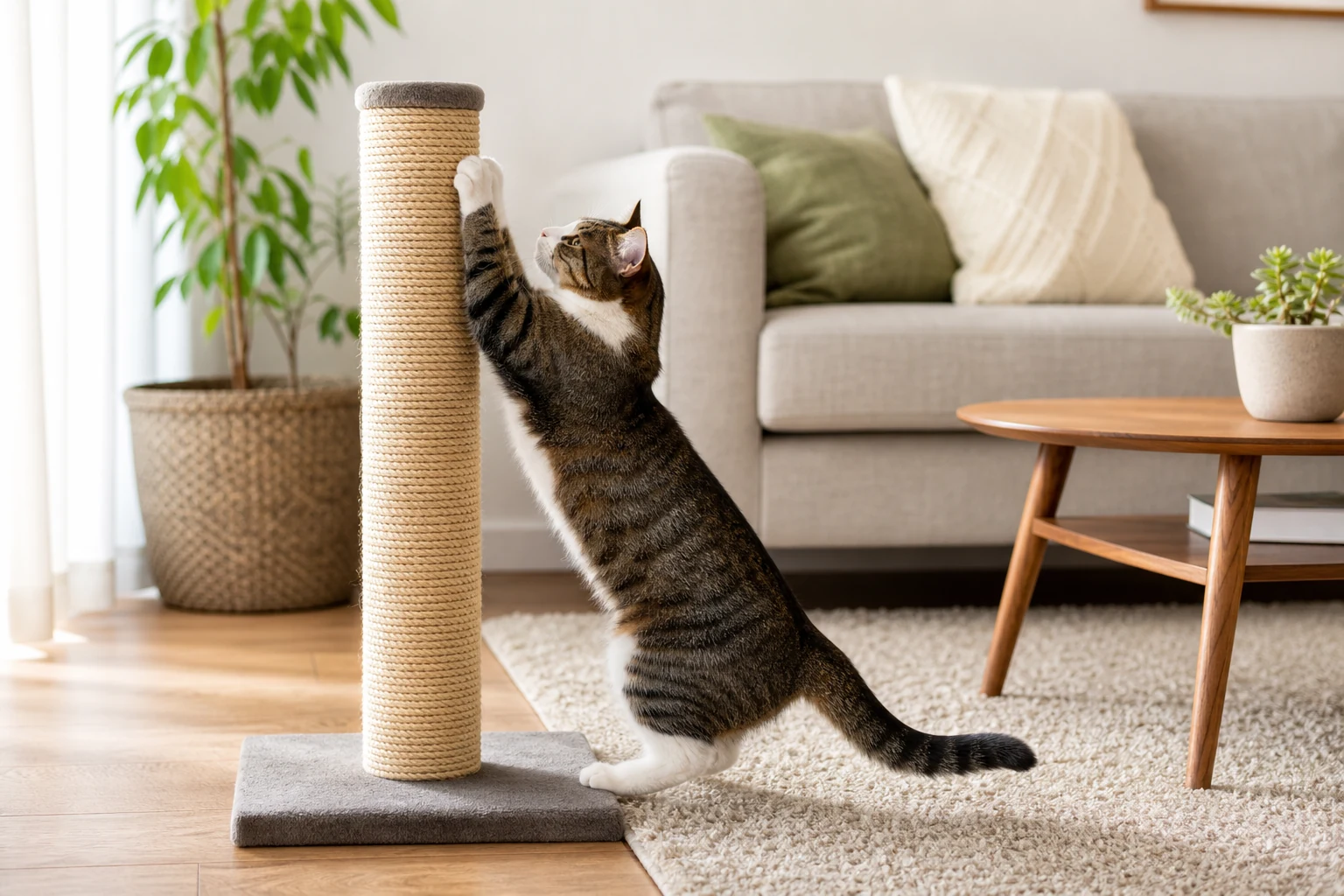
To stop a cat scratching carpet, do not try to remove scratching from the cat's life. Give your cat a better surface in the same location, protect the carpet temporarily, reward the new choice, and adjust the scratcher until it matches what your cat already likes about carpet.
Carpet scratching is frustrating because it often happens in visible, expensive, or rented parts of the home: stairs, doorways, rug edges, bedroom corners, and the strip beside the sofa. But for your cat, scratching is not misbehavior. It is a normal maintenance and communication behavior that can help cats stretch, shed claw sheaths, leave scent, and mark familiar routes through the home 1.
The goal is to make the right behavior easier than the old one. This guide walks through why cats choose carpet, which scratchers usually work best, what deterrents are safe, and when the scratching may point to stress, pain, or a setup problem.
Table of Contents
- Why is your cat scratching the carpet?
- What kind of scratcher works best for carpet scratchers?
- How do you protect the carpet while your cat learns?
- How do you train your cat to use the new scratcher?
- Should you trim nails, use caps, or punish scratching?
- What if your cat scratches carpet in a rental?
- When should carpet scratching make you look deeper?
- Conclusion
- Frequently Asked Questions
- References
Why is your cat scratching the carpet?
Cats scratch carpet because it gives resistance, catches the claws, and often sits exactly where a cat already wants to mark or stretch. The behavior is normal; the target is the problem.
Common reasons include:
- The carpet is horizontal, grippy, and satisfying.
- The cat wants to stretch after waking or before play.
- The spot is a traffic route, doorway, stair, or social area worth marking.
- The cat has no scratcher nearby that feels equally stable.
- Existing scratchers wobble, are too short, or use a texture the cat does not like.
- Stress, boredom, or household changes have increased marking behavior.
Scratching is also part of a healthy indoor environment. The AAFP and ISFM environmental guidelines include scratching areas among the resources cats need, alongside safe spaces, food, water, toileting areas, play opportunities, and resting places 4. If you are reviewing your whole home setup, SnuggleSouls' broader cat behavior guides can help you connect scratching with stress, play, territory, and routine.
The most useful question is not "How do I make my cat stop scratching?" It is "What is this carpet giving my cat that the approved scratcher is not?"
What kind of scratcher works best for carpet scratchers?
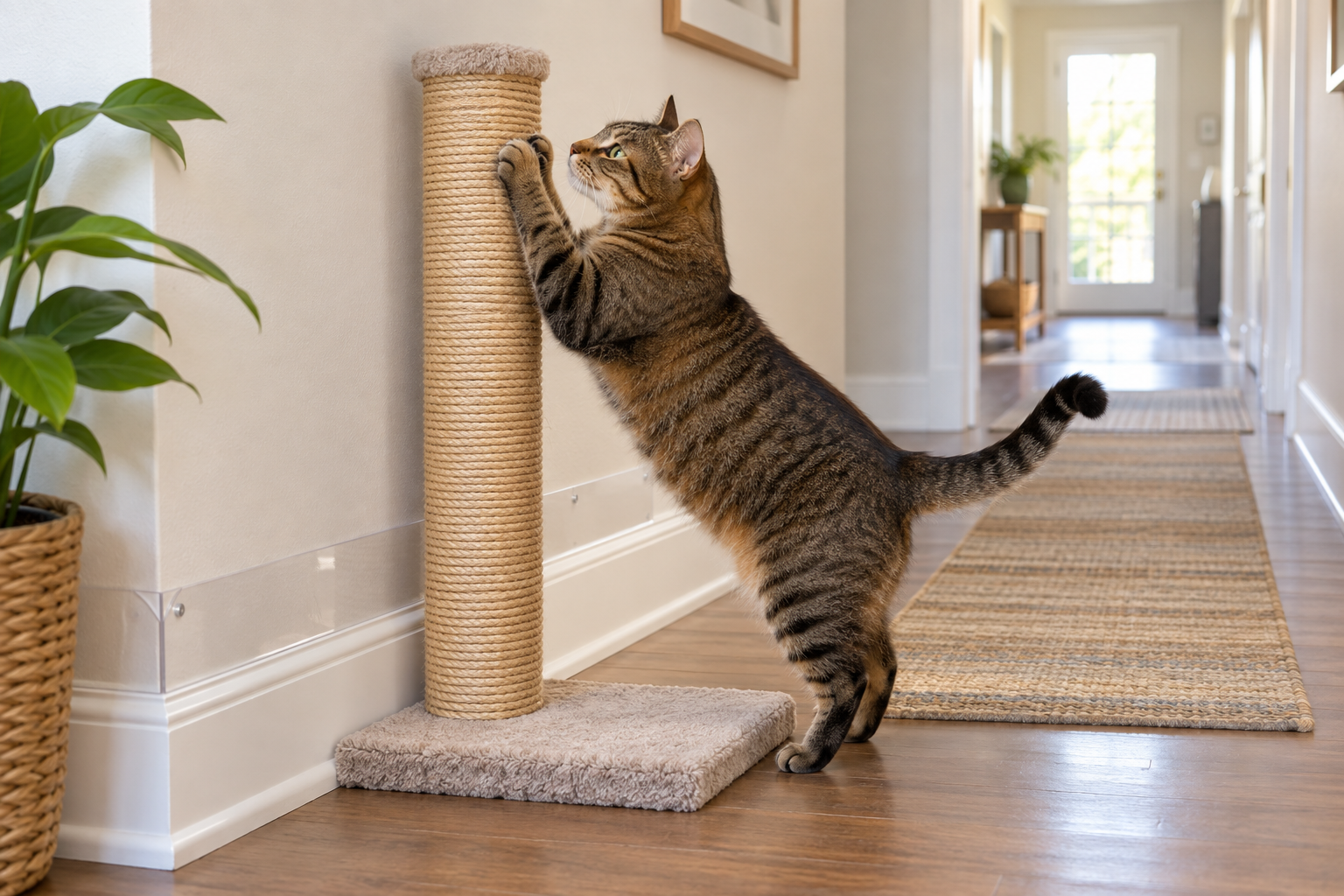
For cats that scratch carpet, start with a sturdy horizontal or low-angled scratcher placed directly over or beside the problem area. Carpet-loving cats often reject tall posts because the shape, resistance, and body posture feel completely different.
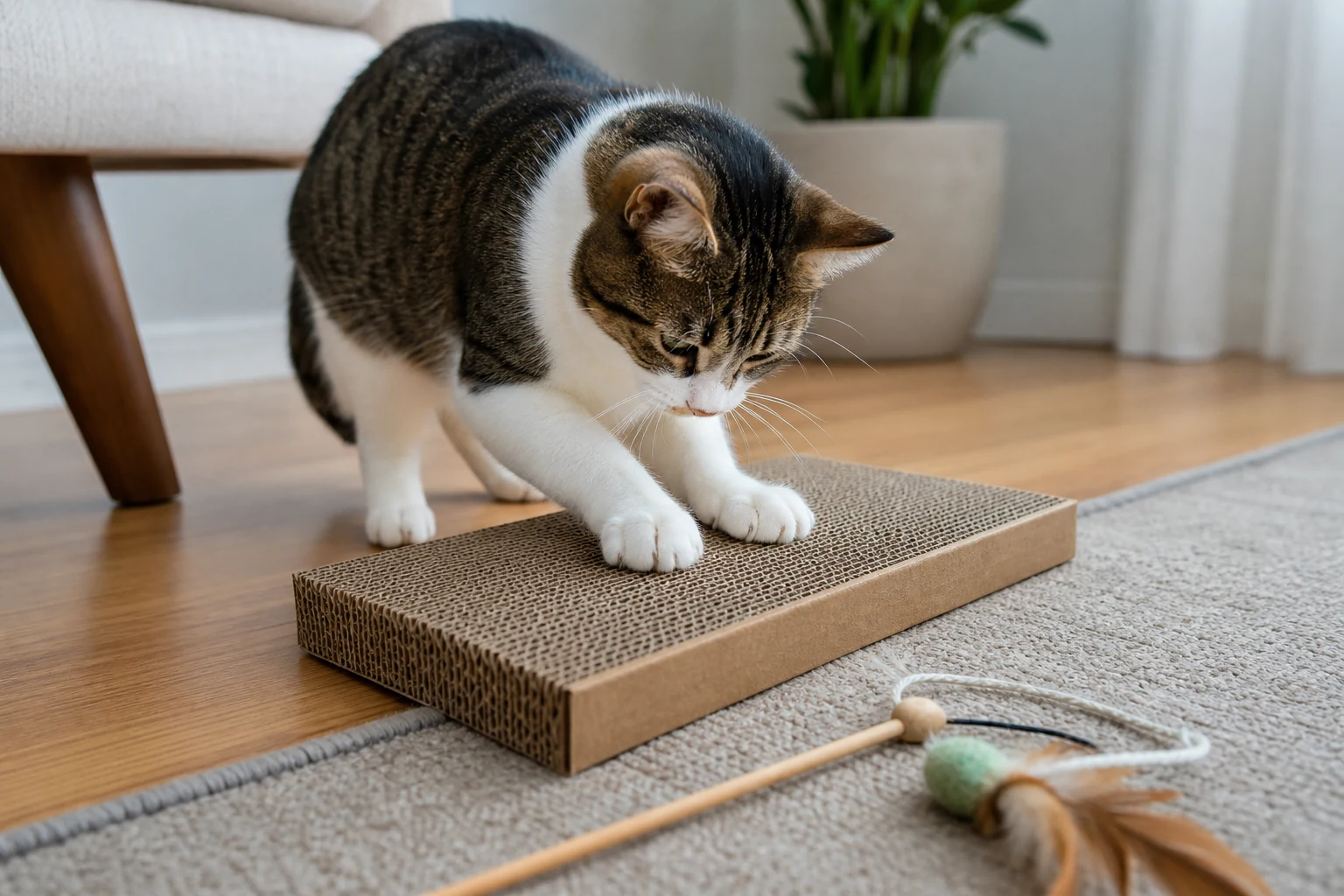
Cats differ in texture and orientation preferences. ASPCA notes that some cats prefer horizontal scratchers, while others prefer vertical or slanted options, and that materials can include cardboard, carpeting, wood, sisal, and upholstery 2. Cornell similarly recommends matching the post to the cat's preferred texture and orientation, including carpet-covered options for cats that already choose carpet 3.
Use this quick matching table:
| If your cat scratches… | Try first | Why it may work |
|---|---|---|
| Carpet edges or rugs | Flat cardboard, sisal mat, or carpet-covered scratch pad | Matches the low, horizontal body position |
| Carpeted stairs | A secure stair-safe scratch mat or flat scratcher near the favorite step | Gives resistance near the repeated route |
| Doorway carpet | Horizontal scratcher plus a vertical post nearby | Supports both marking and stretching at a territory point |
| Sofa-to-carpet transition | Tall sisal post beside the sofa plus a flat scratcher at the rug edge | Covers both vertical and horizontal preferences |
| Bedroom carpet after waking | Scratcher next to the sleeping spot | Catches the natural stretch-after-rest routine |
For a deeper material and placement comparison, see SnuggleSouls' guide to the best scratching posts for cats. For carpet problems, the best scratcher is not always the prettiest one. It is the one your cat can dig into without wobbling.
How do you protect the carpet while your cat learns?
Protect the carpet temporarily, then place the approved scratcher right beside the protected spot. Deterrents work best as a bridge, not as the whole solution.
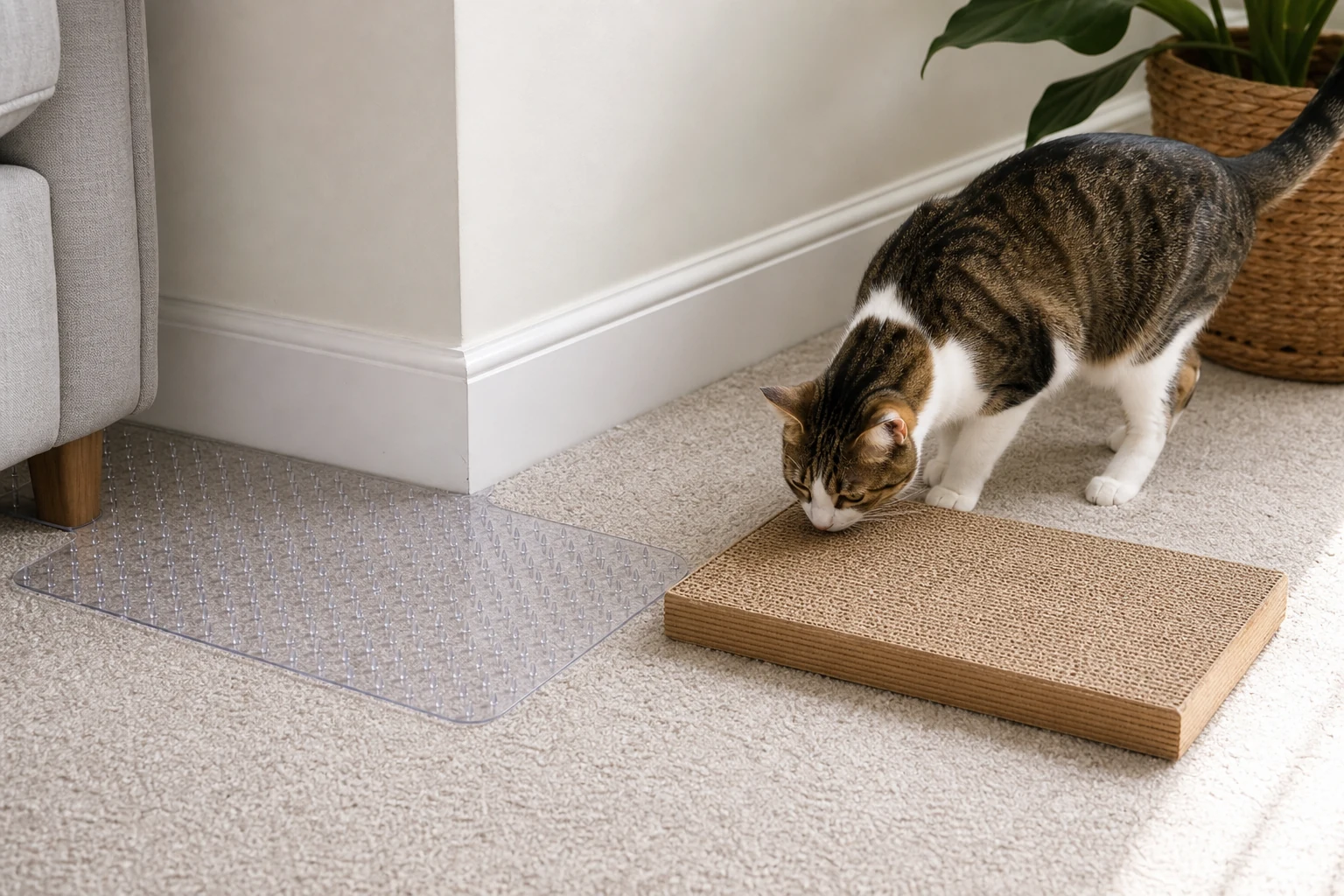
Safe temporary options include:
- A flat scratch mat over the favorite carpet patch.
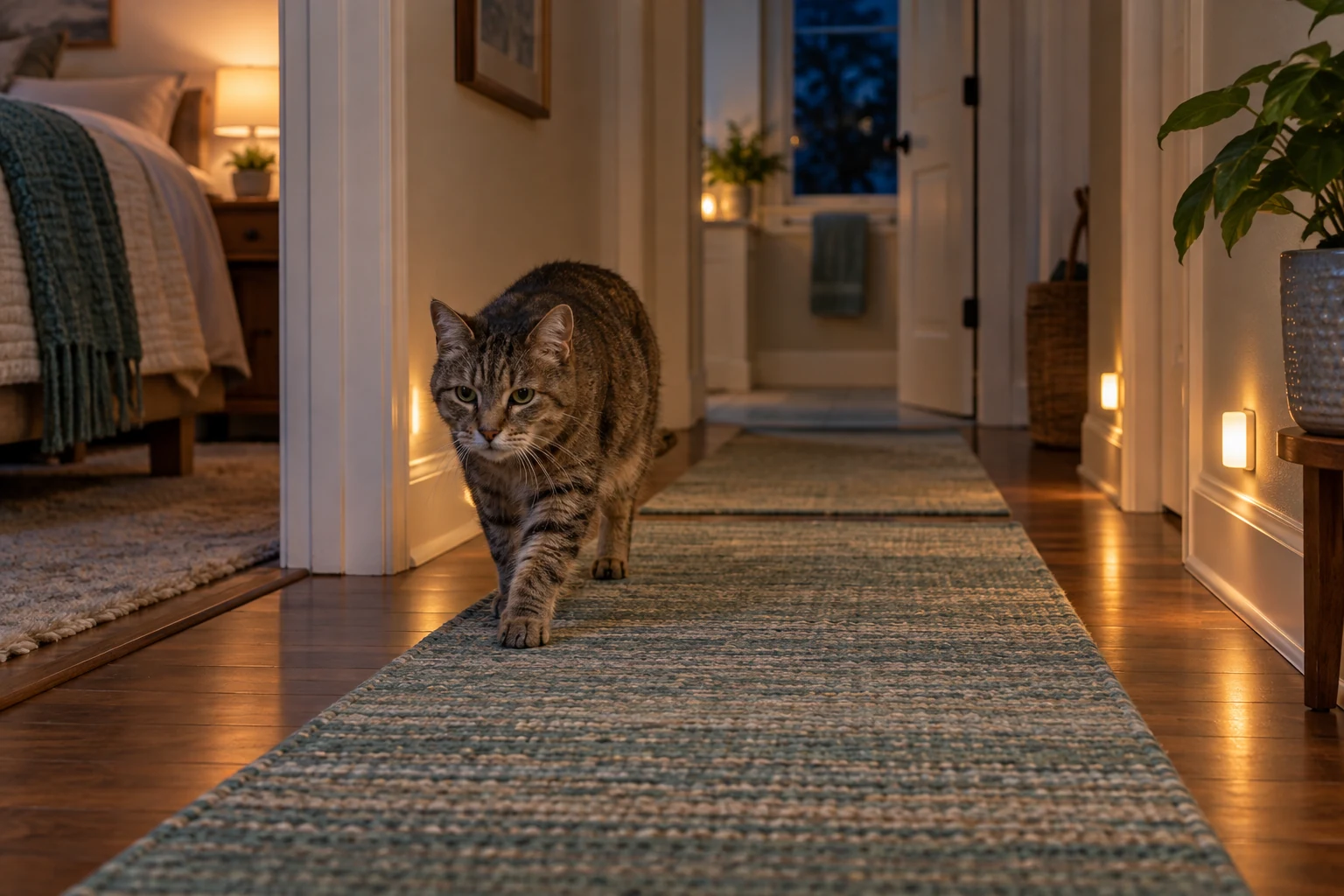
- A clear vinyl carpet runner with the textured side up, used only where safe and not a tripping hazard.
- Double-sided pet-safe tape on a small target area.
- A washable rug or protective mat under a scratcher.
- Furniture or room layout changes that block one corner while leaving a better option nearby.
ASPCA recommends making inappropriate targets less appealing while placing legal alternatives next to those objects 2. International Cat Care also emphasizes offering suitable alternatives and addressing the scratched surface rather than simply scolding the cat 1.
Avoid anything that scares, hurts, or traps your cat. Loud punishment, spraying water, sticky products that attach to paws, and unstable mats can create fear without teaching a better choice. If you need a bigger household safety review, work through a cat-proofing your home checklist so deterrents do not create new hazards.
How do you train your cat to use the new scratcher?
Training works best when you make the new scratcher easy to notice, rewarding to use, and impossible to miss. Put it where the scratching already happens, not across the room where it looks better to you.
Try this seven-day reset:
| Day | What to do | What to watch |
|---|---|---|
| 1 | Put a horizontal scratcher directly over or beside the carpet target. | Does your cat sniff, step on, or avoid it? |
| 2 | Add a second texture, such as sisal if cardboard is ignored. | Which texture gets paw contact? |
| 3 | Sprinkle catnip or silvervine if your cat responds to it. | Interest should rise without forcing contact. |
| 4 | Play with a wand toy near the scratcher, then let the cat land paws on it. | Reward any scratching motion. |
| 5 | Move the scratcher only a few inches if the location is inconvenient. | Do not move it too far too fast. |
| 6 | Add another scratcher near a sleep spot or doorway. | More legal options reduce pressure on one area. |
| 7 | Keep the carpet protected until the new habit is consistent. | Remove protection gradually, not after one good day. |
Reward with calm praise, a treat, or a short play session when your cat uses the new surface. Do not grab your cat's paws and rub them on the scratcher. Many cats dislike forced handling, and the scratcher can become associated with pressure instead of choice.
If your cat keeps returning to one carpet strip, assume the location matters. A scratcher in the wrong room is usually invisible from your cat's point of view.
Should you trim nails, use caps, or punish scratching?
Nail trimming can reduce damage, but it does not replace scratching. Punishment is likely to make the behavior sneakier or more stressful.
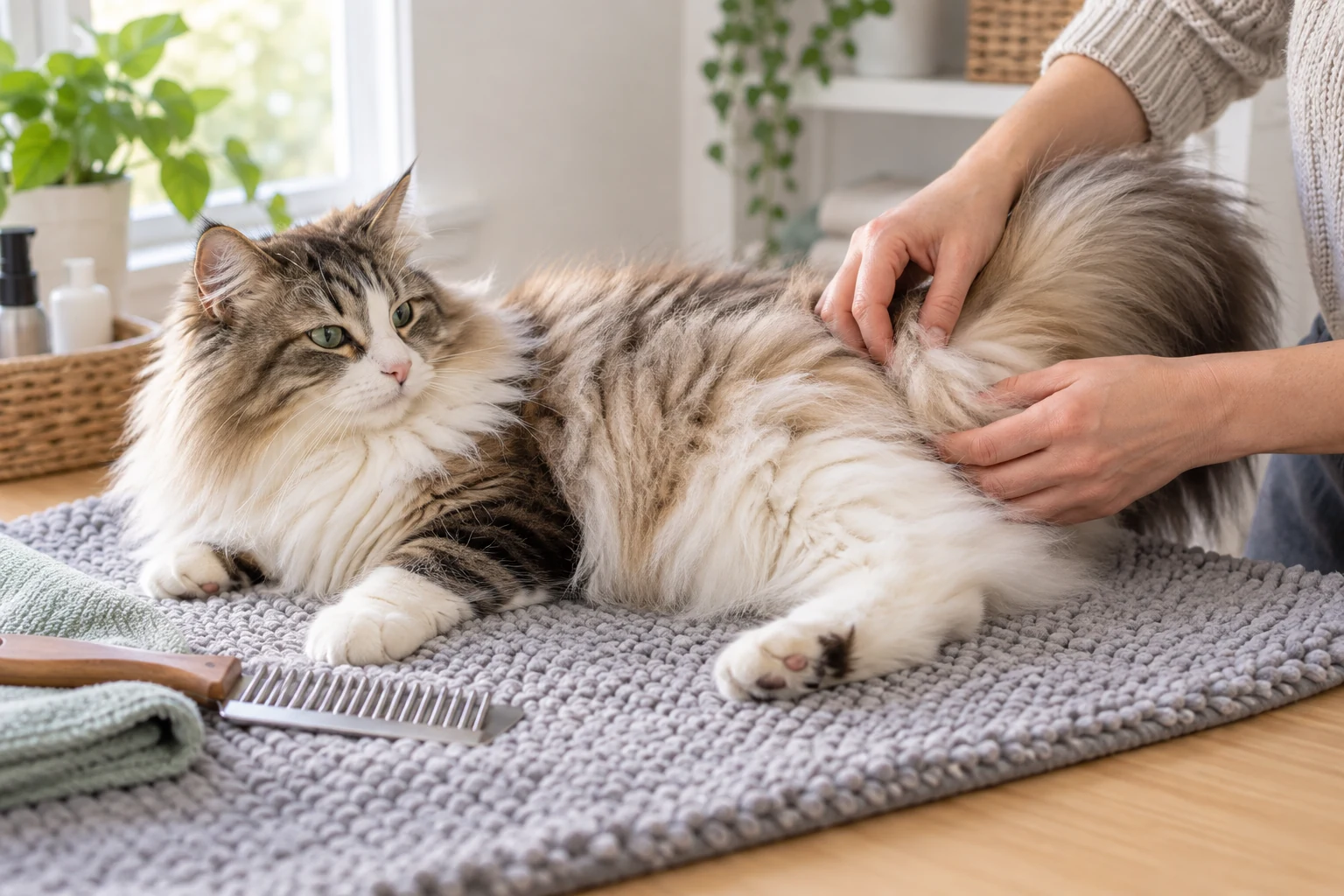
Regular nail care helps because sharp tips catch carpet loops more easily. If your cat tolerates handling, trim only the translucent tip and avoid the quick. SnuggleSouls has a step-by-step guide on how to trim cat nails safely without turning grooming into a wrestling match.
Nail caps can be useful for some cats, especially during a rental-protection or training period, but they must fit correctly and be monitored as nails grow. Ask your veterinarian or groomer for help if you are unsure.
Avoid:
- Declawing, which removes more than a nail and can create serious welfare concerns.
- Yelling, chasing, or startling your cat after scratching.
- Spray bottles or noise traps.
- Strong essential oils or scent deterrents, which can be unsafe for cats.
- Covering every surface without providing a better scratching target.
Humane World for Animals recommends redirecting cats toward appealing, sturdy scratching posts rather than relying on punishment 5. Your cat needs an acceptable outlet, not just a list of forbidden places.
What if your cat scratches carpet in a rental?
In a rental, prioritize reversible protection and multiple legal scratchers in the highest-risk spots: doorways, stair edges, sofa corners, and bedroom paths. Take photos before adding protectors so you can track whether damage is slowing.
A practical rental setup might include:
- One flat scratcher over the current carpet target.
- One heavy vertical post near the sofa or main room.
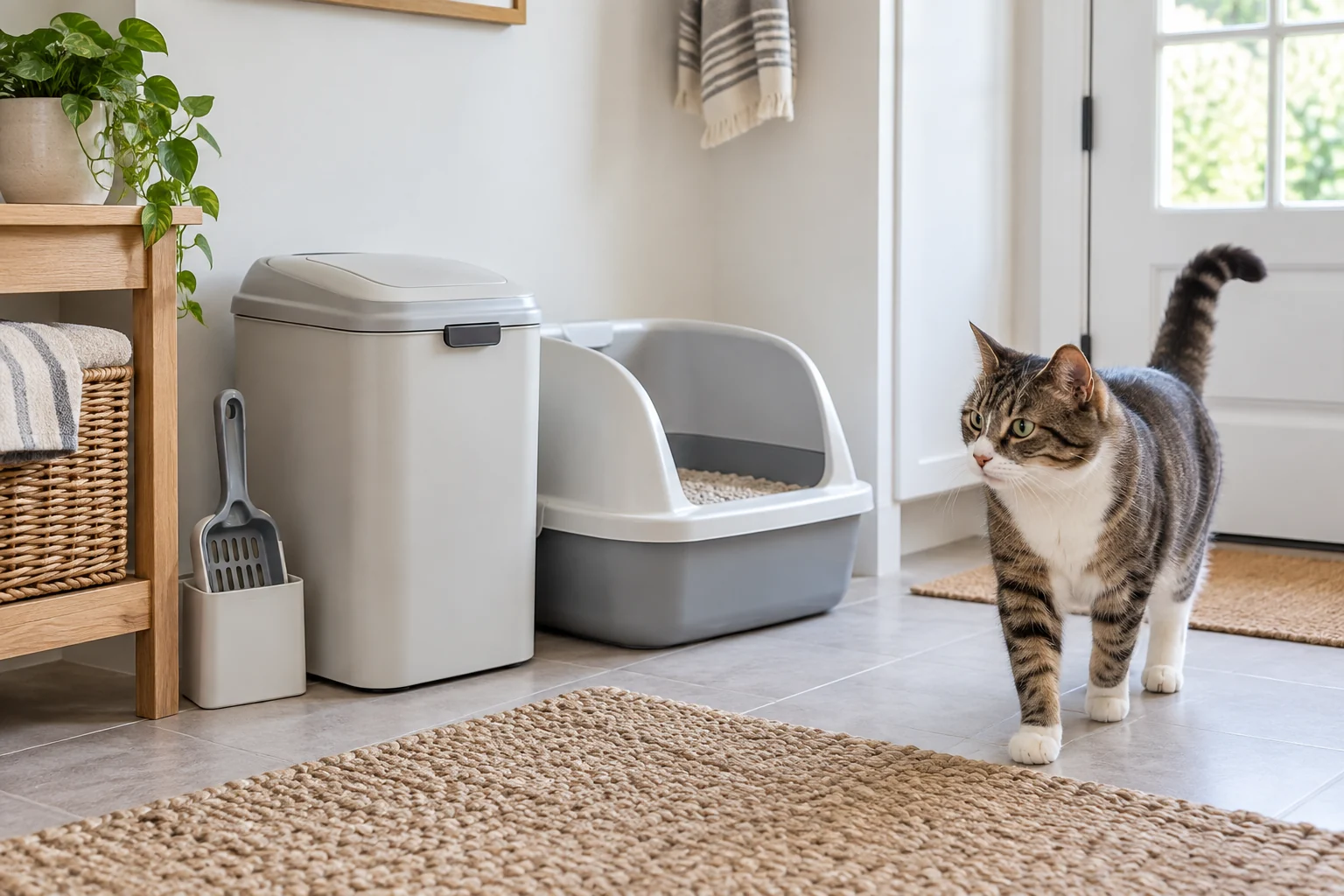
- A washable mat under food, litter, or play zones if carpet damage is tied to excited movement.
- Temporary clear protectors in corners.
- Weekly nail checks.
- Daily play to reduce restless evening scratching.
If you live in a small apartment, review your apartment cat setup too. Cats in compact homes often need resources placed more thoughtfully because every doorway, rug edge, and hallway carries more social traffic.
When should carpet scratching make you look deeper?
Most carpet scratching is normal behavior aimed at the wrong surface. Still, a sudden change deserves attention, especially if it arrives with other behavior or health changes.
Call your veterinarian or a qualified behavior professional if you notice:
- Scratching that starts suddenly in a previously settled adult cat.
- Overgrooming, skin irritation, limping, or sensitivity around the paws.
- Hiding, appetite change, litter box changes, or unusual aggression.
- Scratching paired with urine marking or conflict between cats.
- A senior cat who avoids posts it used to use, especially if jumping or stretching seems uncomfortable.
- Damage that escalates despite several appropriate scratchers and a stable routine.
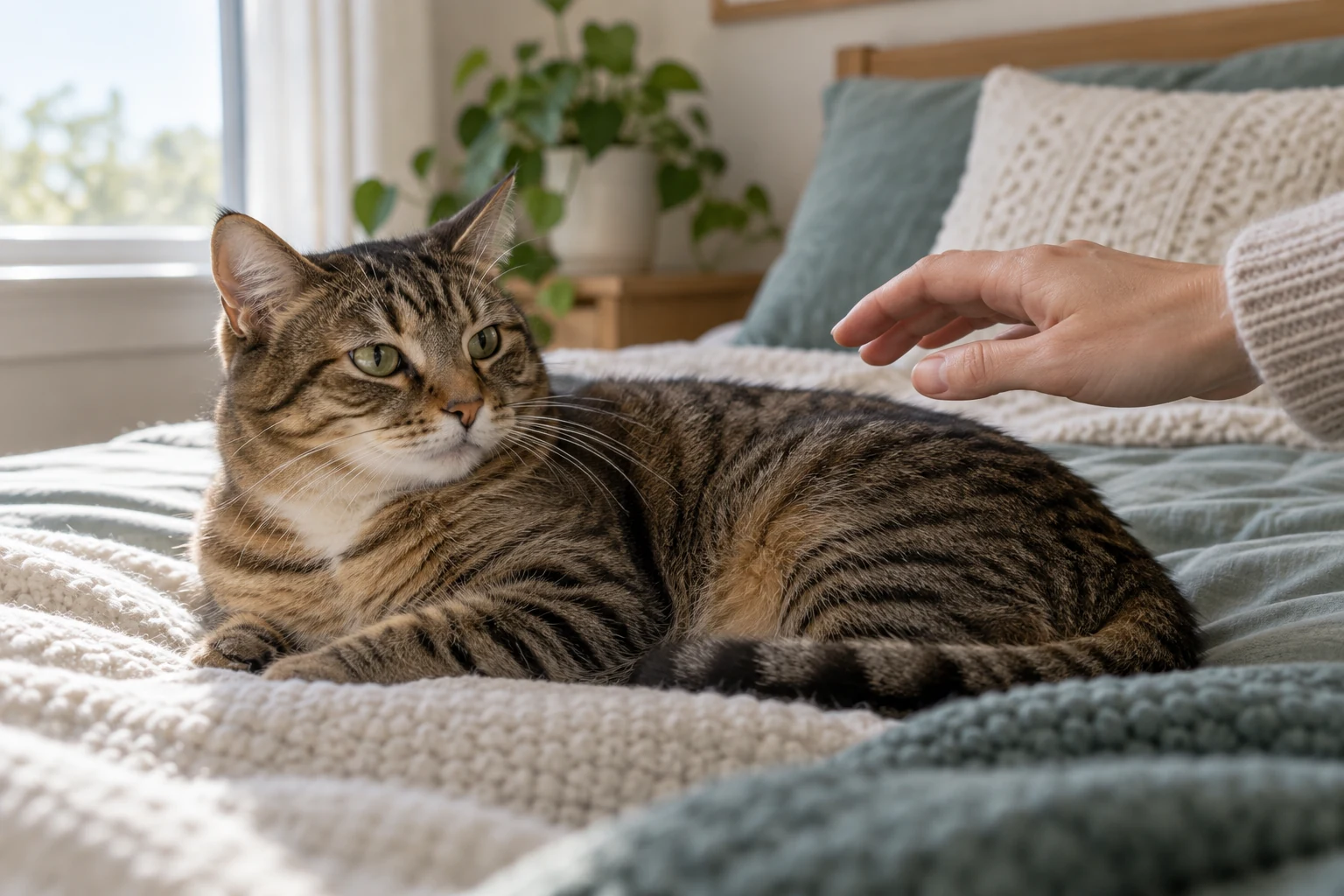
Pain, stress, inter-cat tension, and environmental frustration can all change how a cat uses space. A cat who suddenly stops using a tall post may not be stubborn; the stretch may be uncomfortable, the post may wobble, or another pet may be blocking access.
Conclusion:
The fastest way to stop cats scratching carpet is to respect the need behind the behavior and redirect it with precision. Put a stable horizontal scratcher where the carpet scratching already happens, protect the old target temporarily, reward the new choice, and adjust texture, angle, and location until your cat's preference is clear.
Carpet is not a moral failure for your cat. It is just a surface that accidentally meets several feline needs. Once your home offers a better version of that surface, most cats can learn a cleaner, safer routine.
Frequently Asked Questions
Why does my cat scratch carpet even with a scratching post?
Your cat may prefer the carpet's horizontal angle, texture, location, or stability. Try a flat scratcher beside the carpet target and keep the existing post as a second option.
Is carpet scratching a sign my cat is stressed?
Sometimes, but not always. Scratching is normal cat behavior, but sudden escalation, new locations, urine marking, hiding, or conflict with another pet can suggest stress or a deeper environmental issue.
What scent stops cats scratching carpet?
Scent alone is unreliable and some strong scents, including many essential oils, can be unsafe for cats. Use physical protection plus a better scratcher instead of depending on sprays.
Should I buy a carpet-covered scratching post?
It can help if your cat clearly prefers carpet texture. Choose a stable design and place it near the problem area, but avoid confusing your cat by putting it directly on an unprotected carpet target without a clear training plan.
How long does it take to redirect carpet scratching?
Some cats switch in a few days, while others need two to four weeks of consistent placement, reward, and carpet protection. Do not remove the deterrent after a single good session.
Can I stop my cat scratching carpeted stairs?
Yes, but stairs need extra safety. Use secure, low-profile scratch mats or place scratchers at the top and bottom landing, and avoid loose covers that could slip under people or pets.
References
[1] International Cat Care. (2025). Scratching on furniture and carpets. https://icatcare.org/articles/scratching-on-furniture-and-carpets
[2] ASPCA. (n.d.). Destructive Scratching. https://www.aspca.org/pet-care/cat-care/common-cat-behavior-issues/destructive-scratching
[3] Cornell Feline Health Center. (n.d.). Feline Behavior Problems: Destructive Behavior. https://www.vet.cornell.edu/departments-centers-and-institutes/cornell-feline-health-center/health-information/feline-health-topics/feline-behavior-problems-destructive-behavior
[4] AAFP and ISFM. (2013). Feline Environmental Needs Guidelines. https://catvets.com/resource/aafp-isfm-environmental-needs-guidelines/
[5] Humane World for Animals. (n.d.). How to stop cats' destructive scratching. https://www.humaneworld.org/en/resources/how-stop-cats-destructive-scratching


 EN
EN DE
DE ES
ES PT
PT