
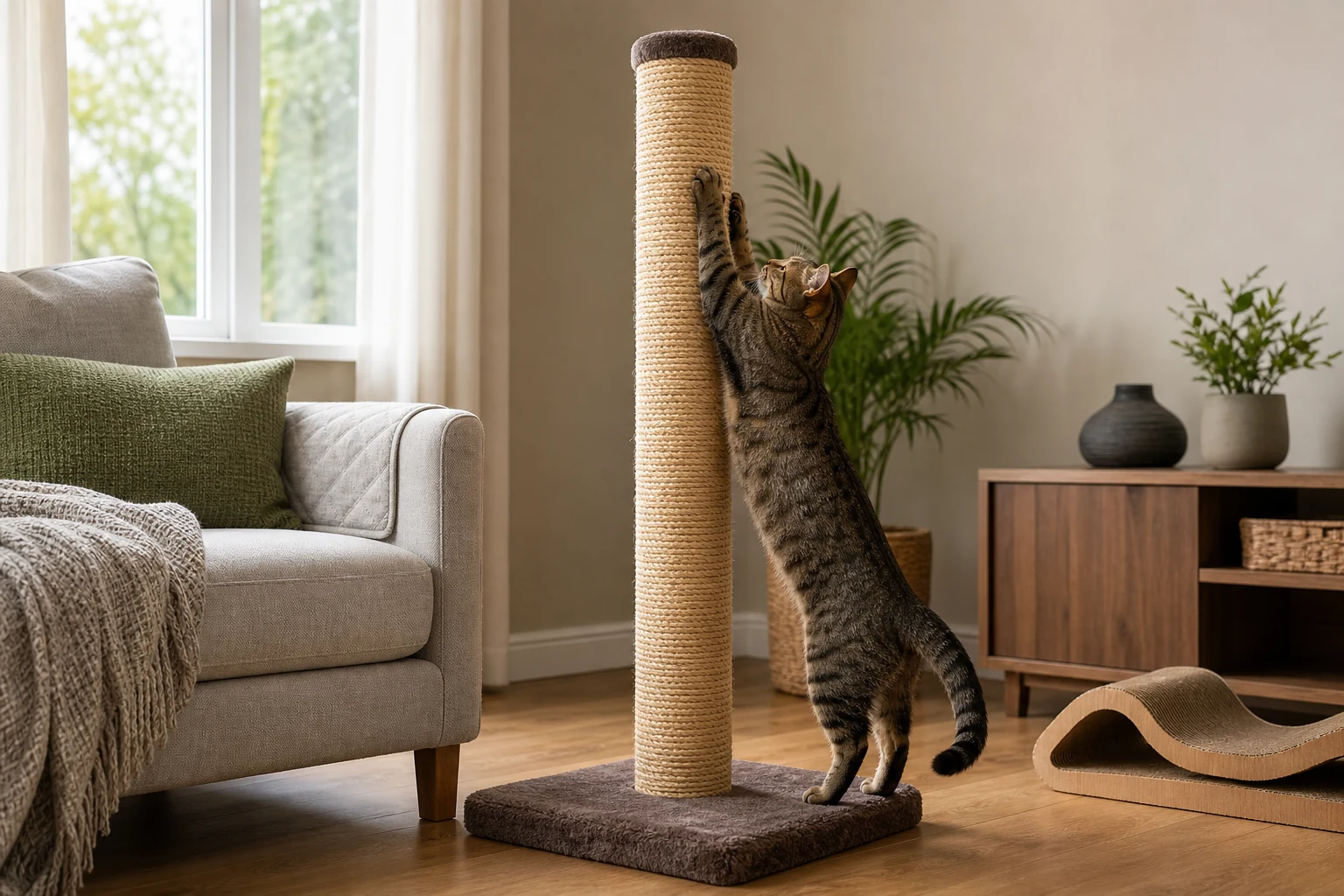
The best scratching post for most cats is tall enough for a full body stretch, heavy enough not to wobble, and covered in a texture the cat enjoys. Material matters, but placement and training usually decide whether your cat uses the post or keeps choosing the sofa.
Scratching is not bad behavior. Cats scratch to condition their claws, stretch their muscles, leave scent and visual marks, and regulate stress in their environment 1. A good scratching setup gives those normal needs a better target.
This guide helps you choose the right post type, place it where your cat naturally wants to scratch, and train without scaring or punishing your cat.
Table of Contents
- What makes a scratching post good for cats?
- Which scratching post material is best for cats?
- Where should you put a scratching post?
- How many scratching posts does a cat need?
- How do you train a cat to use a scratching post?
- How do you stop a cat scratching furniture?
- When is scratching a stress or health clue?
- Conclusion
- Frequently Asked Questions
- References
What makes a scratching post good for cats?
A good scratching post matches the way your cat wants to stretch, grip, and mark. For many adult cats, that means a vertical post that is at least 30 to 32 inches tall, with a wide base and a rough, satisfying surface.
The most common mistake is buying a post that looks tidy to people but feels useless to the cat. If the post is short, soft, slippery, or wobbly, your cat may return to the arm of the sofa because it is taller, heavier, and easier to sink claws into.
Look for these features first:
| Feature | Why it matters | What to choose |
|---|---|---|
| Height | Cats often want a full shoulder, back, and hip stretch. | Tall vertical post for adult cats; lower options for kittens or seniors. |
| Stability | Wobbling can make a cat avoid the post. | Heavy base, wall-mounted scratcher, or sturdy cat tree. |
| Texture | Cats need a surface that catches the claws. | Sisal fabric, sisal rope, cardboard, or natural wood-like textures. |
| Direction | Some cats scratch upright; others prefer flat or angled surfaces. | Offer vertical plus horizontal or angled choices. |
| Location | Scratching is partly communication. | Put posts near sleeping spots, entry paths, and targeted furniture. |
Scratching posts do not replace normal nail care. If your cat's claws snag easily or curve toward the paw pad, add a low-stress routine for trimming your cat's nails safely and ask your veterinarian if a claw looks painful, swollen, or infected.
Which scratching post material is best for cats?
Sisal fabric is often the strongest all-around choice, but the best material is the one your cat consistently uses. Many cats like rough, shreddable textures because they give feedback under the claws.
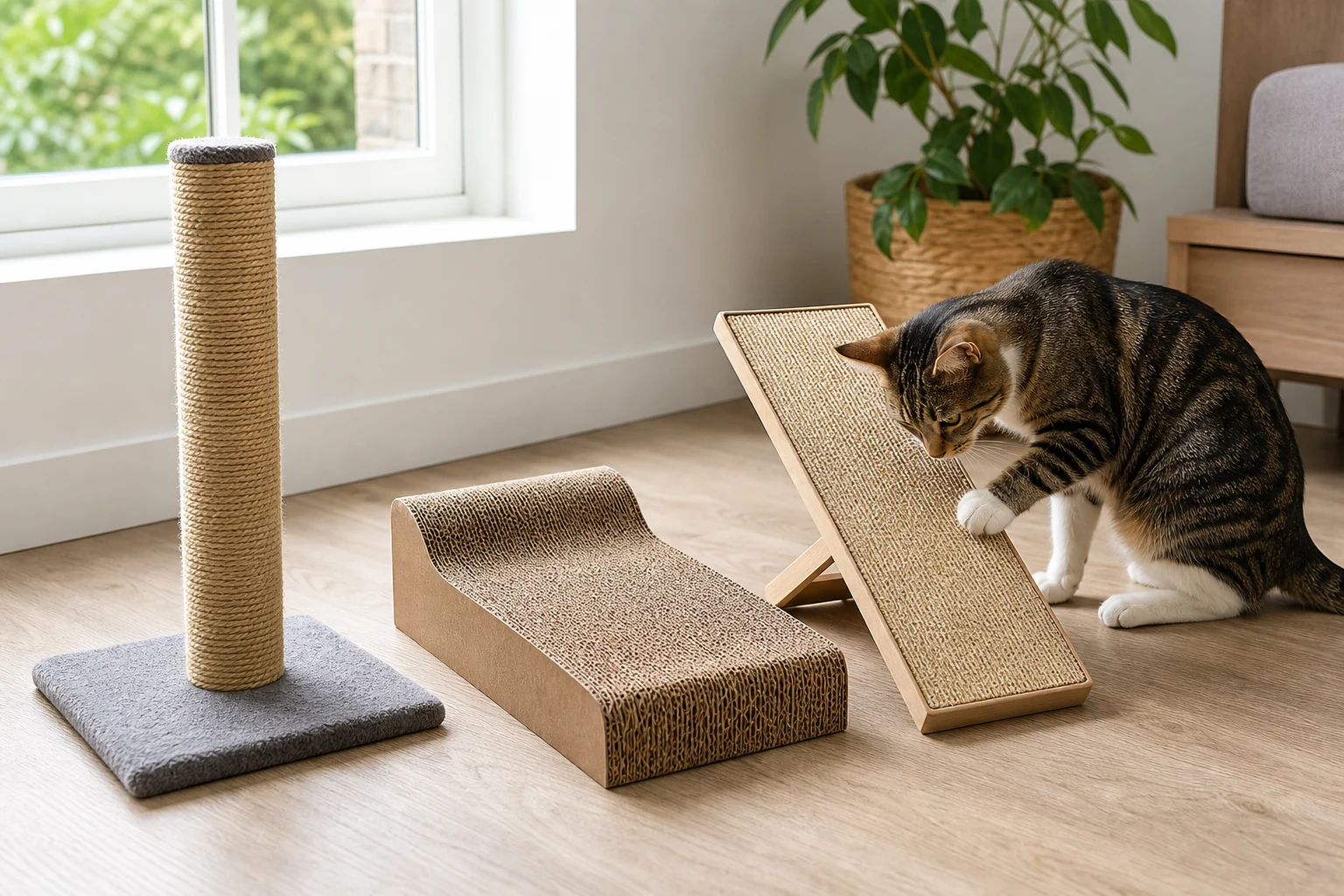
Offering more than one scratching surface helps reveal whether your cat prefers vertical stretching, horizontal scratching, or an angled board.
Here is how common materials compare:
| Material | Best for | Watch-outs |
|---|---|---|
| Sisal fabric | Durable vertical posts and serious stretchers. | Usually better grip than slick carpet, but quality varies. |
| Sisal rope | Cats that like rope texture and repeated claw pulls. | Rope can loosen over time; replace if strands become unsafe. |
| Corrugated cardboard | Horizontal scratchers, budget testing, and cats who love shredding. | Creates debris and wears out faster. |
| Wood or bark-style surfaces | Cats drawn to outdoor textures. | Must be smooth enough to avoid splinters. |
| Carpet | Some cats use it, but it can confuse furniture boundaries. | Avoid carpet that resembles rugs or upholstery you want protected. |
If you are not sure what your cat likes, buy one sturdy vertical sisal option and one inexpensive horizontal cardboard scratcher. That small test usually tells you more than guessing from product photos.
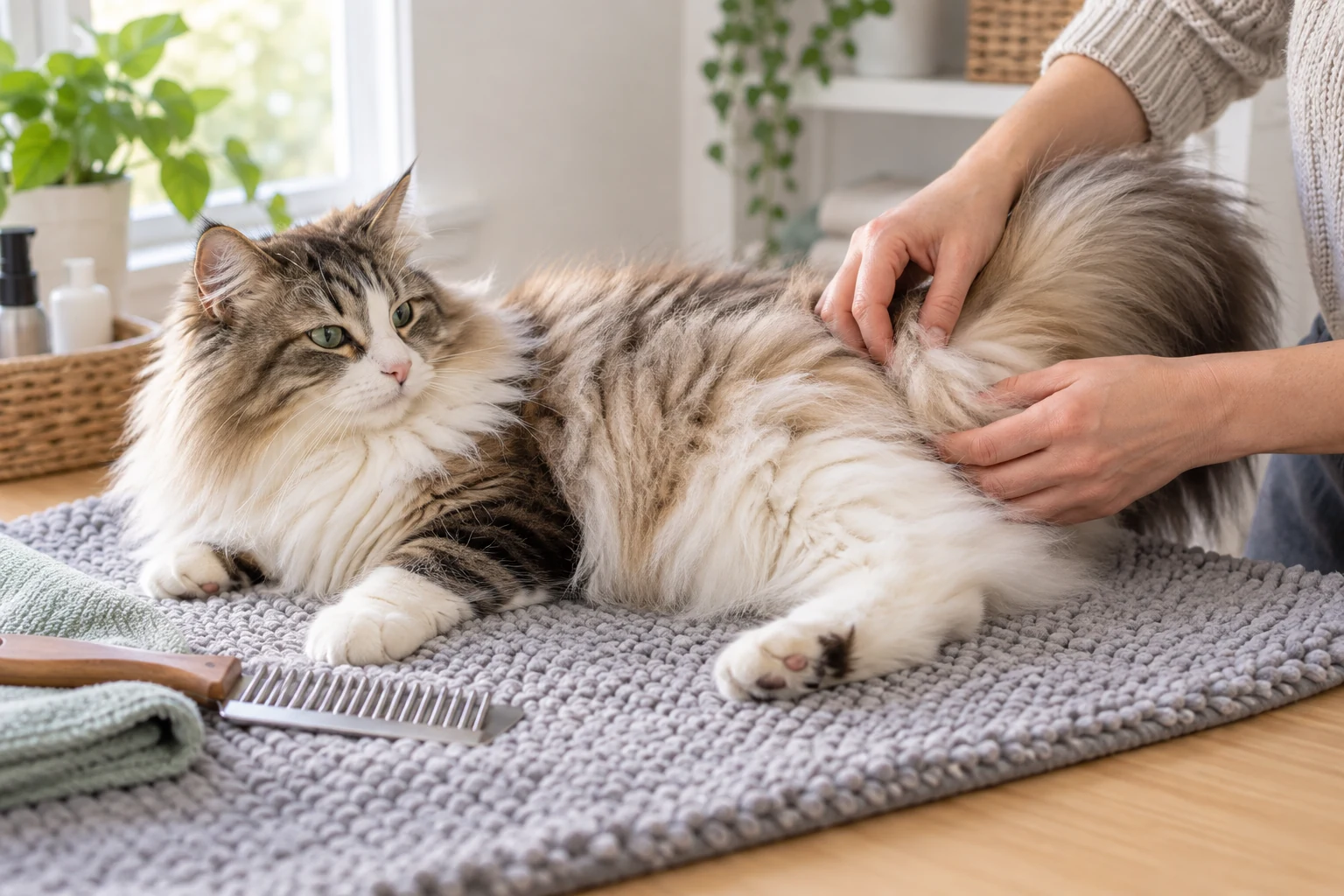
For cats who scratch during excitement, material is only part of the setup. Pair the post with play and grooming routines so your cat has better outlets for energy; our cat grooming routine can help you keep claws, coat, and skin checks calm.
Where should you put a scratching post?
Put scratching posts where your cat already spends time, not in a hidden corner. Scratching is linked to territory and communication, so cats often choose visible routes, resting areas, and furniture that carries familiar human scent 4.
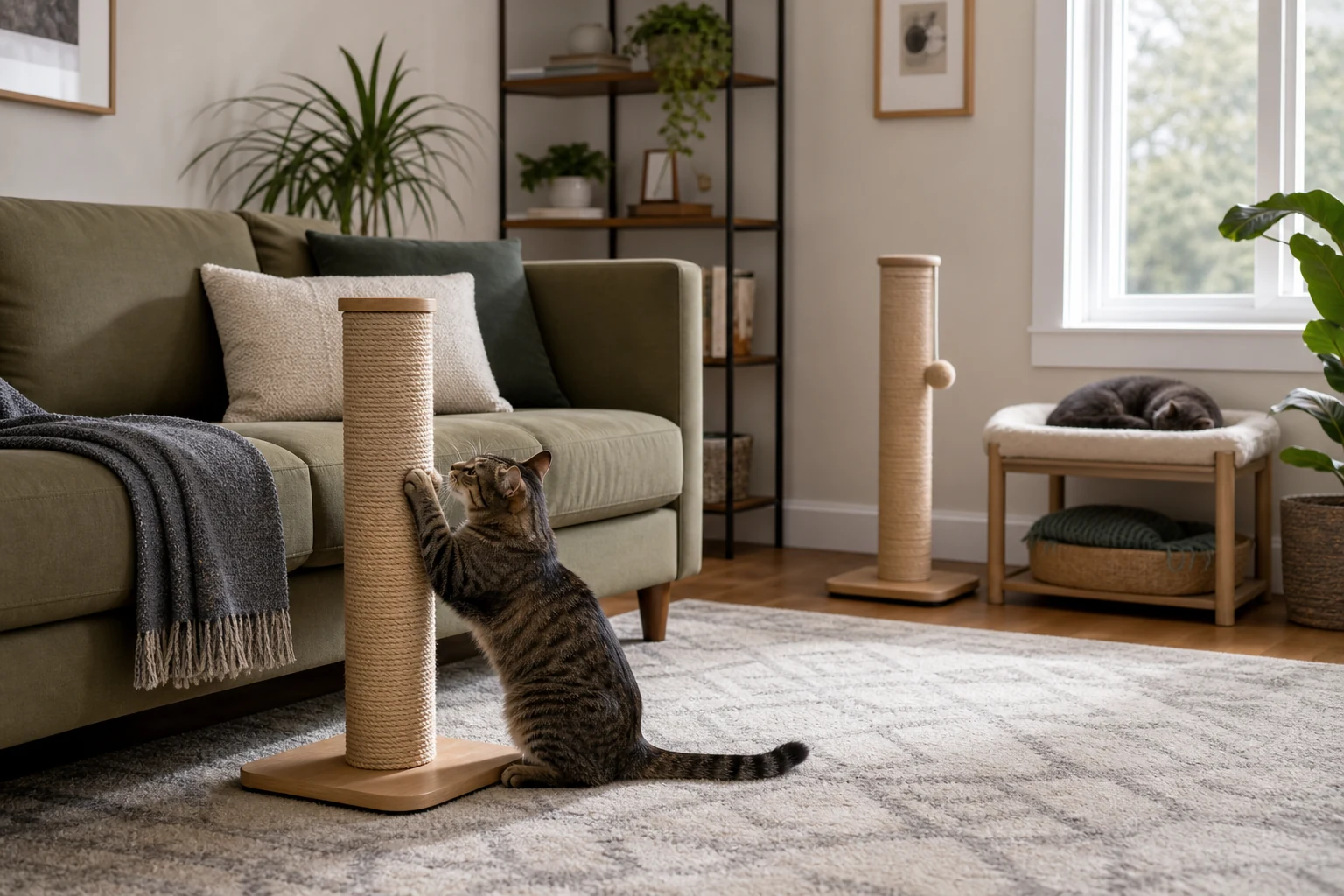
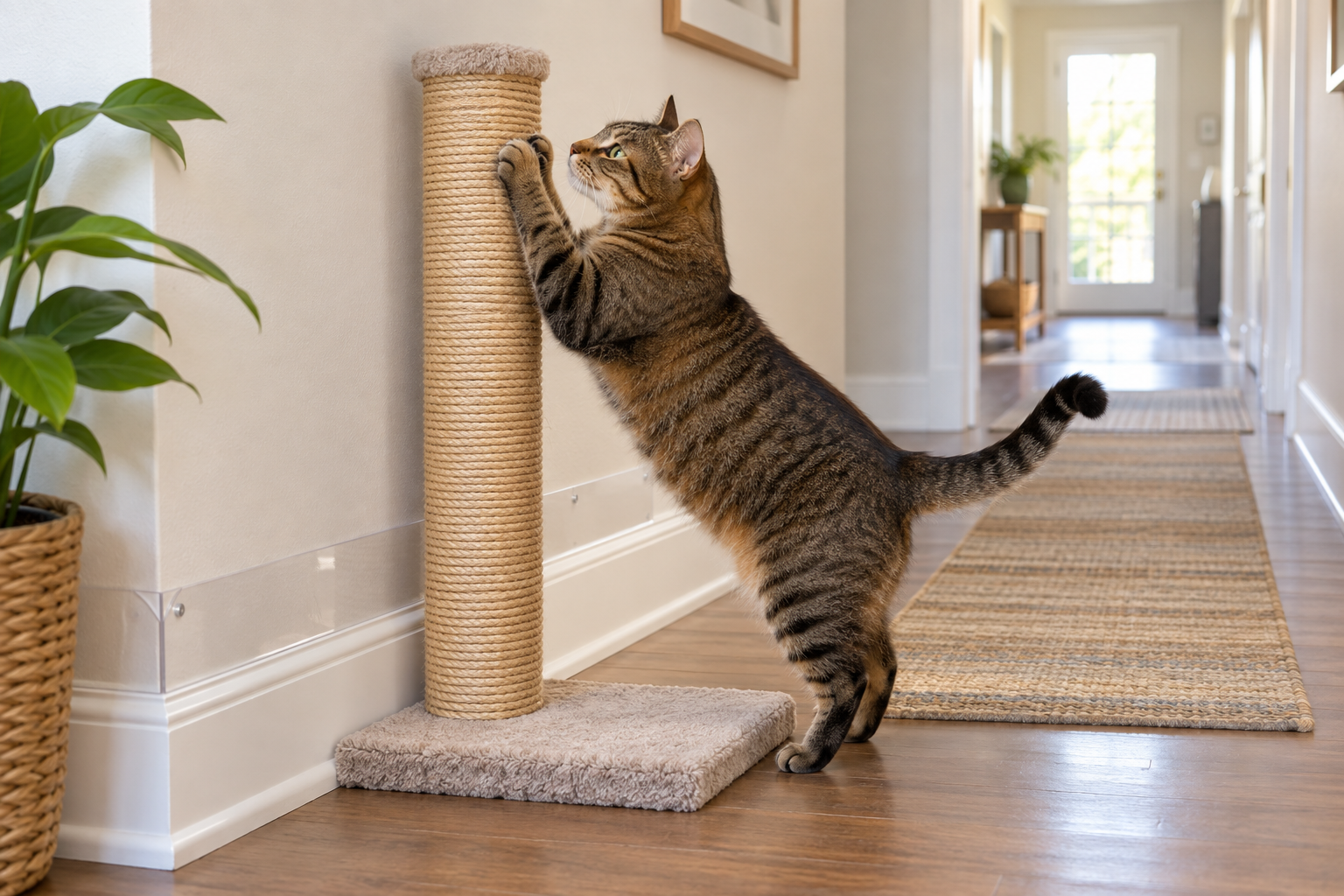
Scratching posts work best in places your cat already uses, such as near resting spots, entry routes, and furniture they have started targeting.
The best locations are usually:
- Beside the sofa or chair your cat has started scratching.
- Near a favorite sleeping spot, because many cats scratch after waking.
- Near windows, perches, or routes between rooms.
- In social rooms, not only in a laundry room or basement.
- In each major cat territory if you have a large home.
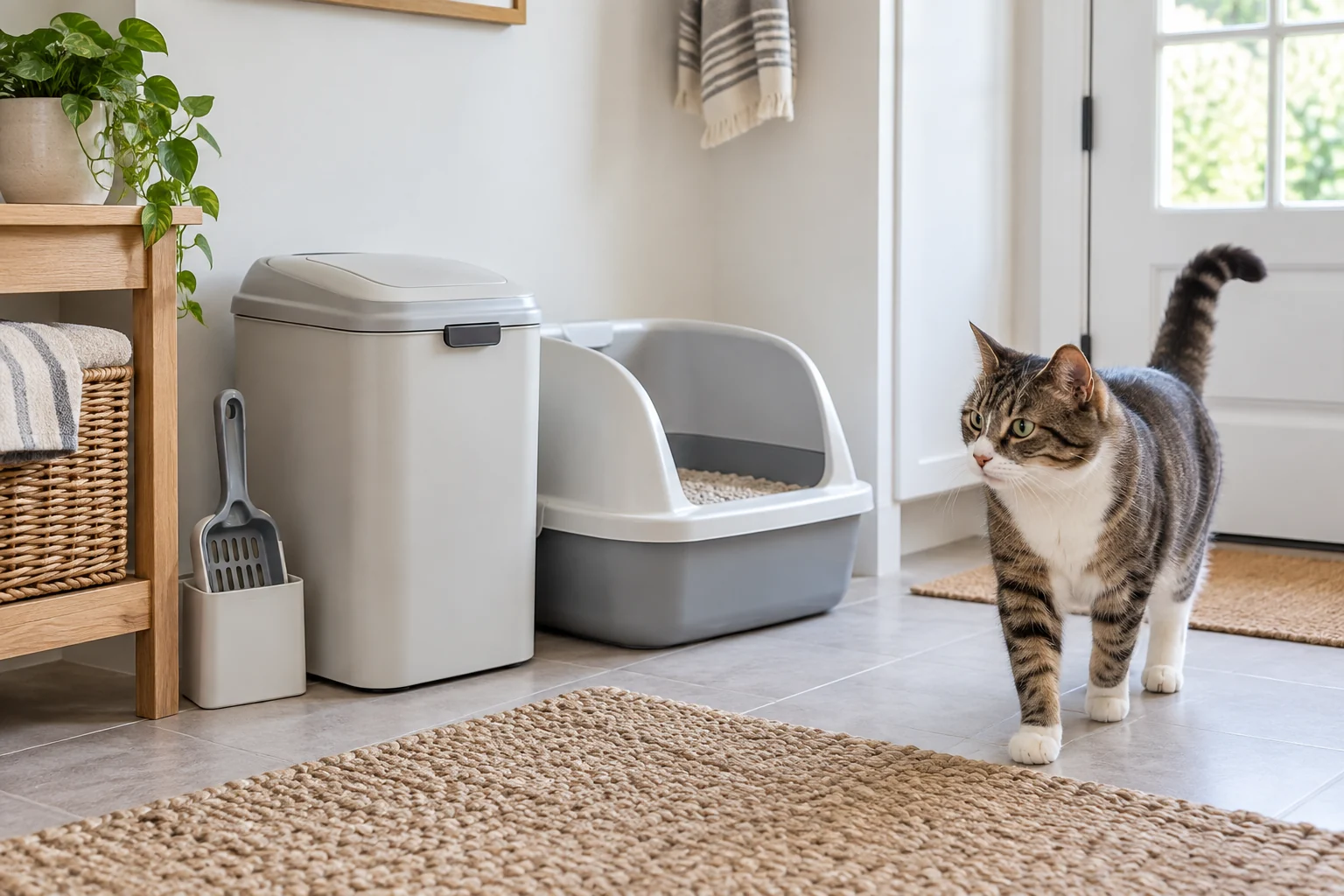
Placement logic is similar to litter box placement: the best setup is easy for the cat to find, comfortable to use, and not trapped in a noisy or awkward spot.
Once your cat is using the post reliably, you can move it a few inches at a time if the original furniture-side location is inconvenient. Moving it across the room in one step often resets the problem.
How many scratching posts does a cat need?
Most homes need at least two scratching options for one cat: one vertical and one horizontal or angled surface. Multi-cat homes need more, especially if cats do not share resting areas peacefully.
Scratching is part of environmental enrichment. Indoor cats benefit from resources that let them climb, hide, play, scratch, rest, and choose between safe spaces 4. A single post in one room may not cover those needs.
Use this simple starting point:
| Home situation | Practical starting setup |
|---|---|
| One adult cat in a small apartment | One tall post near the main living area plus one cardboard scratcher near a rest spot. |
| One kitten | Several stable low scratchers plus a taller option as the kitten grows. |
| One senior cat | Easy-access horizontal or angled scratcher plus a stable lower post. |
| Two or more cats | Multiple posts in separate rooms and near separate resting areas. |
| Cat scratching one specific sofa | Put the best post directly beside that sofa first. |
If tension between cats is part of the problem, avoid forcing them to share one prized post. Spread resources the same way you would spread food, resting spots, and escape routes when introducing two cats.
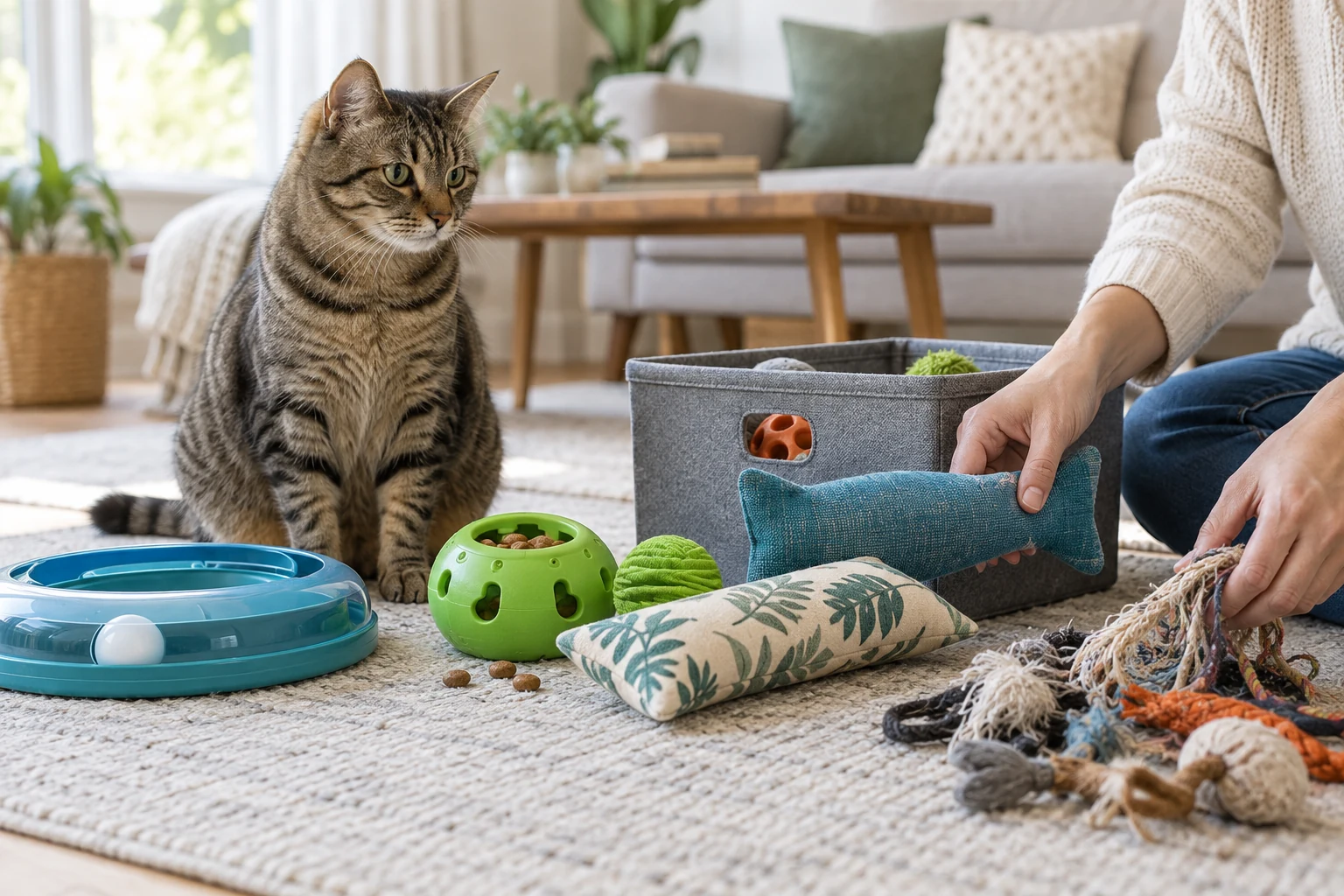
For active indoor cats, scratching also pairs well with interactive cat toys. A play session can end near the post so your cat scratches, stretches, and settles afterward.
How do you train a cat to use a scratching post?
Training works best when you make the post rewarding and the old target less satisfying. Punishment usually backfires because it can make a cat anxious or teach them to scratch when you are not watching 2.
Start with a post your cat can love, then use gentle encouragement:
- Put the post beside the current scratching target.
- Sprinkle a small amount of catnip or silvervine on the post if your cat responds to it.
- Play with a wand toy near the post so your cat grabs it naturally.
- Reward any touch, stretch, or scratch with praise, treats, or more play.
- Leave the post in place long enough for the habit to form.
Do not grab your cat's paws and scrape them on the post. That can feel threatening, especially to cats who dislike paw handling. Instead, model the surface with your fingers, drag a toy across it, or reward curiosity.
If your cat ignores a new post for several days, treat that as useful feedback. Change one variable at a time: move it closer to the target furniture, try a different angle, add a cardboard surface, or choose a taller and heavier model.
How do you stop a cat scratching furniture?
To stop furniture scratching, give your cat a better legal target in the same location, then temporarily make the furniture less rewarding. The goal is redirection, not fear.
The ASPCA recommends providing appropriate scratching items and making inappropriate targets unattractive or inaccessible while the cat learns 2. Practical options include:
- Place a tall post directly next to the scratched sofa arm.
- Cover the scratched spot temporarily with a tightly fitted throw, furniture protector, or double-sided scratch deterrent made for pets.
- Reward your cat every time they use the post.
- Keep claws trimmed so accidental snags are less reinforcing.
- Add more play if scratching happens during high-energy times.
Avoid yelling, spraying water, or startling your cat. These methods can increase stress and may damage trust without teaching the cat what to do instead. If the furniture is part of a broader home setup problem, review cat-proofing your home and remove tempting loose fabrics, unstable surfaces, or blocked routes.
Never declaw a cat as a convenience solution. Declawing is an amputation procedure, not a nail trim, and behavior organizations increasingly emphasize humane alternatives such as enrichment, nail care, and environmental management 3.
When is scratching a stress or health clue?
Scratching more than usual can be normal if your cat is excited, bored, or reacting to a new smell, person, pet, or piece of furniture. It becomes a clue worth investigating when it appears suddenly with other behavior or health changes.
Call your veterinarian or a qualified behavior professional if scratching comes with:
- Sudden aggression, hiding, or fearfulness.
- Overgrooming, skin wounds, or broken claws.
- Limping, reluctance to jump, or obvious pain.
- Urinating outside the litter box.
- Major appetite, sleep, or energy changes.
- Conflict with another pet in the home.
For urgent symptoms such as breathing trouble, collapse, seizures, suspected poisoning, blocked urination, severe trauma, repeated vomiting, or rapid decline, seek emergency veterinary care. A scratching post can help normal behavior, but it cannot solve pain, illness, or serious household stress by itself.
Conclusion:
The best scratching post is not just a product; it is a setup. Choose a tall, stable, satisfying surface, place it where your cat already wants to scratch, and reward the behavior you want to see.
If your cat keeps choosing furniture, assume the current post is failing in height, texture, stability, or location. Adjust those details before blaming the cat. Scratching is a normal feline need, and the right setup protects both your furniture and your bond.
Frequently Asked Questions
Are vertical or horizontal scratching posts better?
Many cats need both. Vertical posts help cats stretch upward and mark visible areas, while horizontal or angled scratchers suit cats who scratch rugs, floors, or low surfaces.
How tall should a cat scratching post be?
For most adult cats, choose a post around 30 to 32 inches tall or taller so the cat can fully extend. Larger cats may need a taller post or a sturdy cat tree scratching surface.
Is sisal rope or sisal fabric better for scratching posts?
Both can work, but sisal fabric often gives a broader, more durable clawing surface. Sisal rope is common and useful, but it should be replaced if it loosens or frays into unsafe strands.
Why does my cat scratch the sofa even with a scratching post nearby?
The post may be too short, unstable, hidden, or covered in a texture your cat dislikes. Move a better post directly beside the sofa, reward use, and temporarily cover the scratched furniture area.
Should I use catnip on a scratching post?
Catnip can help if your cat responds to it. Use a small amount on the post or rub it into the surface, then pair the post with praise, treats, or play when your cat investigates.
When should I replace a scratching post?
Replace it when the surface no longer catches the claws, the base wobbles, or loose fibers could be swallowed or wrapped around a paw. A well-loved post may look worn but still be useful if it stays safe and stable.
References
[1] Ohio State University Indoor Pet Initiative. (2026). Scratching. URL
[2] ASPCA. (2026). Destructive Scratching. URL
[3] Merck Veterinary Manual. (2026). Behavior Problems in Cats. URL
[4] Ellis, S. L. H., Rodan, I., Carney, H. C., et al. (2013). AAFP and ISFM Feline Environmental Needs Guidelines. URL

 Why Does My Cat Flinch When Touched While Sleeping? Startle, Trust, and Pain Clues">
 Cat Scratching Baseboards: Trim Guards and Route Fixes">
 EN
EN DE
DE ES
ES PT
PT