
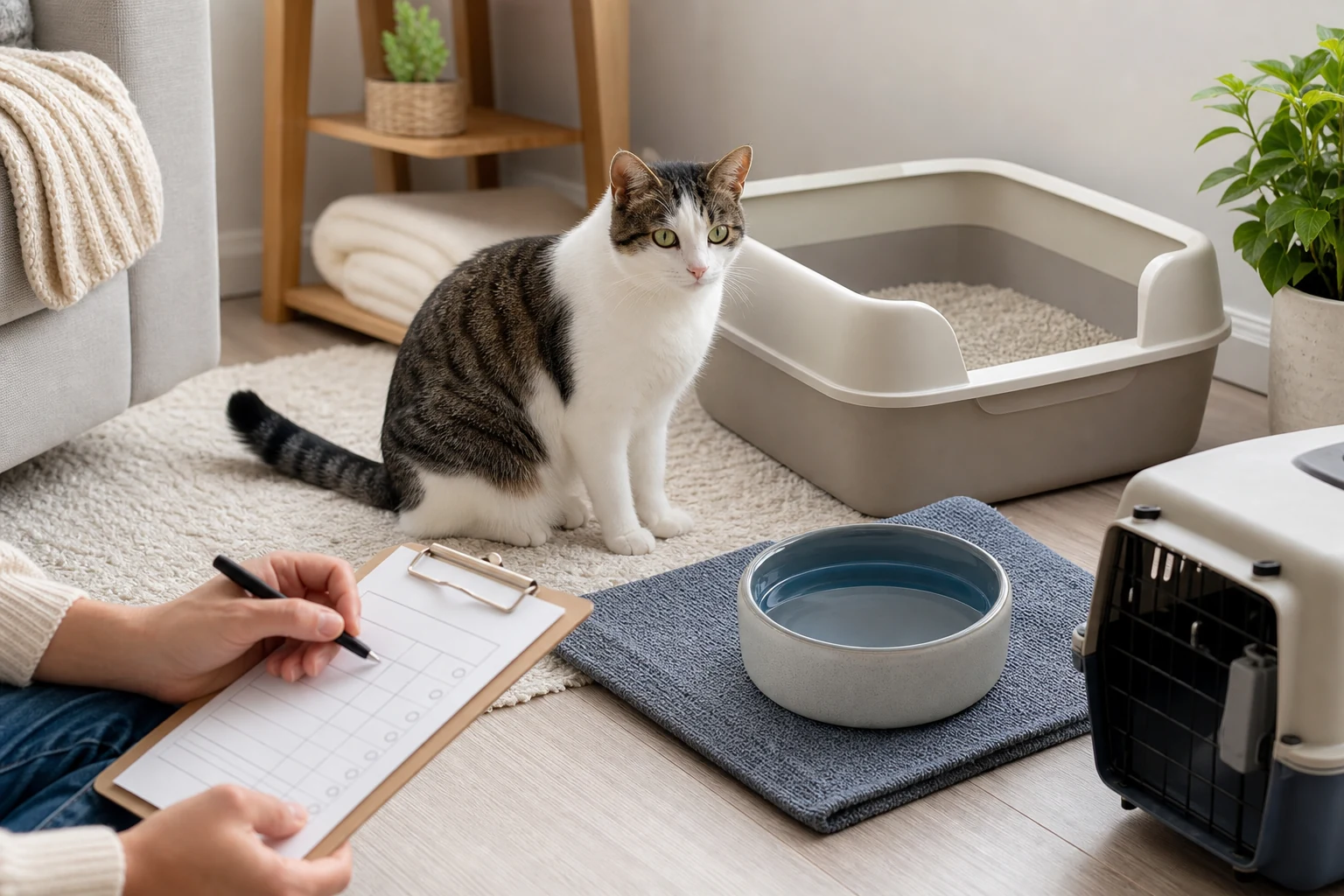
Cat urinary blockage aftercare starts with one non-negotiable question: is your cat passing urine after coming home? If a cat repeatedly strains, cries, vomits, becomes weak, or produces little or no urine after a blockage, treat it as an emergency and contact an emergency veterinarian immediately.
A urinary blockage is not a problem to watch casually. Cornell describes urethral obstruction as a true medical emergency, and complete obstruction can deteriorate quickly without treatment 1. Once your cat has been unblocked and discharged, your job is not to diagnose the bladder at home. Your job is to follow the discharge plan, monitor urine output and comfort closely, and keep every recommended recheck.
Índice
- What counts as an emergency after a urinary blockage?
- What should you monitor during the first 48 hours home?
- When should a cat have a recheck after urinary blockage?
- What is normal after catheter removal, and what is not?
- How can you lower recurrence risk at home?
- What should you ask your veterinarian before leaving the clinic?
- What should multi-cat homes do differently?
- Conclusion: aftercare is monitoring, not guessing
- Preguntas frecuentes
- Referencias
What counts as an emergency after a urinary blockage?
After a recent urinary blockage, any return of unproductive straining is an emergency until a veterinarian says otherwise. Go back to emergency care now if your cat keeps entering the litter box but produces no normal urine clump, cries while trying to urinate, vomits, refuses food, collapses, hides in a way that seems abnormal, or becomes rapidly weaker.
Merck notes that cats with urethral obstruction may make frequent nonproductive attempts to urinate, and complete obstruction can cause severe systemic illness as toxins and electrolyte problems build 2. Male cats are especially vulnerable because their urethra is narrow, but any cat with little or no urine output needs urgent veterinary attention.
Do not press on the abdomen, try to express the bladder, give human pain medicine, use leftover antibiotics, or wait overnight to see whether the cat improves. If you are unsure whether your cat is blocked again or constipated, assume urinary obstruction is possible and call an emergency clinic. Our cat urine crystals emergency guide explains why crystals, plugs, stones, and bladder inflammation can look similar at home.
| Aftercare sign | Por qué es importante | Safest action |
|---|---|---|
| Repeated straining with no normal urine clump | Possible re-obstruction | Emergency veterinarian now |
| Tiny drops only, especially with distress | Possible partial or recurring blockage | Call an emergency veterinarian now |
| Vomiting, weakness, collapse, or severe hiding | Possible advanced illness or pain | Emergency veterinarian now |
| Frequent urination with small clumps but stable behavior | Bladder irritation may persist, but recurrence must be ruled out | Call your veterinarian promptly for instructions |
| Eating, resting, and passing urine as directed | Recovery may be on track | Continue the discharge plan and scheduled recheck |
What should you monitor during the first 48 hours home?
For the first 48 hours after discharge, monitor urine output, litter box visits, appetite, water intake, energy, pain signs, medication response, and whether symptoms are improving or worsening. A cat who visits the box often but still passes urine may have inflammation, but a cat who strains and cannot pass urine needs emergency care.
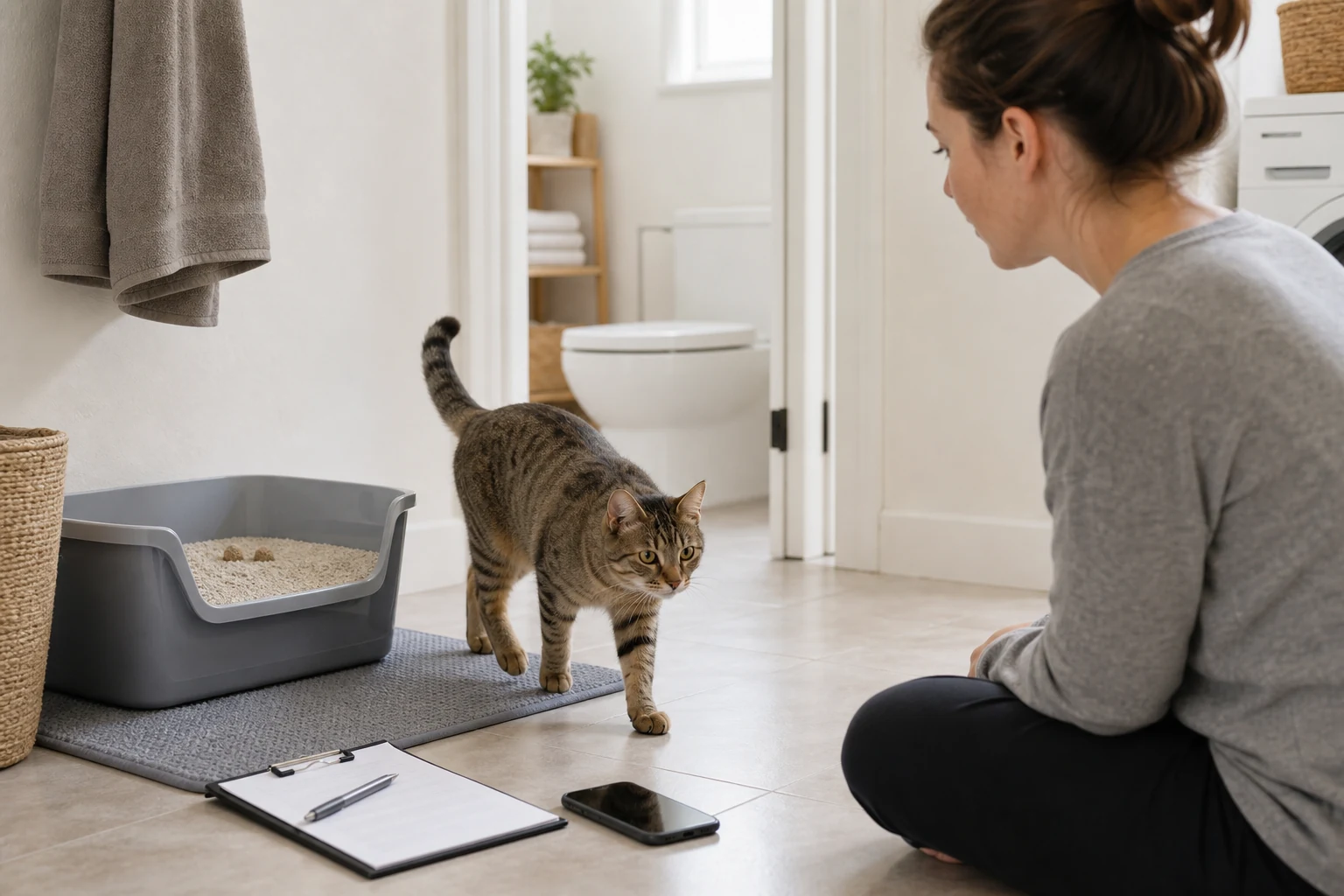
Use a simple log rather than relying on memory. Write down the time of each litter box visit, whether urine was produced, approximate clump size, appetite, vomiting, hiding, crying, and medication timing. If you live with more than one cat, short supervised separation in a calm room may help you confirm which cat is urinating, but do not isolate a cat who is actively straining instead of seeking care.
Common urinary signs, such as frequent trips, blood, straining, and peeing outside the box, overlap across infection, inflammation, stones, and obstruction 1. That is why the first goal is output. If you need a broader symptom refresher, our cat UTI symptoms guide covers the signs that can be mistaken for infection.
Pain can be subtle. Watch posture, facial tension, appetite, grooming, willingness to move, hiding, and reactions to being touched. The signos sutiles de dolor en los gatos guide can help you observe more accurately, but it should not replace your veterinarian's discharge instructions.
When should a cat have a recheck after urinary blockage?
Recheck timing should come from the veterinarian who treated the blockage, because it depends on kidney values, electrolyte changes, catheter time, urinalysis findings, stone risk, medication plan, and whether your cat was stable at discharge. Many cats need prompt follow-up within days, and some need repeat urine testing, bloodwork, imaging, or a longer prevention plan.
Ask for exact timing before you leave the clinic. If the discharge sheet says to recheck in 24 to 72 hours, schedule it before life gets busy. If it says to recheck after finishing medication or after a diet transition, put the date on your calendar. A cat who seems better can still need follow-up, because the recheck is how your veterinary team confirms that recovery is moving in the right direction.
MSPCA-Angell describes close monitoring after catheter removal to confirm the cat can urinate before going home, and notes that some cats may continue to strain a bit as inflammation resolves 4. The important distinction is whether urine is passing and whether the cat is stable. If urine output declines, discomfort worsens, or systemic signs appear, do not wait for the scheduled recheck.
What is normal after catheter removal, and what is not?
Some mild, short-term urinary irritation can happen after a blockage and catheterization, but "normal" aftercare still means your cat is passing urine, eating reasonably, resting, and not declining. Small urine clumps, mild blood tinge, or more frequent trips may be expected in some cases, but only your veterinarian can tell you what is acceptable for your cat's specific discharge plan.
Call your veterinarian promptly if you see:
- Urine output that is shrinking rather than improving.
- Straining that looks intense, repeated, or painful.
- Blood that increases or appears with worsening discomfort.
- Refusal to eat, repeated vomiting, severe lethargy, or hiding.
- A cat who seems sedated, disoriented, or worse after medication.
- Any missed or vomited medication when the clinic told you the dose was important.
Do not adjust prescription pain medicine, anti-spasm medicine, antibiotics, urinary diets, or supplements on your own. Merck's professional FLUTD overview emphasizes that treatment choices can include environmental management, litter box management, diet adjustments, pain control, and other therapies depending on the diagnosis 3. The mix must be individualized.
How can you lower recurrence risk at home?
Home prevention after urinary blockage is usually built around hydration, diet consistency, clean litter access, stress reduction, weight management when needed, and fast response to warning signs. These steps do not guarantee that a cat will never block again, but they can support the veterinarian's medical plan.
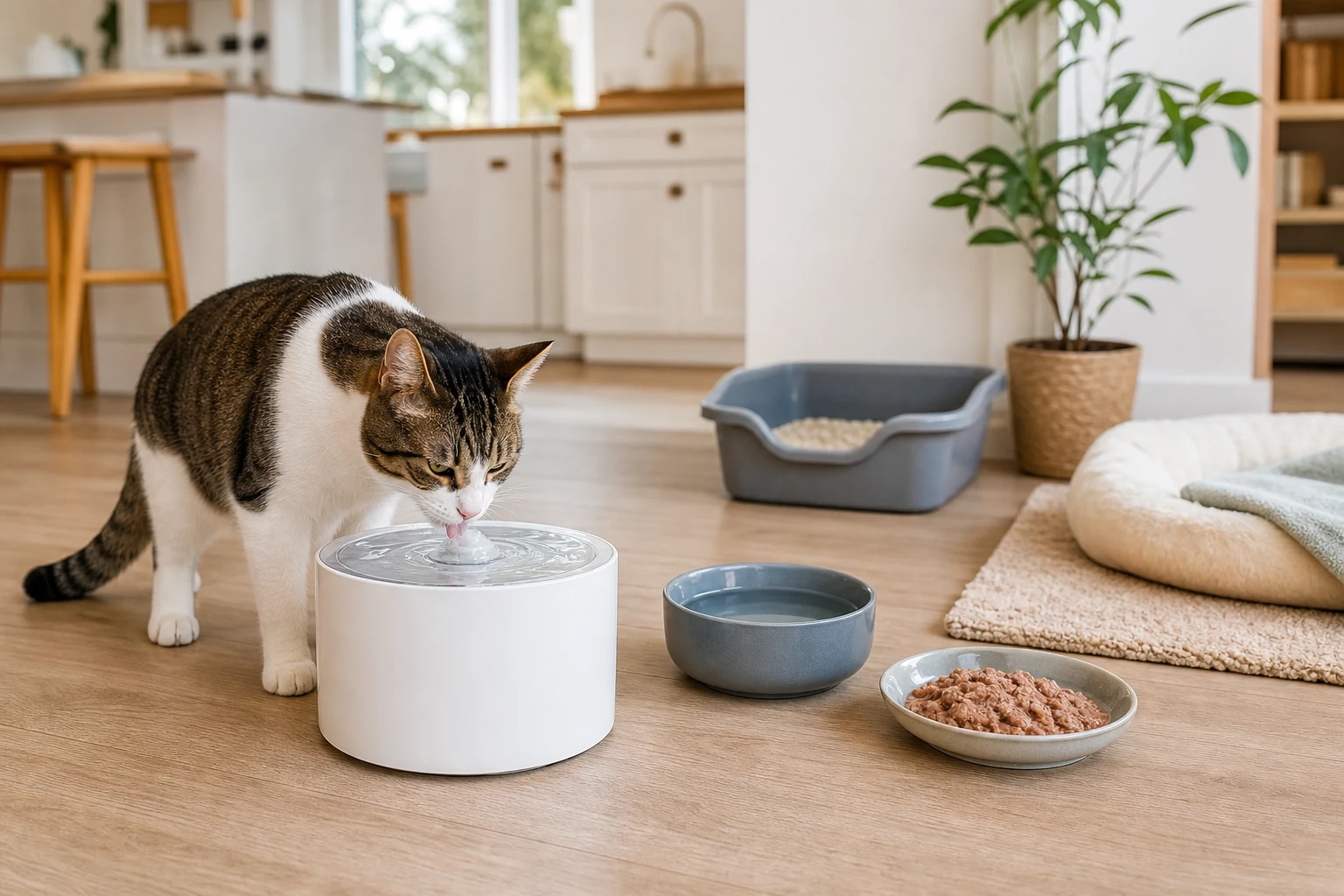
International Cat Care recommends that recurrence prevention may include increasing water intake, diet changes, and measures to reduce stress 5. Cornell also lists practical FLUTD prevention steps such as feeding small frequent meals, managing weight, providing clean fresh water, offering enough litter boxes, keeping boxes clean, placing them in quiet safe areas, and minimizing major routine changes 1.
Useful home steps include:
- Follow the exact prescription diet or feeding plan if your veterinarian prescribed one.
- Ask before mixing foods, treats, supplements, or urinary acidifiers with a therapeutic diet.
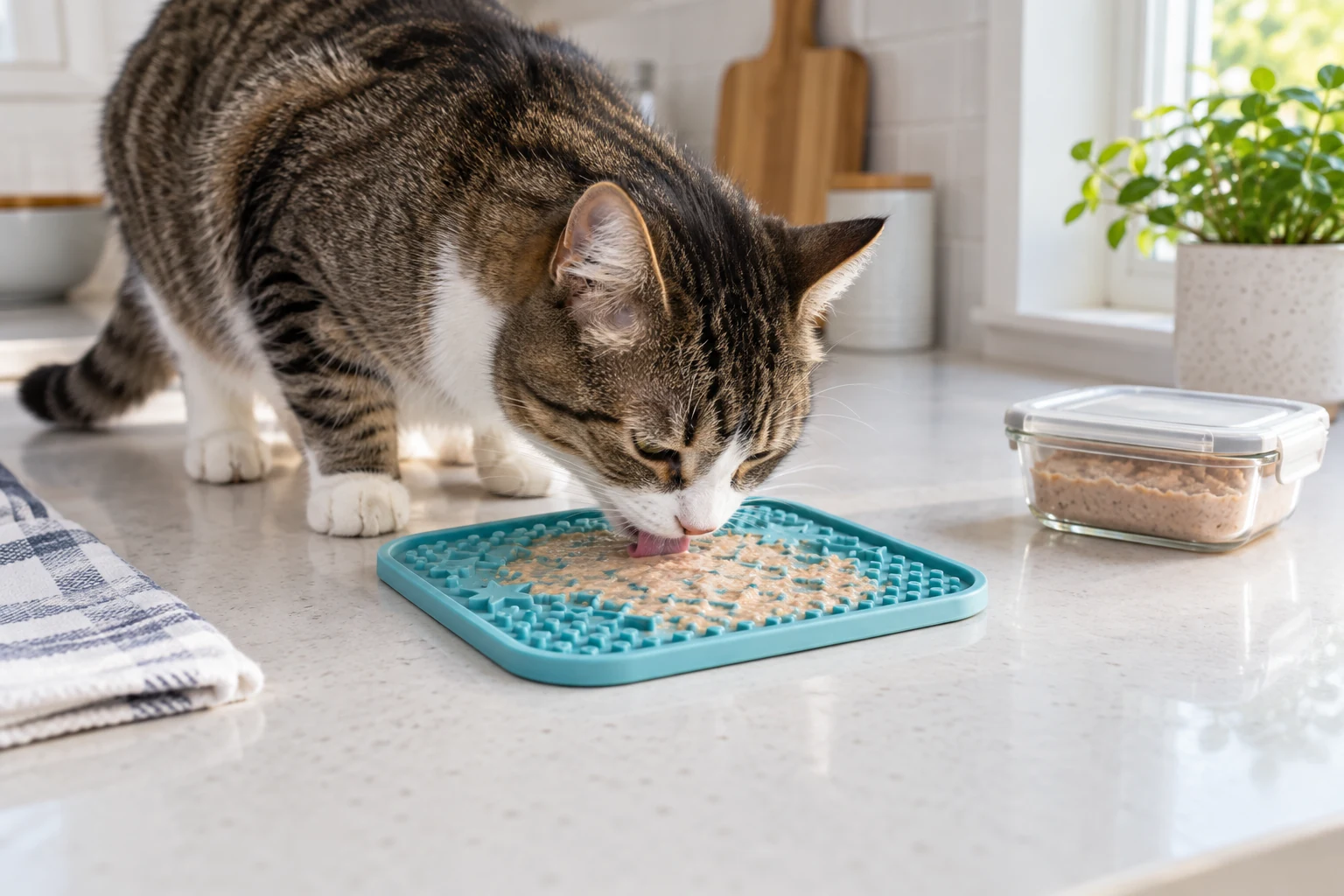
- Offer fresh water in several places and consider a fountain if your cat likes moving water.
- Discuss wet food with your veterinarian; the benefits of wet food for cats can help you understand hydration, but urinary cases need individual guidance.
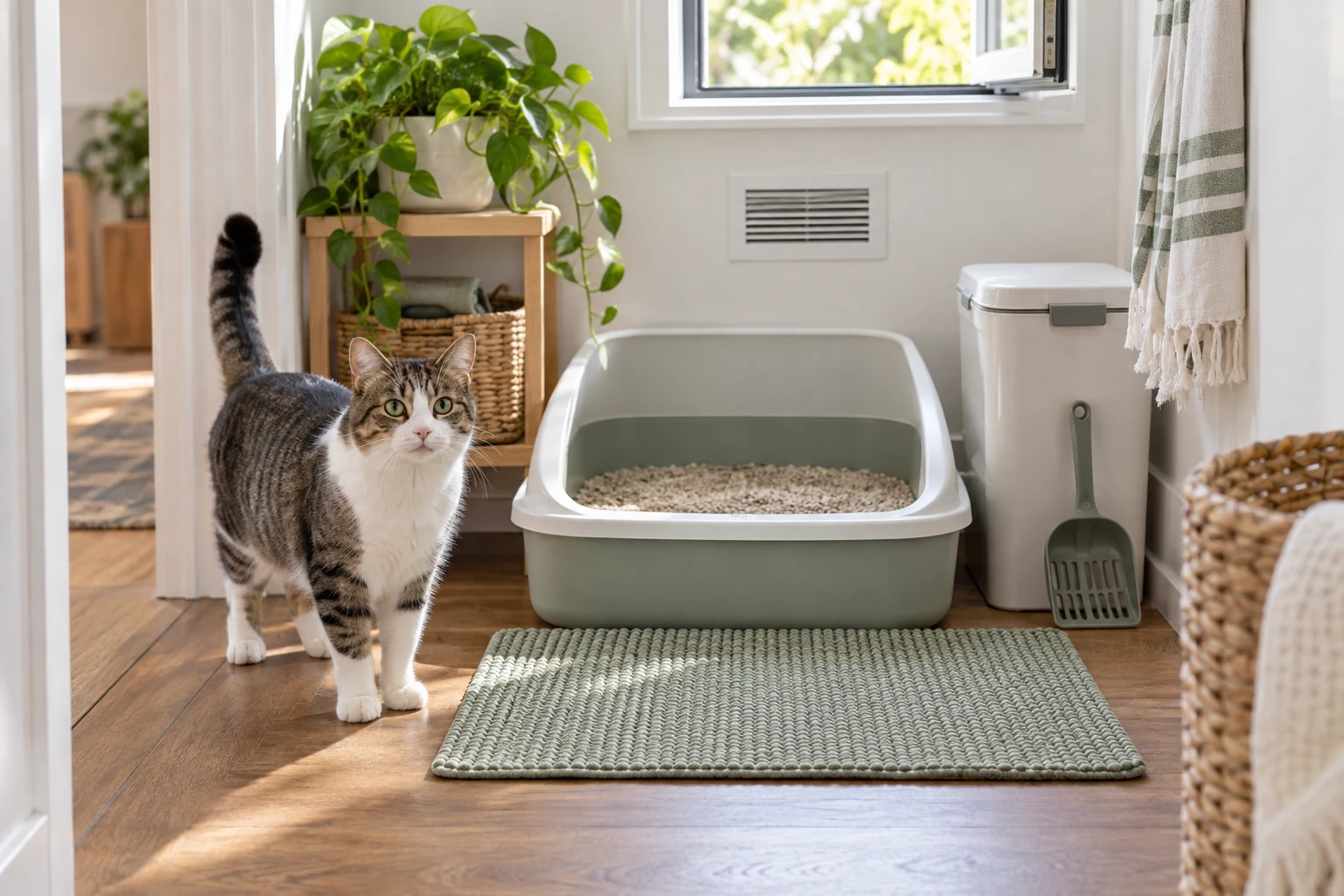
- Keep litter boxes clean, easy to enter, and placed where the cat feels safe.
- Utiliza el La mejor configuración para la bandeja sanitaria del gato principles to reduce access problems, especially for painful, senior, or anxious cats.
- Avoid sudden litter, food, household, or schedule changes during recovery unless your veterinarian directs them.
- Keep conflict, crowding, and resource guarding low in multi-cat homes.
The most important safety rule is to avoid DIY urinary chemistry. Struvite, calcium oxalate, infection, obstruction, and inflammation require different strategies. A food or supplement that sounds urinary-friendly can be wrong for the specific diagnosis.
What should you ask your veterinarian before leaving the clinic?
Before discharge, ask for clear written instructions that tell you what to give, what to monitor, when to recheck, and what signs mean "come back now." A stressful emergency visit is not the time to rely on memory.
Ask these questions:
- What caused or likely contributed to the blockage?
- Did tests show crystals, stones, infection, kidney changes, or electrolyte problems?
- What urine output should I expect tonight and tomorrow?
- Which signs mean emergency care now?
- When is the recheck, and what tests may be repeated?
- What medications were prescribed, and what side effects should I watch for?
- Should my cat wear an e-collar or have activity limits?
- Should I change food now, later, or not at all?
- Are treats allowed with the urinary diet?
- How should I monitor in a multi-cat household?
- What is the plan if this happens again?
If your cat has blocked more than once, ask whether additional diagnostics, stone analysis, referral, or surgery discussion is appropriate. Cornell notes that perineal urethrostomy may be considered for cats that continue to obstruct despite proper medical management, but it is generally a last-resort decision with its own risks 1.
What should multi-cat homes do differently?
Multi-cat homes need clearer urine tracking and more resource separation after a urinary blockage. You may not know which cat made which clump unless you temporarily observe the recovering cat, use separate boxes, or follow your veterinarian's monitoring advice.
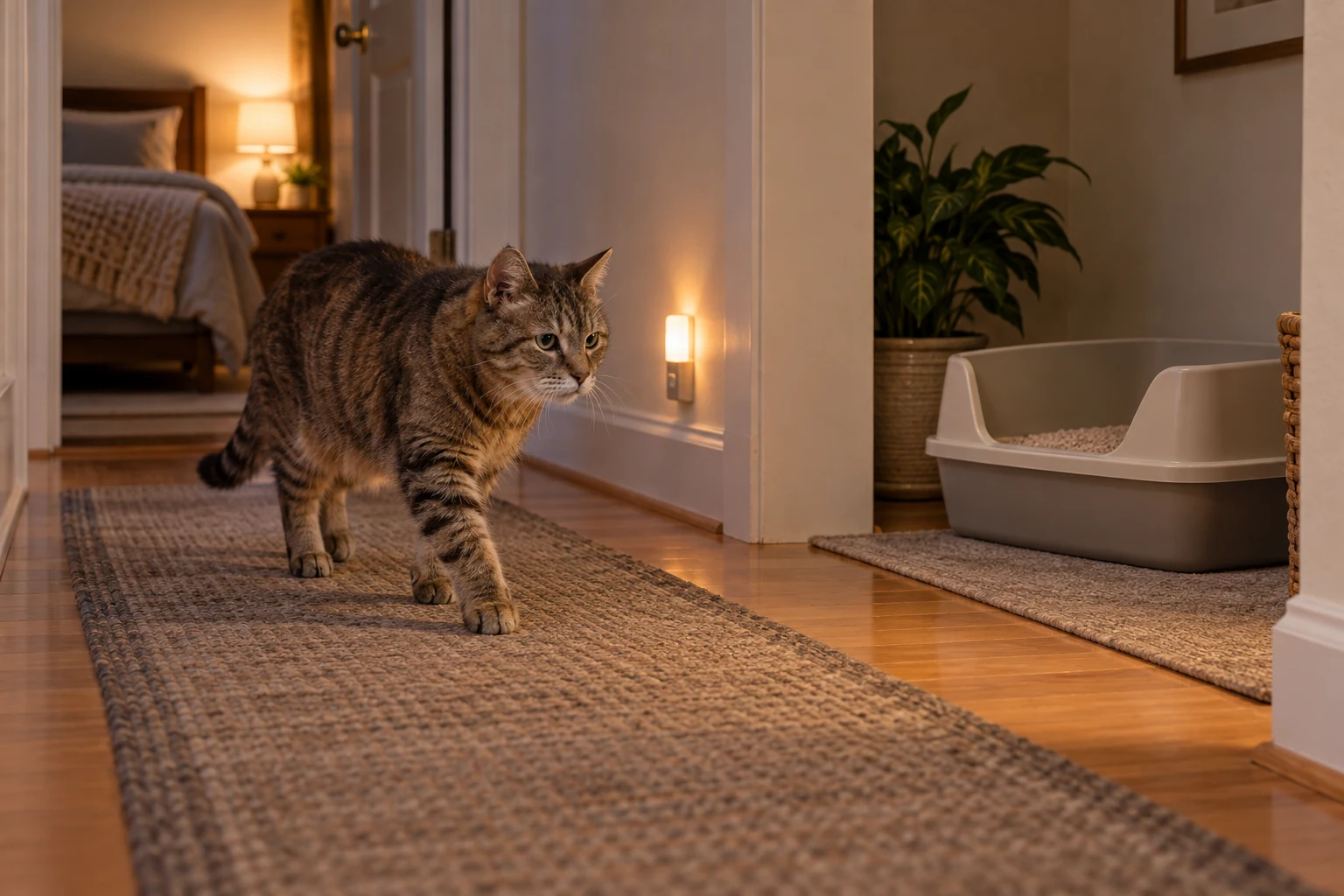
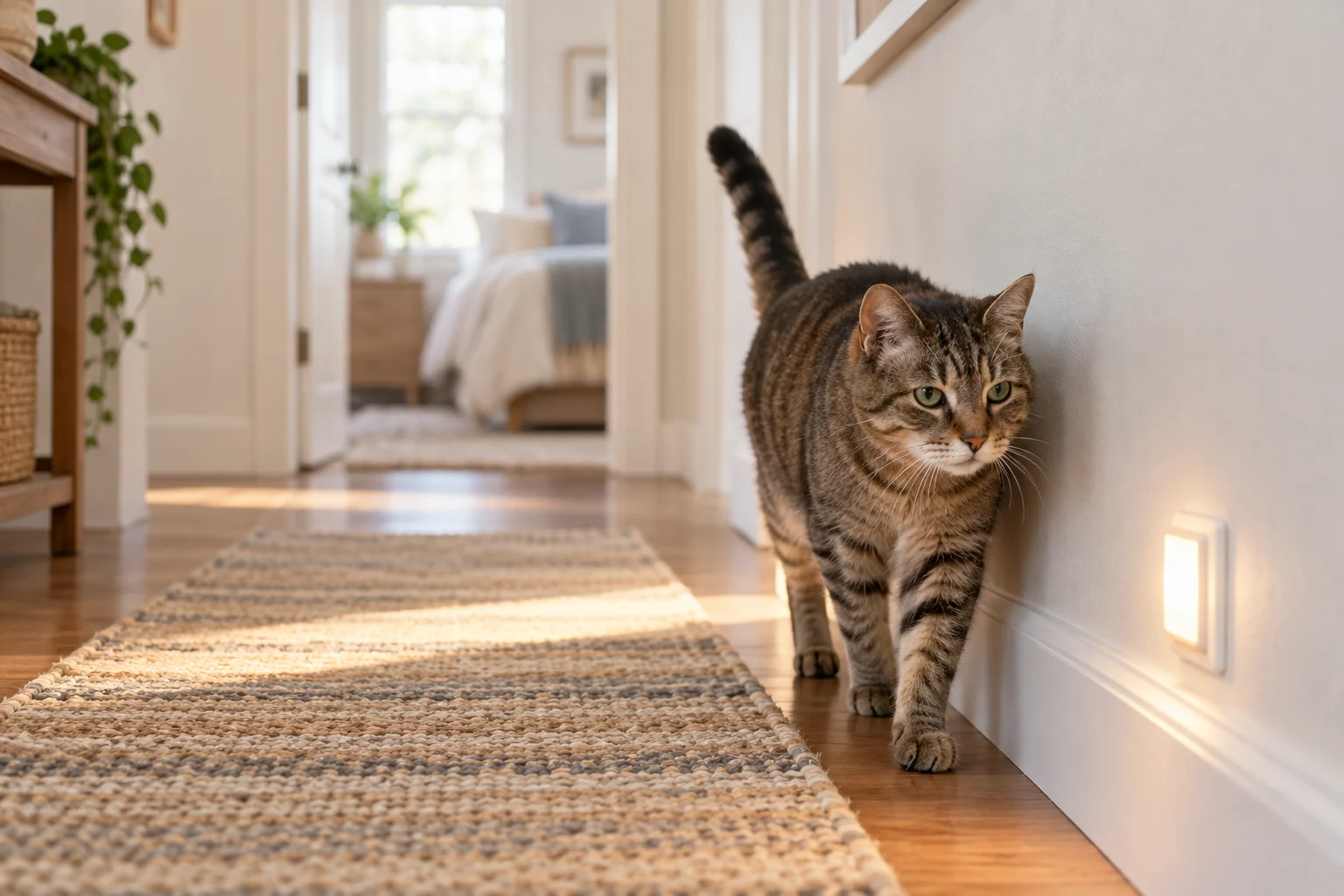
Provide more than one quiet route to litter, water, food, resting spots, and hiding places. Competition can be subtle: one cat blocking a hallway, staring near a litter box, or taking over a favorite resting area can increase stress for the recovering cat. Stress is not the only cause of urinary disease, but it can be part of the lower urinary tract picture for many cats 3.
Keep changes calm and boring. Do not introduce a new litter, move every box, invite visitors to meet the recovering cat, or rearrange the home during the first fragile days unless the current setup is clearly preventing access. A stable, predictable routine makes it easier to notice real medical changes.
Conclusion: aftercare is monitoring, not guessing
Cat urinary blockage aftercare is a partnership with your veterinary team. At home, focus on urine output, pain signs, appetite, hydration, medication adherence, clean litter access, stress reduction, and scheduled rechecks.
The red flag is simple: repeated straining with little or no urine after a blockage is an emergency. For non-emergency learning, keep using trusted Guías sobre la salud de los gatos, but let your veterinarian direct the recovery plan for the individual cat in front of you.
Preguntas frecuentes
How soon can a cat block again after being unblocked?
A cat can re-obstruct soon after treatment, which is why the first days home require close monitoring. If your cat strains repeatedly and produces little or no urine, do not wait for the next scheduled recheck. Contact an emergency veterinarian immediately.
Is it normal for my cat to pee small amounts after urinary blockage?
Some cats may urinate small amounts or strain mildly as inflammation resolves, but this is only acceptable if your veterinarian said it fits your cat's case and your cat is still passing urine. Shrinking output, worsening distress, vomiting, weakness, or no urine is not normal aftercare.
Should I switch my cat to wet food after a urinary blockage?
Ask your veterinarian first. Wet food may help increase water intake for many cats, but cats with urinary stones, crystals, kidney concerns, or prescription diet needs require a plan tailored to test results and medical history.
Can stress cause a cat to block again?
Stress can contribute to feline lower urinary tract problems in some cats, but it is not the only possible cause. Stones, plugs, inflammation, anatomy, urine concentration, and other medical factors can be involved, so recurrence prevention should combine veterinary care with home stress reduction.
Do antibiotics prevent another urinary blockage?
Not unless your veterinarian has identified or strongly suspects a bacterial infection. Many feline lower urinary tract episodes are not caused by bacteria, and unnecessary antibiotics can delay the correct treatment plan.
What should I do if my cat misses a urinary blockage medication dose?
Call the clinic that prescribed it and ask what to do. Do not double a dose, stop the medication, or substitute another medicine unless your veterinarian tells you to.
Referencias
[1] Centro de Salud Felina de Cornell. (2026). Feline Lower Urinary Tract Disease. Read Cornell's FLUTD overview
[2] Merck Veterinary Manual. (2025). Urethral Obstruction in Small Animals. Read Merck's urethral obstruction overview
[3] Manual Veterinario de Merck. (2025). Lower Urinary Tract Disease in Cats. Read Merck's FLUTD professional overview
[4] MSPCA-Angell. (2026). Urethral Obstruction in Cats. Read MSPCA-Angell's obstruction guide
[5] International Cat Care. (2025). Cat Carer Guide to Lower Urinary Tract Diseases. Read the International Cat Care urinary tract guide
 EN
EN DE
DE ES
ES PT
PT