
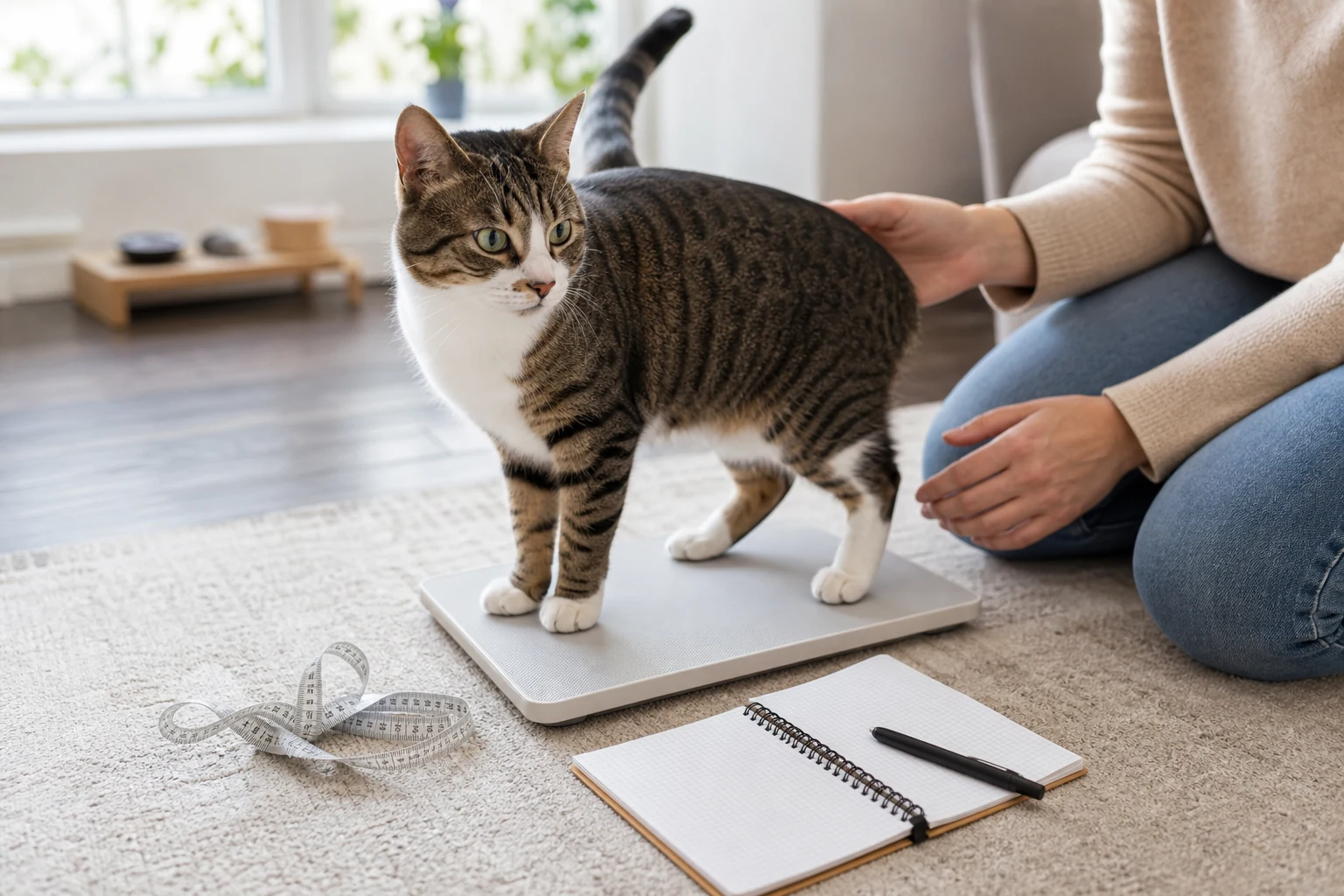
For a stable adult cat, record weight at routine veterinary exams; a monthly home check can help you notice a trend, but it is not required for every cat. The 2025 Canadian Veterinary Medical Association (CVMA) Code of Practice offers age-based intervals: twice daily from birth to 2 weeks, weekly from 2 to 8 weeks, monthly from 8 weeks to 1 year, and every 6–12 months for adults. Veterinary weight-loss, diabetes-risk, illness, and kitten-foster plans may call for a different schedule, so follow your care team’s instructions. 1 3 4 9
The useful goal is a consistent record, not the largest number of weigh-ins. A single reading cannot show whether a change is persistent, and weight by itself cannot describe body condition or muscle. This guide explains how often to weigh by situation, how to make home readings comparable, and when a weight change deserves a call to your vet.
If you want to see weight and body condition together, the cat body condition score and weight tracker records both in one entry and shows the change since the last check.
How often should you weigh your cat?
Start with your cat’s age and the reason for monitoring. The AAFP guide says to record a cat’s weight and body-condition score at each exam, while the CVMA code gives a more frequent age-based schedule for kittens. These are general monitoring references; a veterinarian or kitten-care team may set a different interval for an individual cat. 1 9
| Situation | A reasonable schedule to discuss with your vet | Important context |
|---|---|---|
| Healthy adult with stable weight | Record weight at routine exams. If your vet wants a home trend, ask whether a monthly check is useful. | The AAFP guide recommends recording weight and body condition at each exam. The CVMA code gives every 6–12 months as an adult monitoring interval; a monthly home weigh-in is not a universal requirement. 1 9 |
| Cat on a veterinarian-directed weight-loss plan | Recheck within one week of starting; after a full food transition, recheck in one to two weeks; then weigh at least every other week until the goal is reached. | VCA’s schedule is for a supervised weight-loss plan. If you weigh at home, VCA still recommends a clinic assessment once a month to confirm the home-scale readings. 2 |
| Cat at risk of diabetes | Monthly home weighing may be part of the plan. | AAHA’s monthly recommendation applies to cats at risk of diabetes; it is not a universal schedule for all cats. The guideline also calls for noting changes in water intake or urine output. 3 |
| Kitten from birth to 2 weeks | The CVMA code gives twice-daily weight checks as one monitoring schedule. | Bottle-fed and foster kittens may have a more frequent or different care plan. Follow the veterinarian or rescue team’s instructions; ASPCApro’s bottle-feeding guide calls for daily checks. 4 9 |
| Kitten from 2 to 8 weeks | The CVMA code gives weekly checks as one monitoring schedule. | A kitten that is not feeding, gaining as expected, or seems unwell needs prompt advice from the veterinary or foster-care team rather than waiting for the next routine check. 4 9 |
| Kitten from 8 weeks to 1 year | The CVMA code gives monthly checks as one monitoring schedule. | Track growth consistently and discuss the trend at kitten wellness visits. This is one published care framework, not a substitute for an individual veterinary plan. 9 |
| Senior cat, chronic illness, poor appetite, or an unexpected weight change | Ask the veterinarian to set the interval. | Weight should be interpreted with body and muscle condition; a stable scale number does not rule out a health problem. 1 5 |
The kitten intervals above come from the CVMA’s 2025 Canadian Code of Practice, which offers one age-based monitoring framework. Bottle-feeding and rescue programs may use different instructions. If your veterinarian, breeder, or foster organization has given you a schedule, use that plan. For a routine food switch or small portion adjustment, our cat food switch log can help you record weight alongside appetite and feeding changes; a medical plan takes priority.
How can you weigh your cat at home consistently?
Frequency only helps when the readings are comparable. Our guide to weighing a cat at home walks through how to choose a scale, use a consistent method, and record carrier weight.
You can use a pet or baby scale, weigh your cat in a carrier and subtract the carrier’s weight, or use a bathroom scale by weighing yourself first and then again while holding your cat. The bathroom-scale method is an estimate; if you are tracking a medical or weight-loss plan, ask your clinic to confirm the home readings. 1 2 7
Repeated measurements are easiest to compare when the same scale and method are used. AAHA specifically recommends using the same scale when monitoring cats in a diabetes-related treatment plan; the AAFP Cat Friendly Practice guide also describes weighing the carrier separately if the cat stays inside it. A trend measured the same way is more useful than several readings taken under changing conditions. 1 3 8
To keep a home check consistent:
- Put the scale on a hard, level surface and use the same scale each time.
- Weigh at a similar point in the daily routine, rather than comparing unrelated conditions.
- If using a towel, place it on the scale and zero the scale before the cat steps on.
- If your cat stays in a carrier, weigh the empty carrier separately and subtract its weight.
- For the bathroom-scale method, record your weight, pick up your cat, weigh both together, and subtract your weight from the combined reading.
- Record the date, unit, scale or method, and any relevant change in food, appetite, or health.
A different scale, recent meal, full bladder, or time of day can make a small change look larger than it is. When possible, weigh at a similar time and under similar conditions, and note anything that changed. 8
The AAFP guide describes weighing a cat in a carrier and subtracting the carrier’s weight. If your cat is frightened or struggling, stop rather than forcing the weigh-in; ask your clinic for a low-stress way to monitor weight. 1
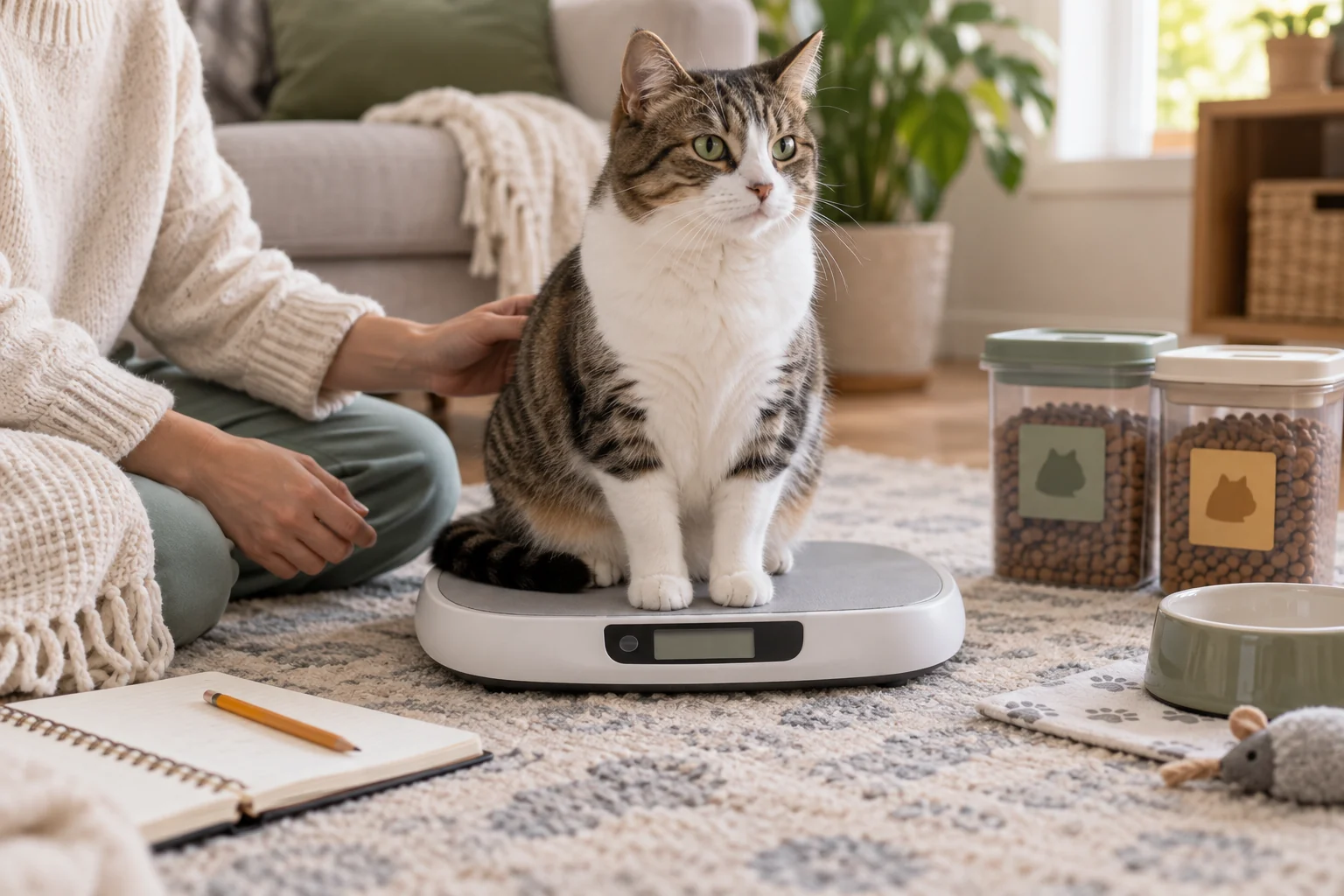
A home scale for repeatable weight checks
Using the same scale and a consistent routine can make weight trends easier to discuss with your veterinarian. Record the date and reading; a scale does not explain why weight is changing.
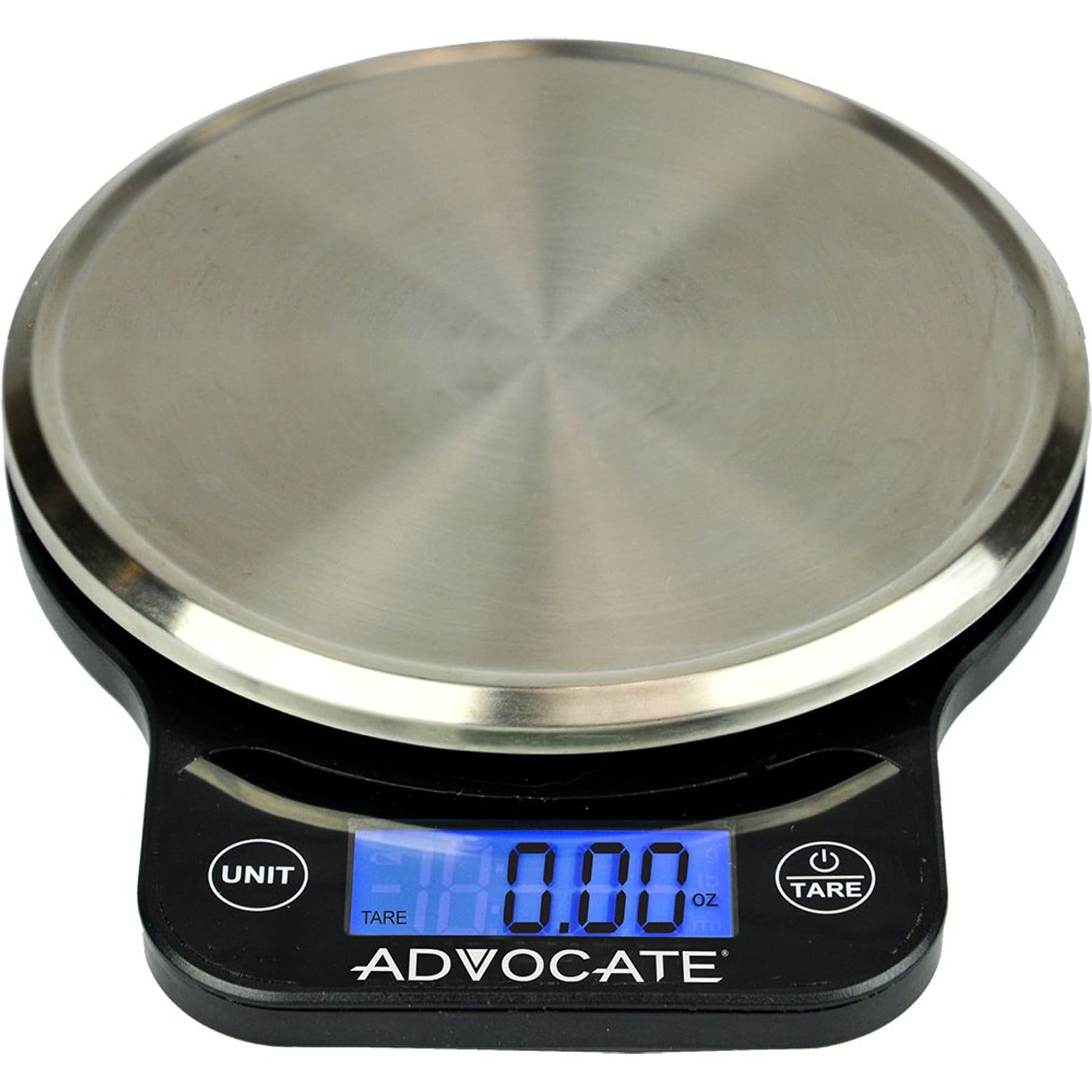
Advocate
Advocate Universal Digital Household Scale
Advocate Universal Digital Household Scale; For precise everyday measurements, try the Advocate Universal Digital Household Scale. This portable scale is great for measuring your…
$32.95
Shop ChewyWe may earn a commission if you buy through this Chewy link, at no extra cost to you. Product details and prices can change.
What can a weight log tell you—and what can’t it tell you?
A dated log can help you and your veterinary team see whether the weight is stable, rising, or falling over time. It can also preserve context that is easy to forget, such as a food change, appetite shift, or a different weighing method. For unexplained weight loss, VCA recommends reviewing appetite, food intake, activity, vomiting or diarrhea, thirst, urination, and stool changes as part of the veterinary history. 5
If a reading changes unexpectedly, compare the conditions before assuming it reflects a true gain or loss. Our guide to why a cat’s weight may fluctuate explains common measurement and day-to-day variation, plus when a continuing trend should be discussed with a veterinarian.
A scale cannot show how much of a cat’s weight is fat versus muscle. Ask your veterinarian to assess body condition and muscle condition, especially for senior cats or cats with ongoing illness. Our body condition and muscle condition score guide explains why the number on a scale is only one part of that assessment.
If your vet has asked you to keep a home history, the Cat Weight & Body Condition Tracker lets you record dated weights, the weighing method, and optional body-condition observations, then review or print the history for an appointment. It organizes your observations; it does not diagnose a problem or decide whether a change is safe.
When should you contact a veterinarian before the next weigh-in?
Call your veterinarian about unexplained or continuing weight loss or gain, particularly if appetite, thirst, urination, activity, vomiting, or stool has also changed. VCA describes an unintentional loss of more than 10% of normal body weight as clinically significant and says faster loss is more concerning. Do not wait for a 10% loss if the change is rapid, continues, or comes with other symptoms. A log helps provide context but cannot identify the cause. 5
Do not wait for the next scheduled weigh-in if your cat has difficulty breathing, collapses, cannot urinate, has a seizure, or has severe or repeated vomiting. These are emergency signs that need immediate veterinary care. 6
Conclusion
For a stable adult cat, record weight at routine veterinary exams and ask whether a monthly home check would help you watch a trend. Kittens need age-appropriate monitoring, while a weight-loss plan, diabetes risk, illness, or foster-care situation may call for a different interval. Keep the method consistent, record context, and contact your vet about unexplained changes instead of trying to solve them by weighing more often.
Frequently Asked Questions
Should I weigh my cat weekly or monthly?
It depends on why you are monitoring. A stable adult may only need weight recorded at routine exams; a monthly home check can be useful if your vet recommends it. A supervised weight-loss plan can require weigh-ins at least every other week, while some neonatal kittens are weighed daily under foster-care guidance. 1 2 4
Should I weigh my cat every day?
Not as a routine for a stable adult cat unless your veterinarian asks you to. Daily weighing may be needed for neonatal or bottle-fed kittens when their foster-care instructions call for it. 1 4
How often should I weigh my kitten?
The CVMA’s 2025 Code of Practice gives one age-based schedule: twice daily from birth to 2 weeks, weekly from 2 to 8 weeks, and monthly from 8 weeks to 1 year. Bottle-fed or foster kittens may have different instructions; follow the kitten’s veterinary or rescue-care plan. 4 9
How often should I weigh an overweight cat?
If your veterinarian has started a weight-loss plan, follow that plan’s recheck schedule. VCA recommends an early reassessment, another check after the food transition, and at least every-other-week weigh-ins until the goal is reached; clinic checks may still be needed to verify a home scale. 2
How can I weigh my cat without a pet scale?
You can use a bathroom scale: weigh yourself, then weigh yourself while holding your cat, and subtract the first reading from the combined reading. Treat it as an estimate and use the same scale and similar conditions each time; for a medical plan, ask your clinic to confirm the home measurement. 2 7 8
What should I do if one reading looks very different?
Check the scale, units, carrier or towel tare, and whether the weighing conditions changed; those differences can make a small change look larger. If weight loss is unexplained or continues, contact your veterinarian. If your cat also seems unwell, has stopped eating, is struggling to urinate, collapses, or has breathing trouble, seek prompt or emergency veterinary care instead of waiting for another reading. 5 6 8
References
[1] American Association of Feline Practitioners. (2023). Cat Friendly Practice Guide. AAFP guide
[2] VCA Animal Hospitals. (2024). Creating a Weight Reduction Plan for Cats. VCA
[3] American Animal Hospital Association. (2026). 2026 AAHA Diabetes Management Guidelines for Cats: Recognizing and Managing Cats at Risk. AAHA
[4] ASPCApro. (2023). Kitten Bottle Feeding Guide & Kitten Weight and Age Chart. ASPCApro
[5] VCA Animal Hospitals. (2026). Abnormal Weight Loss in Cats. VCA
[6] Cornell University College of Veterinary Medicine. (n.d.). Emergency and Critical Care. Cornell University
[7] PetMD. (n.d.). What’s the Average Healthy Cat Weight? PetMD
[8] Association for Pet Obesity Prevention. (2026). Dog & Cat Weight Change Calculator. APOP
[9] Canadian Veterinary Medical Association. (2025). Code of Practice for the Care of Domestic Cats (2nd ed.). CVMA