
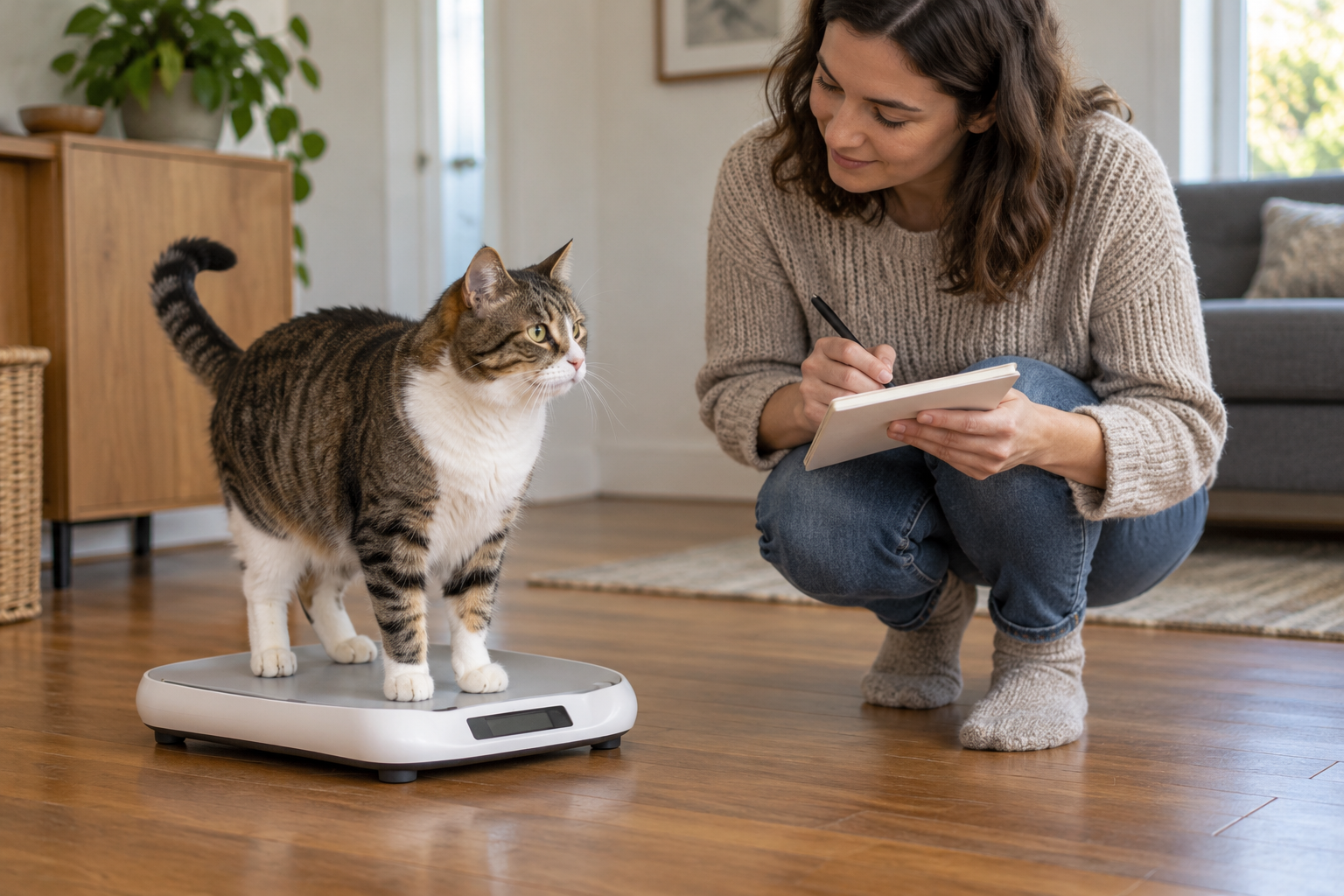
If your cat’s weight seems to jump up and down, first ask whether each reading used the same scale, unit, timing, and method. A changed setup can make readings hard to compare, but repeated or unexplained weight change should not be dismissed as “normal fluctuation.” 1 2
The most useful question is not just “What number did the scale show?” It is “How confident am I that these readings were measured the same way, and what else has changed about my cat?”
Why can the numbers jump around?
Before deciding that your cat gained or lost body weight, check whether the measurements are comparable. Different scales, a recent meal or full bladder, a unit change, or a carrier with different bedding can affect a home comparison. 1 2 5
| Check | Why it can confuse a comparison |
|---|---|
| Scale, location, or surface changed | A different scale or setup makes it harder to tell whether the cat or the measurement changed. |
| Pounds and kilograms got mixed | The number may look dramatically different even though the unit changed. |
| Carrier, towel, or blanket changed | The equipment contributes weight, and its contents may not weigh the same each time. |
| Weighing method changed | A pet-scale reading, carrier reading, and person-plus-cat estimate are not interchangeable measurements. |
| Timing changed | Meals and bathroom timing can make close readings less comparable. |
If the method is the issue, use the guide to how to weigh a cat at home for setup options. The aim here is to interpret a record, not to force a particular scale or make a frightened cat stay on one.
Owner discussions show the kinds of readings that cause worry: one post asks about a sequence from 4.4 kg to 4.2 kg and then 4.8 kg within roughly two weeks; another asks how to weigh a cat when the apartment floor is uneven. These are real questions, not evidence that a particular amount of fluctuation is medically normal. 7 8
When do readings look like a trend?
A trend is more credible when readings from different dates were taken with the same unit, scale, and method. A single unusual result may deserve a setup check; a repeated direction across comparable readings deserves attention and context.
Relative change helps account for a cat’s starting size: (newer weight − earlier weight) ÷ earlier weight × 100. A 0.2 kg difference is 5% of a 4 kg starting weight and 2.5% of an 8 kg starting weight. That example is arithmetic, not a safe-or-unsafe cutoff. Short intervals or mismatched measurements can still make the percentage misleading. 1 6
Use the weighing schedule set for your cat, particularly for kittens or a veterinarian-supervised plan. If you are unsure how often to collect readings, see how often to weigh your cat; daily weighing is not automatically more useful than a repeatable schedule. For kittens, our kitten weight chart guide explains how age-specific ranges should be interpreted alongside the care team's instructions. 2
What should you do with a surprising reading?
Use two questions together: Were the readings measured comparably? and Has your cat’s health or behavior changed? That keeps a questionable scale result from being mistaken for a diagnosis, while also preventing concerning changes from being waved away as a scale problem.
| Measurement confidence | How your cat seems | Next step |
|---|---|---|
| Low: the unit, scale, floor, method, or carrier setup changed | Your cat otherwise seems well | Correct the mismatch, mark the reading as a different setup, and make the next planned weigh-in comparable. |
| Low | Appetite, thirst, urination, stool, energy, or body shape has changed | Contact your veterinary team; do not wait for a perfect home measurement. |
| Higher: same scale, unit, and method | One result differs, with no other change | Check the setup and take one calm repeat reading if your cat tolerates it. Keep the original reading with a note instead of silently deleting it. |
| Higher | Several comparable readings move in one direction, or change is rapid | Share the dated record with your veterinary team and ask what to do next. |
This is a practical record-check, not a clinical scoring system. If your cat has a prescribed weight plan, follow that plan and ask the veterinary team before changing food or portions. If the plan is for weight loss, see our guide to tracking a cat's weight loss with your vet for what to bring to rechecks.
What details make a weight history useful?
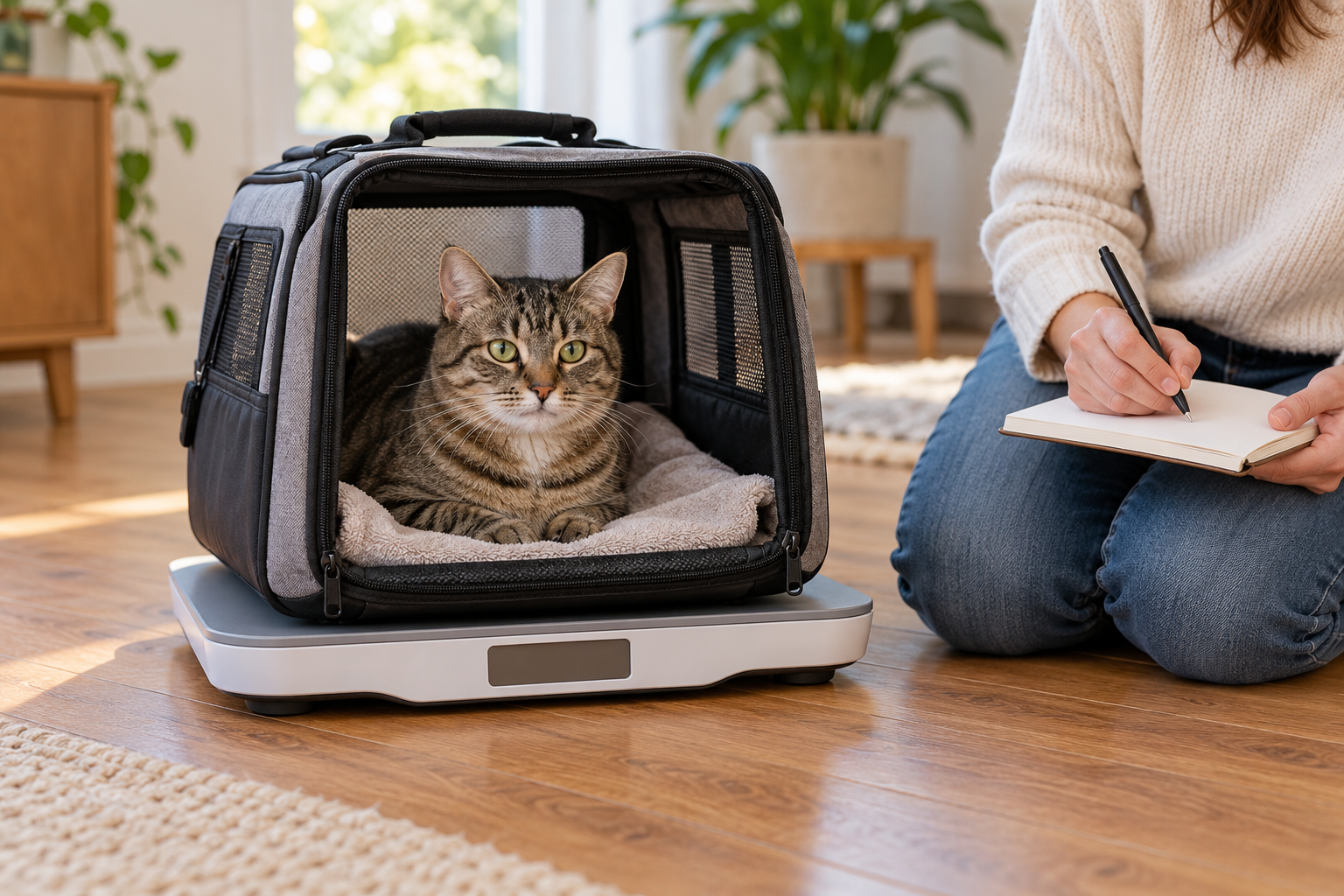
Keep the number attached to the conditions that produced it. Record the date, unit, scale or method, and whether a carrier or bedding was included; note a changed setup instead of blending the result into a series as if nothing changed. A veterinary hospital specifically advises rechecking the carrier setup because blankets and other contents can change its tare weight. 5
The Cat Weight & Body Condition Tracker lets you save dated check-ins and add the weighing method and context. You can also note appetite and muscle condition, which can help your vet interpret what a number alone cannot show. Veterinary nutritional assessment considers body weight alongside body condition score (BCS) and muscle condition score (MCS); the scores describe different aspects of condition. For more on those checks, see the body condition and muscle condition score guide. 4 6
Keep weight readings consistent
A home pet scale can help you record readings under similar conditions over time. Share the trend with your veterinarian; short-term fluctuations can have several causes.
Advocate
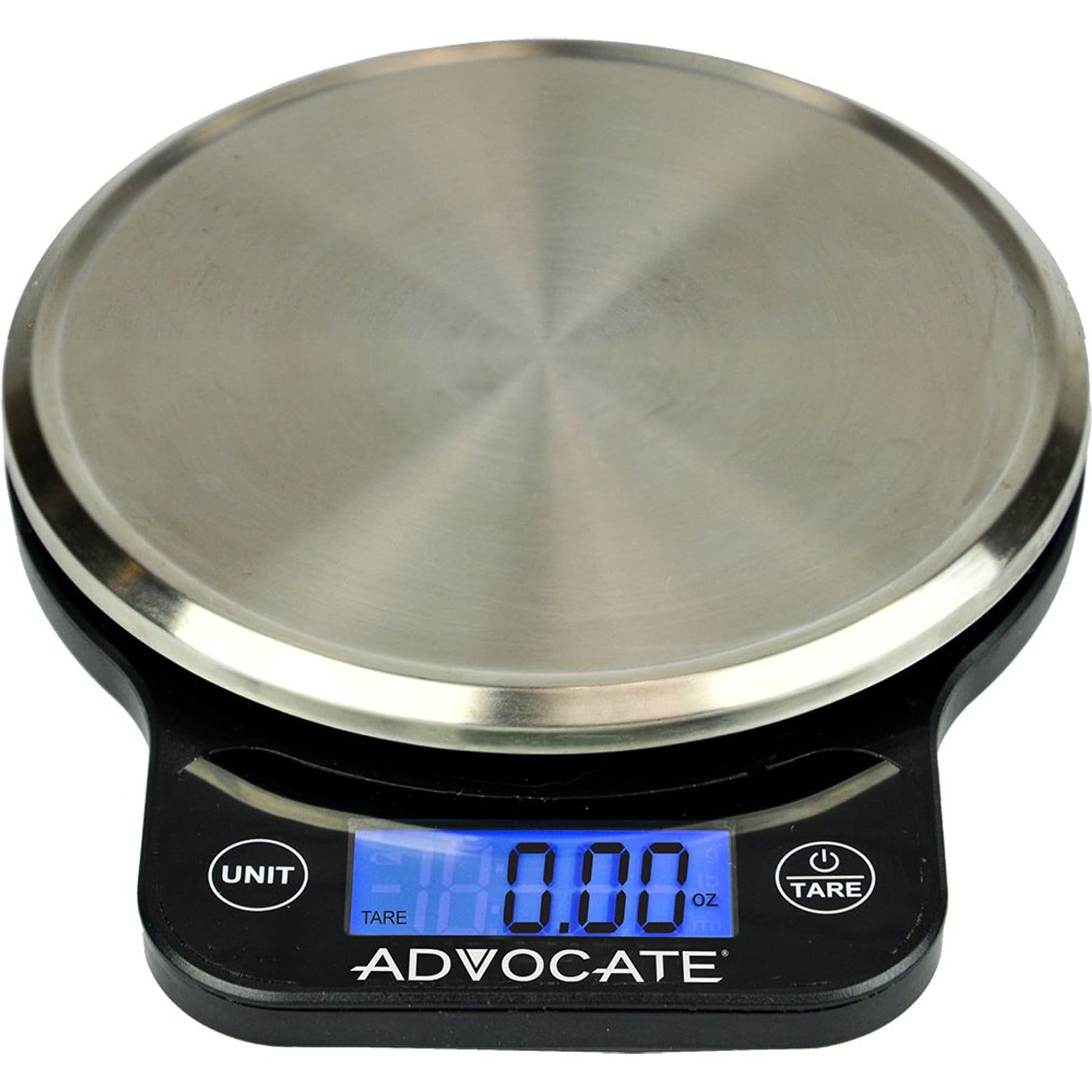
Advocate Universal Digital Household Scale
Advocate Universal Digital Household Scale; For precise everyday measurements, try the Advocate Universal Digital Household Scale. This portable scale is great for measuring your…
$32.95
Shop ChewyWe may earn a commission if you buy through this Chewy link, at no extra cost to you. Product details and prices can change.
When should you call a veterinarian?
Contact your veterinary team about an unplanned or persistent gain or loss, even if your cat still seems cheerful. Weight loss has many possible causes, and a scale cannot tell you why it happened. Mention any appetite change, increased thirst or urination, vomiting, diarrhea, reduced energy, grooming change, or visible change in body shape. 3 6
Do not wait to collect more readings if your cat seems ill or is declining. APOP advises same-day veterinary assessment if a cat eats little or nothing for 24 hours, and sooner if the cat seems ill; breathing trouble, collapse, or severe weakness warrant urgent care. 1
Conclusion
When your cat’s weight seems to jump, check the measurement conditions, keep the original reading with context, and compare future weigh-ins made the same way. A consistent record can reveal a pattern, but unexplained or ongoing change belongs in a conversation with your veterinarian—not a self-directed food adjustment.
Frequently Asked Questions
Is it normal for a cat’s weight to change from one day to the next?
Measurement timing and setup can make home readings differ, so one number does not establish a trend. If comparable readings continue to change or your cat seems unwell, ask your veterinarian how to interpret them.
Should I cut my cat’s food if one weigh-in is higher?
No. First check whether the reading is comparable with earlier ones, and follow your veterinary team’s instructions before changing portions.
Can I compare a home weight with the number from the vet clinic?
Keep the scale and method with each reading. A home estimate and a clinic measurement may not be directly comparable; show both to your veterinary team and ask how to use them together.
How often should I weigh my cat?
The right interval depends on the cat and the reason for monitoring. Follow your veterinarian’s schedule or read how often to weigh your cat for a situation-by-situation overview. 2
References
[1] Association for Pet Obesity Prevention. (2026). Pet Weight Recheck. Source
[2] VCA Animal Hospitals. (n.d.). Tips for Successful Weight Loss in Dogs and Cats. Source
[3] VCA Animal Hospitals. (n.d.). Abnormal Weight Loss in Cats. Source
[4] American Animal Hospital Association. (2021). Screening Evaluation. Source
[5] Exclusively Cats Veterinary Hospital. (n.d.). Weighing Your Cat at Home. Source
[6] American Association of Feline Practitioners. (2021). 2021 AAFP Feline Senior Care Guidelines. Source
[7] Reddit owner discussion, r/cats. (2023). Weight fluctuations in a cat. Discussion
[8] Reddit owner discussion, r/vet. (2025). I need to weigh my cat but my apartment floor is so wonky. Discussion