
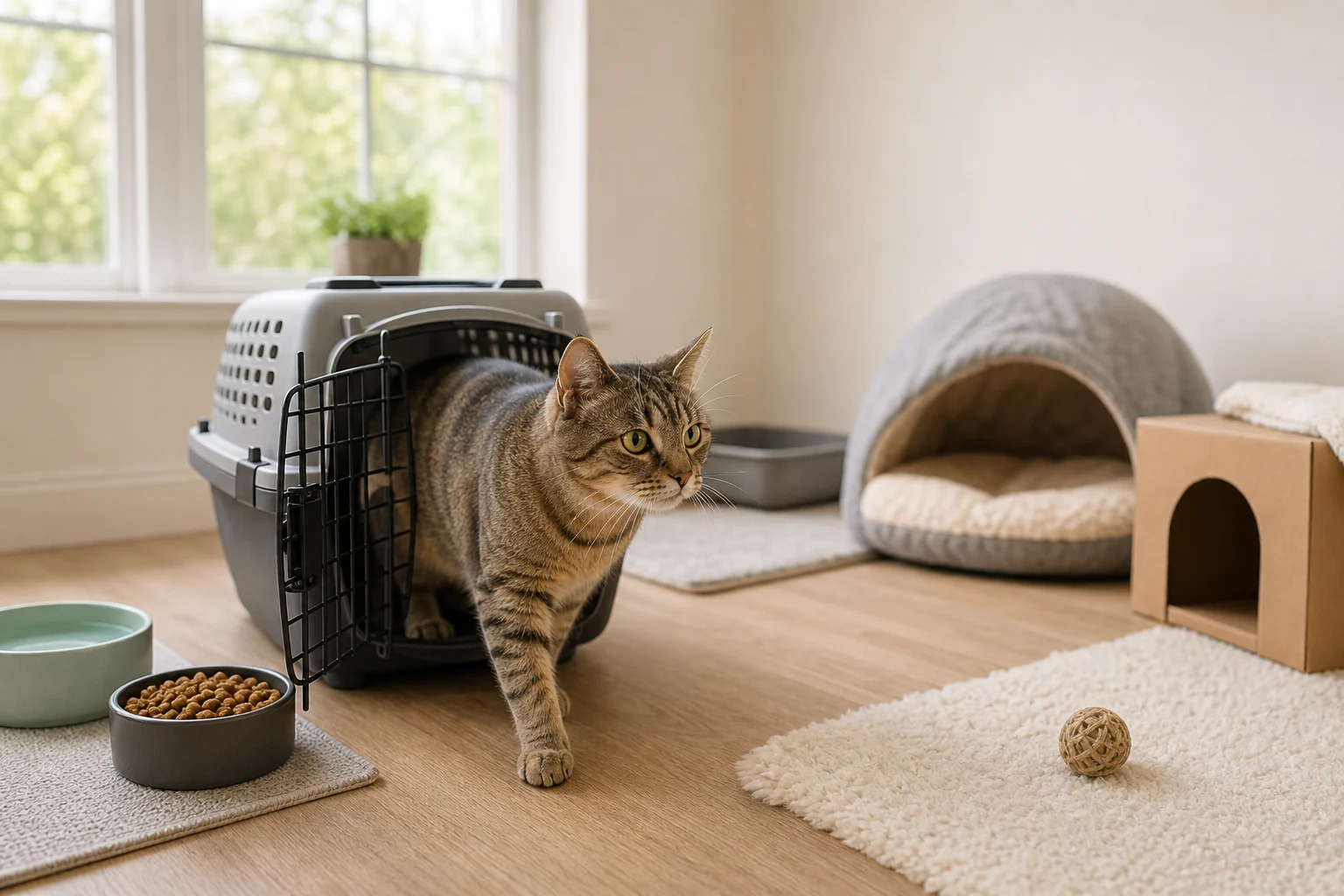
To settle a cat into a new home, start small: one quiet room, familiar-smelling items, easy access to food, water, litter, hiding places, scratching, and a predictable routine. Most cats need a few days to a few weeks before the new space feels safe, and the fastest progress usually comes from letting the cat choose when to explore.
A move is not just a new address to a cat. It is a sudden change in scent, sound, territory, escape routes, people, and sometimes other animals. Even a confident cat may hide, eat less at first, or explore only at night while learning that the new home is safe.
This first-week guide shows what to set up, what to do each day, when to expand access, and which warning signs mean you should slow down or call your veterinarian.
Table of Contents
- How long does it take a cat to settle into a new home?
- What should you set up before your cat arrives?
- What should you do on the first day?
- What routine helps a cat settle during the first week?
- When should you let your cat explore the rest of the house?
- What warning signs mean your cat is not settling normally?
- How can you help a shy, senior, or multi-cat household adjust?
- Conclusion: Help your cat feel safe first
- Frequently Asked Questions
- References
How long does it take a cat to settle into a new home?
Many cats begin to relax within several days, but a full adjustment can take weeks, especially for shy cats, seniors, cats from shelters, or cats moving into a busy household. Hiding at first is common because cats use safe places to reduce anxiety and assess unfamiliar surroundings.1
Instead of measuring success by whether your cat comes out immediately, look for small signs of recovery:
- eating and drinking when the room is quiet
- using the litter box consistently
- resting with a softer body posture
- grooming normally
- sniffing the room or carrier
- accepting treats, play, or slow blinking from a distance
- exploring a little more each day
If your cat hides under the bed all afternoon but eats overnight, uses the litter box, and gradually looks calmer, that can be normal first-week behavior. If hiding comes with not eating, repeated vomiting, straining in the litter box, open-mouth breathing, collapse, or rapid decline, treat it as a medical concern rather than simple shyness.
For more context on body language and stress, SnuggleSouls' guide to why cats hide can help you separate normal caution from a pattern that needs closer attention.
What should you set up before your cat arrives?
Set up one quiet starter room before the carrier comes inside. International Cat Care recommends giving a new cat a room with essentials such as food, water, litter, bedding, toys, and scratching options so the cat can settle without being overwhelmed by the whole home.1
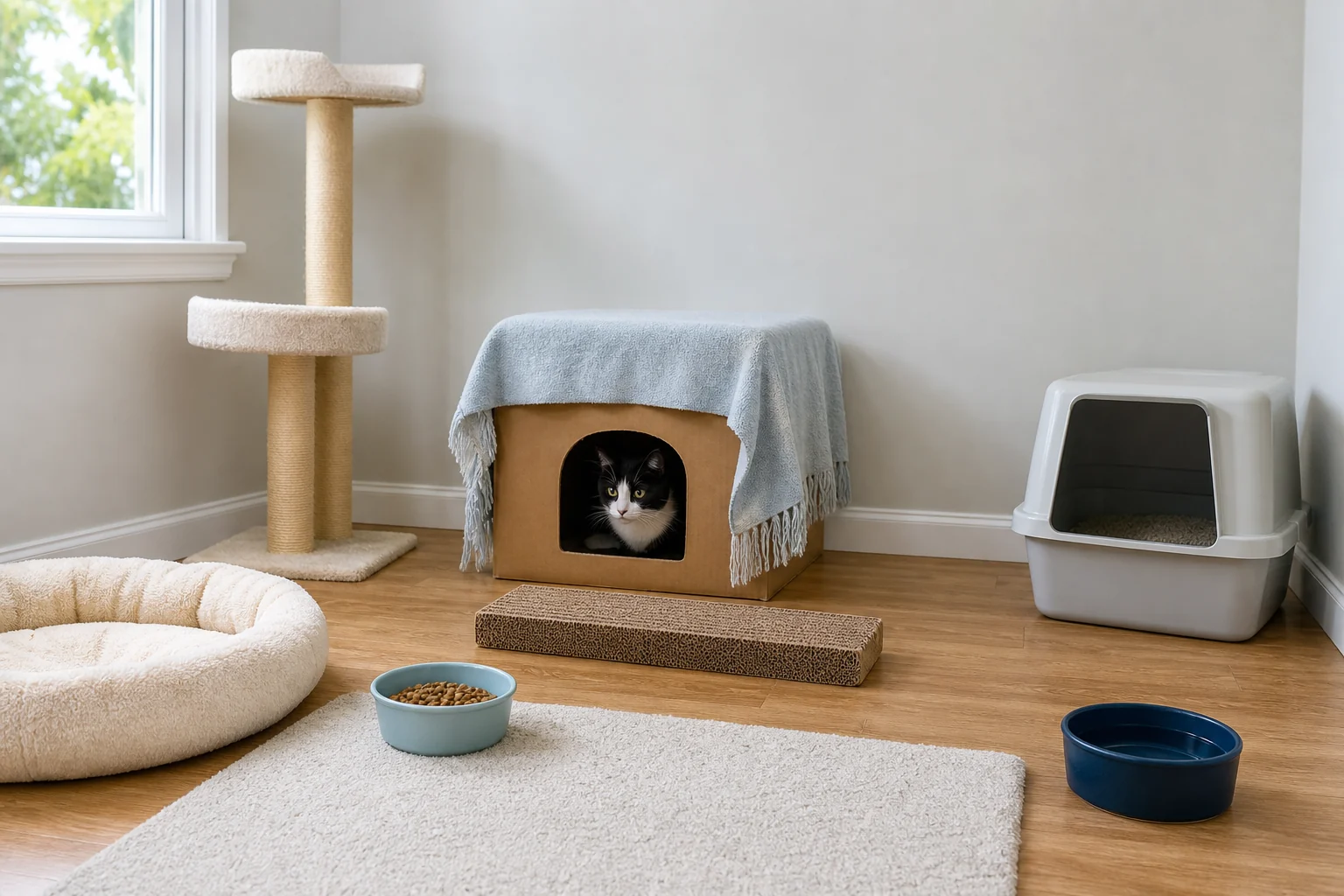
Place the room away from heavy foot traffic if possible. A spare bedroom, office, or quiet bathroom can work if it is safe, warm, and easy for you to check. Before arrival, remove toxic plants, loose cords, small swallowable objects, open vents, unstable decor, cleaning products, and any gap where a frightened cat could become trapped.
Use this starter-room checklist:
| Resource | First-week setup | Why it matters |
|---|---|---|
| Hiding place | Covered bed, cardboard box, carrier with the door open, or cat cave | Gives the cat control and a retreat |
| Litter box | Clean, uncovered or familiar-style box in a private corner | Makes elimination predictable and easy |
| Food and water | Separate bowls, away from the litter box | Reduces conflict between essential resources |
| Scratching | Horizontal or vertical scratcher near resting space | Offers scent marking and stress relief |
| Resting spot | Soft bed plus the cat's own blanket if available | Adds familiar scent and comfort |
| Perch | Stable low-to-medium perch if safe for the cat | Lets the cat observe without feeling exposed |
| Toys | Wand toy, soft toy, or puzzle feeder used gently | Supports low-pressure engagement |
Environmental-needs guidelines from AAFP and ISFM describe safe places, key resources, play, scratching, scent, and respectful social interaction as core parts of a healthy feline environment.2 Ohio State's Indoor Pet Initiative also emphasizes basic indoor resources such as places to rest, hide, scratch, play, perch, eat, drink, and eliminate.3
If litter box access is part of the concern, review the best cat litter box setup before your cat arrives. It is easier to prevent an awkward box location than to fix a habit after your cat has already found another spot.
What should you do on the first day?
On the first day, carry the cat directly to the starter room, close the door, open the carrier, and let the cat come out on their own. Do not pull the cat from the carrier, pass them around, or introduce them to the whole household right away.
Sit quietly nearby for a few minutes if your cat seems interested, then give space. Some cats walk out and inspect the room within minutes. Others stay inside the carrier or under a bed for hours. Both can be normal as long as the cat is safe and essential resources are available.
Keep the first day simple:
- Speak softly and move slowly.
- Keep children, guests, and other pets out of the room.
- Offer the same food the cat has been eating, if known.
- Leave water fresh and easy to reach.
- Avoid loud cleaning, rearranging, or repeated checking.
- Let the carrier stay available as a familiar hide.
- Check later for food intake, water level, and litter box use.
Cats Protection notes that scent familiarity can help cats settle, so bedding, a blanket, or a soft item that already smells like the cat or previous home can be useful.5 If you are adopting from a shelter or moving with your own cat, ask whether a familiar blanket, bed, or towel can travel with them.
What routine helps a cat settle during the first week?
A new cat usually relaxes faster when the home becomes predictable. Feed at consistent times, clean the litter box quietly, offer brief social visits, and let the cat decide how much contact feels safe.

Use this first-week rhythm as a starting point:
| Day range | What to prioritize | What to avoid |
|---|---|---|
| Day 1 | Quiet arrival, secure room, food, water, litter, hiding | Forced handling, visitors, introductions |
| Days 2-3 | Short calm visits, predictable meals, gentle observation | Chasing the cat out of hiding |
| Days 3-5 | Low-pressure play if the cat is willing, scent swapping, door sniffing | Full-house access before the cat is eating and eliminating normally |
| Days 5-7+ | Supervised exploration if the cat is confident | Rushing other pets or children into the room |
When you visit, sit sideways rather than leaning over the cat. Read, work quietly, or place treats nearby and let the cat approach. If the cat comes out, keep petting brief and watch for signals such as turning away, tail lashing, skin twitching, flattened ears, or sudden stillness.
Wand play can help, but it should be an invitation, not a test. Drag the toy slowly at a distance and stop before the cat becomes overwhelmed. If your cat does not engage, leave it for another day.
Track the practical basics for the first week:
- Did the cat eat today?
- Did the cat drink?
- Did the cat urinate?
- Did the cat pass stool?
- Is the cat hiding less, the same, or more?
- Is the cat grooming?
- Is there vomiting, diarrhea, coughing, limping, or breathing trouble?
That simple record is helpful if you need veterinary advice. It also prevents you from mistaking nighttime eating or litter use for "nothing is happening."
When should you let your cat explore the rest of the house?
Let your cat explore more space when they are eating, drinking, using the litter box, and showing curiosity in the starter room. Curiosity may look like sniffing the doorway, coming out during your visits, playing briefly, or resting in the open.
Open one new area at a time. Keep the starter room available as a home base, and do not remove the litter box, carrier, or favorite hide too soon. Your cat should be able to retreat without being followed.
Before expanding access, check the rest of the home for:
- open windows or loose screens
- washer, dryer, recliner, and appliance hazards
- string, ribbon, rubber bands, thread, and dental floss
- toxic plants and cleaning products
- open fireplaces, balconies, and escape routes
- tight gaps behind appliances or under cabinets
- dog doors or exterior doors that open often
If you need a room-by-room safety pass, use SnuggleSouls' guide to cat-proofing your home before opening the door.
For cats who are moving from an old home, do not allow outdoor access during the early settling period. Cats Protection advises keeping cats indoors at first after a move so they have time to learn the new home as their base.5
What warning signs mean your cat is not settling normally?
Call your veterinarian promptly if your cat has not eaten for 24 hours, refuses water, seems weak, hides while rapidly declining, vomits repeatedly, has severe diarrhea, breathes with effort, collapses, has a seizure, or shows signs of pain. New-home stress can reduce appetite briefly, but a cat who stops eating can become medically vulnerable.
Seek urgent veterinary care if your cat repeatedly enters the litter box but produces little or no urine, cries while trying to urinate, has blood in the urine, vomits with urinary signs, or seems painful. Urinary blockage can be life-threatening, especially in male cats.
Watch for these first-week patterns:
| Sign | What it may mean | Safer next step |
|---|---|---|
| No food for 24 hours | Stress, illness, pain, nausea, dental pain, or food refusal | Call your veterinarian |
| No urine seen | Hidden urination, dehydration, or urinary emergency | Check carefully; urgent care if straining or distressed |
| Repeated litter trips | Urinary discomfort, constipation, diarrhea, stress | Contact a veterinarian promptly |
| Sudden house soiling | Stress, box access issue, urinary disease, gastrointestinal issue | Review setup and call your vet if sudden or repeated |
| Hiding plus worsening lethargy | More than normal caution | Veterinary advice |
| Aggression when approached | Fear, pain, overstimulation, poor escape routes | Give space and reassess handling |
| Panting or open-mouth breathing | Emergency-level distress or respiratory issue | Seek urgent care |
If urination changes appear after the move, SnuggleSouls' guide to cat stress peeing can help you think through environment and litter-box factors, but medical causes still need to be ruled out when signs are sudden, painful, or repeated.
How can you help a shy, senior, or multi-cat household adjust?
Adjust the pace to the cat in front of you. A bold young cat may ask to explore quickly. A shy adult, senior cat, recently rehomed cat, or cat recovering from illness may need a longer safe-room period and more predictable handling.
For a shy cat:
- Keep the room quieter than you think is necessary.
- Offer covered and elevated hiding options.
- Sit nearby without staring.
- Use treats and play to invite, not lure by force.
- Let hiding be useful rather than "fixing" it immediately.
Ohio State notes that cats often hide when anxious or threatened and that indoor cats should have hiding areas where they feel safe from people, noise, and other animals.4 Removing every hide can make a scared cat feel more exposed. Safer hides with easy access let you monitor the cat while preserving their sense of control.
For a senior cat:
- Use low-entry litter boxes.
- Add non-slip rugs on slick floors.
- Keep food, water, and litter close at first.
- Avoid high jumps until you know mobility is comfortable.
- Watch appetite, drinking, stool, urine, and pain signs closely.
For a home with resident cats:
- Keep the new cat fully separate at first.
- Do scent swaps with bedding before visual contact.
- Feed on opposite sides of a closed door only if both cats remain relaxed.
- Use gradual visual introductions, not a sudden face-to-face meeting.
- Add extra litter boxes, resting places, scratching areas, and food/water stations.
For a home with dogs or young children:
- Keep the starter room off-limits.
- Use doors, gates, and supervision rather than trust.
- Teach children to let the cat come to them.
- Prevent chasing, cornering, grabbing, or carrier invasion.
- Give the cat escape routes that children and dogs cannot access.
The goal is not to make the cat "get used to it" by exposure. The goal is to make the home predictable enough that curiosity can replace fear.
Conclusion: Help your cat feel safe first
The best way to settle a cat into a new home is to give them control: one quiet room, familiar scent, reliable resources, gentle routines, and permission to hide while they learn the new territory. Expand access only when eating, litter use, and curiosity are steady.
If your cat is cautious but eating, eliminating, and gradually exploring, patience is often the right plan. If your cat stops eating, strains in the litter box, breathes abnormally, vomits repeatedly, seems painful, or declines quickly, contact a veterinarian instead of assuming it is just moving stress.
For more next-step reading, SnuggleSouls' cat behavior guides can help you understand hiding, stress signals, play, and home routines as your cat becomes more comfortable.
Frequently Asked Questions
Should I let my new cat hide?
Yes, as long as the hiding spot is safe and your cat can reach food, water, and the litter box. Hiding is a normal coping strategy for many cats in a new home, and forcing the cat out can increase fear.
Should I sleep in the same room as my new cat?
You can, if the room is quiet and your presence does not make the cat more anxious. If the cat freezes, refuses to eat, or will not use the litter box while you are there, give more space overnight.
When can I pick up my new cat?
Wait until your cat is voluntarily approaching, staying relaxed during touch, and not trying to retreat. Many cats need days or weeks before being picked up feels safe, and some prefer not to be lifted at all.
Is it normal for a new cat not to eat the first night?
Some cats skip or barely touch food the first night, especially if they are hiding. If your cat has not eaten for 24 hours, is a kitten, is diabetic, is overweight, has known medical problems, or seems unwell, call your veterinarian promptly.
When should I introduce my new cat to my other cat?
Wait until the new cat is eating, using the litter box, and calm in the starter room. Start with scent swapping and controlled separation before visual contact; do not put the cats together and hope they work it out.
How do I know my cat is starting to feel safe?
Signs include eating on schedule, using the litter box reliably, grooming, resting in more open spots, blinking softly, exploring, playing, rubbing cheeks on objects, and choosing to approach you.
References
[1] International Cat Care. (2024). Helping your new cat or kitten settle in. https://icatcare.org/articles/helping-your-new-cat-or-kitten-settle-in/
[2] American Association of Feline Practitioners and International Society of Feline Medicine. (2013). Feline Environmental Needs Guidelines. https://pmc.ncbi.nlm.nih.gov/articles/PMC11383066/
[3] The Ohio State University Indoor Pet Initiative. (n.d.). Basic Indoor Cat Needs. https://indoorpet.osu.edu/cats/basic-indoor-cat-needs
[4] The Ohio State University Indoor Pet Initiative. (n.d.). Hiding Instinct. https://indoorpet.osu.edu/cats/understanding-cats/hiding-instinct
[5] Cats Protection. (n.d.). Bringing a Cat Home. https://www.cats.org.uk/help-and-advice/home-and-environment/bringing-a-cat-home





 Why Does My Cat Flinch When Touched While Sleeping? Startle, Trust, and Pain Clues">
 Cat Scratching Baseboards: Trim Guards and Route Fixes">
 EN
EN DE
DE ES
ES PT
PT