
PRICE THE PLAN, PIECE BY PIECE
First-Year & Monthly Cat Budget Planner
ILLUSTRATIVE TEMPLATE — Sample figures demonstrate how the calculator separates one-time set-up, monthly care, and cash reserves. Replace any row with your local quotes.
See the full cost breakdown & excluded items
| Item | Timing | Entered price | Scope | Counted amount |
|---|
Keep a copy of your plan
Save deliberately, then update quotes as you learn more. This planner does not send entries to our server.
One locally saved plan per browser. No cloud sync. Clearing browser data may remove it; download an editable backup to move devices. Privacy policy.
BEYOND THE ADOPTION FEE
How to build a first-year cat adoption budget
A complete first-year cat adoption budget separates one-time set-up purchases from 12 months of recurring care, annual veterinary visits, and an emergency cash reserve. Before entering numbers above, check our guide to U.S. shelter adoption fees and first-year costs to see real shelter fee schedules ($0–$400) and what medical care they typically bundle.
You can start from the Shelter Adult Cat or Rescue Kitten sample template above to see how the math works immediately, or switch to a blank custom plan to enter local clinic and retail quotes at your own pace.
Mark shelter-included medical care to avoid double counting
Confirm the vaccination record, spay/neuter status, microchip registration, any remaining veterinary care, and the food currently being fed. Many shelters bundle sterilization, initial vaccines, and microchipping into the adoption fee, though inclusions vary by organization. [1]
Keep any included service marked as Included in another fee in the calculator so you do not pay for it twice in your remaining budget.
THE ROUTINE AFTER HOMECOMING
How to estimate monthly cat care & multi-cat costs
Start with food, litter, and any recurring preventive care or pet insurance payments you choose. Add ongoing monthly pet rent if required by your lease. Then set aside one twelfth of annual bills—such as routine wellness exams, cat sitting, and gear replacements—to see your true monthly run rate.
Use the wet and dry cat food calculator to calculate exact monthly feeding costs from your cat’s daily calorie needs and actual can or bag prices, or check portion targets first with the cat calorie calculator.
For two or more cats, separate per-cat and shared household costs
When you select 2 to 4 cats at the top of the planner, each row unlocks an Amount covers selector. A per-cat quote multiplies by the number of cats in the plan; a household total is counted once. Use household totals for shared litter setups or combined sitting quotes rather than doubling every line indiscriminately.
SPENDING AND CASH ARE DIFFERENT TOTALS
First-year cat spending vs. starting cash needed at adoption
Remaining first-year spending adds the set-up items still to pay, twelve months of monthly costs, and the annual costs entered. Already owned or pre-paid items are excluded so you see your forward 12-month expenditure.
Starting cash plan adds set-up items still to pay, your first month of recurring costs, any annual bills marked due at the start, a refundable housing deposit if applicable, and the shortfall in your target cash reserve.
The two totals answer different questions—do not add them together. A reserve contribution or refundable deposit ties up cash upfront without being a consumed expense.
Worked arithmetic example
Monthly costs: 80
Annual costs: 360
First-year spending = 340 + (80 × 12) + 360 = 1,660
Monthly planning average = 80 + (360 ÷ 12) = 110
If 120 of annual costs is due at the start, the refundable deposit is 200, and a reserve target of 500 already has 150 saved, starting cash is 340 + 80 + 120 + 200 + 350 = 1,090.
How much money should you save before adopting a cat?
Use the Starting cash plan bar chart in the summary panel to see exactly how much liquidity you need on day one. Combine your local setup quotes with first-month supplies, any landlord deposit, and the emergency buffer you want on hand before pickup.
A refundable pet deposit is tracked in the Cash buffer tab because it locks up funds without counting as a permanent expense. Enter nonrefundable pet fees under Set-up and monthly pet rent under Monthly.
Pin and compare two adoption scenarios
Click Pin this plan to compare in the summary card, then switch presets, adjust shelter inclusions, or change the number of cats from 1 to 2. The calculator displays the exact difference in first-year spending, monthly average, and day-one cash required.
A SHORT QUOTE-GATHERING CHECKLIST
What to confirm before you finalize your budget
- Shelter or rescue inclusions: confirm the adoption fee, spay/neuter completion, vaccine dates, microchip registration, and current diet.
- Veterinary clinic quotes: check the fee for an initial wellness exam, booster vaccines, and annual preventive care.
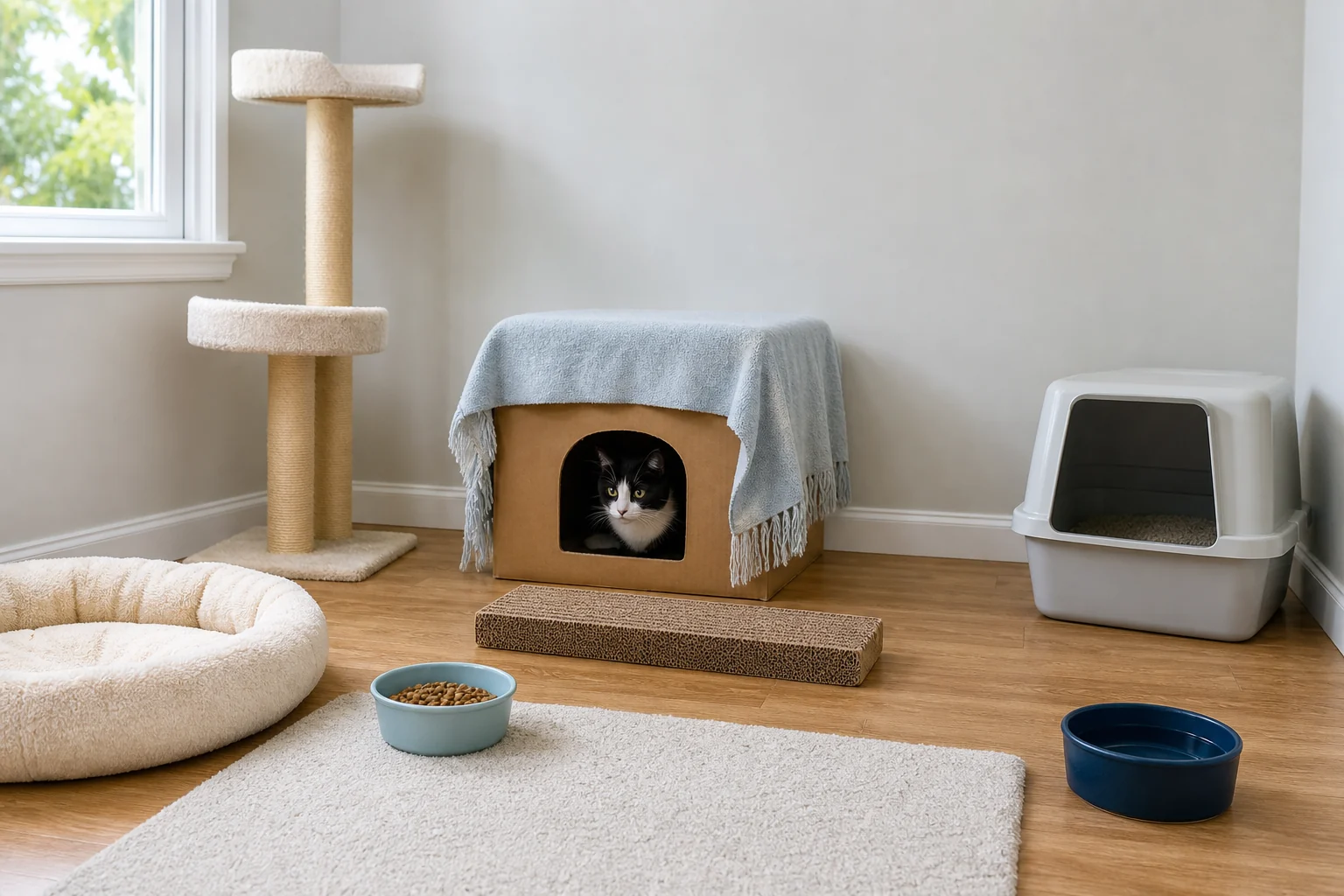
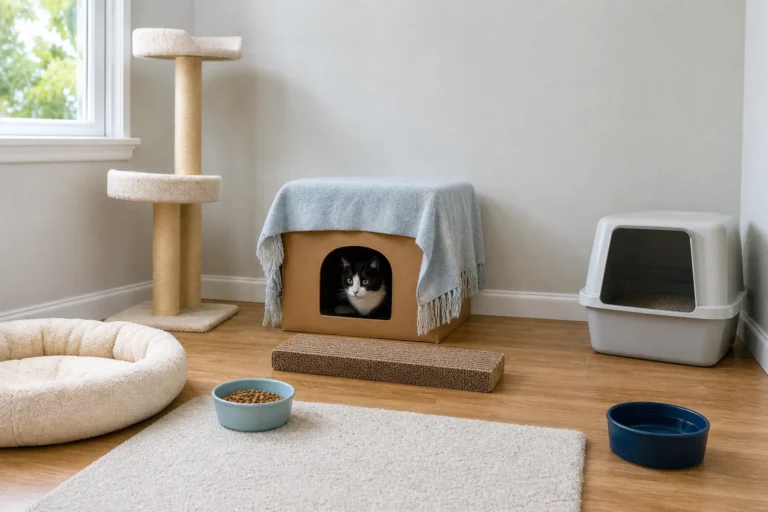
- Home starter gear: price a sturdy carrier, appropriately sized litter boxes, bowls, scratching posts, and safe hiding spots. [2]
- Housing & travel care: verify lease pet deposits or monthly pet rent, plus local drop-in cat sitting rates.
- Emergency backup: note policy waiting periods, deductibles, and the cash reserve you want accessible.
- U.S. cat adoption fees & first-year cost breakdown
Compare real shelter fee schedules and see what services are typically bundled.
- Prepare the first week in a new home
Connect your starter supplies budget with a stress-free settling-in setup.
- Choose a litter box set-up
Check box count, sizing, and placement before pricing your supplies.
- Keep vaccination records organized
Review the shelter medical record with your veterinarian to avoid duplicate vaccines.
- Plan cat care when you travel
Decide which visit frequency and services to request when gathering annual sitting quotes.
Cat adoption cost calculator FAQ
How do I use this cat adoption cost calculator if I do not have all local quotes yet?
Click either “Shelter Adult Cat (Sample)” or “Rescue Kitten (Sample)” at the top of the planner to load an illustrative baseline, or leave unknown rows blank in a custom plan. Blank active rows stay flagged as unknown so you get an immediate partial estimate without assuming unpriced items are free.
Is the adoption fee the full cost of bringing home a cat?
Usually it is one part of the first-year budget. Confirm what medical care the shelter fee includes, then add starter supplies, any landlord fees, monthly food and litter, and annual veterinary care.
Does switching the currency convert the numbers automatically?
No. Currency changes the symbol and formatting only; it does not apply exchange rates or load country-specific price tables. Enter quotes in your own local currency.
How do I avoid counting vaccinations, microchipping, or neutering twice?
In the Set-up tab, set any medical service covered by the shelter’s adoption package to “Included in another fee.” Only switch a row to “Still to pay” if you must pay for that procedure separately after pickup.
Can I compare the cost of adopting a kitten versus an adult cat?
Yes. Load the “Shelter Adult Cat (Sample)” preset and click “Pin this plan to compare” in the summary card, then click “Rescue Kitten (Sample)” or enter your own kitten booster and setup quotes to see the side-by-side difference.
How do I estimate the budget for adopting two cats or a bonded pair?
Change “Cats in this plan” to 2. The calculator unlocks the “Amount covers” selector on every row so you can multiply per-cat expenses (like food, exams, and insurance) by two while counting shared household gear or a combined adoption fee once.
Why is a refundable pet deposit excluded from first-year spending?
The calculator treats a refundable deposit as cash tied up rather than a consumed expense, so it is added to your Starting Cash Plan instead of First-Year Spending. Nonrefundable pet fees belong in Set-up.
Should I add the Starting Cash figure to Remaining First-Year Spending?
No. Those two totals overlap. Starting Cash already includes your Set-up purchases and first month of recurring care, plus deposits and reserve funding.
Does buying pet insurance remove the need for a cash reserve?
No. Most pet insurance policies require you to pay the veterinary clinic upfront, meet an annual deductible, and wait for reimbursement on eligible claims. Enter your monthly premium in Monthly and keep a realistic emergency buffer in Cash buffer.
Can I save, print, or export my cat adoption budget?
Yes. You can save your plan in your current browser’s local storage, download an editable JSON backup file, export a spreadsheet-ready CSV breakdown, or print/save a formatted PDF summary.
CALCULATIONS & REFERENCES
How your adoption budget is calculated
Per-cat costs multiply by your selected number of cats; household totals are counted once. The monthly planning average equals monthly costs plus one twelfth of annual costs.
Included, already paid/owned, and not-applicable items are excluded from remaining spending. Reserve shortfall equals the greater of target minus existing reserve or zero. No currency conversion, inflation, financing cost, medical-cost forecast, or insurance reimbursement is applied.