
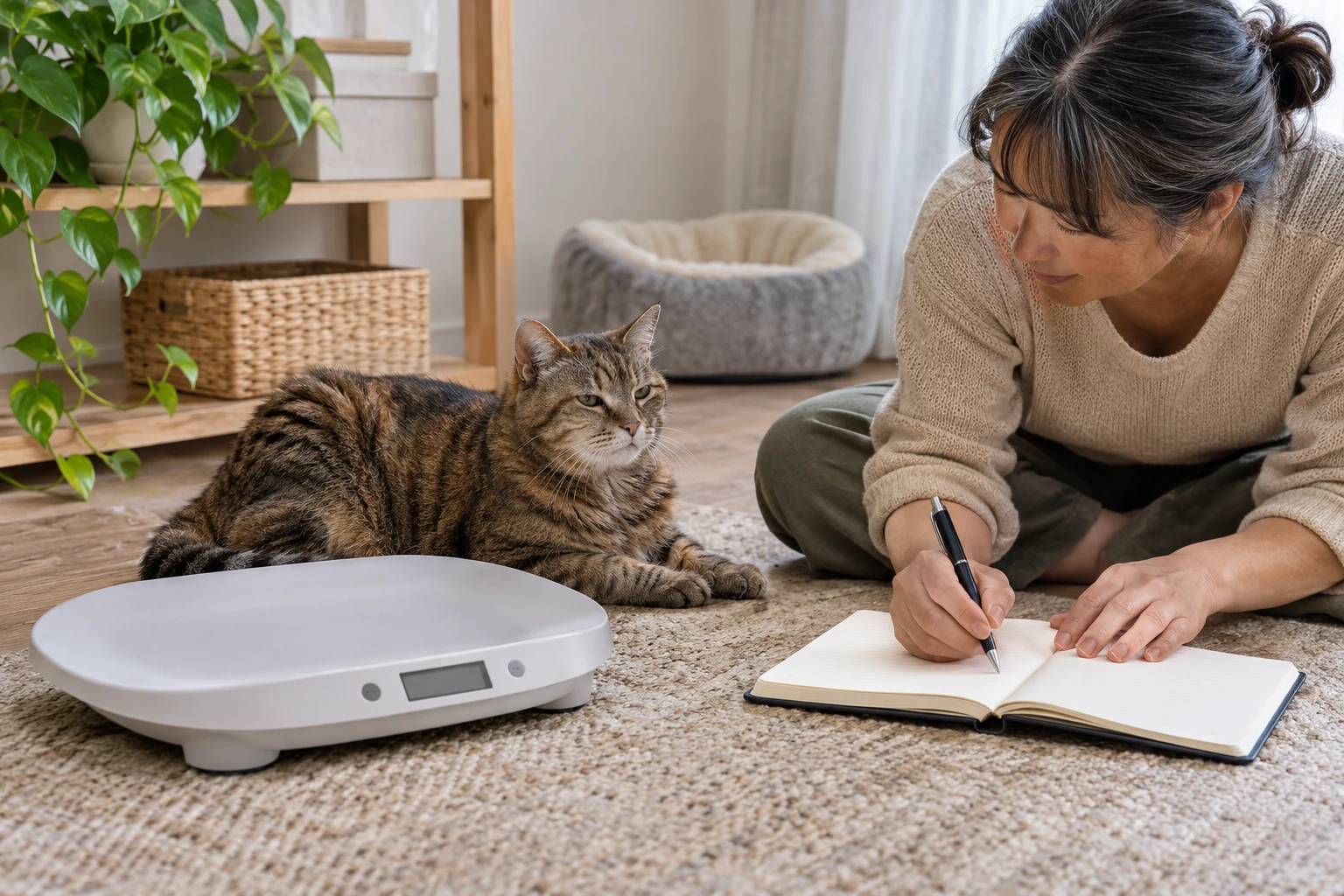
A senior cat losing weight without a veterinarian-directed plan should be discussed with the veterinary team promptly; do not wait for more change before calling. Record the dates and measurements you already have, plus appetite, drinking, litter-box, food, and behavior changes. These details can help the veterinary team decide what to check next. 1 2
Gradual loss can be hard to notice, especially under a long coat, and older cats may show changes in body condition or muscle even when the scale tells only part of the story. You can also check your cat's senior life-stage bracket with our Cat Age Calculator before your appointment. This guide is about documenting an unexplained change and preparing for veterinary advice; it does not diagnose a cause or give a home weight-gain plan.
What does unplanned weight loss look like in a senior cat?
Unplanned loss means the cat is getting lighter when no veterinarian has set a weight-loss goal. Do not write it off as normal aging: senior-cat guidelines say unexplained trends in weight, body-condition score, or muscle-condition score need investigation. Body composition can change even when total weight stays similar, so a scale alone may miss muscle loss. 1
Look at the trend alongside the cat, not just at one number. A measurement can vary with the scale or method, while a repeated downward pattern, a looser-fitting collar, more prominent bones, or new difficulty jumping may be useful observations to tell the veterinarian. A single impression is not a diagnosis; it is a reason to collect what you have and ask for guidance.
Eating normally does not make unexplained loss safe to ignore. Owner questions in recent cat-care forums include older cats losing weight despite eating and uncertainty about what information to bring after a recent exam. Those posts show the concern and wording people use, but they cannot establish what is causing an individual cat’s loss. The veterinary sources likewise recommend assessing the cat’s history and examination rather than guessing from appetite alone. 3
What should I record before calling the veterinarian?
Write down a dated timeline using facts you observed, and mark anything you are unsure about as unknown. Veterinary weight-loss assessments commonly ask about appetite, the food and amount offered, activity, chewing or swallowing, vomiting or regurgitation, drinking and urination, stool changes, and medications or supplements. 3
Use this checklist; you do not need to fill every line before calling:
| Record | What to note | Why it helps |
|---|---|---|
| Weight history | Date, reading, unit, scale and method; include clinic weights and when you first noticed a change. | Gives the veterinarian a timeline and helps compare like with like. |
| Food and appetite | Current food, recent changes, approximate amount offered and left, treats, appetite, and whether another pet may eat the food. | Shows what the cat may actually be consuming and what changed around the same time. |
| Water and litter box | Noticeable changes in drinking or urination, accidents, stool changes, vomiting, or regurgitation. | Adds context that a weight number cannot show. |
| Body and movement | Whether ribs, spine, hips, or back legs feel more prominent; grooming, coat, jumping, walking, energy, or social changes. | Helps describe body-condition and muscle changes as well as daily function. |
| Care context | Medicines and supplements, recent diet or household changes, prior diagnoses, test dates, and veterinary instructions. | Prevents key timeline details from being lost during the appointment. |
Use the same scale and method where possible, and keep the unit with every entry. If a reading looks surprising, check the date, unit, and setup, but do not postpone contacting the veterinary team to collect more measurements. For a step-by-step home method, see how to weigh a cat at home. You can also keep dates, weight, optional BCS, method, appetite, muscle notes, and context together in the Cat Weight & Body Condition Tracker; it records observations but does not interpret them as a diagnosis.
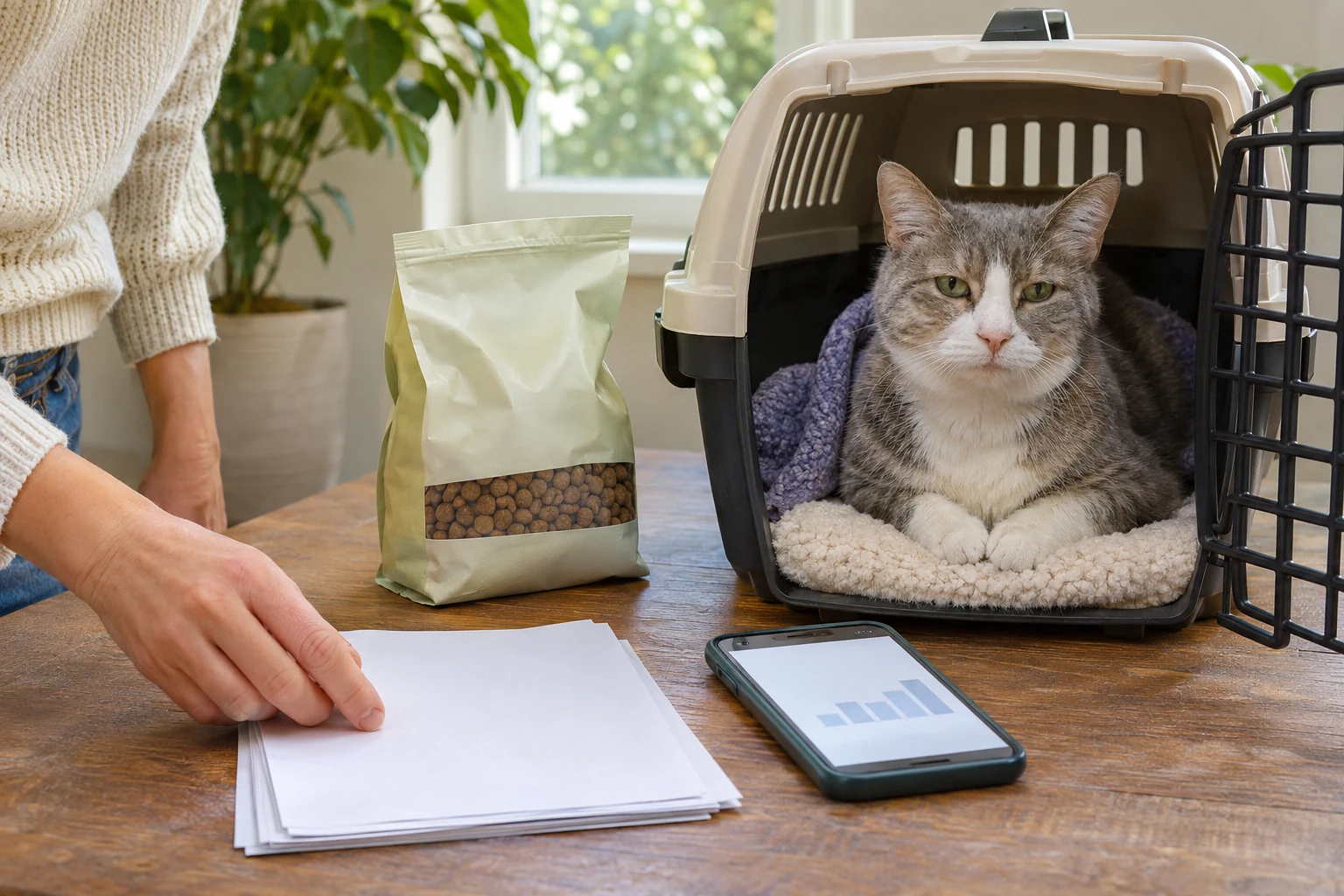
For a body-condition score (BCS) or muscle-condition score (MCS), note who made the assessment and whether it was uncertain. They describe different aspects of body condition; avoid guessing a score if you are not comfortable doing so. The body condition and muscle condition guide explains the distinction.
A home scale for recording weight changes
A pet scale can help you document weight trends to share with the veterinarian. Unplanned weight loss in a senior cat needs medical evaluation; do not wait for repeated home readings before calling.
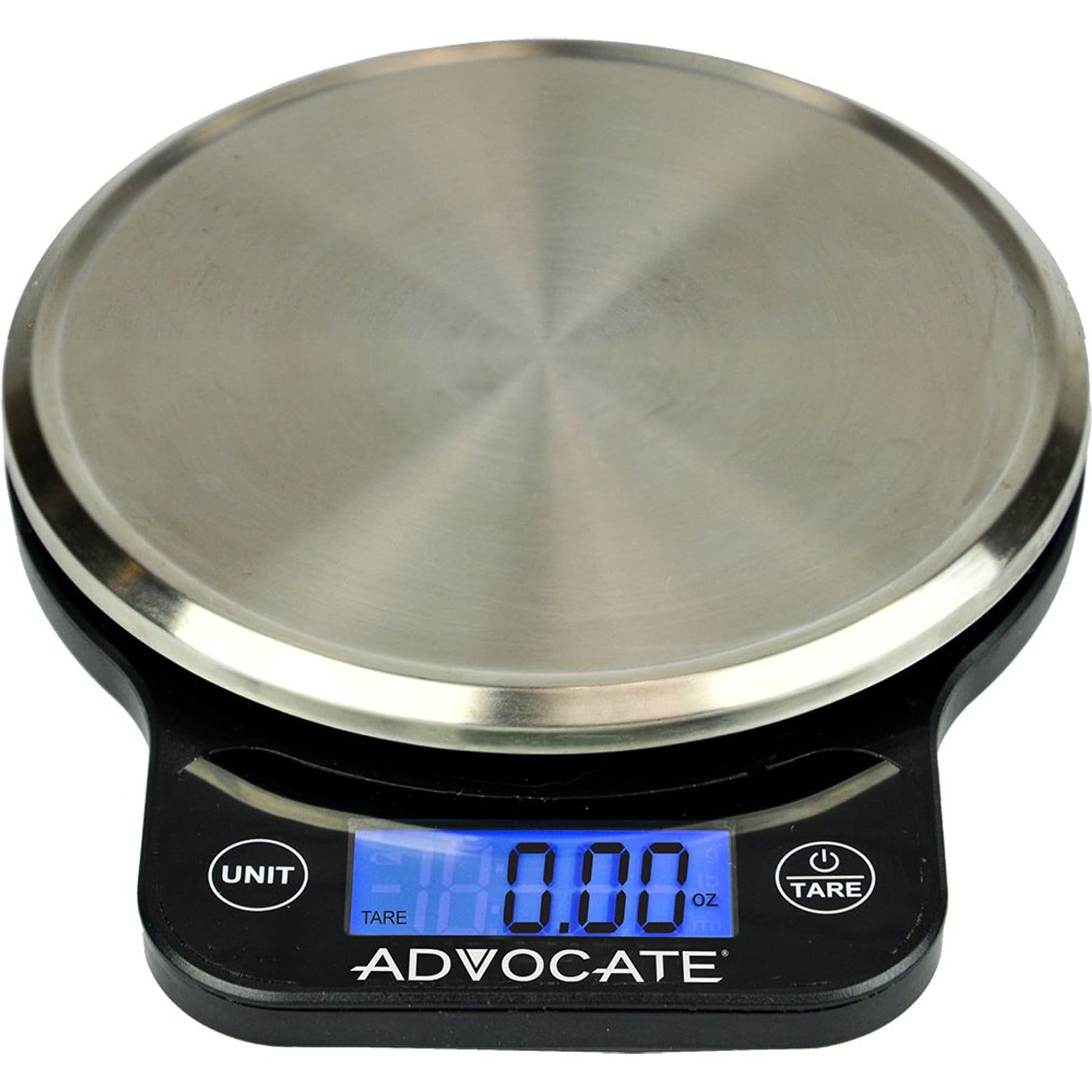
Advocate
Advocate Universal Digital Household Scale
Advocate Universal Digital Household Scale; For precise everyday measurements, try the Advocate Universal Digital Household Scale. This portable scale is great for measuring your…
$32.95
Shop ChewyWe may earn a commission if you buy through this Chewy link, at no extra cost to you. Product details and prices can change.
How should I interpret the weight record?
Use the record to describe what happened and when—not to decide the cause or prescribe a diet change. Compare dated readings taken with the same scale and method, note equipment or routine changes, and include body and muscle observations because a stable number does not rule out a change in body composition. 1
If one home reading differs from the previous one, first check whether the scale, unit, carrier, timing, or weighing method changed. A measurement issue is possible, but it should not be used to dismiss a repeated downward trend or other changes. This guide to why a cat’s weight reading may fluctuate explains how to check the measurement context.
Keep unexplained loss separate from a planned reduction in a cat who is overweight. A veterinarian-directed program has its own target, food plan, and recheck schedule; do not reduce food or switch to a “weight-loss” diet for an older cat because of a home reading. If a veterinarian is already supervising intentional loss, follow that plan and use the guide to tracking a veterinarian-directed weight-loss plan for the records to bring to rechecks.
When should I call the vet?
Call your veterinary team promptly when you suspect unexplained weight loss, even if your cat still eats or otherwise seems normal. PDSA advises contacting a veterinarian whenever you think your cat has lost weight, and Cornell notes that owner observations and comparison with prior weights and body-condition findings are part of senior-cat assessment. Do not wait for the next routine appointment or for a particular percentage threshold. 2 4
Ask the clinic how soon your cat should be seen and what records to bring. Call sooner if the change is rapid or comes with reduced appetite, repeated vomiting or diarrhea, a marked change in thirst or urination, weakness, or a sudden change in behavior. If your cat has not eaten for 24 hours, has difficulty breathing, collapses, or repeatedly strains to urinate while producing little or no urine, seek urgent veterinary care rather than waiting for a routine appointment. 5 6
What should I bring to the appointment?
Bring a short, factual handoff instead of trying to solve the problem at home. Cornell describes the senior-cat visit as including a medical and behavioral history, examination, weight and body-condition checks, and comparison with prior evaluations; VCA also notes that the veterinarian may use history, examination, and appropriate tests to investigate weight loss. 2 3
You can copy this template into a note:
- First noticed: [date or approximate period]
- Weight readings: [date — weight — unit — scale/method]
- Appetite and food: [what changed, if anything]
- Water and litter box: [observed changes]
- Other changes: [vomiting/stool, grooming, movement, energy, behavior]
- Current care: [medications, supplements, diet changes, recent test dates]
- Main questions: [what changed, how soon to recheck, which signs mean call sooner]
Bring the food packaging or a photo of its label if the diet recently changed, plus medication names and prior test results if you have them. Do not delay the appointment to make a complete log; an incomplete but dated account is more useful than waiting for perfect records.
Conclusion
An older cat’s unexplained weight loss deserves veterinary follow-up; it should not automatically be attributed to age or treated with a do-it-yourself feeding change. Record dated measurements and the surrounding observations, call your veterinary team promptly, and let them decide what examination or next steps fit your cat.
Frequently Asked Questions
Is it normal for senior cats to lose weight?
Some changes in body composition can accompany aging, but unexplained weight, body-condition, or muscle-condition trends should be investigated rather than assumed to be normal. Ask your veterinarian to assess the change in the context of your cat’s history and examination. 1
My senior cat is losing weight but still eating. Should I call the vet?
Yes. Appetite alone cannot explain the change, and unplanned weight loss should be discussed with a veterinarian even when a cat is eating. Record appetite and the amount offered, but do not use eating normally as a reason to wait. 3 4
Should I feed more or switch to kitten food?
Do not make a major diet change or add supplements to treat unexplained loss without veterinary advice. The appropriate plan depends on the individual cat and the reason for the change; ask the clinic what to feed while arranging evaluation.
Can muscle loss happen if the number on the scale stays the same?
Yes. The AAFP senior-care guidelines note that body composition can change even when total weight does not, which is why weight, BCS, and MCS provide different information. Note visible or gently felt changes and ask the veterinary team to assess them. 1
How often should I weigh my senior cat?
There is no single home schedule that fits every older cat. Ask your veterinarian how often to measure based on your cat’s health and the reason for monitoring; contact the clinic sooner if you notice a concerning change rather than waiting for the next scheduled weigh-in.
References
[1] American Association of Feline Practitioners. (2021). 2021 AAFP Feline Senior Care Guidelines. Source URL
[2] Cornell University College of Veterinary Medicine. The Special Needs of the Senior Cat. Source URL
[3] VCA Animal Hospitals. Abnormal Weight Loss in Cats. Source URL
[4] PDSA. Weight loss in cats. Source URL
[5] VCA Animal Hospitals. Recognizing the Signs of Illness in Cats. Source URL
[6] Cornell University College of Veterinary Medicine. Feline Lower Urinary Tract Disease. Source URL