
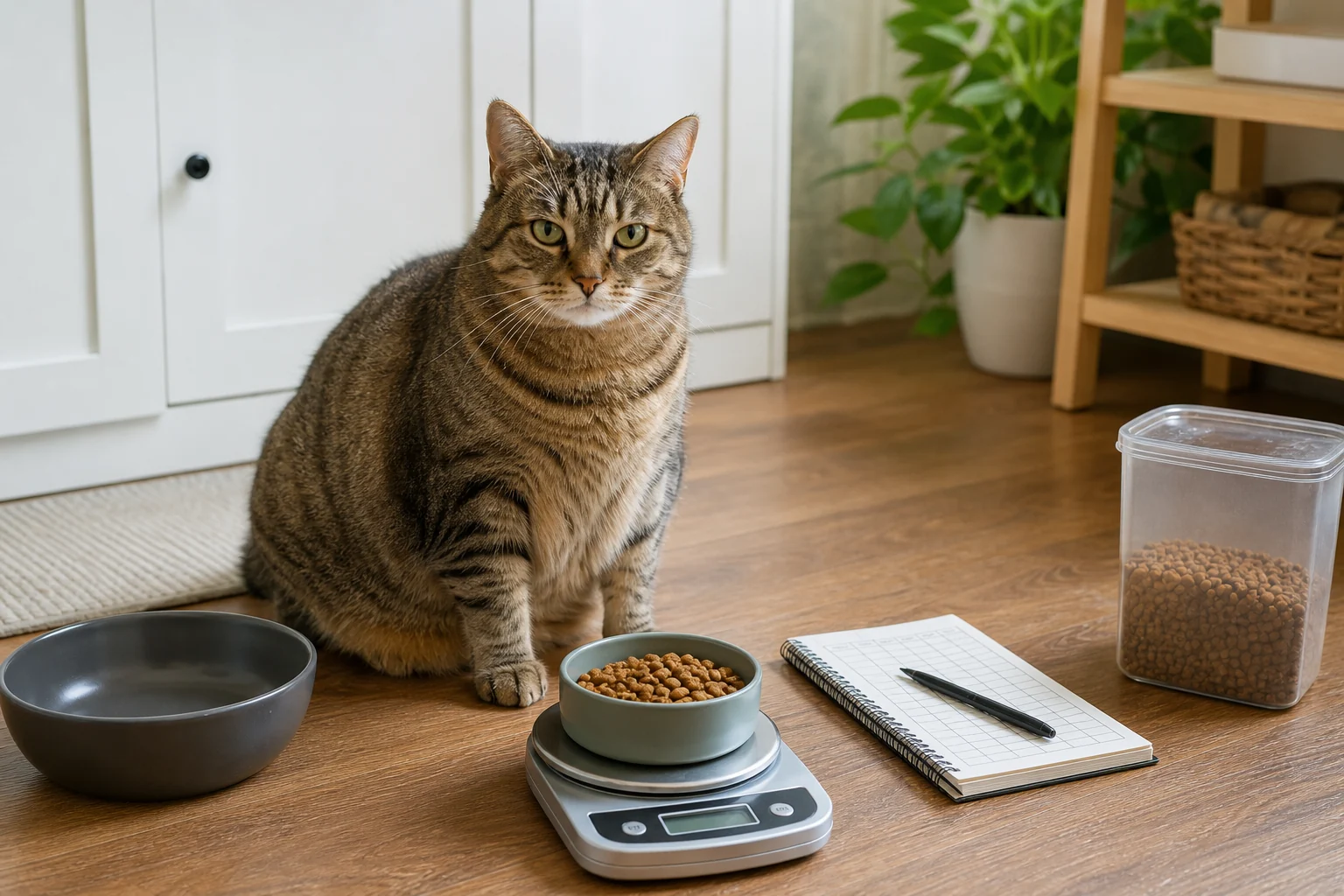
To transition an overweight indoor cat from free feeding to measured meals, start by measuring what your cat already eats, then move gradually toward scheduled portions instead of removing the bowl overnight. The goal is calorie control without panic, food conflict, or unsafe fasting.
Free feeding can look gentle because food is always available. For some indoor cats, though, an always-full dry-food bowl quietly becomes more calories than their body uses. Cornell Feline Health Center identifies free feeding as a major factor in feline obesity and advises controlled mealtimes for overweight cats 1.
This guide is for otherwise stable adult indoor cats who have gained weight slowly while dry food has been available most of the day. If your cat is obese, has diabetes, kidney disease, urinary disease, chronic vomiting or diarrhea, poor appetite, sudden weight change, pregnancy, nursing, or a prescription diet, use this as background and ask your veterinarian for a personal plan.
Table of Contents
- What is the safest way to stop free feeding an overweight cat?
- How do you measure the current free-feeding amount first?
- How do you set the first measured-meal target?
- What meal schedule helps a former free-fed cat adjust?
- How can you reduce begging without refilling the bowl?
- How do you handle multi-cat homes and food stealing?
- How do you monitor weight and body condition after the switch?
- When should your veterinarian lead the transition?
- Conclusion: Make measured meals predictable, not stressful
- Frequently Asked Questions
- References
What is the safest way to stop free feeding an overweight cat?
The safest way is to replace unlimited access with predictable measured meals over one to three weeks. Do not suddenly slash food or force a cat to go long periods without eating, especially if the cat is obese or has any health concern.
A good transition has four parts:
| Step | What you do | Why it matters |
|---|---|---|
| Audit | Measure the current daily intake for 7 days | Shows the real starting point |
| Plan | Set a realistic first target | Avoids a crash diet |
| Schedule | Split food into meals or timed portions | Keeps the routine predictable |
| Monitor | Track weight, appetite, stool, vomiting, and begging | Catches stress or unsafe change early |
This is different from a mixed-feeding adjustment. If your cat already eats wet meals plus dry food, first read how to adjust mixed feeding for indoor cats who gain weight. Here, the main problem is the unlimited dry-food bowl.
The first week should feel boring. You are gathering data, not trying to win weight loss immediately. Most cats tolerate change better when the mealtime pattern becomes clear before the amount changes much.
How do you measure the current free-feeding amount first?
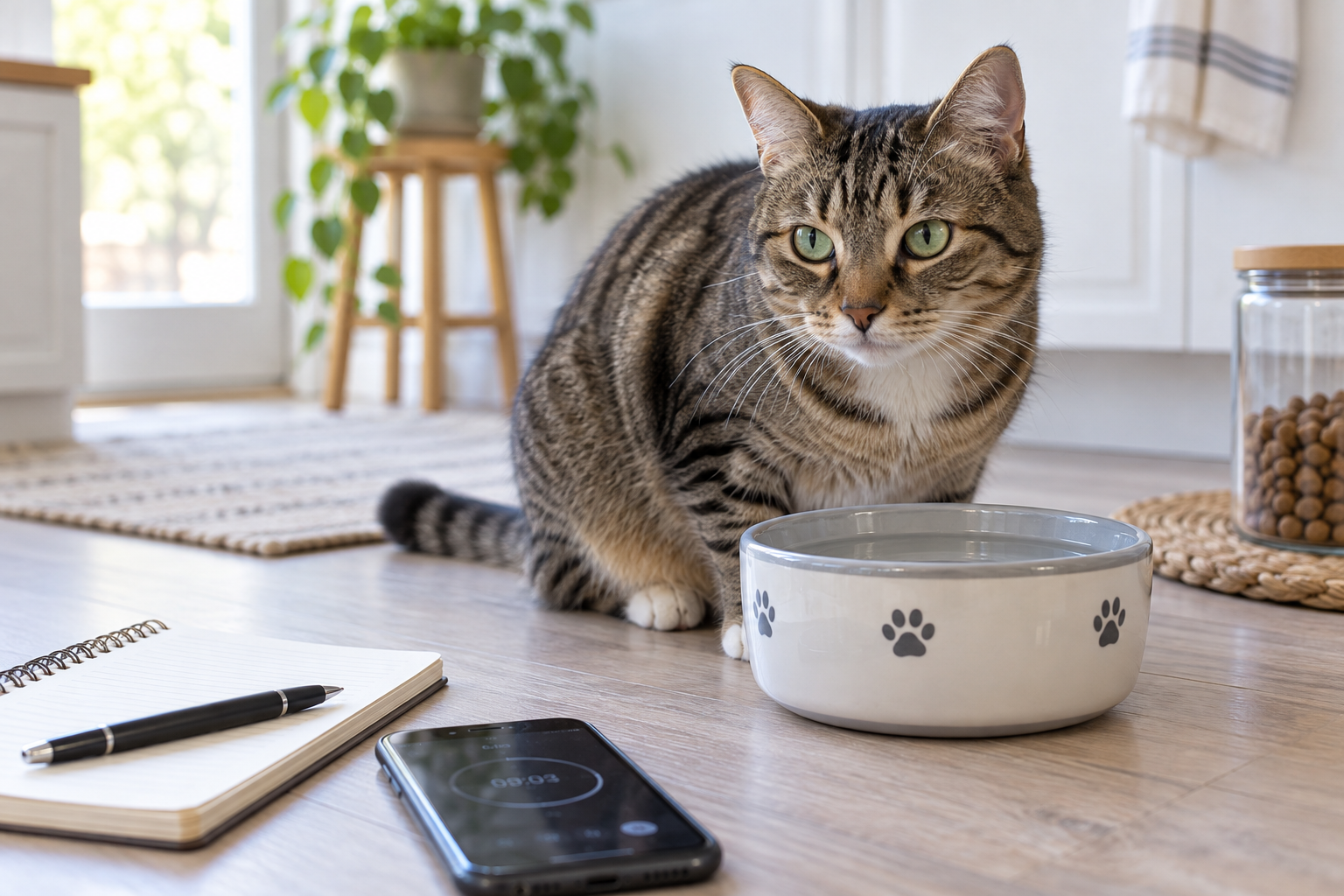
Measure the current free-feeding amount by weighing the dry food you put out each morning and subtracting what remains 24 hours later. Repeat for a full week so you see weekday, weekend, and household-pattern differences.
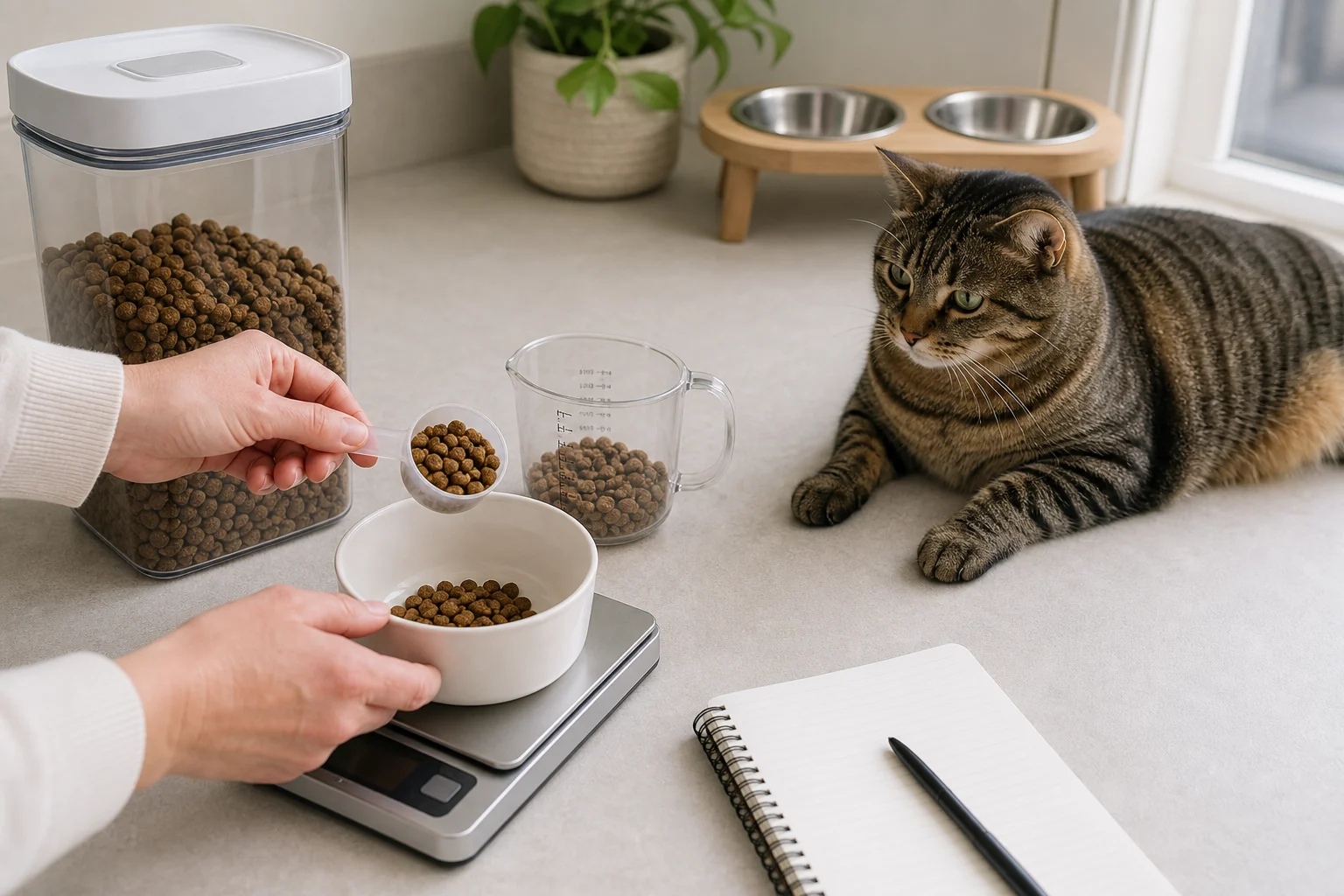
A seven-day food audit shows how much your cat actually eats before you replace the always-full bowl.
Use grams if you can. Measuring cups are convenient, but kibble size, pouring angle, and whether the cup is heaped can change the calorie count. If the food label lists calories per cup and calories per kilogram, the gram number is usually easier to control.
Record every food source:
- Dry food added to the bowl.
- Dry food left at the end of the day.
- Wet food, if any.
- Treats, toppers, dental treats, lickable snacks, and pill pockets.
- Food used for training, puzzle feeders, or hiding games.
- Any food stolen from another pet.
WSAVA's nutrition resources emphasize diet history, body condition, muscle condition, calorie needs, and feeding management as parts of nutrition assessment 2. That same idea works at home: write down what is really happening before deciding what to change.
What if the bowl is shared?
If more than one cat uses the bowl, the audit cannot tell you which cat ate the calories. For one week, feed cats separately for at least the main meals, or use supervised portions so you can see who eats what. A shared free-fed bowl often hides both problems at once: one cat gains weight while another cat quietly eats less.
How do you set the first measured-meal target?
Set the first target by combining your cat's current intake, body condition, ideal-weight estimate, and veterinary guidance when needed. For a mildly overweight but otherwise healthy adult cat, the first step is often a small reduction from the audited intake, not an aggressive diet.
Use SnuggleSouls' cat calorie calculator and the guide on how much should I feed my cat as planning tools. Then compare the estimate with what your cat actually ate during the audit. If the audit shows 310 kcal per day and the estimate suggests 230 kcal, do not jump straight to the lower number without veterinary input, especially if your cat is obese.
VCA advises that weight-reduction plans should include a target weight, calorie plan, weigh-ins, and clear feeding instructions 3. For a cat who is only slightly overweight, your veterinarian may still support a gradual home adjustment. For a cat with obesity or health issues, the plan should be individualized.
A practical first target can look like this:
| Current situation | Safer first move |
|---|---|
| Food amount is unknown | Audit first; do not reduce yet |
| Mild weight gain and no illness signs | Reduce hidden extras and overfilled dry food first |
| Cat is clearly obese | Ask the vet for a target weight and calorie plan |
| Cat begs intensely when food is limited | Use smaller scheduled meals before cutting more calories |
| Cat eats less or skips meals | Pause the change and call your veterinarian |
Never assume "less is always better." Cats need enough food to maintain essential nutrition and keep eating consistently. A sudden starvation approach can be dangerous, and Cornell cautions that weight loss should be gradual under veterinary direction for obese cats 1.
What meal schedule helps a former free-fed cat adjust?
A former free-fed cat usually adjusts best to several small, predictable meals instead of one or two large meals. The schedule should make food appear reliably while keeping the total daily amount measured.
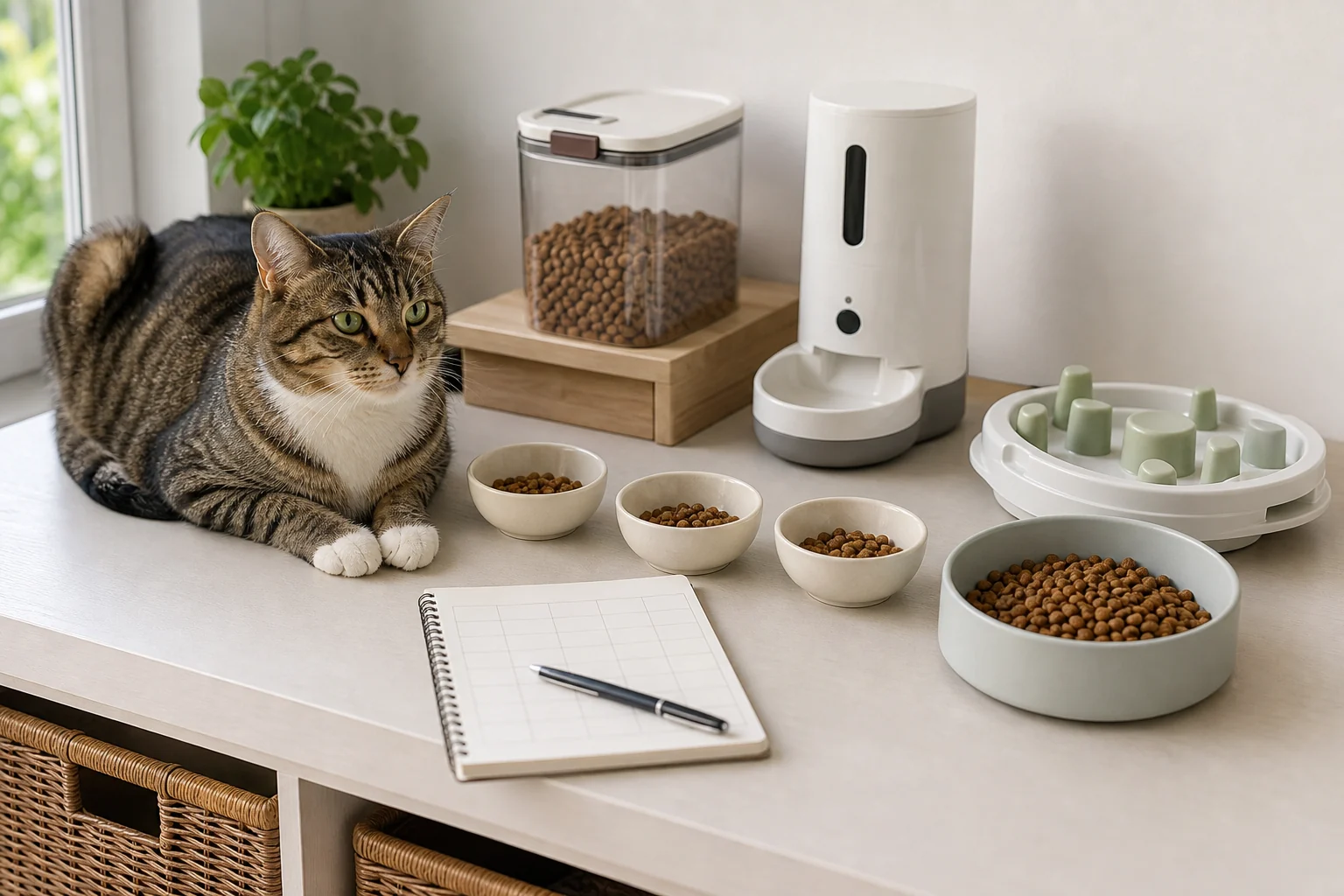
Several small measured meals can feel more predictable than one unlimited bowl while keeping calories controlled.
Start with the times your cat already visits the bowl. If your cat grazes most in the early morning, after work, and before bed, build meals around those predictable moments.
Example transition:
| Phase | What changes | What stays familiar |
|---|---|---|
| Days 1-3 | Measure the full daily amount, but leave it available | Bowl location and food stay the same |
| Days 4-7 | Offer the same amount in 3-4 portions; lift leftovers after 30-60 minutes | Same food, more predictable timing |
| Week 2 | Put one dry portion in a timed feeder or easy puzzle | Cat still gets familiar dry food |
| Week 3 | Adjust calories only if appetite and behavior are stable | Schedule remains consistent |
Timed feeders for cats can help if the issue is early-morning begging or a long workday. They should dispense measured food from the daily allowance, not extra food. If the feeder uses volume settings, test several releases and weigh the real amount.
Should you add wet food during the switch?
Wet food can help some cats feel more satisfied because it adds moisture and creates a clear meal, but it still counts toward the daily calorie budget. If you add wet food, subtract those calories from dry food rather than feeding both as full portions.
Keep the first transition simple. Changing food type, meal times, and calorie amount all at once can make it harder to know what caused vomiting, refusal, begging, or stool changes.
How can you reduce begging without refilling the bowl?
Reduce begging by making meals predictable, splitting the daily amount into smaller portions, adding play before meals, and using food puzzles with measured food. Do not answer every meow with a refill, or the old free-feeding pattern returns in a new form.
Former free-fed cats often beg because the environment changed. That does not always mean they need more calories. It can mean they miss checking the bowl, dislike a long gap, or have learned that a human will refill food after enough noise.
Try these low-risk supports:
- Feed at consistent times for at least two weeks.
- Use a small bedtime portion from the daily allowance if overnight begging is the problem.
- Schedule a short play session before a meal.
- Put part of the dry ration in easy puzzle feeders for cats.
- Add water to wet food if your cat likes the texture.
- Keep the empty bowl out of sight between meals if it triggers checking behavior.
Begging also deserves a health check when it changes suddenly. Read SnuggleSouls' guide to why your cat is always hungry if hunger comes with weight loss, vomiting, diarrhea, increased thirst, increased urination, restlessness, food stealing, or a major behavior change.
How do you handle multi-cat homes and food stealing?
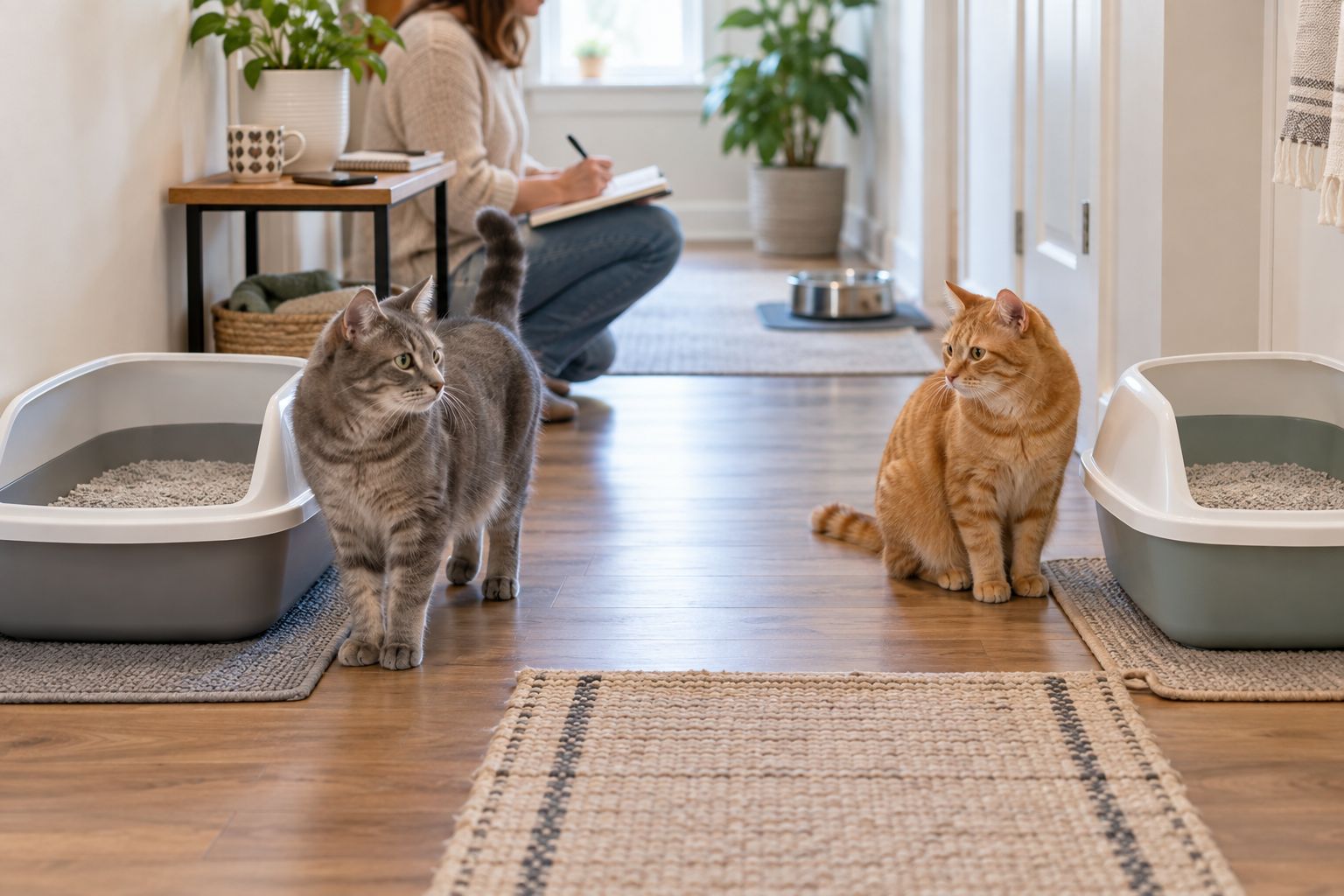
Handle multi-cat homes by feeding cats separately, supervising meal windows, and removing leftovers after each cat has had a fair chance to eat. A free-fed shared bowl is one of the hardest setups for weight control because it hides who ate what.
VCA recommends separate feeding locations and monitored mealtimes for cats in weight plans, especially when cats have different needs 3. That may feel like extra work at first, but it is often the difference between a real plan and a guess.
Useful setups include:
| Household problem | Better setup |
|---|---|
| One cat steals dry food | Feed in separate rooms with doors closed |
| One cat eats slowly | Give that cat a quiet room and more time |
| Cats need different diets | Use separate meals or microchip-controlled access |
| Work schedule is tight | Use timed feeders in separate spaces |
| The overweight cat raids bowls | Lift all bowls after the meal window |
Do not punish the cat who steals. Food competition is usually a management problem, not a character problem. Make access clearer, calmer, and more separated.
How do you monitor weight and body condition after the switch?
Monitor weekly body weight, monthly body photos if your cat tolerates them, and a simple body condition check. The goal is gradual improvement, steady appetite, normal stool, and a calmer routine.
AAHA/AAFP life stage guidance emphasizes nutrition and weight management across the cat's life, including regular assessment rather than waiting until a cat is obviously unwell 4. At home, you can support that by tracking trends instead of reacting to one day.
Check:
- Ribs: you should be able to feel them under a light fat cover.
- Waist: there should be some shape from above, depending on breed and coat.
- Belly: a primordial pouch is normal, but heavy abdominal fat is different.
- Movement: watch jumping, grooming, play, and willingness to move.
- Appetite: note skipped meals, frantic hunger, or new food guarding.
- Symptoms: vomiting, diarrhea, constipation, thirst, urination, coughing, lethargy, or hiding.
The SnuggleSouls cat body condition and weight calculator can help you organize the check. If weight drops quickly, your cat stops eating, or symptoms appear, stop adjusting at home and call your veterinarian.
How fast should an overweight cat lose weight?
For an obese cat, Cornell describes gradual loss as the goal and gives an example range of about one to two percent of body weight per week under veterinary direction 1. That is not a DIY target for every cat. It is a reminder that fast loss is not the goal.
If your cat is only mildly overweight, the first win may be stopping further gain. Weight maintenance plus better meal structure can be progress before active loss begins.
When should your veterinarian lead the transition?
Your veterinarian should lead the transition if your cat is obese, senior, very young, pregnant, nursing, diabetic, on a prescription diet, has kidney or urinary disease, has liver risk, has repeated vomiting or diarrhea, is losing weight unexpectedly, or has a sudden appetite change.
Call promptly if your cat stops eating for 24 hours, vomits repeatedly, has severe diarrhea, strains to urinate, collapses, has breathing trouble, has seizures, may have eaten something toxic, or declines quickly. Feeding changes should never delay urgent care.
Cornell's obese-cat guidance points out that excess calorie intake can outpace energy use in indoor cats and that veterinary guidance helps protect the cat during weight loss 5. A veterinary team can set a target weight, choose the right food, protect muscle, check for pain or disease, and decide how often to reweigh.
Conclusion: Make measured meals predictable, not stressful
Transitioning an overweight indoor cat from free feeding to measured meals is not about taking food away suddenly. It is about making food visible, predictable, and matched to your cat's real needs.
Start with a seven-day audit, split the daily amount into several scheduled portions, use tools like timed feeders or puzzle feeders only with measured food, and monitor body condition as the routine changes. If your cat is obese, unwell, or reacting strongly to the change, bring your veterinarian into the plan before cutting further.
Frequently Asked Questions
Is free feeding bad for cats?
Free feeding is not automatically bad for every cat, but it can make weight gain easier in indoor cats because dry food is calorie-dense and intake is hard to track. If your cat is overweight, measured meals usually give you better control.
Can I stop free feeding my cat overnight?
It is usually better to transition gradually unless your veterinarian gives a specific plan. Sudden food restriction can cause stress, food guarding, or missed meals, and obese cats should not be crash-dieted.
How many meals should an overweight indoor cat eat each day?
Many adult cats adjust well to three or four small measured meals, but the right schedule depends on health, food type, routine, and veterinary advice. The total daily calories matter more than the exact number of bowls.
What if my cat cries for food after I remove the free-fed bowl?
First check that the new amount is not too low and that meals are not too far apart. Then use predictable meal times, play before meals, puzzle feeding, and a small bedtime portion from the daily allowance. Call your veterinarian if hunger is sudden, intense, or paired with weight loss or other symptoms.
Should I use an automatic feeder for the transition?
An automatic feeder can help if it dispenses measured portions accurately. Test the real amount it releases, count it inside the daily allowance, and use separate feeders or rooms in multi-cat homes.
How do I know if my cat is losing weight too fast?
Weigh weekly and watch appetite, energy, vomiting, stool, grooming, and behavior. If the number drops quickly, your cat skips meals, or symptoms appear, pause the plan and contact your veterinarian.
References
[1] Cornell Feline Health Center. (2026). Obesity. Cornell University College of Veterinary Medicine
[2] World Small Animal Veterinary Association. (2026). Global Nutrition Guidelines. WSAVA
[3] VCA Animal Hospitals. (2026). Creating a Weight Reduction Plan for Cats. VCA Animal Hospitals
[4] AAHA and AAFP. (2021). 2021 AAHA/AAFP Feline Life Stage Guidelines: Nutrition and Weight Management. AAHA
[5] Cornell Feline Health Center. (2026). Ask Elizabeth: Care of Obese Cats. Cornell University College of Veterinary Medicine

 Why Does My Cat Jerk Awake Suddenly? Startle Reflexes, Sleep Starts, and Vet Clues">
 Cat Scratching Door Frame: How to Protect Trim">
 EN
EN DE
DE ES
ES PT
PT