
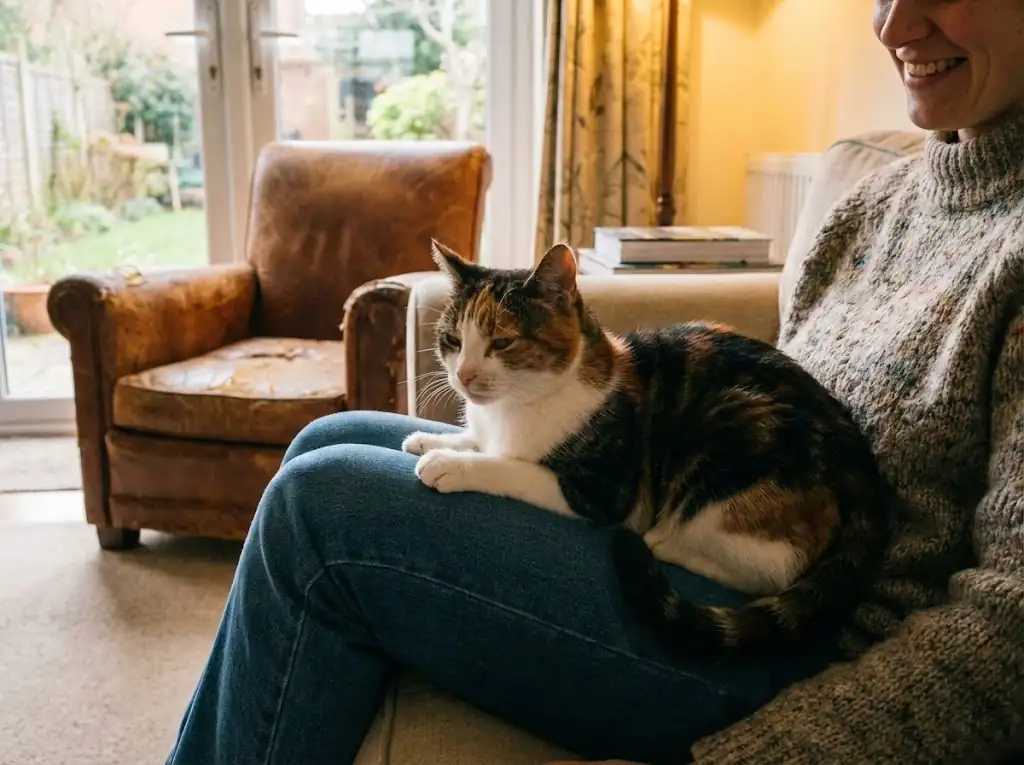
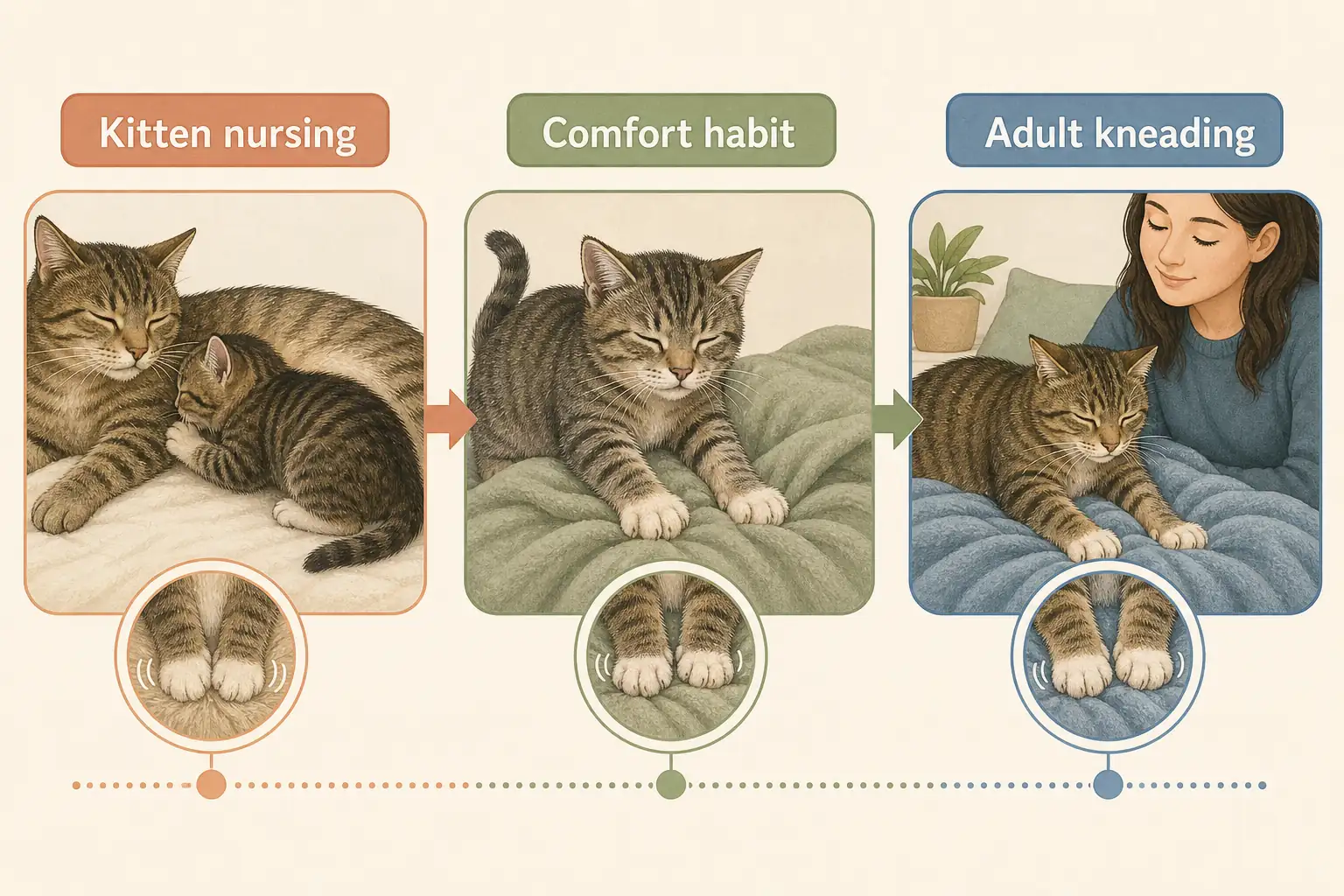
Cats knead by rhythmically pressing their front paws against a soft surface. The behavior begins when kittens knead during nursing and often continues into adulthood as a familiar comfort or settling habit. Kneading is usually normal when your cat looks relaxed and acts normally; sudden changes, pain, or paw injury deserve closer attention.
Kneading does not prove one specific emotion. Use the cat’s whole body, the situation, and any changes in routine to understand what it may mean.
Table of Contents
- What does cat kneading look like?
- Why do cats knead blankets and people?
- Does kneading mean my cat loves me?
- Is my cat’s kneading normal or concerning?
- Why does my cat knead me with claws?
- How should I respond when my cat kneads?
- When should I call a vet about kneading?
- What should I track if kneading suddenly changes?
- Conclusion
- Frequently Asked Questions
- References
What does cat kneading look like?
Cat kneading is a slow, repeated pressing motion in which the front paws alternate against a blanket, bed, lap, or other soft surface. Some cats purr, settle down, or gently flex their claws while doing it.
Common variations include:
- kneading with both front paws
- alternating one paw and then the other
- kneading before lying down
- purring, drooling, or appearing sleepy
- kneading a favorite blanket, bed, clothing, or person
- extending claws as each paw presses down
The behavior is sometimes called “making biscuits.” Most kneading episodes are ordinary when the cat has a loose body, neutral ears, soft eyes, and freedom to stop or move away.
Why do cats knead blankets and people?
Adult kneading is commonly understood as a behavior that begins during nursing and continues because the motion and setting feel familiar or comforting. Cats may also knead while settling into a preferred resting place or during calm social contact.
| Situation | What may be happening | What to notice |
|---|---|---|
| Kneading a soft blanket before sleep | Settling into a comfortable resting place | Loose body and normal routine |
| Kneading a person’s lap | Warmth, familiarity, comfort, or social contact | Cat approaches and leaves voluntarily |
| Kneading while purring | Often a relaxed context | Purring alone does not prove comfort |
| Kneading after a change or stressful event | Possible self-soothing or return to routine | Whether other stress or health changes are present |
| Kneading one unusual surface repeatedly | Preference or learned habit | Whether fabric is being chewed or swallowed |
The AAFP/ISFM environmental needs guidelines emphasize giving cats safe places, predictable positive interaction, and choices in social contact.1 Those principles fit kneading well: let the cat choose the surface and leave when finished.
Does kneading mean my cat loves me?
Kneading you can be part of a trusting, comfortable relationship, but it is not a direct test of love. Your lap may be warm, soft, familiar, and associated with calm attention.
A relaxed social kneading episode may include:
- voluntarily approaching you
- a loose body and neutral ears
- soft eyes or slow blinking
- settling comfortably afterward
- leaving without being restrained
Cats show connection in different ways. A cat who never kneads may still seek company, greet you, sleep nearby, rub against you, or choose gentle play. The SnuggleSouls guide to why cats become cuddly explains why affection should be read through the cat’s individual style.
Is my cat’s kneading normal or concerning?
Kneading is usually normal when it is familiar, relaxed, and not causing injury. It deserves closer attention when it changes suddenly, appears painful, damages the paws or skin, or occurs with broader behavior or health changes.
| What you notice | Usually more reassuring | More concerning |
|---|---|---|
| Pattern | Familiar routine before rest or cuddling | Sudden new behavior or major increase |
| Body posture | Loose body, soft eyes, neutral ears | Tense posture, flattened ears, repeated stopping |
| Paws | Uses both paws comfortably | Favors one paw, limps, licks, or reacts to touch |
| Surface | Kneads and settles | Chews or swallows fabric |
| Routine | Normal appetite, grooming, play, movement, and litter box use | Hiding, appetite change, poor grooming, pain, or reduced activity |
| Social context | Approaches and leaves voluntarily | Seems unable to settle or becomes distressed |
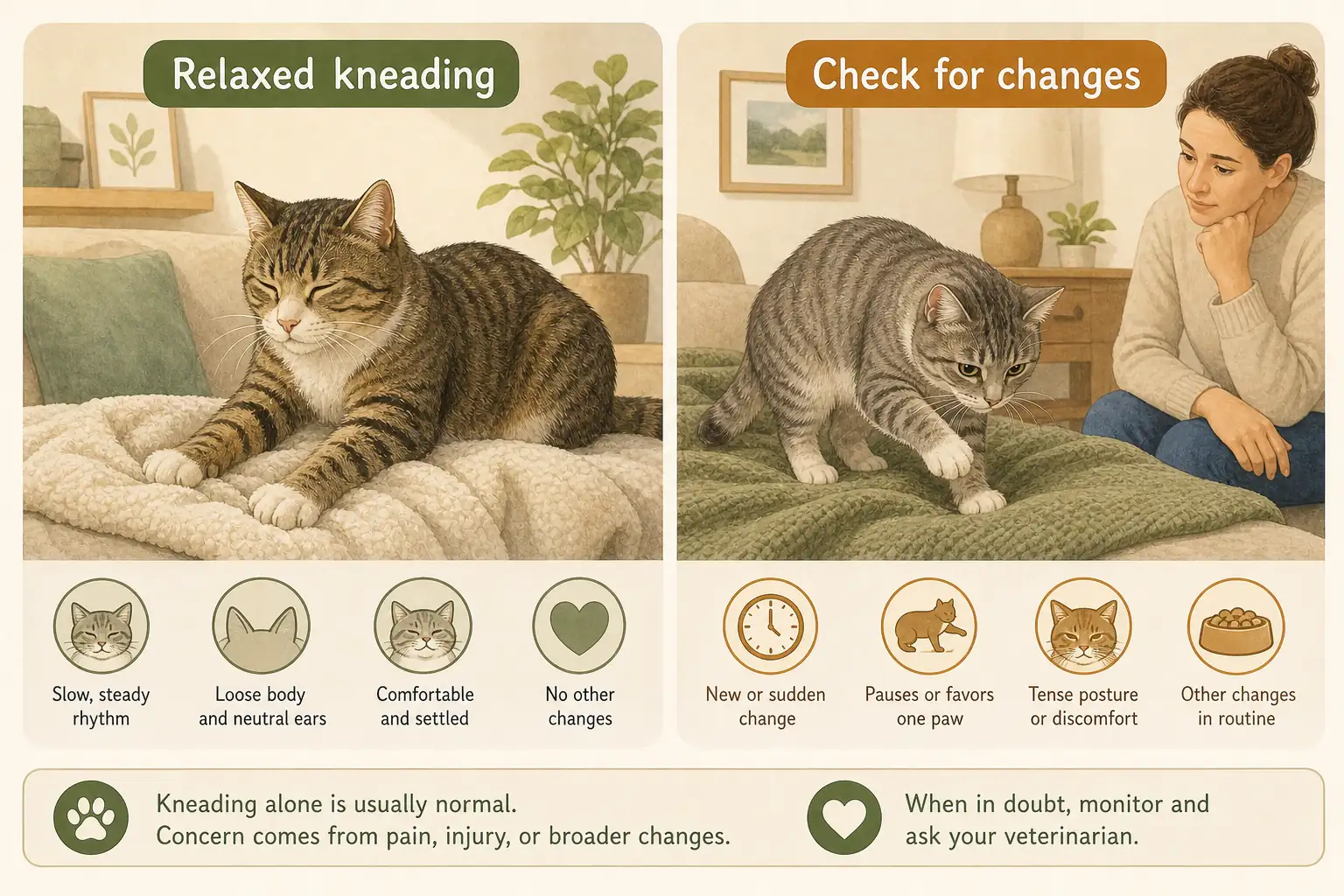
Read the whole cat instead of focusing on the paws alone. Cats Protection recommends interpreting posture, ears, eyes, tail, and context together.2 The SnuggleSouls cat tail language guide can help you describe accompanying body language.
Why does my cat knead me with claws?
Cats may extend and retract their claws naturally during the kneading motion. The claws are not necessarily an act of aggression, but they can still hurt or damage fabric.
Do not shout, push the cat away roughly, hit the paws, or punish the behavior. Instead:
- place a thick folded blanket between the cat and your skin
- keep a preferred soft kneading blanket nearby
- calmly stand or shift if you need the interaction to end
- redirect the cat to the blanket without grabbing the paws
- keep nails maintained using a method your cat tolerates
- ask a veterinarian or groomer for help if nail trimming is difficult
Never declaw a cat to stop kneading. If a claw appears torn, embedded, swollen, or painful, contact your veterinarian.
How should I respond when my cat kneads?
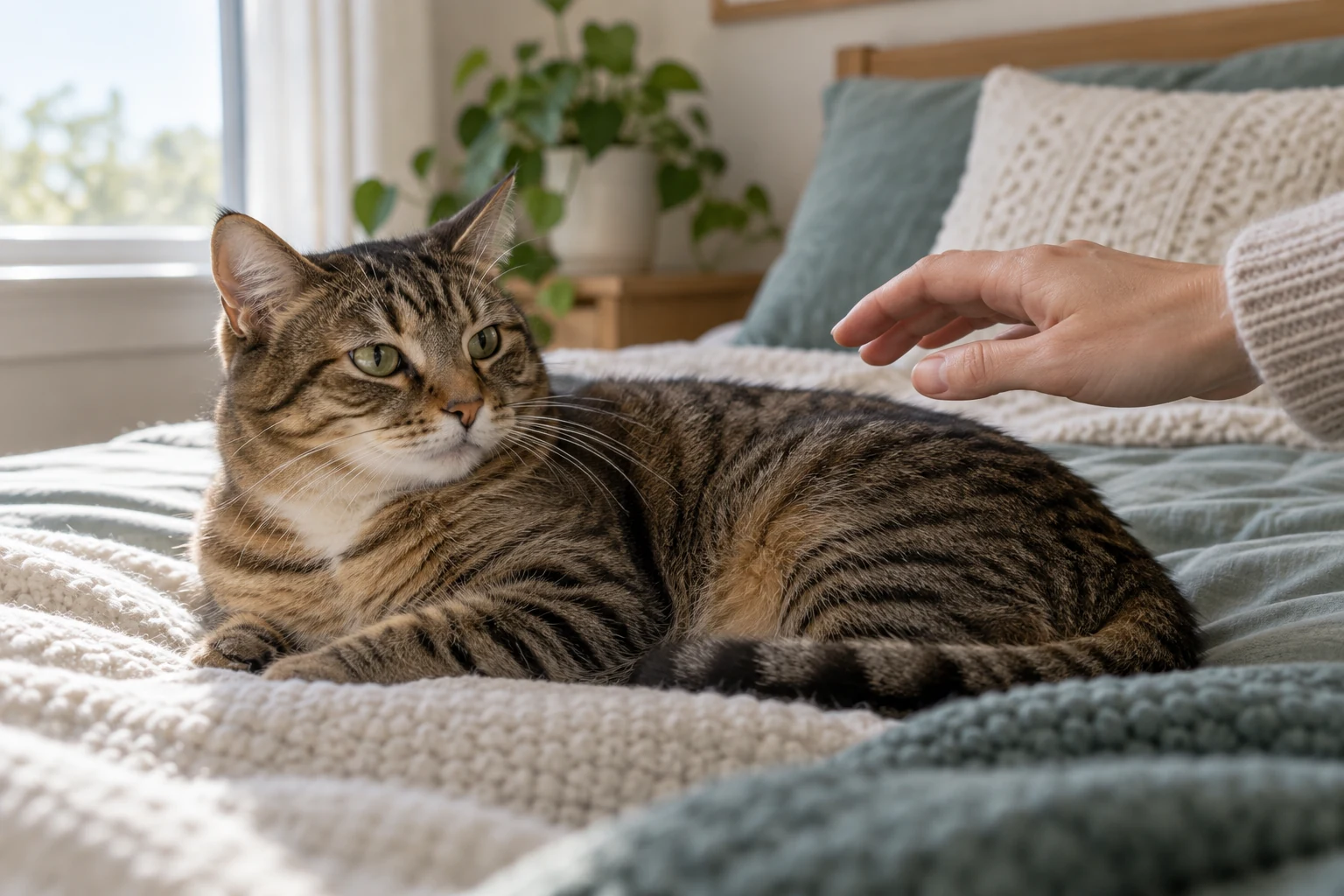
Let relaxed kneading continue when it is comfortable for both of you, while protecting your skin and giving the cat an easy alternative surface. Keep the interaction voluntary.
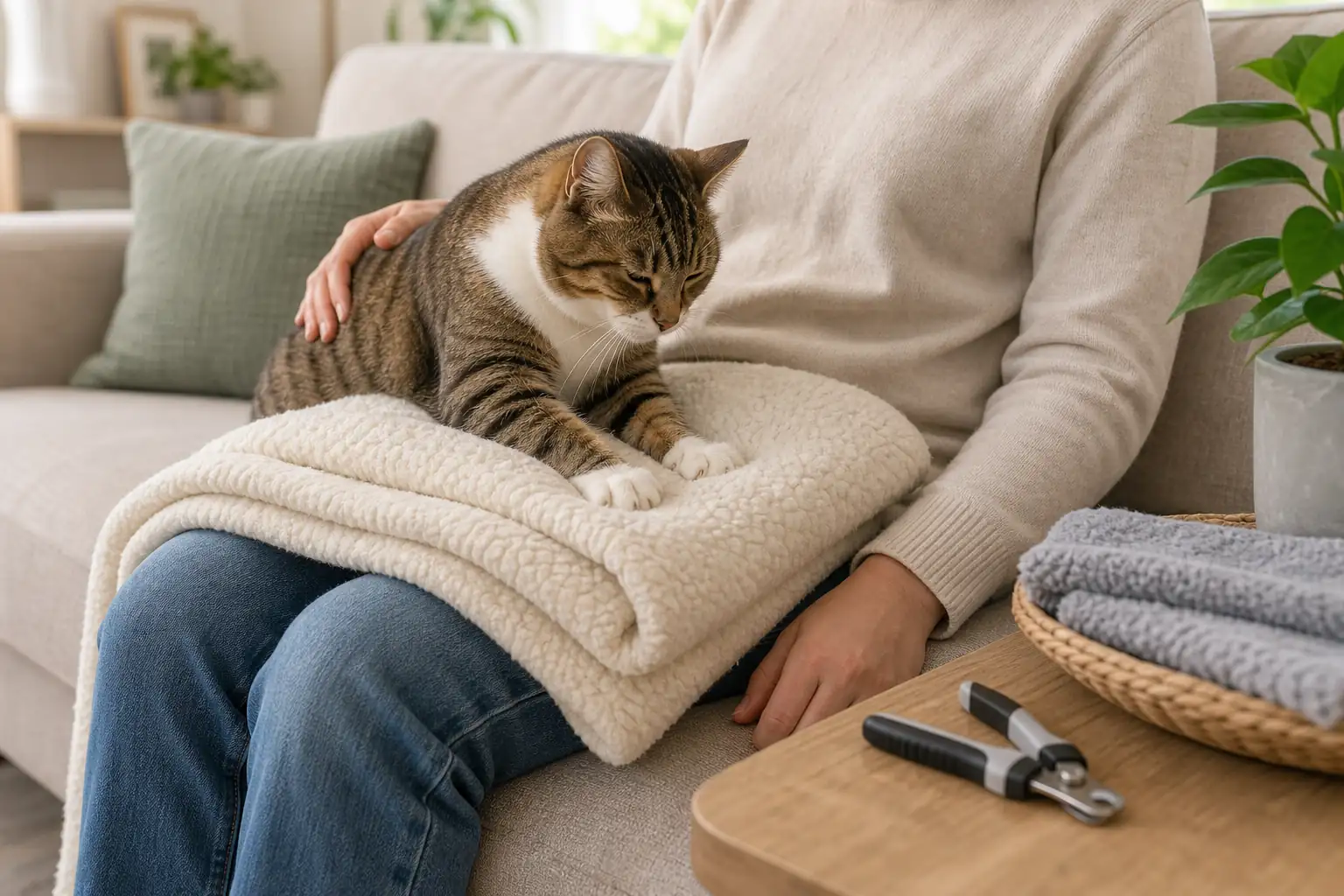
Use this low-pressure approach:
- Check that the cat’s body looks loose and comfortable.
- Place a thick blanket under the paws before claws become uncomfortable.
- Pause petting if the cat becomes tense or overstimulated.
- Let the cat move away without holding or repositioning them.
- Offer a separate soft bed or blanket as a predictable kneading spot.
- Keep the surface free from loose threads that could be swallowed.
If petting during kneading ends in a nip, the cat may be overstimulated or simply finished. Stop sooner, give space, and use the SnuggleSouls cat behavior guides for related low-pressure support.
When should I call a vet about kneading?
Call your veterinarian when kneading changes suddenly or appears alongside paw pain, limping, skin damage, fabric swallowing, distress, or another meaningful behavior change. Kneading itself is rarely the medical problem; the surrounding changes are what matter.
Call promptly if your cat:
- favors one paw or stops placing weight on it
- repeatedly licks, bites, or guards a paw
- has a torn claw, swelling, bleeding, discharge, or visible injury
- chews or swallows blanket fibers
- begins kneading compulsively and cannot settle
- hides, eats less, moves differently, or reacts painfully to touch
- shows a sudden major personality change
VCA notes that cats may hide illness and that appetite, grooming, movement, hiding, and behavior changes can provide important clues.3 If kneading is paired with unusual skin sensitivity, twitching, or frantic biting, the feline hyperesthesia guide explains why veterinary assessment is important.
What should I track if kneading suddenly changes?
Track when kneading happens, what surface is involved, how the cat’s body looks, and what else changed. A short video can help a veterinarian compare ordinary kneading with pain, skin sensitivity, or repetitive behavior.
Record:
- when the change began
- frequency and duration
- whether one paw is favored
- the surface or social situation
- body posture, ears, eyes, tail, and vocalization
- licking, chewing, limping, or paw sensitivity
- appetite, sleep, grooming, play, and litter box changes
- recent household changes or stressful events
Do not repeatedly handle a painful paw to investigate it yourself. Record what you can observe safely and contact the clinic.
Conclusion
Cats usually knead because a familiar kitten behavior has continued into adulthood as a comfort, settling, or social routine. It is generally normal when the cat looks relaxed, uses the paws comfortably, and follows their usual daily routine.
Protect your lap with a thick blanket, redirect gently when needed, and keep the interaction voluntary. Call your veterinarian when kneading suddenly changes, one paw appears painful, fabric is swallowed, or the behavior occurs with broader health or behavior changes.
Frequently Asked Questions
Why do cats knead their owners?
Your lap may feel warm, soft, safe, and familiar. Kneading you can occur during comfortable social contact, but it does not prove one specific emotion.
Why does my cat knead and purr?
Many cats purr and knead while settling comfortably. Read the whole body because cats can also purr in other contexts. Loose posture and normal behavior afterward are reassuring.
Why does my cat knead before lying down?
Kneading may be part of a familiar settling routine. The repeated paw motion often occurs on a preferred soft sleeping surface before the cat rests.
Why does my cat knead me but not other people?
Your scent, routine, lap, blanket, or interaction style may be especially familiar. Cats often develop specific comfort routines with particular people or surfaces.
Should I stop my cat from kneading?
Usually no. If claws hurt, place a thick blanket under the paws or calmly redirect to another soft surface. Do not punish or forcibly hold the paws.
Why does my cat bite a blanket while kneading?
Some cats mouth fabric as part of a comfort routine. Contact your veterinarian if the cat chews off or swallows fibers, damages the mouth, or the behavior becomes intense or sudden.
Is excessive kneading a sign of anxiety?
Not necessarily. A change in kneading may occur during stress, but it does not diagnose anxiety. Look for broader routine, body-language, or health changes and seek guidance if the pattern becomes distressing.
References
[1] Ellis, S. L. H., et al. AAFP and ISFM Feline Environmental Needs Guidelines.
[2] Cats Protection. Cat Body Language.
[3] VCA Animal Hospitals. Recognizing Signs of Illness in Cats.
 Why Does My Cat Flinch When Touched While Sleeping? Startle, Trust, and Pain Clues">
 Cat Scratching Baseboards: Trim Guards and Route Fixes">
 EN
EN DE
DE ES
ES PT
PT