
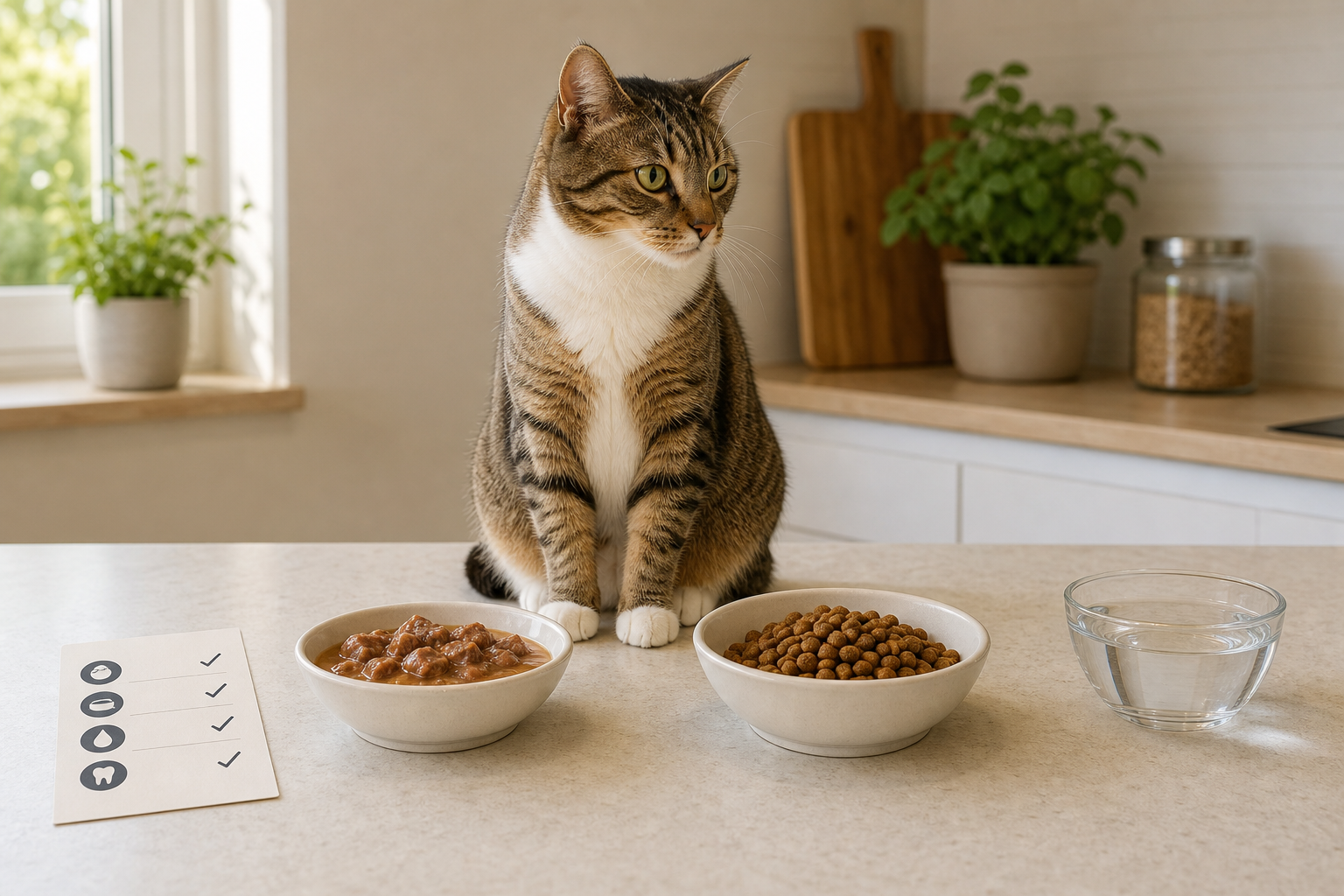
Do cats need wet food? Not every healthy cat requires wet food, provided their diet is complete and balanced for their life stage and they stay well hydrated. In comparing wet food vs. dry food for cats, wet food adds dietary water while dry kibble offers storage convenience and easy portioning—and mixed feeding works well when total daily calories are measured.
This comparison covers moisture, calorie density, cost, storage, dental care, and feeding routines. A diagnosed condition or sudden change in appetite, weight, or chewing needs a veterinarian's advice rather than a food-format guess.
Table of Contents
- What are the real differences between wet and dry cat food?
- When is wet cat food usually the better choice?
- When is dry cat food usually the better choice?
- Is mixed feeding a good compromise?
- How do you switch without overfeeding?
- What safety details matter with wet food?
- How should you choose between wet and dry food for your cat?
- When should a veterinarian guide the choice?
- Conclusion: Wet vs dry cat food is about fit, not a universal winner
- Frequently Asked Questions
- References
What are the real differences between wet and dry cat food?
The biggest practical differences in cat dry vs. wet food are moisture, calories per gram, storage, texture, and feeding flexibility. Both formats can provide complete and balanced nutrition when the label matches your cat's life stage 1 2.
Cornell reports that dry food typically contains 6–10% water and canned food at least 75% 1. Cats eating dry food usually drink more from a bowl, while water in food also contributes to total intake 5. In a 2026 comparison of 22 healthy cats fed dry, mixed, and wet diets, dry-fed cats drank the most bowl water, but wet-fed cats had the highest total water intake after food moisture was counted 6. The study followed a small group over short feeding periods; it does not show that every cat eating dry food is dehydrated.
Because food moisture dilutes calories per gram, wet food often has lower as-fed calorie density; the calories in a can, pouch, or serving still vary by product. Compare the label's calories with the amount your cat eats, rather than comparing bowl size alone 7. Dry food is convenient to store, measure, and use in automatic or puzzle feeders 7.
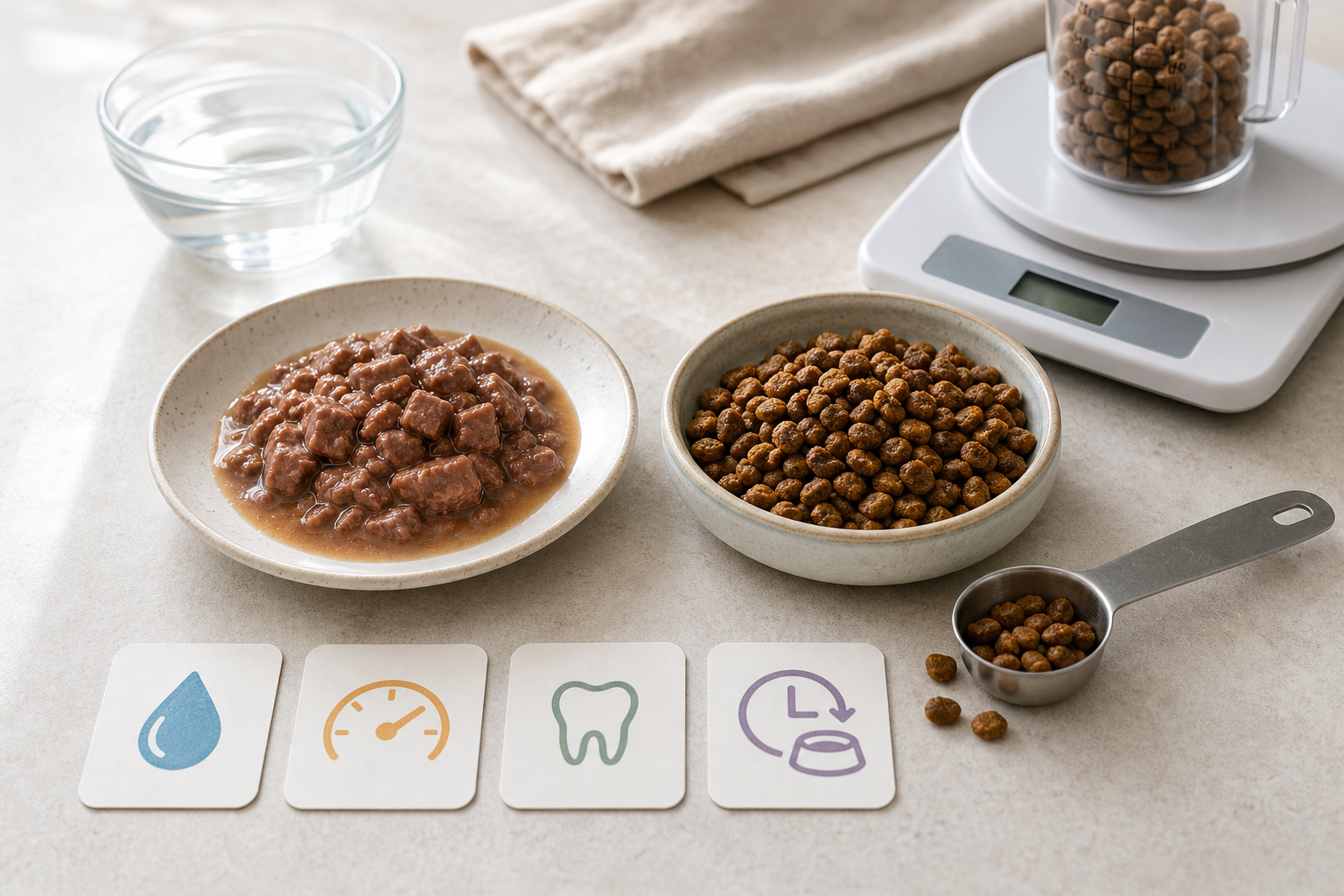
| Factor | Wet cat food | Dry cat food | What it means for you |
|---|---|---|---|
| Moisture | Usually high | Usually low | Wet food supplies more water in the meal; keep fresh water available with either format. |
| Calories per gram | Often lower because of water | Often more concentrated | Check calories in the actual portion, not how full the bowl looks. |
| Storage | Refrigerate after opening | Easier pantry storage | Wet food requires stronger food-safety habits. |
| Feeding routine | Best for meals | Works for meals, puzzles, or timed feeders | Dry food is convenient for long workdays. |
| Palatability | Often very appealing | Varies by cat | Picky cats may prefer one texture strongly. |
| Cost | Often costs more per calorie | Often costs less per calorie | Compare the daily cost of the amount your cat actually needs 7. |
For the nutrition-label checks that apply to either format, read SnuggleSouls' guide to choosing healthy cat food. For meal timing by age, use our cat feeding schedule by age.
When is wet cat food usually the better choice?
Wet food can be a practical fit when you want to add water through meals, your cat prefers its texture, or your household finds measured canned meals easier to serve. It is not automatically healthier than dry food, and a wet label does not guarantee a product fits a medical need.
Wet food contains substantial water and can raise total water intake 5 6. If you are wondering can I feed my cat wet food only, the answer is yes for most healthy cats—as long as the canned or pouch formula states it is complete and balanced for your cat's life stage and you feed enough cans to meet daily calorie needs. A veterinarian may also include a higher-moisture diet in a plan for some urinary or kidney conditions, though ordinary wet food is not a treatment for those diseases 3 7.
Wet food's higher water content usually means fewer calories per gram, so a cat may eat a larger-looking portion for the same calories 7. That does not make wet food a weight-loss treatment; the full daily calorie amount still matters. If a cat suddenly eats less, drops food, drools, or seems painful while chewing, contact a veterinarian rather than relying on a texture change 10.
Choose wet food by the same label standards as dry food. Look for a nutritional adequacy statement that says it is complete and balanced for your cat's life stage 2 4. For a wet-food buying checklist, see choosing the right wet food for your cat.
For more detail on the moisture trade-off and when it may matter, read benefits of wet food for cats.
When is dry cat food usually the better choice?
Dry food can fit households that need convenient storage, automatic feeders, puzzle feeding, or a lower cost per calorie. A dry diet can provide complete nutrition when it is suitable for the cat's life stage and fed in a measured amount 1 7.
Dry food is calorie-concentrated by weight, so a small-looking amount can provide many calories. Measure the full daily ration instead of topping up a bowl without tracking it; adjust portions based on body condition and veterinary guidance 1.
Dry food may suit a cat that prefers crunchy texture or grazes from a measured daily serving. If a cat prefers softer texture temporarily, you can moisten hard kibble with a splash of warm water just before serving—just discard uneaten moistened kibble within 1–2 hours so it does not spoil. A healthy cat that eats reliably and maintains an appropriate body condition does not need to switch formats solely because wet food is popular.
Ordinary hard kibble is not a substitute for dental care. Some specific diets and products have earned Veterinary Oral Health Council acceptance for plaque or tartar claims; check the current VOHC accepted-products list and ask your veterinarian what suits your cat 8. If your cat has bad breath, red gums, drooling, or painful chewing, get a dental assessment instead of relying on food texture 10.
Is mixed feeding a good compromise?
Mixed feeding—combining wet and dry cat food—can fit a routine that uses wet meals alongside a measured dry portion for a puzzle or timed feeder. There is no standard wet-to-dry ratio; count calories from both foods and treats within one daily plan.
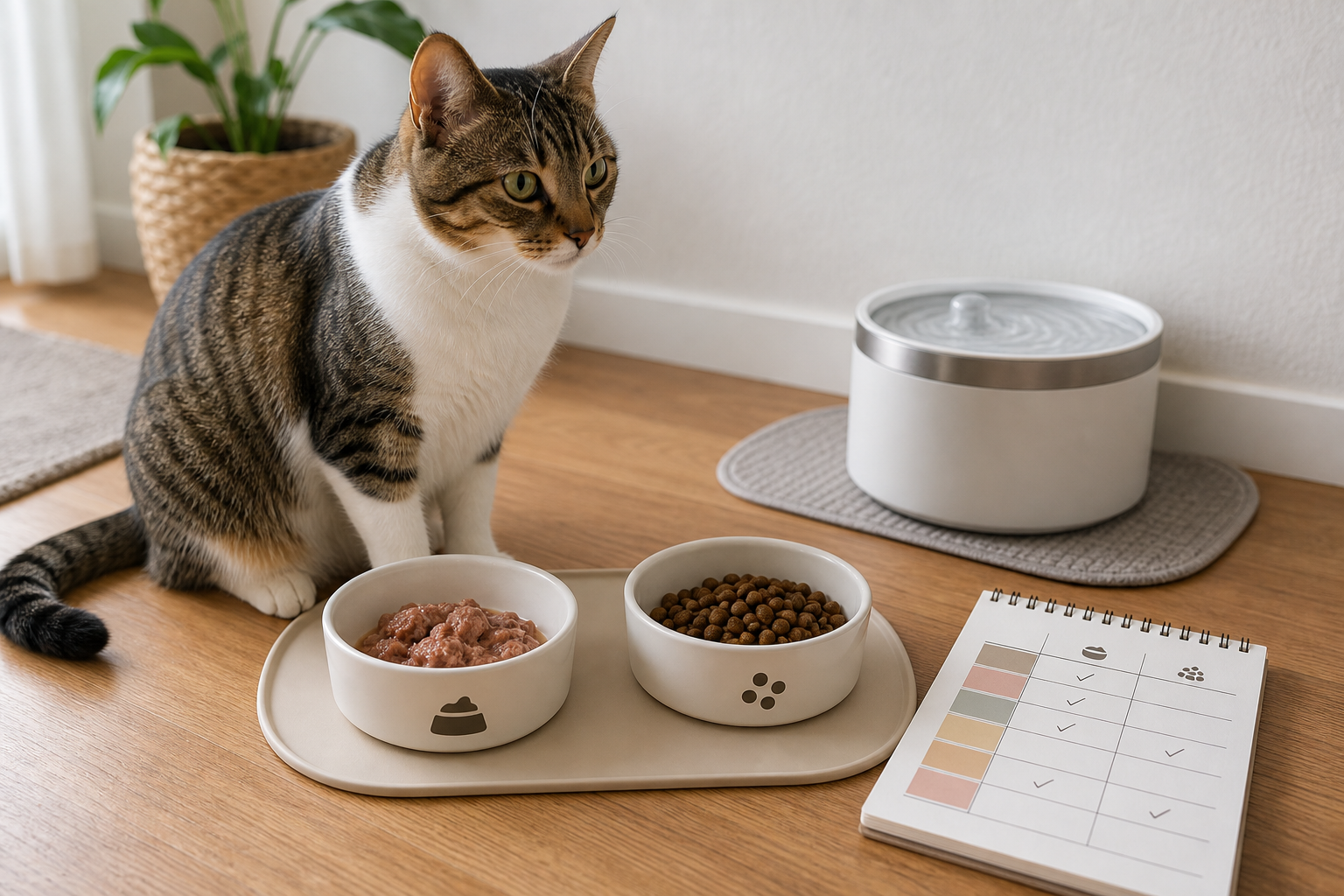
Introduce a new texture gradually rather than replacing every meal at once. If your cat refuses the food, vomits, develops persistent diarrhea, or eats much less, pause the change and contact your veterinarian.
For the calorie math and meal examples, use SnuggleSouls' guide to mixing wet and dry cat food or calculate exact split portions in our Wet & Dry Cat Food Calculator. For meal timing, read how often to feed cat wet food.
How do you switch without overfeeding?
Switch by calories, not by bowl volume. If wet food is added without reducing the dry-food amount, the combined calories may exceed your cat's daily needs.
Check calories per can, pouch, cup, or gram. Use a veterinarian's target when your cat has a medical condition; otherwise, SnuggleSouls' Cat Calorie Calculator can provide a starting estimate. Track body condition as well as scale weight with the Cat Body Condition Score & Weight Tracker 1.
Use this simple calculation:
| Step | What to do | Why it matters |
|---|---|---|
| 1 | Set a daily calorie target with your veterinarian or a reliable starting estimate. | Needs differ by age, activity, body condition, and health. |
| 2 | Subtract calories from wet food and treats from that target. | This gives the remaining budget for dry food. |
| 3 | Measure the remaining dry portion using the product's kcal per cup or gram. | Scoops and can sizes differ between products. |
| 4 | Introduce a new texture gradually and monitor appetite, stool, and weight. | Slow down and ask your vet if your cat refuses food or develops ongoing vomiting or diarrhea. |
For a worked wet-and-dry example, see how to mix wet and dry cat food. For can or pouch conversions, use how much wet food to feed a cat.
Veterinary nutrition guidance matters when a cat has a medical condition or needs a therapeutic diet; ask the veterinary team before changing formats 3.
What safety details matter with wet food?
Cover and refrigerate opened wet food, follow the package's storage window, and remove uneaten food rather than leaving it out for hours 7. For detailed handling steps, see SnuggleSouls' wet cat food storage guide.
A small storage aid for canned food
If you choose wet food, a reusable can cover can help store an opened can between meals. Refrigerate and use leftovers according to the package guidance; the cover does not determine how long food remains safe.
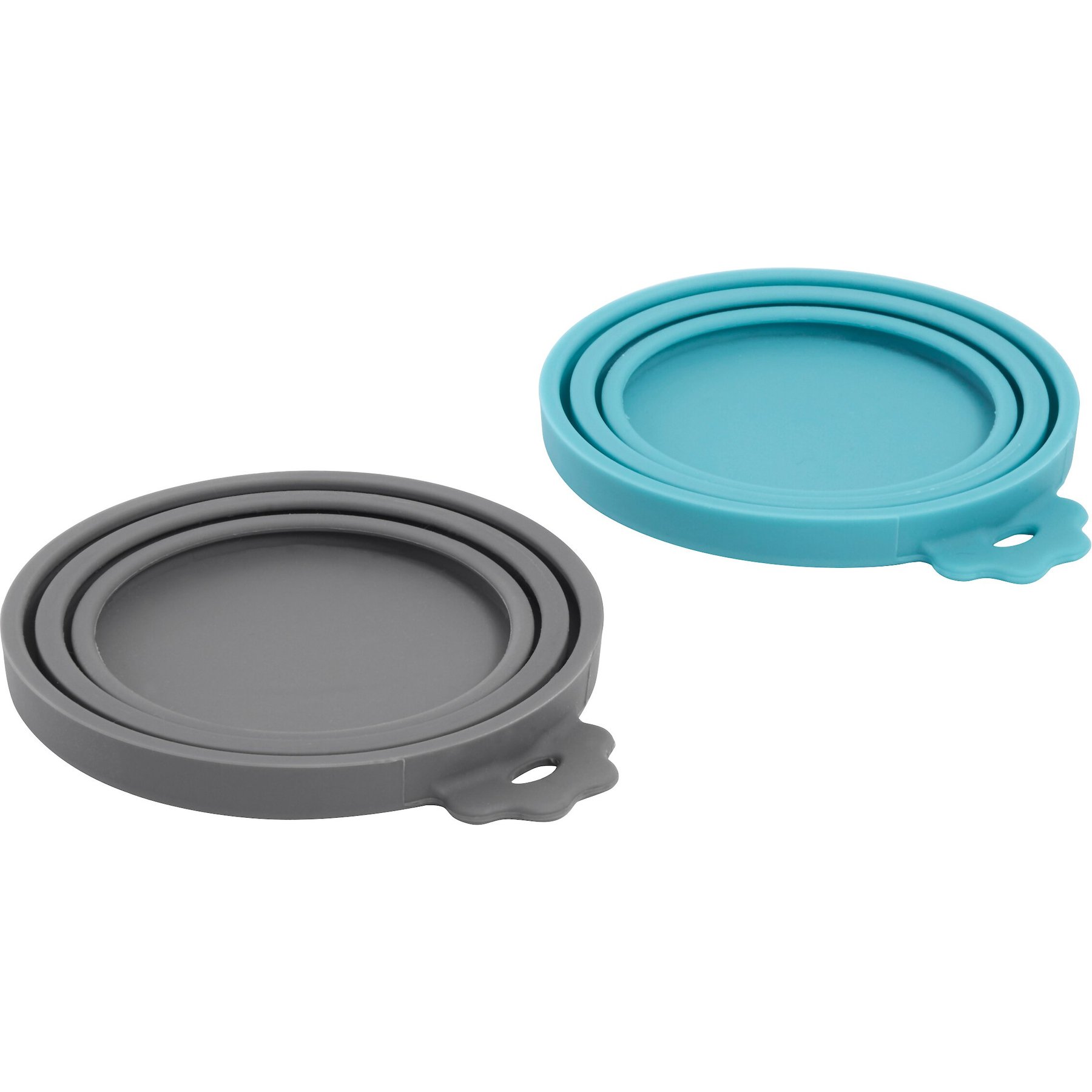
Frisco
Frisco Silicone Pet Food Can Cover, 2 Pack
Frisco Silicone Pet Food Can Cover, 2 Pack; Put a lid on it (in a good way) with the Frisco Silicone Pet Food Can…
$4.99
Shop ChewyWe may earn a commission if you buy through this Chewy link, at no extra cost to you. Product details and prices can change.
How should you choose between wet and dry food for your cat?
Choose the format that fits your cat's nutrition needs and your household routine. Wet food adds dietary moisture; dry food is convenient and more calorie-dense by weight; either can fit if the diet is complete and balanced and the portion is measured.
Use this decision checklist:
| Your cat's situation | Better starting point | Why |
|---|---|---|
| You want to add moisture to a healthy cat's meals | Wet or mixed feeding, if accepted | Water in food contributes to total intake; keep fresh drinking water available. |
| Urinary, kidney, diabetes, or other diagnosed disease | Follow the veterinarian's diet plan | The right formula and format depend on the diagnosis 3 9. |
| Weight gain or a weight-loss plan | Measure calories in either format | Wet food is not automatically a weight-loss diet; avoid sharp calorie cuts. |
| Long workdays or timed feeding needs | Dry or mixed feeding | More practical for feeders and puzzles. |
| Cat prefers a particular texture | Choose the complete food the cat reliably eats | A sudden appetite change still needs veterinary attention. |
| Dental pain or difficulty chewing | Ask a veterinarian; a softer texture may help temporarily | Food texture does not treat dental disease. |
| Multi-cat home with food stealing | Meal-fed wet, measured dry, or microchip feeders | Prevents one cat from eating everyone else's food. |
| Tight budget | Compare daily cost for the measured amount | Keep adequacy and calorie needs in view, not just package price. |
For either format, check four basics: complete-and-balanced status, correct life stage, measured calories, and your cat's body condition. Then adjust with veterinary guidance if the cat's weight, appetite, or health changes.
When should a veterinarian guide the choice?
Ask your veterinarian before changing food for a growing kitten, a pregnant or nursing cat, a senior cat with an appetite or weight change, or any cat with a diagnosed condition or prescribed diet 1 3.
Contact a veterinarian promptly if a cat stops eating, loses weight unexpectedly, vomits repeatedly, has persistent diarrhea, or shows pain while chewing. Straining to urinate, repeated litter-box trips, or passing little or no urine can signal lower urinary tract disease; passing little or no urine is an emergency 9 10. A switch between wet and dry food does not diagnose or treat these signs.
Conclusion: Wet vs dry cat food is about fit, not a universal winner
Wet, dry, and mixed feeding can all work for a healthy cat when the food is complete and balanced for its life stage and the daily amount fits its needs. Wet food adds water through meals; dry food can be easier to store and use in feeders. Neither format guarantees weight control, dental health, or treatment of disease. Compare the label and calories, choose a routine your cat accepts, and ask a veterinarian to guide changes for kittens, pregnancy, nursing, illness, or concerning symptoms.
Frequently Asked Questions
Do cats need wet food, or can I feed wet food only?
Healthy cats do not strictly require wet food if they eat a complete and balanced dry diet and drink enough water, though wet food makes boosting daily moisture much easier. You can also feed wet food only, provided every can or pouch carries an AAFCO complete-and-balanced statement for your cat's life stage and meets daily calorie targets. 1 2
Is wet food better than dry food for cats?
Neither format is universally better. Wet food provides more water in the meal; dry food is more convenient for some homes. Either can fit if it is complete and balanced for the cat's life stage and calories are measured. Ask a veterinarian about a diagnosed health condition 1 5.
Can cats live on dry food only?
Many healthy cats can eat a complete and balanced dry food as their main diet. Keep fresh water available and monitor appetite and body condition. A cat with urinary, kidney, or other health concerns may need an individualized plan; the format alone does not determine the right diet 1 3.
Is it okay to mix wet and dry cat food?
Yes. Divide the daily calorie target between both foods and treats instead of feeding a full ration of each. For examples, see how to mix wet and dry cat food.
Does wet food help cats drink more water?
Wet food contributes water through the meal, while cats eating dry food usually drink more from a bowl. In a 2026 comparison, cats on wet food had the highest total water intake, but the small study does not predict each cat's response 5 6. Keep fresh water available with either format.
Does dry food clean cats' teeth?
Regular dry kibble should not be treated as dental care. Some specific products have earned VOHC acceptance for plaque or tartar claims; ask your veterinarian about dental care if you notice bad breath, red gums, drooling, or painful chewing 8 10.
How many times a day should I feed wet food?
Many cats do well with two or more wet meals per day, but the best schedule depends on total calories, appetite, and your household routine. If you use mixed feeding, reserve part of the daily calories for dry food rather than adding it freely. See how often to feed cat wet food for schedule options.
References
[1] Cornell Feline Health Center. (2026). Feeding Your Cat. Cornell Feline Health Center
[2] U.S. Food and Drug Administration. (2024). "Complete and Balanced" Pet Food. FDA
[3] WSAVA Global Nutrition Committee. (2021). Guidelines on Selecting Pet Foods. WSAVA
[4] Association of American Feed Control Officials. (2026). Reading Labels. AAFCO
[5] Cornell Feline Health Center. (2026). Hydration. Cornell Feline Health Center
[6] van Diggelen RA, Gillies GJ, Shoveller AK, Banton S, and Kosmal PAL. (2026). Water intake and consumption behavior of colony and privately-owned healthy domestic cats fed 100% dry, 50% dry and 50% wet, and 100% wet diets. PubMed
[7] VCA Animal Hospitals. (2026). Dry, Canned, or Semi-Moist: Food Choices for Cats. VCA Animal Hospitals
[8] Veterinary Oral Health Council. (2026). Accepted Products. VOHC
[9] Cornell Feline Health Center. (2026). Feline Lower Urinary Tract Disease. Cornell Feline Health Center
[10] Cornell Feline Health Center. (2026). Anorexia. Cornell Feline Health Center