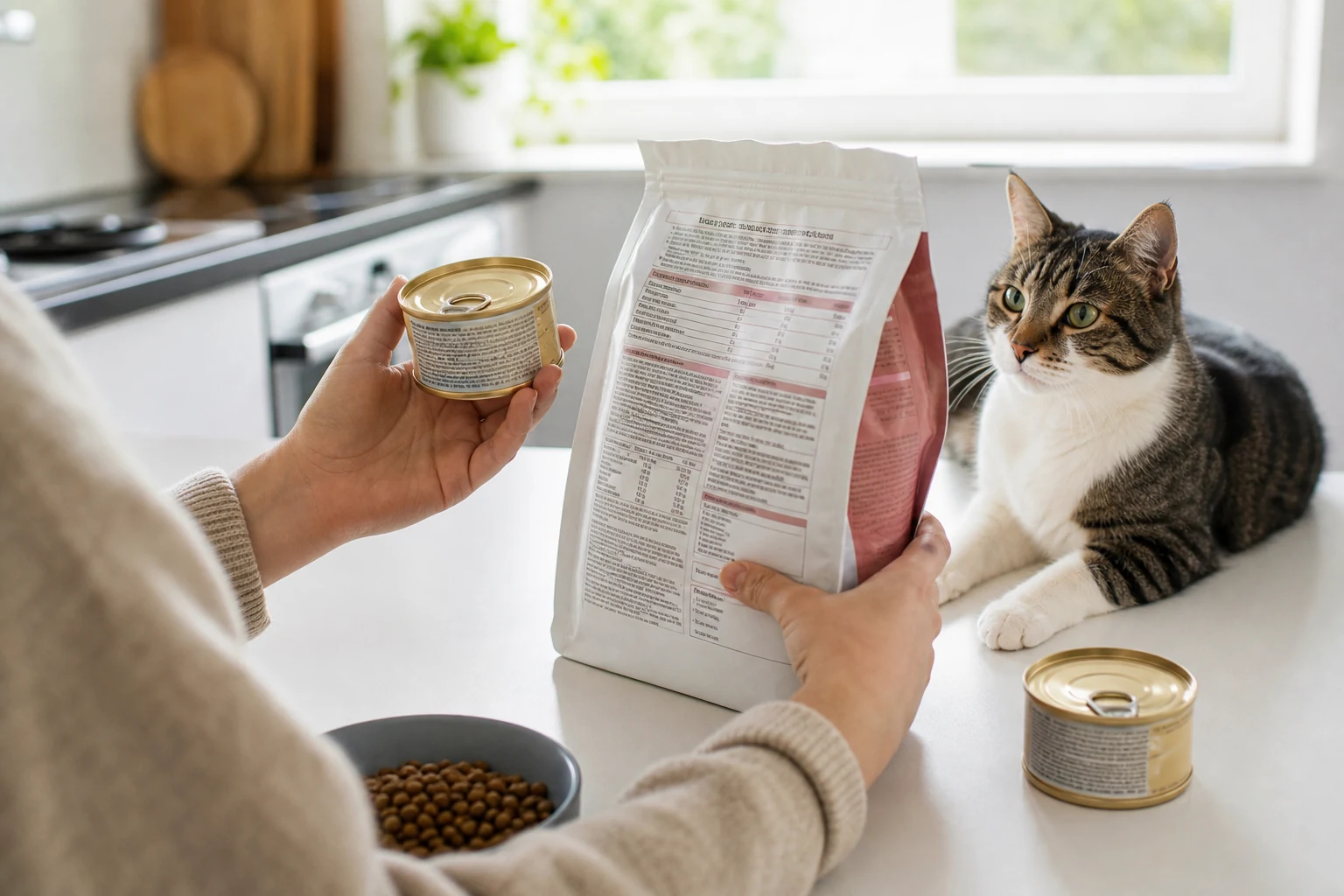
Low Carb Cat Food: Benefits, Label Checks, and Vet Tips
Low carb cat food can help some cats, especially diabetic cats, but it should fit calorie control, complete nutrition, and veterinary guidance.

A practical route from package to bowl
Start with the food label, turn a suitable daily calorie target into portions you can measure, then build a routine you can review.
✦Use your cat’s actual food packaging and recent measurements. This guide connects the right calculator with the care question that comes next.
Each step answers one practical question. The tools can pass compatible details forward, so you do not need to restart from scratch.
Find “Calorie Content” or “Metabolizable Energy (ME)” and keep the number with its unit. For a can or pouch, note its net weight too; for kcal per cup, the food’s grams per cup help convert a portion to weight.
Start with the label you have; the guide explains where common calorie units appear.
Use a recent measured weight and the profile that best fits your cat, or enter a calorie target from your veterinarian. The calculator gives a starting estimate for healthy cats; it does not prescribe a target for a medical or weight-change plan.
Not sure how to describe body condition? You can leave it unscored and read the guide before choosing.
Use the target with the calorie values from your packages to plan wet food, dry food, or a mix. A 50/50 setting means equal calories from each food—not equal grams or bowl volume. Optional price fields estimate food used and pack purchases.
The Cat Calorie Calculator can pass its target and compatible label details to the wet-and-dry calculator from the result controls.
Pick a meal rhythm your household can repeat, then use the calculator’s per-meal amounts instead of serving a full wet portion and a full dry portion together. Age and routine affect how a schedule fits; they do not replace the calorie and label math.
A measured routine also makes it easier to notice leftovers, treats, and food changes.
Keep dated weights and optional body-condition observations so you can see a trend rather than judge one meal or measurement. If your routine or your cat’s weight changes, review the feeding target with the context you recorded.
The tracker can open the calorie calculator with your latest recorded weight. A weight trend is useful context, not a diagnosis.
Browse practical answers on food choices, portions, feeding frequency, and everyday cat nutrition.
Explore practical guides for feeding equipment, food transitions, enrichment, and everyday nutrition questions.

Low carb cat food can help some cats, especially diabetic cats, but it should fit calorie control, complete nutrition, and veterinary guidance.
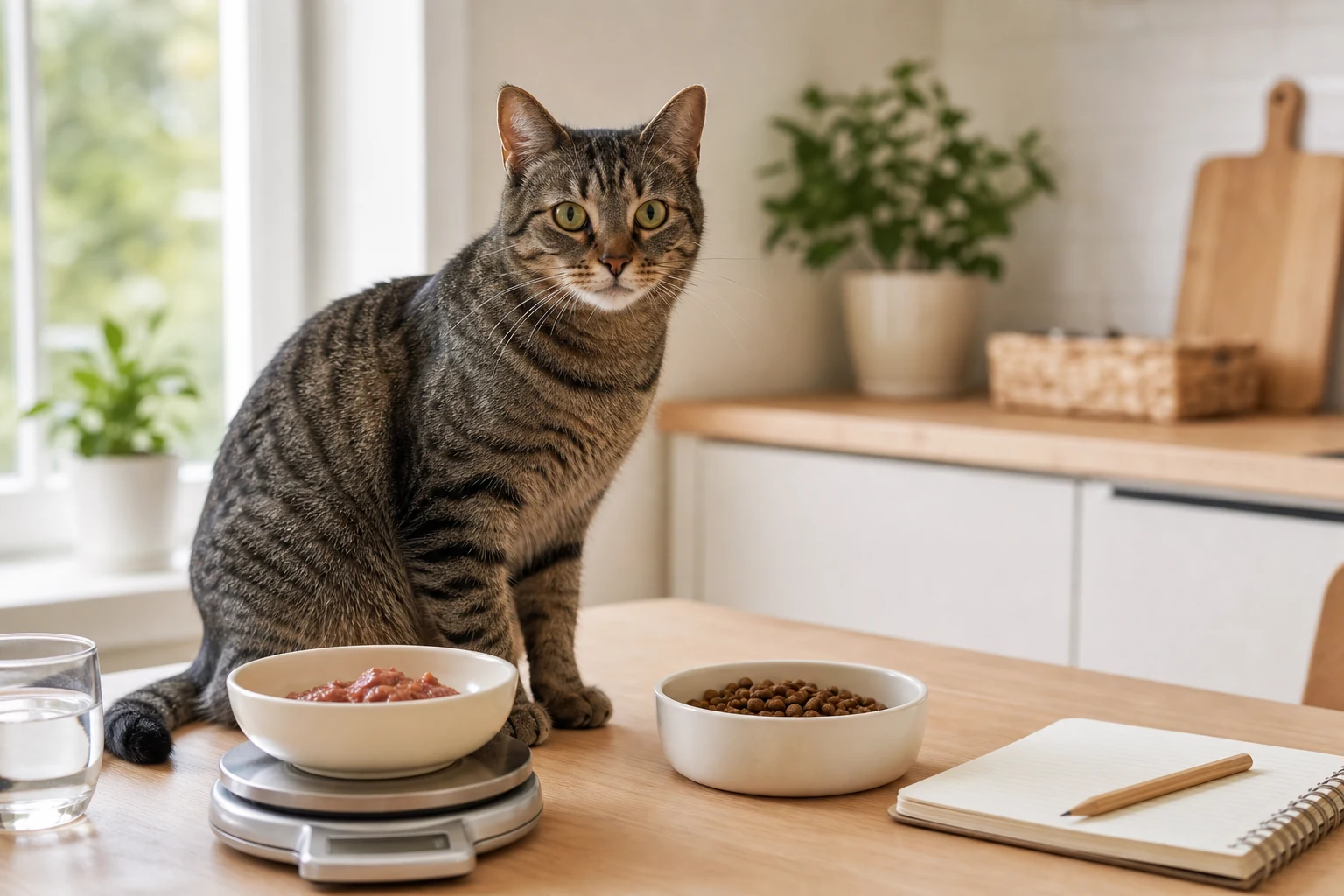
If your indoor cat is gaining weight on mixed feeding, the fix is usually not to quit wet food or dry food. It is to make both formats share one calorie.
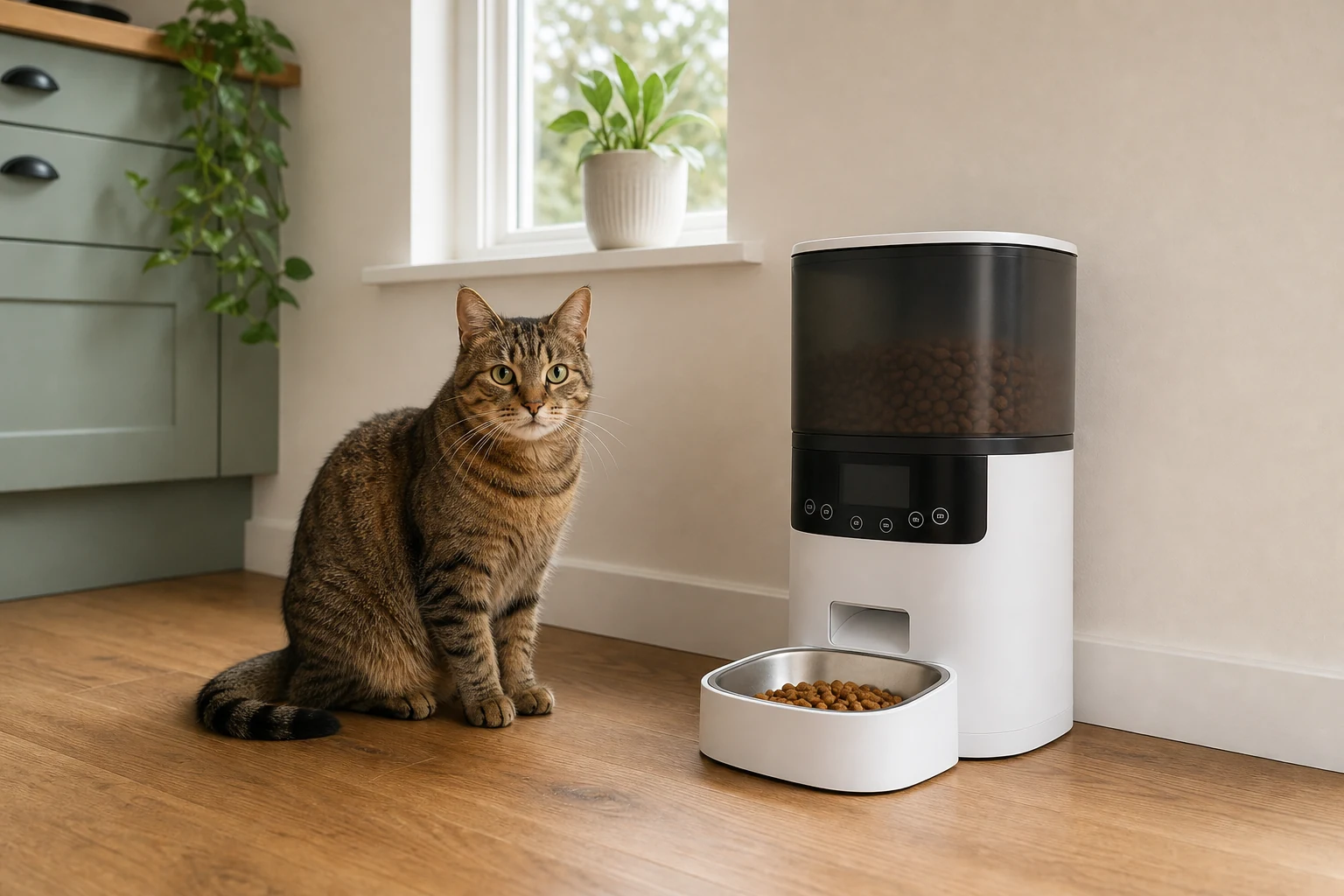
Use a timed feeder to serve measured meals on a consistent schedule. Learn how to set portions, keep food safe, and avoid common multi-cat setup mistakes.
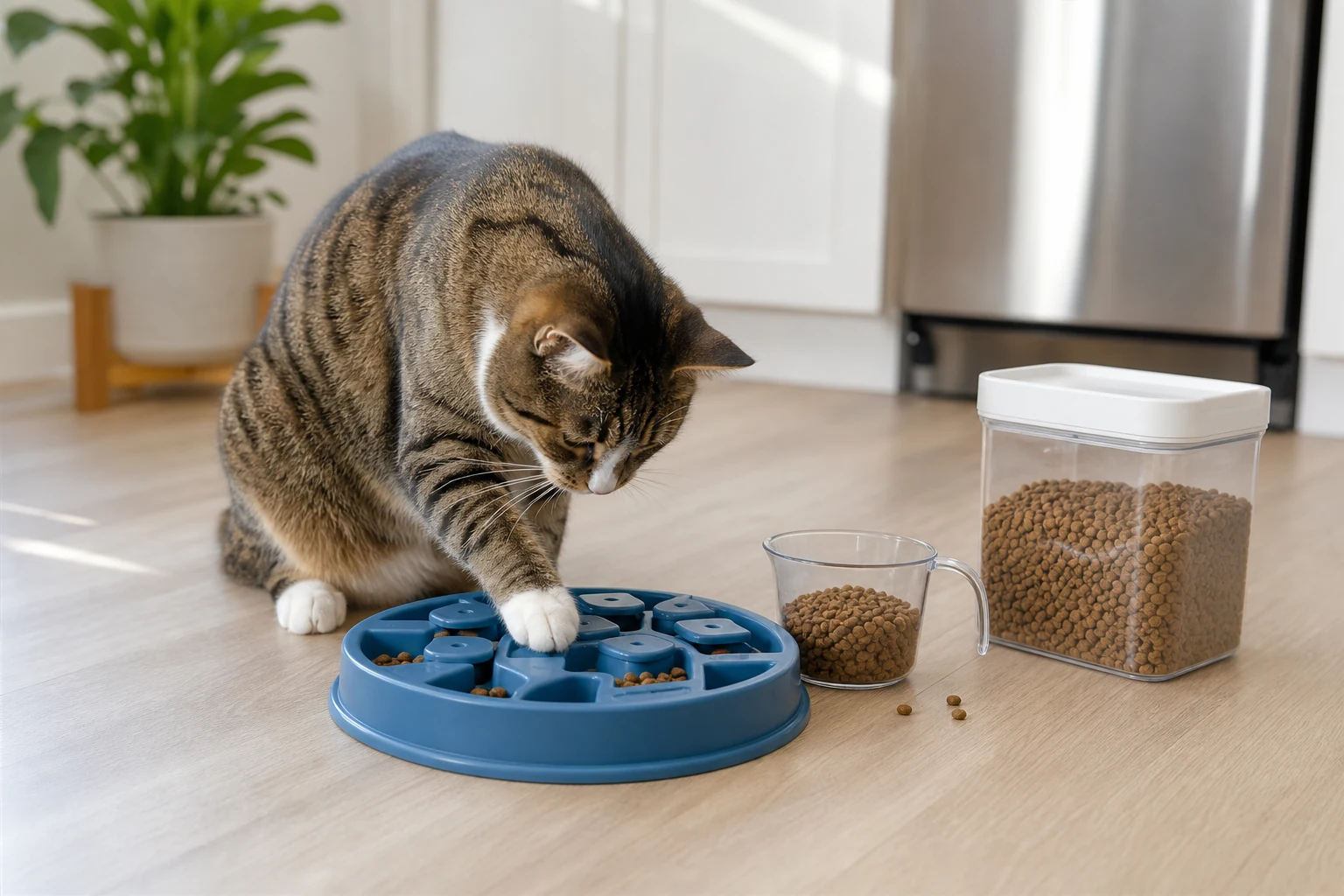
Compare puzzle feeders for cats, choose an easy starting level, protect daily portions, and learn when a food puzzle may frustrate or exclude a cat.

Learn how to read a cat food label: check the nutritional adequacy statement, compare nutrients on a dry-matter basis, and use calories and claims wisely.
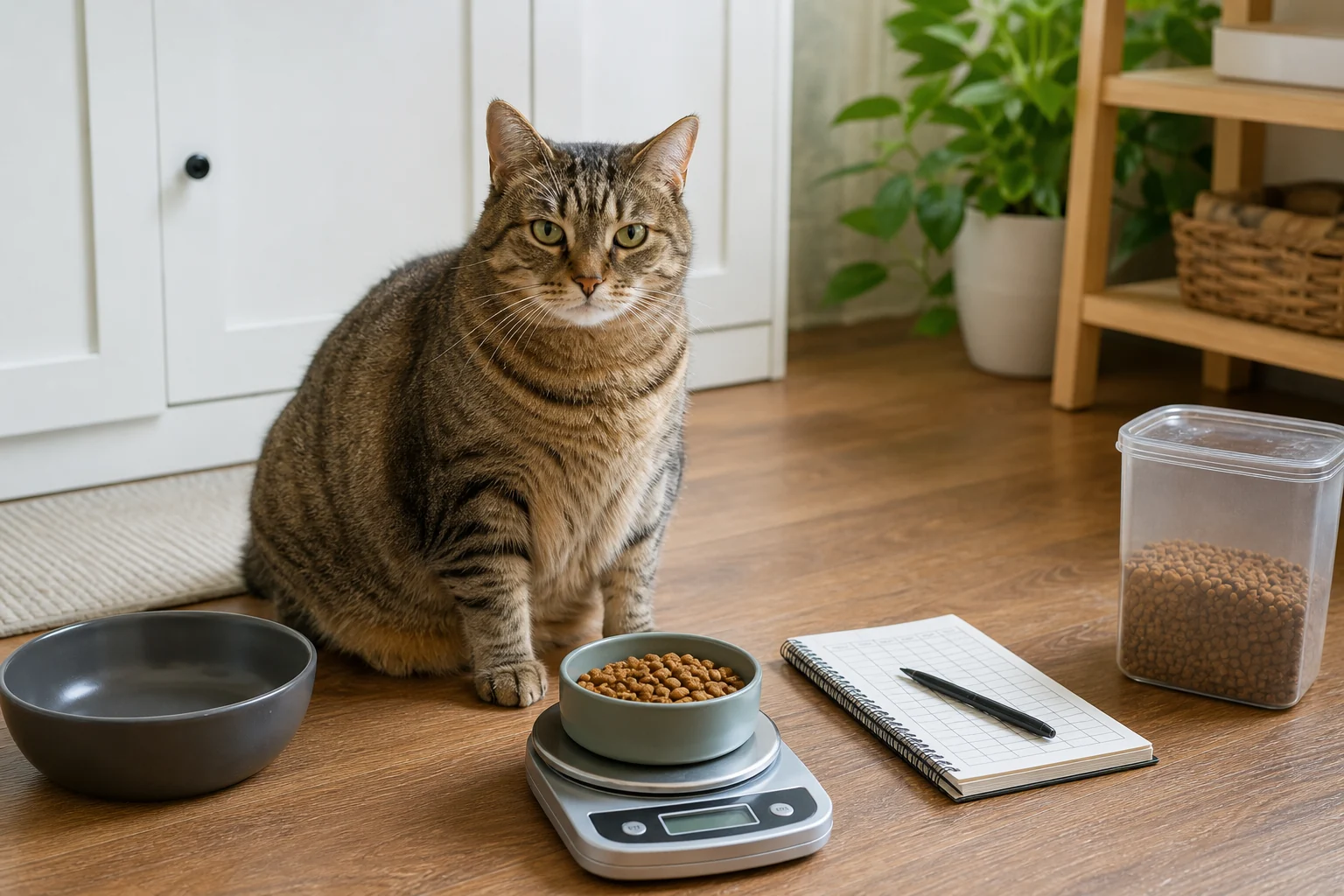
To transition an overweight indoor cat from free feeding to measured meals, start by measuring what your cat already eats, then move gradually toward.
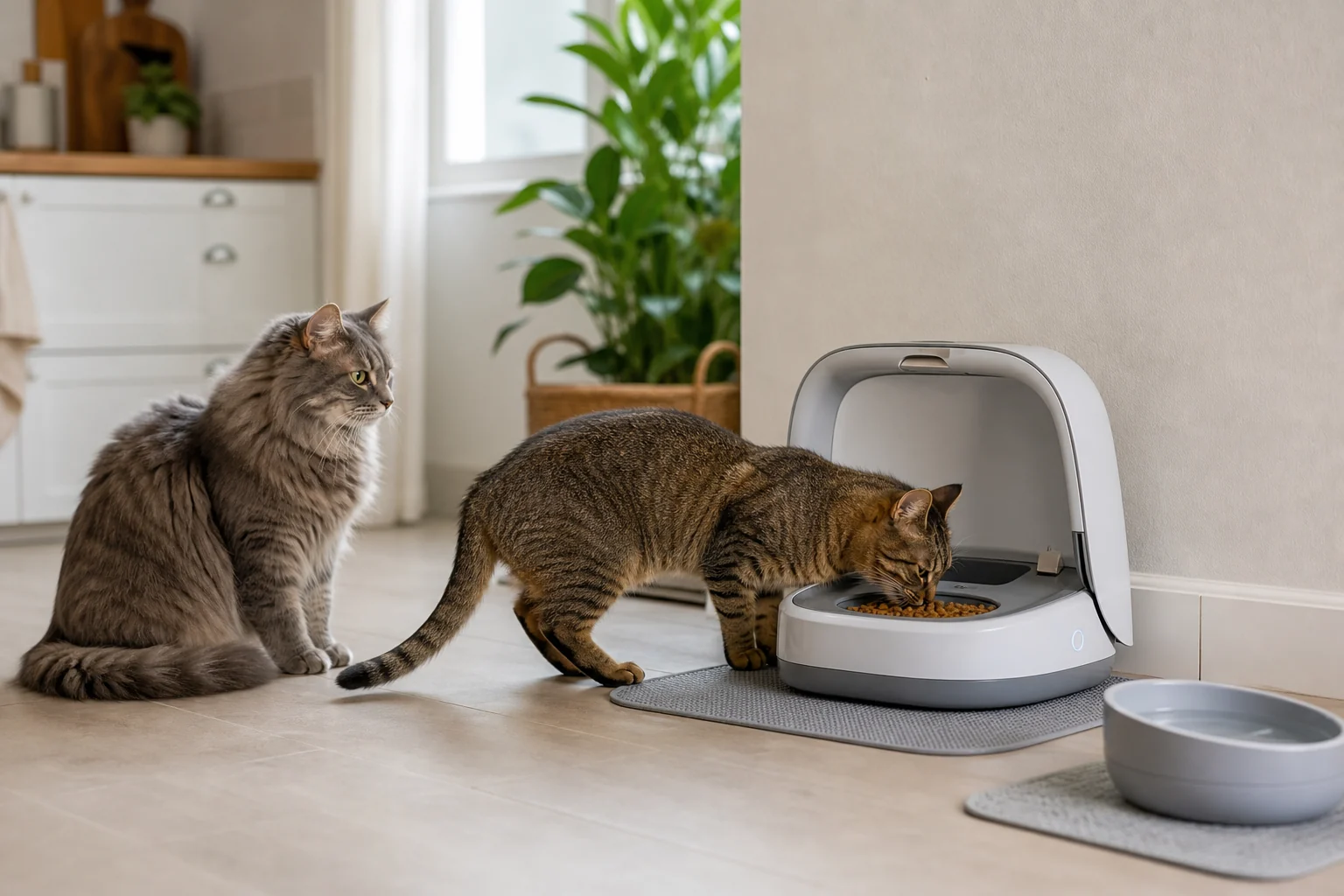
See how microchip cat feeders can separate meals, set measured portions, and support multi-cat homes, plus training and troubleshooting tips.
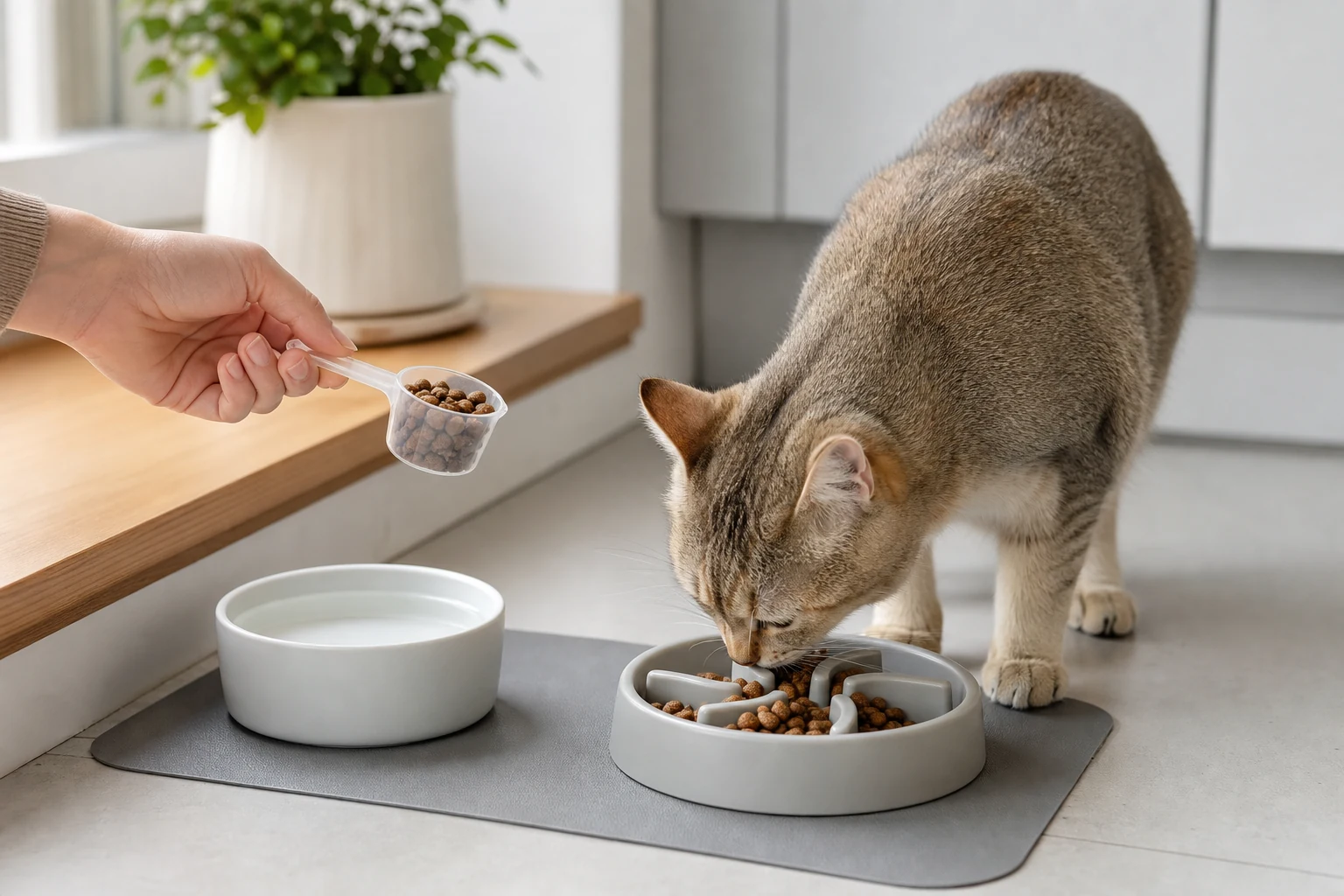
Slow feeder bowls for cats can help some fast eaters take smaller bites and spend longer with a measured meal, but they are not a weight-loss plan by.