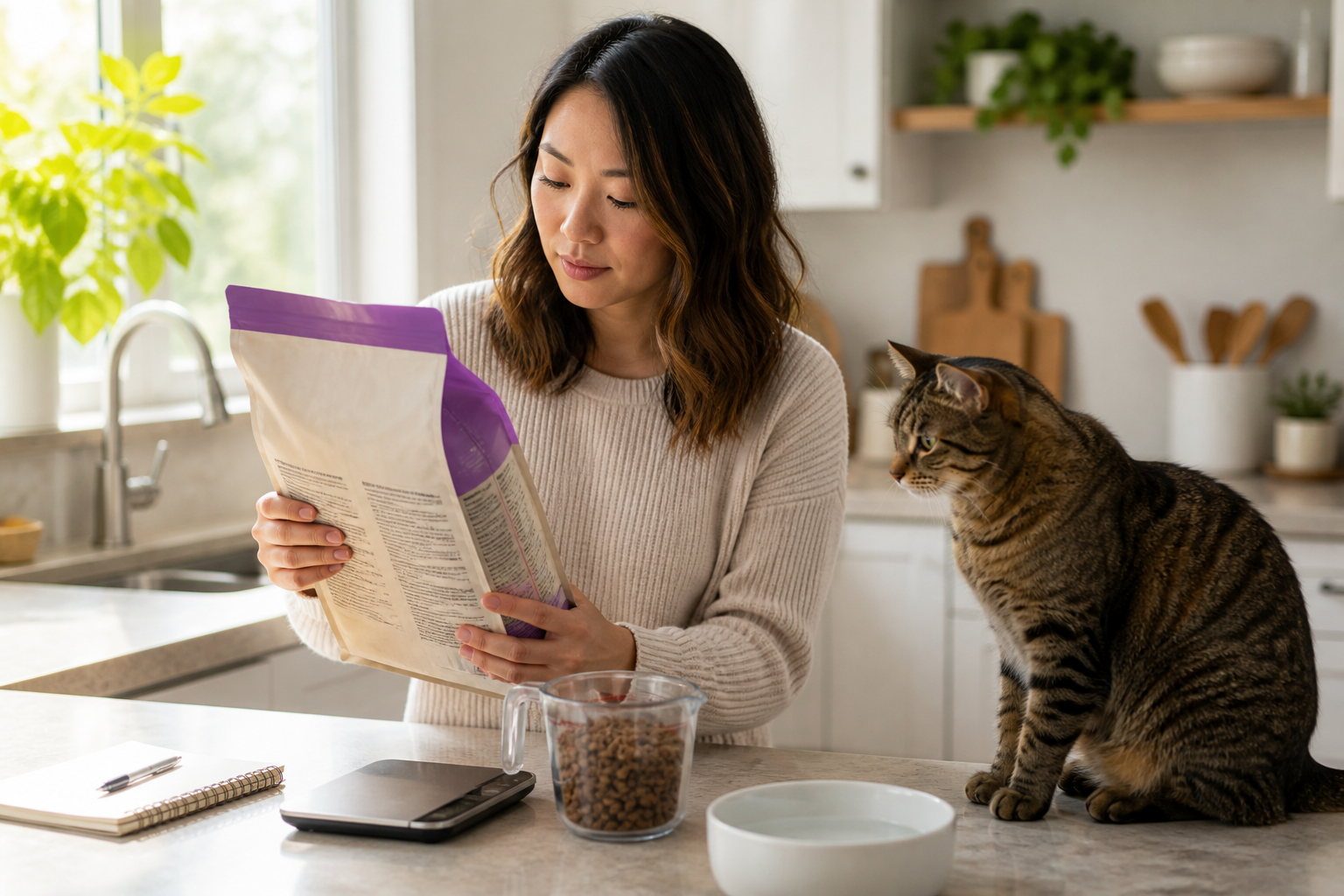
Cat Food Feeding Directions: Package Portions Explained
Cat food feeding directions are a useful starting estimate, but your cat’s calories, body condition, weight trend, and health decide the real portion.

A practical route from package to bowl
Start with the food label, turn a suitable daily calorie target into portions you can measure, then build a routine you can review.
✦Use your cat’s actual food packaging and recent measurements. This guide connects the right calculator with the care question that comes next.
Each step answers one practical question. The tools can pass compatible details forward, so you do not need to restart from scratch.
Find “Calorie Content” or “Metabolizable Energy (ME)” and keep the number with its unit. For a can or pouch, note its net weight too; for kcal per cup, the food’s grams per cup help convert a portion to weight.
Start with the label you have; the guide explains where common calorie units appear.
Use a recent measured weight and the profile that best fits your cat, or enter a calorie target from your veterinarian. The calculator gives a starting estimate for healthy cats; it does not prescribe a target for a medical or weight-change plan.
Not sure how to describe body condition? You can leave it unscored and read the guide before choosing.
Use the target with the calorie values from your packages to plan wet food, dry food, or a mix. A 50/50 setting means equal calories from each food—not equal grams or bowl volume. Optional price fields estimate food used and pack purchases.
The Cat Calorie Calculator can pass its target and compatible label details to the wet-and-dry calculator from the result controls.
Pick a meal rhythm your household can repeat, then use the calculator’s per-meal amounts instead of serving a full wet portion and a full dry portion together. Age and routine affect how a schedule fits; they do not replace the calorie and label math.
A measured routine also makes it easier to notice leftovers, treats, and food changes.
Keep dated weights and optional body-condition observations so you can see a trend rather than judge one meal or measurement. If your routine or your cat’s weight changes, review the feeding target with the context you recorded.
The tracker can open the calorie calculator with your latest recorded weight. A weight trend is useful context, not a diagnosis.
Browse practical answers on food choices, portions, feeding frequency, and everyday cat nutrition.
Explore practical guides for feeding equipment, food transitions, enrichment, and everyday nutrition questions.

Cat food feeding directions are a useful starting estimate, but your cat’s calories, body condition, weight trend, and health decide the real portion.
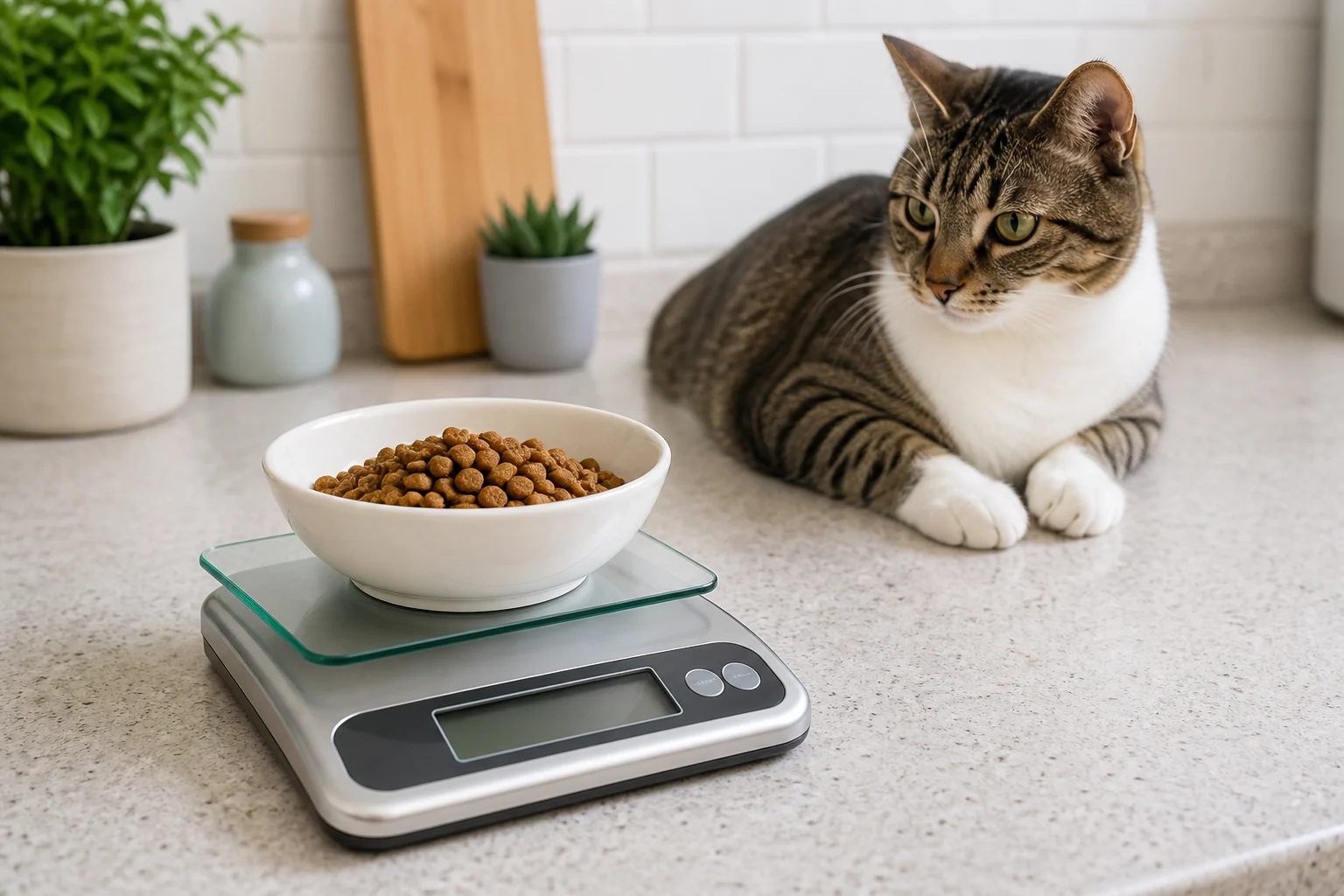
Turn food-label calories into repeatable gram portions, weigh each meal, and keep wet food, dry food, and treats within one daily plan.
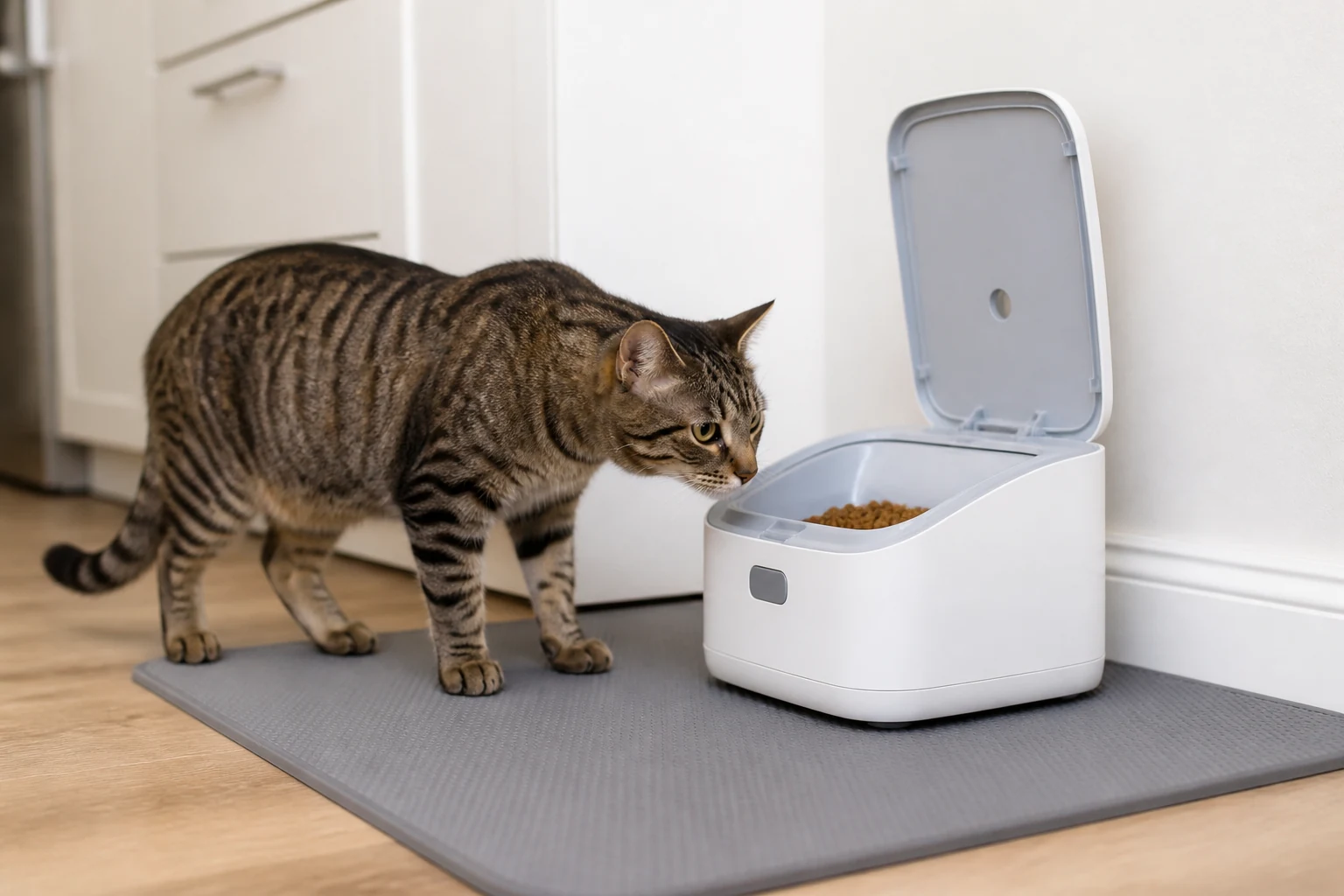
Introduce a microchip feeder to a scared cat by making the feeder boring, open, and predictable before you expect your cat to eat from it. The goal is not.
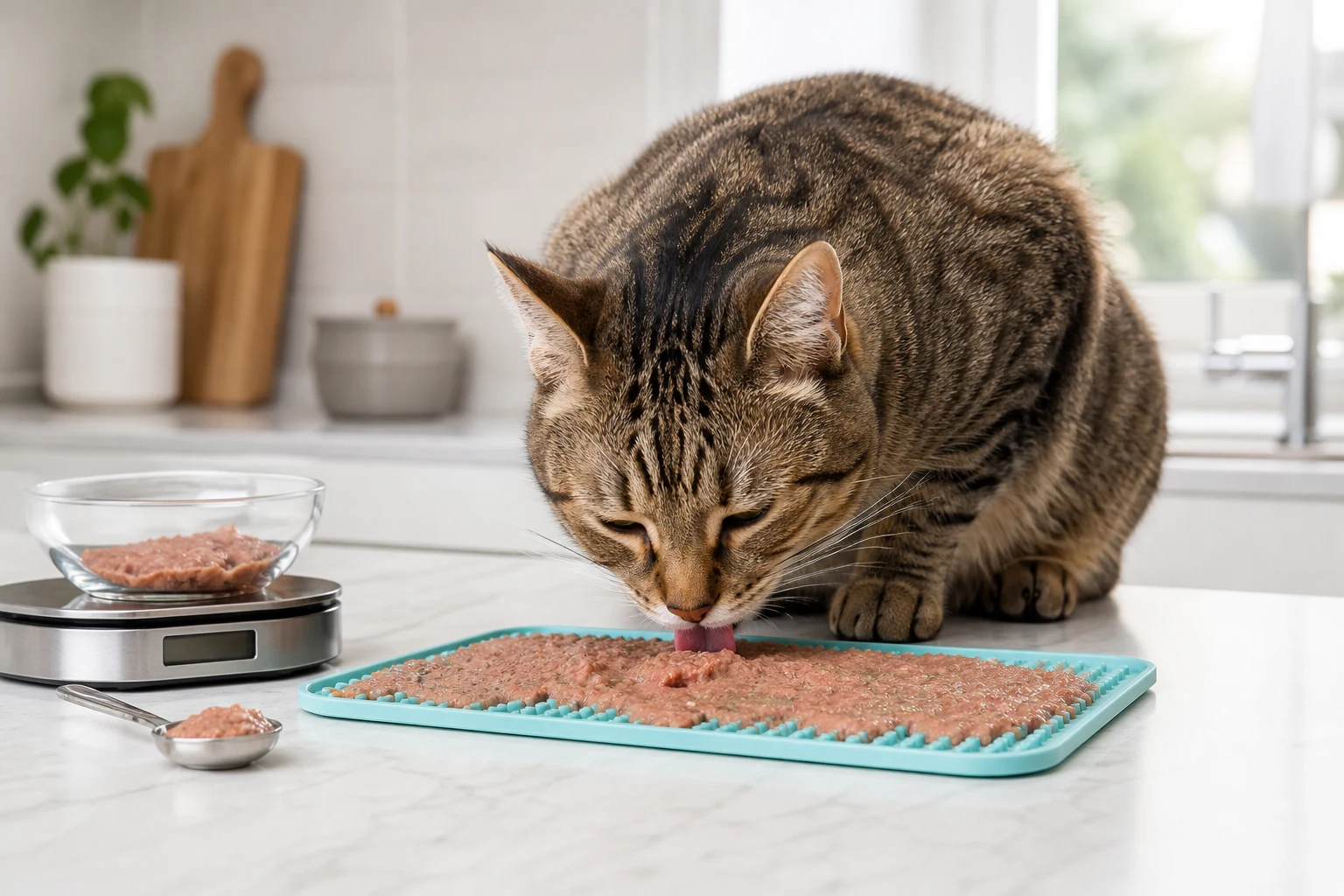
Learn how to use lick mats for cats safely with wet food, measured portions, cleaning tips, enrichment ideas, and warning signs that need a vet.

Compare old and new food calories, calculate the replacement portion, and transition gradually without accidentally stacking servings.
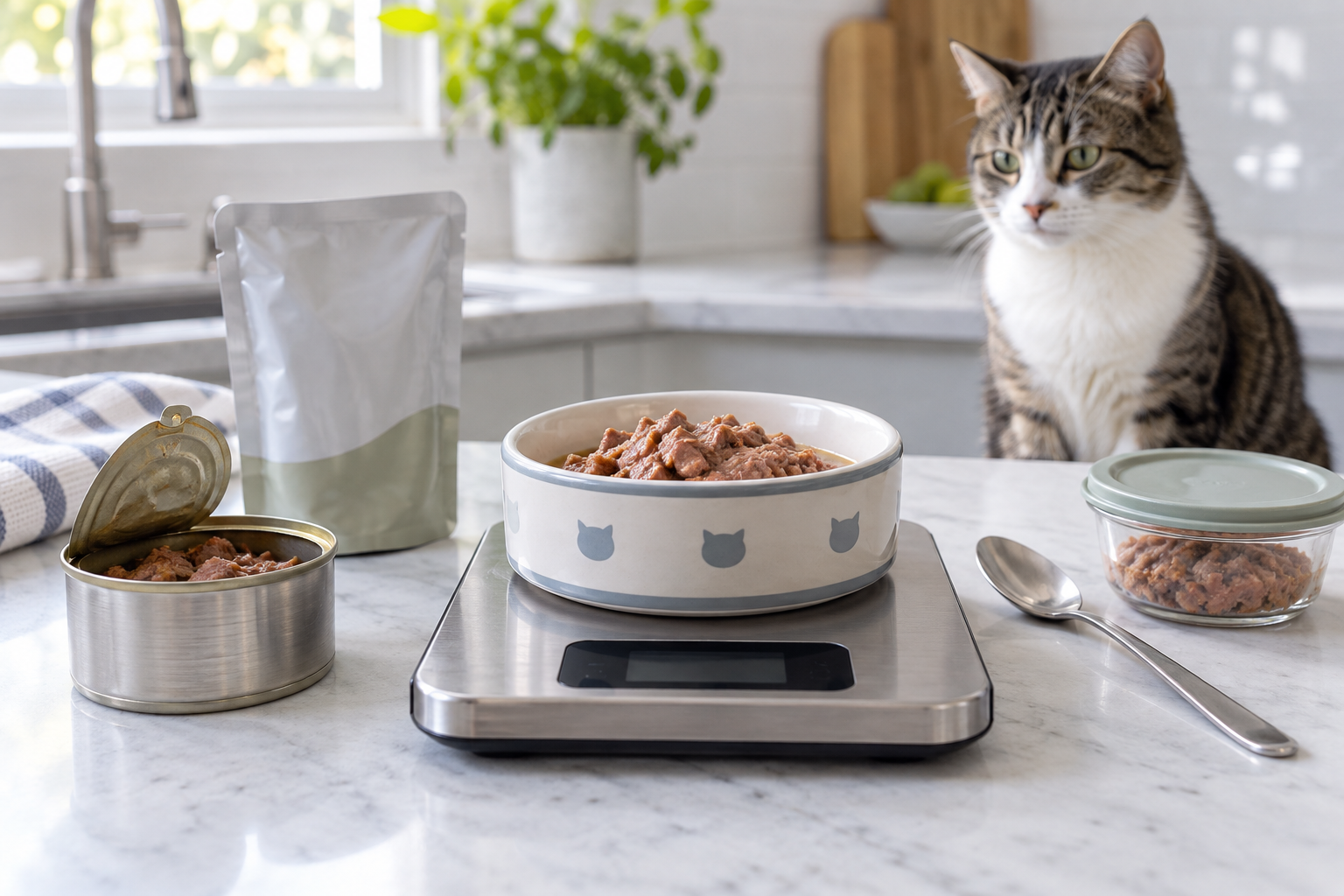
Use a kitchen scale to portion canned, pouched, or tray-packed cat food consistently, then refrigerate any unused food promptly.
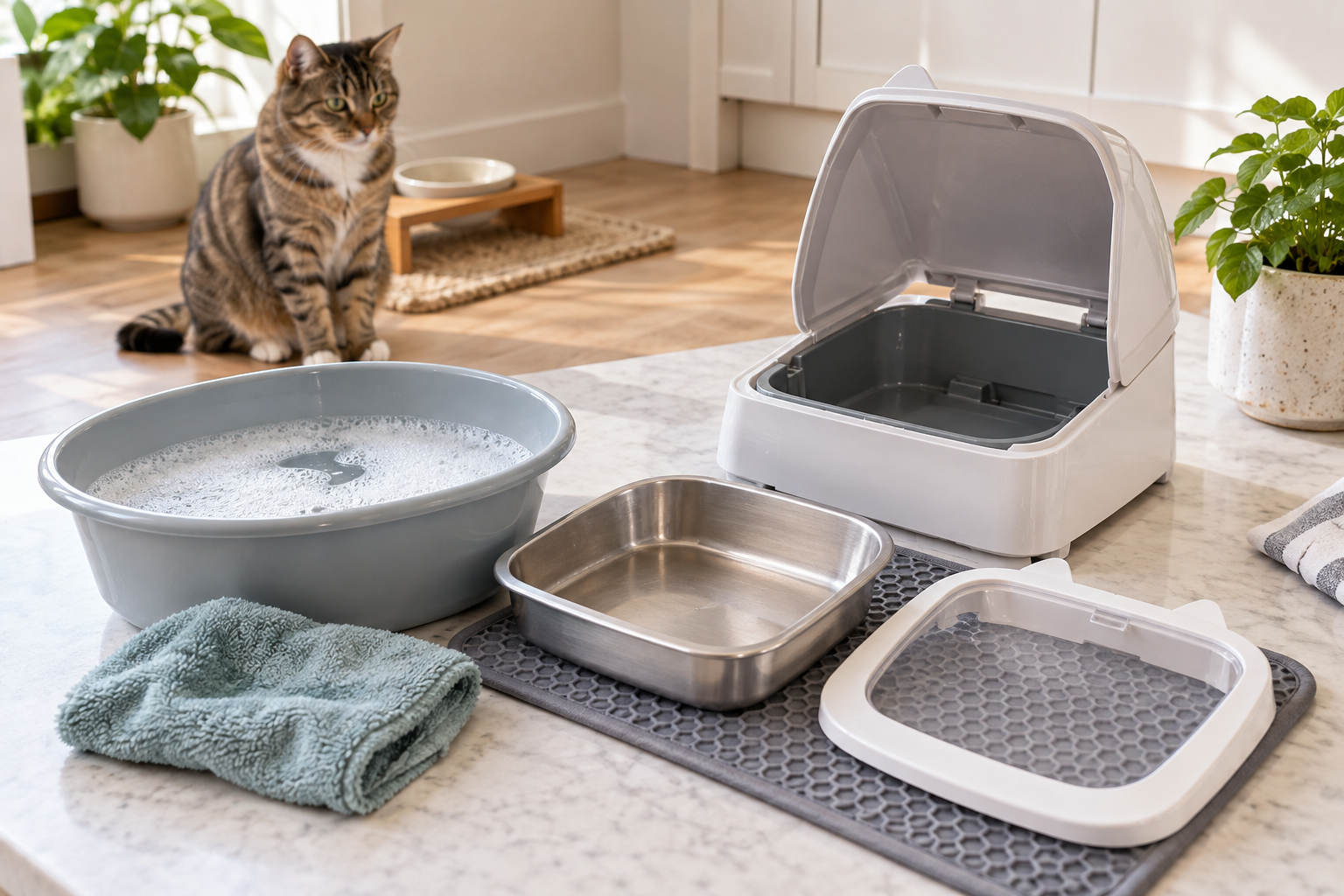
Learn which microchip-feeder parts can be washed, how to keep the electronic base dry, and how to handle wet-food residue safely. Check your model’s manual.
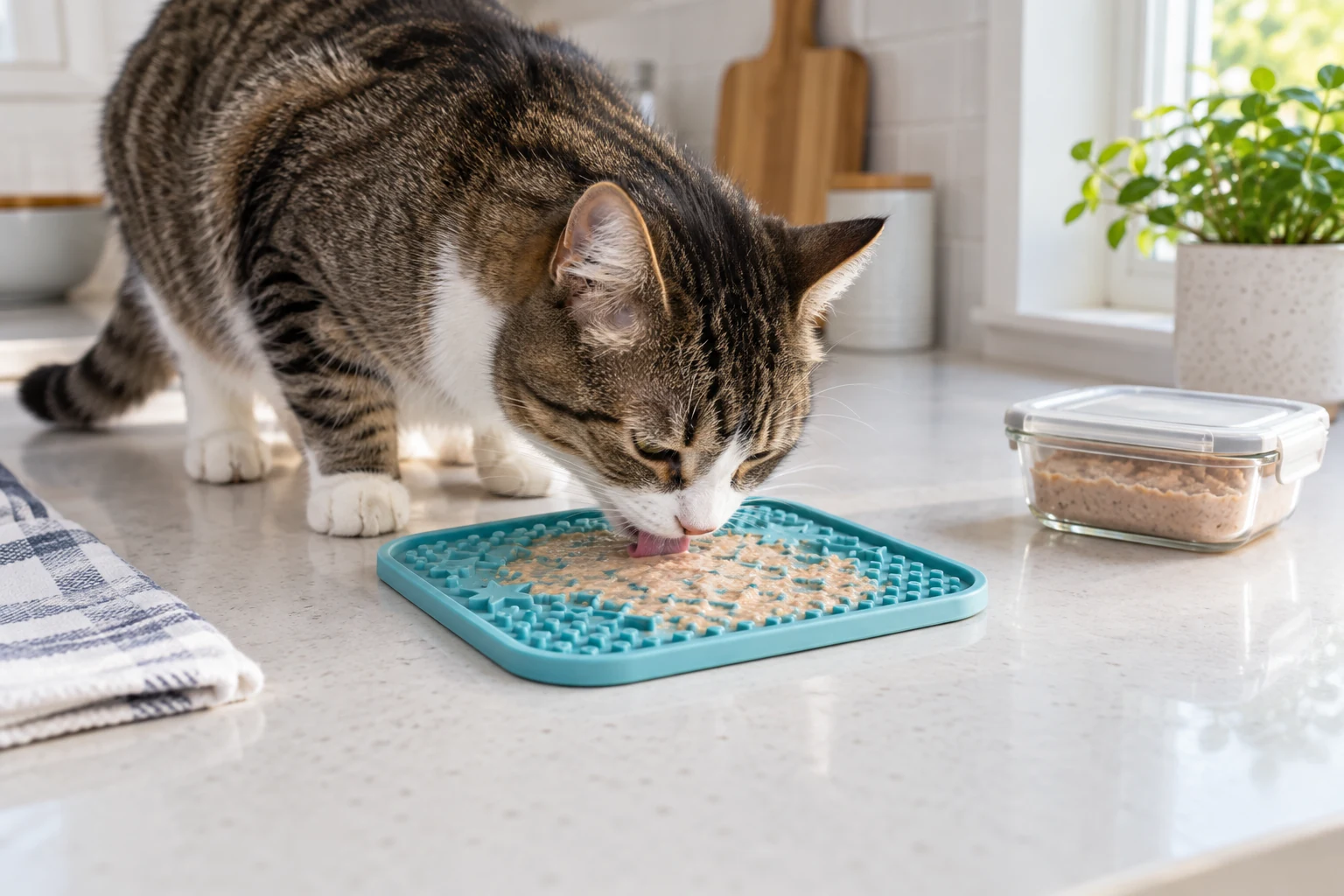
Frozen lick mats for cats can slow a measured wet-food meal, but keep them thin and supervised, and skip them when cold food hurts.